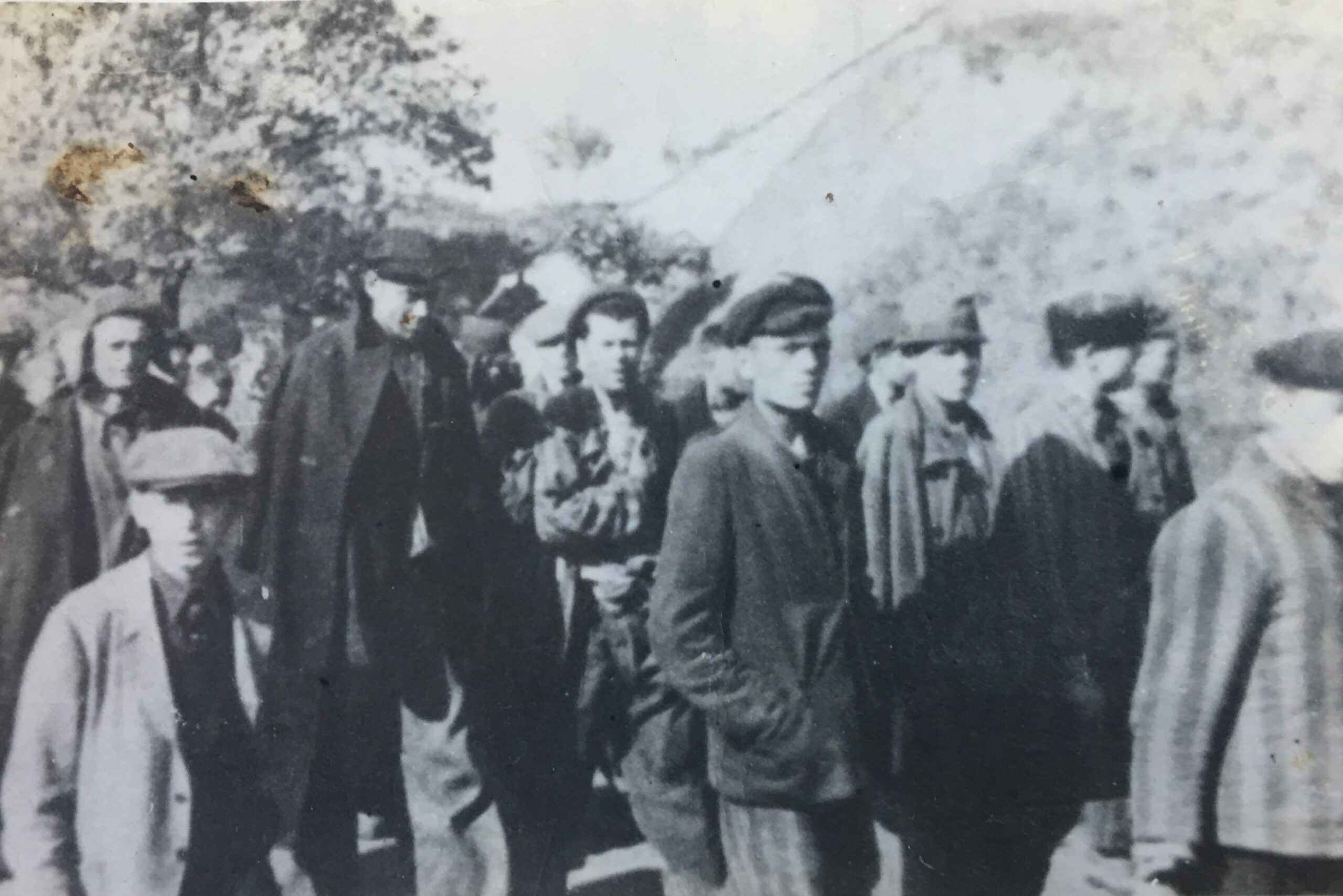
Members of the Boys were slave labourers in the Rehmsdorf-Tröglitz labour camp in Germany, which was a subcamp of the Buchenwald concentration camp.
Buchenwald concentration camp was operated by Nazi Germany. The camp had 139 subcamps.
The Boys were teenage and child Holocaust survivors, who were brought to the UK after the war for rest and rehabilitation.
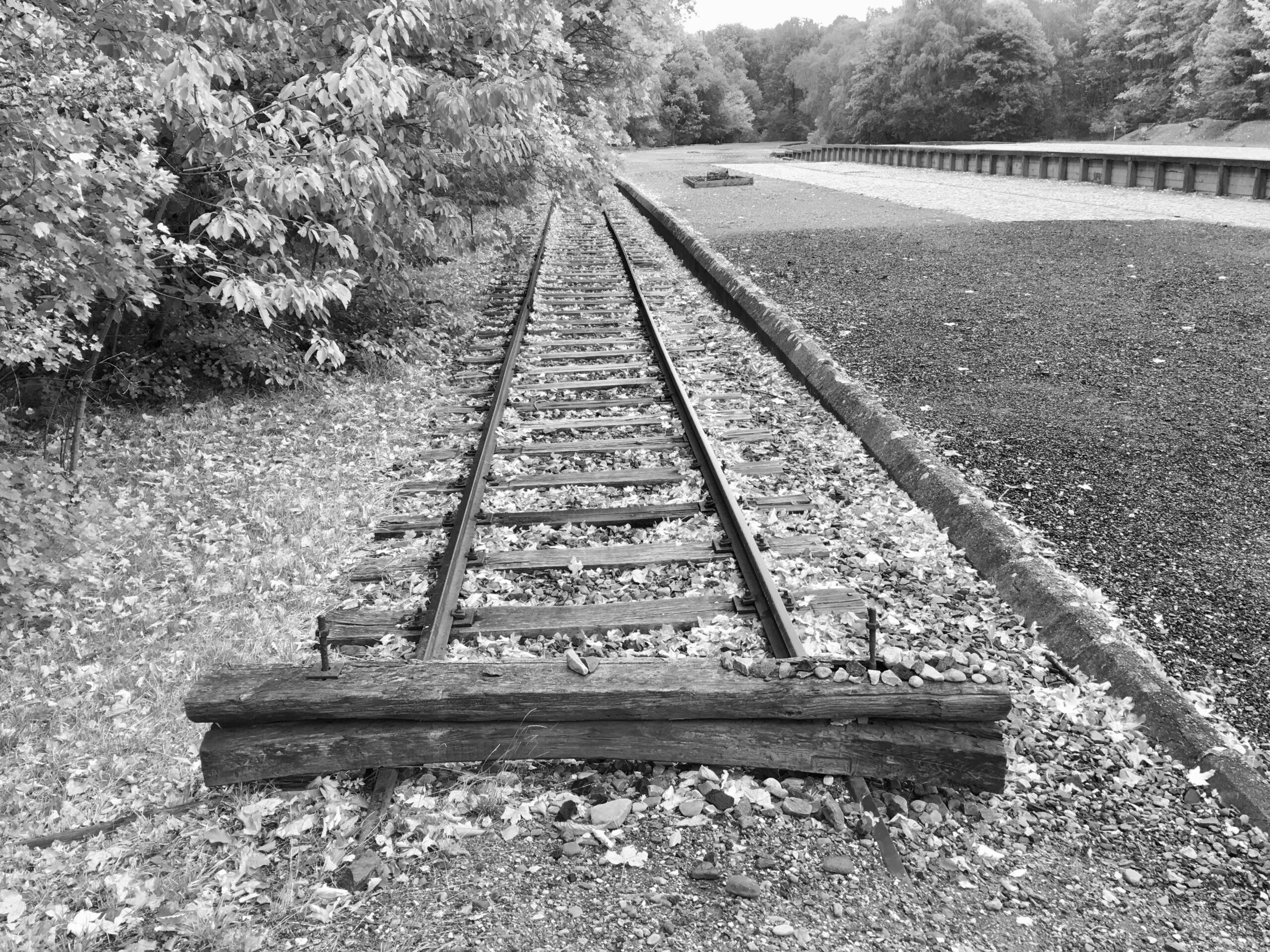
The Rehmsdorf-Tröglitz camp was run by Brabag (Braunkohle Benzin AG) who worked closely with the Nazi regime. The production of synthetic petroleum was vital for the German war effort and the company was set up in 1934. Petroleum was made from brown coal. Brabag managers ruthlessly exploited the slave labourers assigned to them to speed up construction of their plants. As a result, the death rates in Rehmsdorf-Troglitz were extremely high. An estimated 13,000 slave labourers worked for Brabag during World War II.
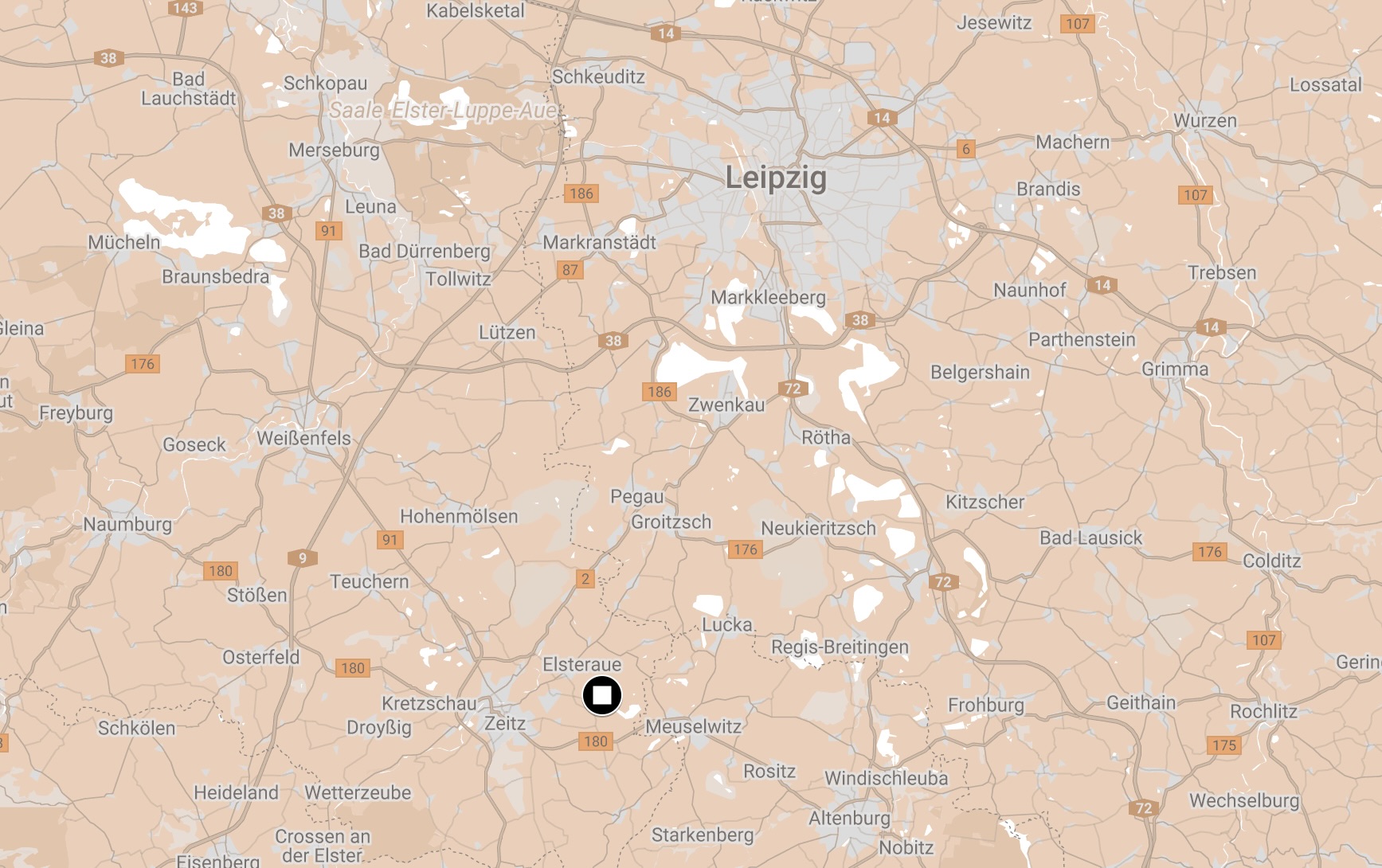
The camp’s official name was Aussenlager Wille. It was located in the towns of Tröglitz, Rehmsdorf and Gleina, all situated within a three and a half kilometer triangle.
Harry Spiro described the camp at a Chabad meeting in Oxford in 2019:
History
Brabag had been making synthetic fuels in Tröglitz since 1939. The factory was bombed by the Allies in 1944. In order to get production going again slave labourers were brought in to rebuild the plant.
Members of the Boys arrived in Rehmsdorf-Tröglitz in February 1945 after enduring death marches and evacuation by death trains from Auschwitz and Gross-Rosen concentration camps.
“After nineteen days at Buchenwald, I was moved again with about 3,000 other prisoners. We were forced onto open freight trains; I feared our destination. This time the journey lasted about half a day. We were not told why we were being moved or where we were being taken. It turned out to be a makeshift camp in the village of Gleina. We were housed in several large stables on a farm. There were no bunk beds, so we slept on straw spread out on the floor. The stables were very crowded and there was not enough room for everyone to lie down. The camp was surrounded by barbed wire and there were towers manned by SS guards with machine guns and powerful searchlights. At night, the SS locked the doors from the outside and stood guard with dogs to ensure that no one got out. At about four o’clock the following morning, we were woken with shouts, and given ersatz coffee and a small piece of black bread. We were then made to line up outside, and marched for nearly two hours to a large factory where we had to work all day. This was the Brabag factory, not far from the town of Zeitz-Jena. It was an enormous complex that stretched for miles, and consisted of hundreds of buildings and tens of thousands of workers. Railway lines criss-crossed the factory and the place seemed as big as a town.”
David Herman, David’s Story (Herman Press, 2016).
Herman was 18 years old when he was a prisoner in Rehmsdorf-Tröglitz.
Structure
Initially prisoners lived in the village of Gleina and then in a tent camp near the Brabag factory in Tröglitz. They were also housed in brick barracks in Rehmsdorf. All three locations were west of the small city of Zeitz. The camp was named after Brabag factory manager Dr Wille.
The camps were constructed in haste and there were few toilets or washing facilities. The camp had the highest proportion of Jewish slave labourers in the Buchenwald subcamp system. The prisoners were used in construction work.
“This, I think, was the worst camp. Hundreds died every week. It was real horror. Very little food, hard work. I stayed there for five months. As I look back I can’t understand how I survived. I got wounded there by an SS man. He hit me with the barrel of his rifle. It happened as follows. We went out in a group of twenty men to cast a roof, and when we finished ten minutes too late, the Germans started beating us and shooting. Twelve men were shot. Eight of us left alive. When we arrived at the gate of the camp, the guard explained that there had been an attempt to escape and that they had shot twelve men. The camp leader was pleased that they had done such a very good job.”
Menachem Silberstein quoted in Martin Gilbert, The Boys: The Story of 732 Young Concentration Camp Survivors (Wiendenfield & Nicholson, 1996).
Silberstein was 17 years old when he was in the camp.
Dissolution & Liberation
Before the approach of American troops, the prisoners were evacuated in overcrowded open freight cars to Theresienstadt Ghetto in early April. An Allied air raid outside Reitzenhain on the German-Czech border caused panic. Survivors fled into the woods and were pursued by the SS, the local Hitler Youth and NSDAP members, and 388 prisoners were killed in a massacre. The evacuation then continued on foot.
Aftermath
After the war the firm and its remaining assets were dissolved. Brabag denied any responsibility for the prisoners and rejected all claims for compensation by former prisoners.
A small museum and memorial in Rehmsdorf commemorate the history of the camp.
 About
About History
 Education
 Quilts
 FIlms
FIlms Photos
 News Media & Events
 Publications
 Donate