Many members of the Boys were deported to the Dachau concentration camp during its period of operation.
Dachau concentration camp was operated by Nazi Germany and had 139 subcamps.
The Boys were teenage and child-Holocaust survivors, who were brought to the UK after the war for rest and rehabilitation.
Overview
Dachau was the first concentration camp built in Nazi Germany.
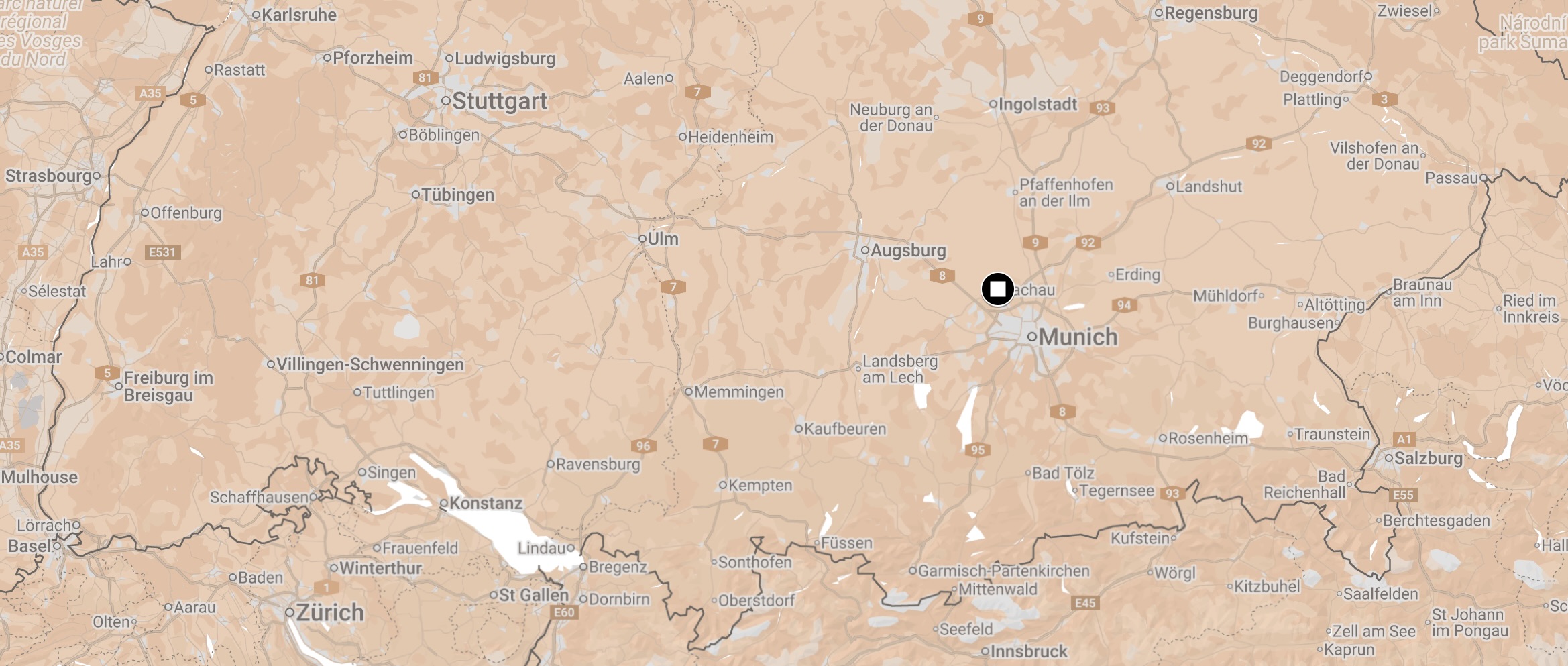
It was located 16km northwest of Munich, in the German state of Bavaria, where the Nazi Party had their official headquarters. Dachau served as a model for the network concentration camps that were set up by the Nazis.
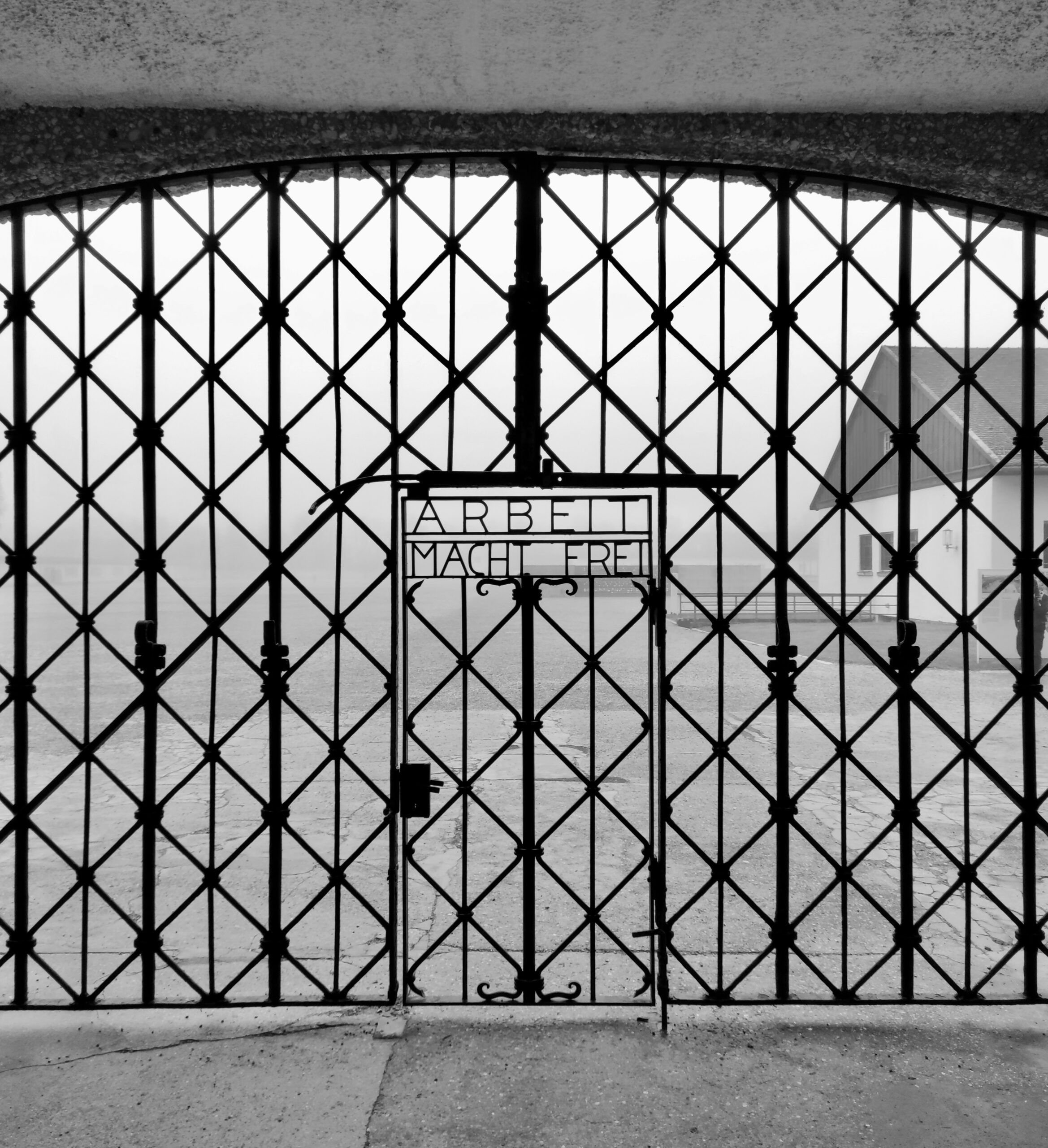
The first prisoners were to serve as forced labourers in ammunition factory and to construct the camp. On the main gate was the motto Arbeit Macht Frei, work sets you free, reflecting the Nazi propaganda that the camp was a re-education camp. The focus, however, soon shifted to using slave labour as a method of torture and murder.
In 1943, factories were built near the main camp and the prisoners used as slave labourers. Satellite camps were set up under the authority of Dachau in the summer and autumn of 1944 near armaments factories throughout southern Germany to increase war production. It was in this later period of the camp’s existence that the Boys came to work as slave labourers or were evacuated on death marches and death trains from camps further to the east.
History
The Dachau concentration camp opened on 22 March 1933. It was initially set up to hold Hitler’s political opponents but was enlarged to hold so-called ‘asocials’ and forced labourers who came from across occupied Europe. The first criminals were brought to the camp in 1935.
The first Jews were held in the camp after the annexation of Austria and the Kristallnacht November pogrom when more than 11,000 Jewish men were interned in Dachau. Most of these men were released after a few months after proving that they had made arrangements to emigrate. The Jewish population of the camp was negligible until the construction of its slave labour camps and the evacuation of the camps as the Allies advanced.
Prisoners in Dachau were brutally treated. There were 32,000 documented deaths at the camp, and thousands that are undocumented. Historians believe as many as 40,000 people may have died in the camp. About 10,000 of the 30,000 prisoners in the camp when it was liberated were sick and many later died. Medical experiments were also carried out in Dachau.
Structure
The camp covered an area of about 5 acres, but the complex was far larger and included SS training schools, warehouses and factories. There were 32 barracks, including one specifically for clergy imprisoned for opposing the Nazi regime and another for medical experiments.
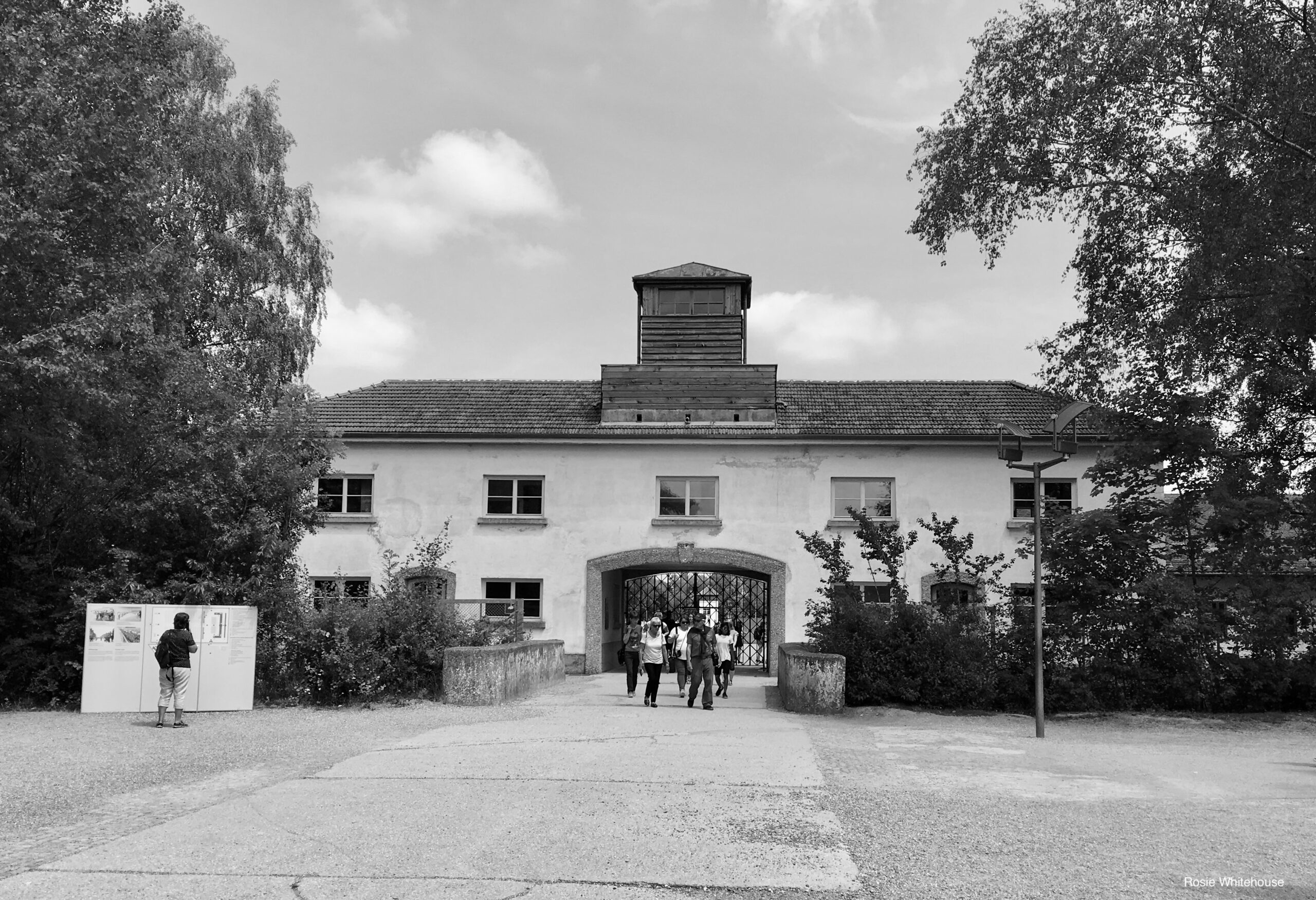
The camp was surrounded by electrified barbed-wire a ditch and wall. There were seven watchtowers.
Between 1941-43, 4,000 Soviet prisoners of war were murdered in the camp complex. A crematorium was built in 1942. In August 1944 a women’s camp opened inside Dachau.
Dissolution & Liberation
As the Allies advanced into the Third Reich, the SS began to evacuate the camps. They hoped to prevent the liberation of large numbers of prisoners. At the end of 1944, the overcrowding of camps began to take its toll on the prisoners. The unhygienic conditions and the supplies of food rations became disastrous. In November a typhus fever epidemic broke out that took thousands of lives
In April 1945, the evacuation of Dachau began. Prisoners were to marched to the Baltic and North Sea coasts to be drowned or concentrated in the Alps where the Nazis planned to make a last stand against the Allies. Thousands of prisoners too weak to walk were murdered. Before the camp was abandoned, the SS tried to cover up their crimes by destroying the evidence.
Dachau was the third concentration camp to be liberated by British or American Allied forces. The soldiers who entered the camp on 29 April 1945 found 30 freight wagons filled with corpses in an advanced state of decomposition that had been brought to the camp by the SS.
Aftermath
The main Dachau camp and its subcamps were used to house displaced persons and many members of the Boys spent the months after the liberation in these camps. Notable was the establishment of the first exclusively Jewish displaced person’s camp at Feldafing. The opening of the camp was an important moment as it was the first time that the US authorities had recognised the Jews a distinct individual group.
The complex was also used to keep SS soldiers awaiting trial, the scene of the Dachau Trials and a place of execution. Over 1,600 individuals were tried in around 489 separate proceedings between 1945 and 1948, run by the U.S. military, who used the former administrative offices and guards houses as a military base during the operation.
From 1948, a section of the camp complex known as Dachau-East (“Dachau-Ost”) was used as a temporary settlement for ethnic Germans expelled from eastern Europe due to border changes.
 About
About History
 Education
 Quilts
 FIlms
FIlms Photos
 News Media & Events
 Publications
 Donate