Member of the Boys were taken as slave labours to the Christianstadt labour camp, a subcamp of the Gross Rosen concentration camp.
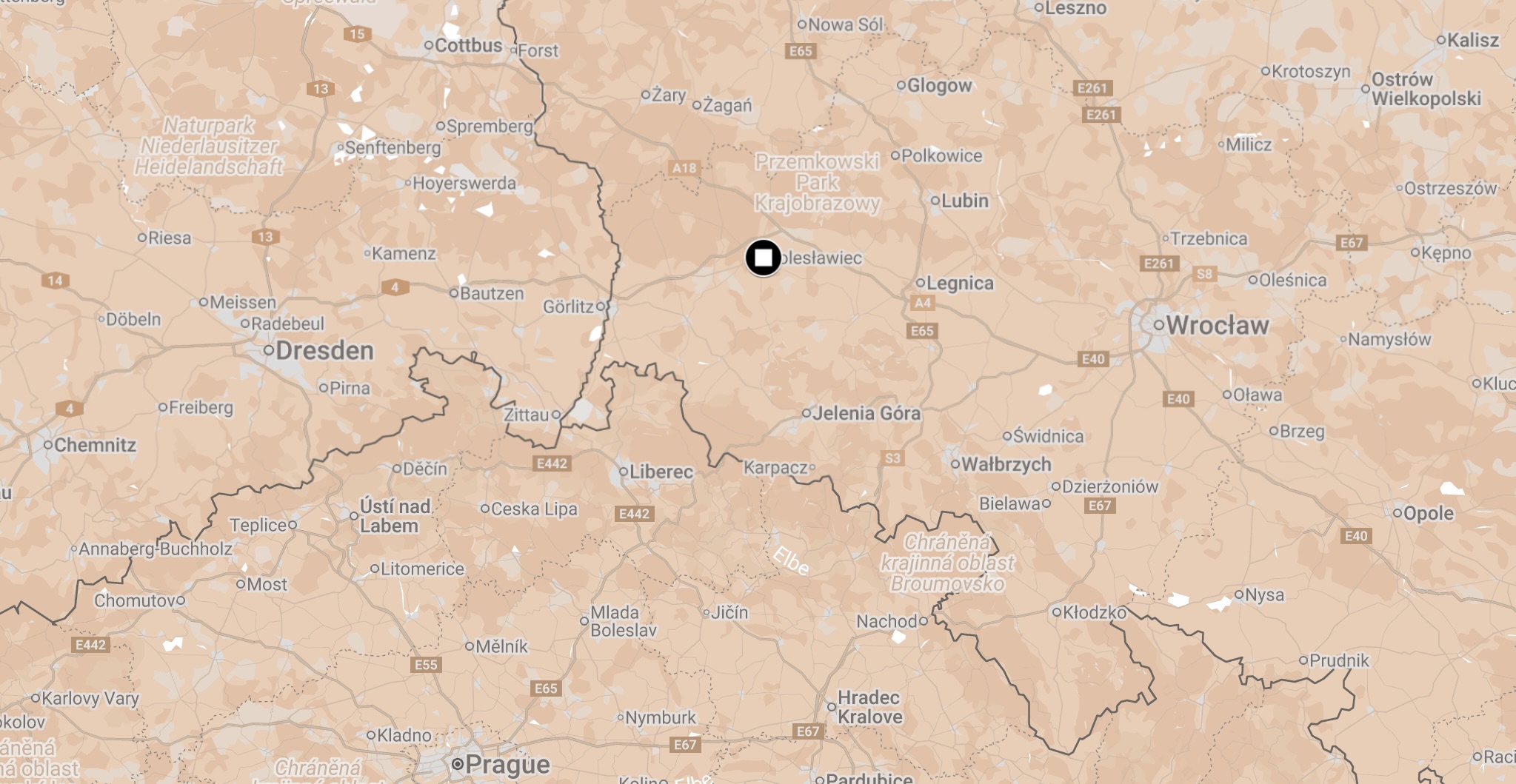
The Gross Rosen concentration camp was operated by Nazi Germany. The camp had 100 subcamps located in what is now the Czech Republic, Germany and Poland.
The Boys were child and teenage Holocaust survivors, who were brought to the UK after the war for rest and rehabilitation.
The camp was located west of the city on the Schwedenwall in the Christianstadt forest from June 1944. Christianstadt was then in Germany but is now Krzystkowice in Poland
History
This camp provided female slave labourers for the Christianstadt plant of the Gesellschaft mbH for recycling chemical products.
In Christianstadt itself and the immediate environs, work had been under way since 1940 to expand what had initially been the IG Farben Works chemical factory, then the Dynamit AG Nobel plant. Forced labourers, prisoners of war (POWs), and Jews from the forced labor camp (ZAL) also known as Organisation Schmelt were employed at the building site.
When it was built, the camp housed 500 women from the Auschwitz II concentration camp. With additional transports from Transylvania and the Łódź Ghetto, the number increased to 1,031 in September 1944.
The Christianstadt prisoners were Jewish women of Polish, Czech, Hungarian, Dutch, and Austrian nationality.
The camp regime was arduous for the women; for any offense at all, they were punished with penal roll calls lasting many hours, during which the prisoners had to stand regardless of the weather.
By December 1944, the number of prisoners had fallen to fewer than 900.
Dissolution
The evacuation occurred on February 2 or 3, 1945. The women were escorted out of the camp under the surveillance of a detachment of uniformed men commanded by an SS man with the rank of Oberscharführer. The evacuation route led southward. On foot, the prisoners reached the territory of what was then the “Sudetengau” (later part of the Czech Republic).
They continued toward Draždany via the towns of Cinwald (Zinnwald, now Cínovec), Dubí (Eichwald), and Komořany (Kommern), until they reached Most (Brüx). There, the column was directed toward Karlovy Vary (Karlsbad). Four weeks after the evacuation had begun, the column reached a place called Cheb (Eger). There, the prisoners were loaded onto freight cars and taken to Zelle near Hanover.
The march then brought them to Bergen-Belsen.

 About
About History
 Education
 Quilts
 FIlms
FIlms Photos
 News Media & Events
 Publications
 Donate