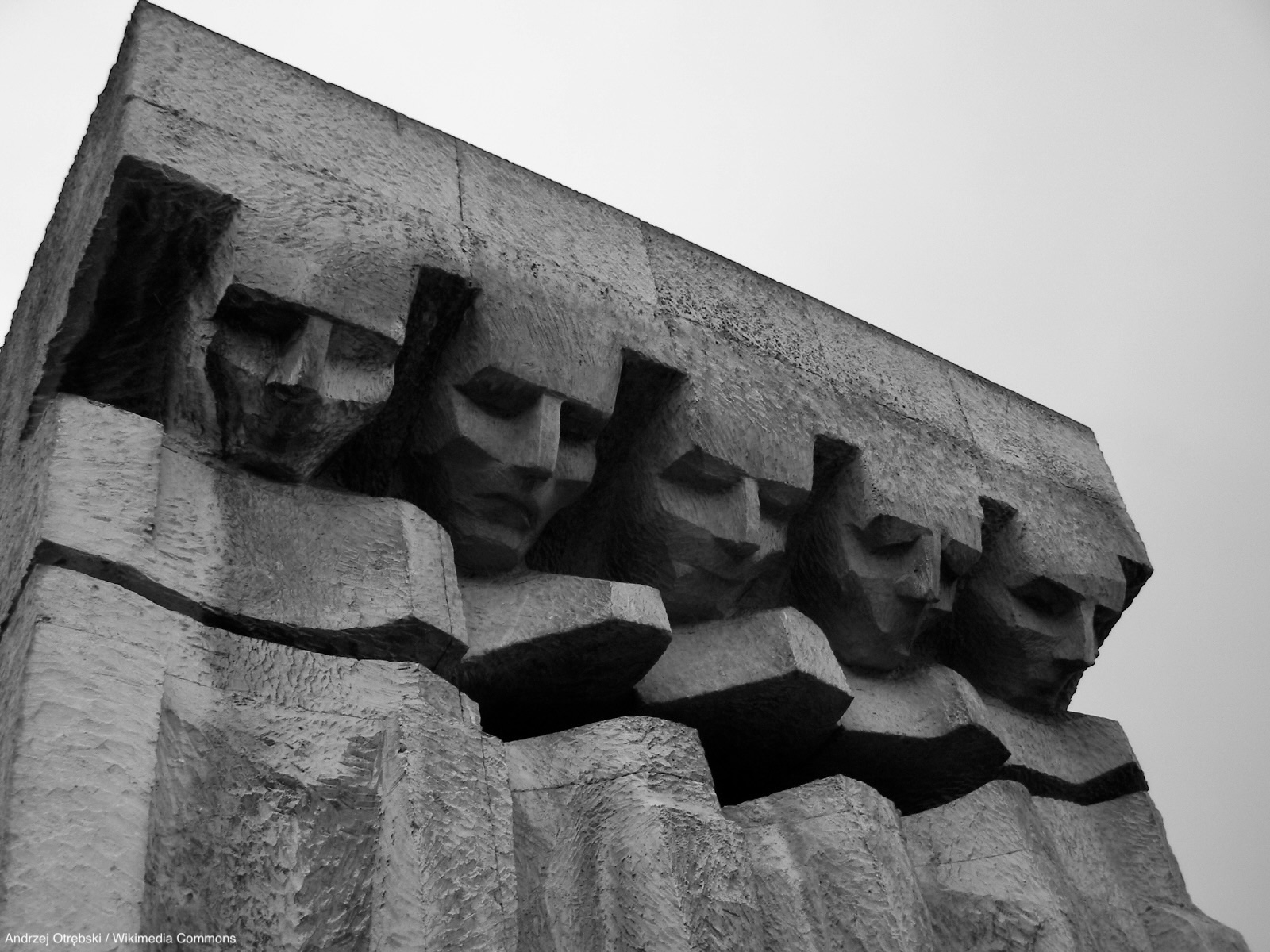
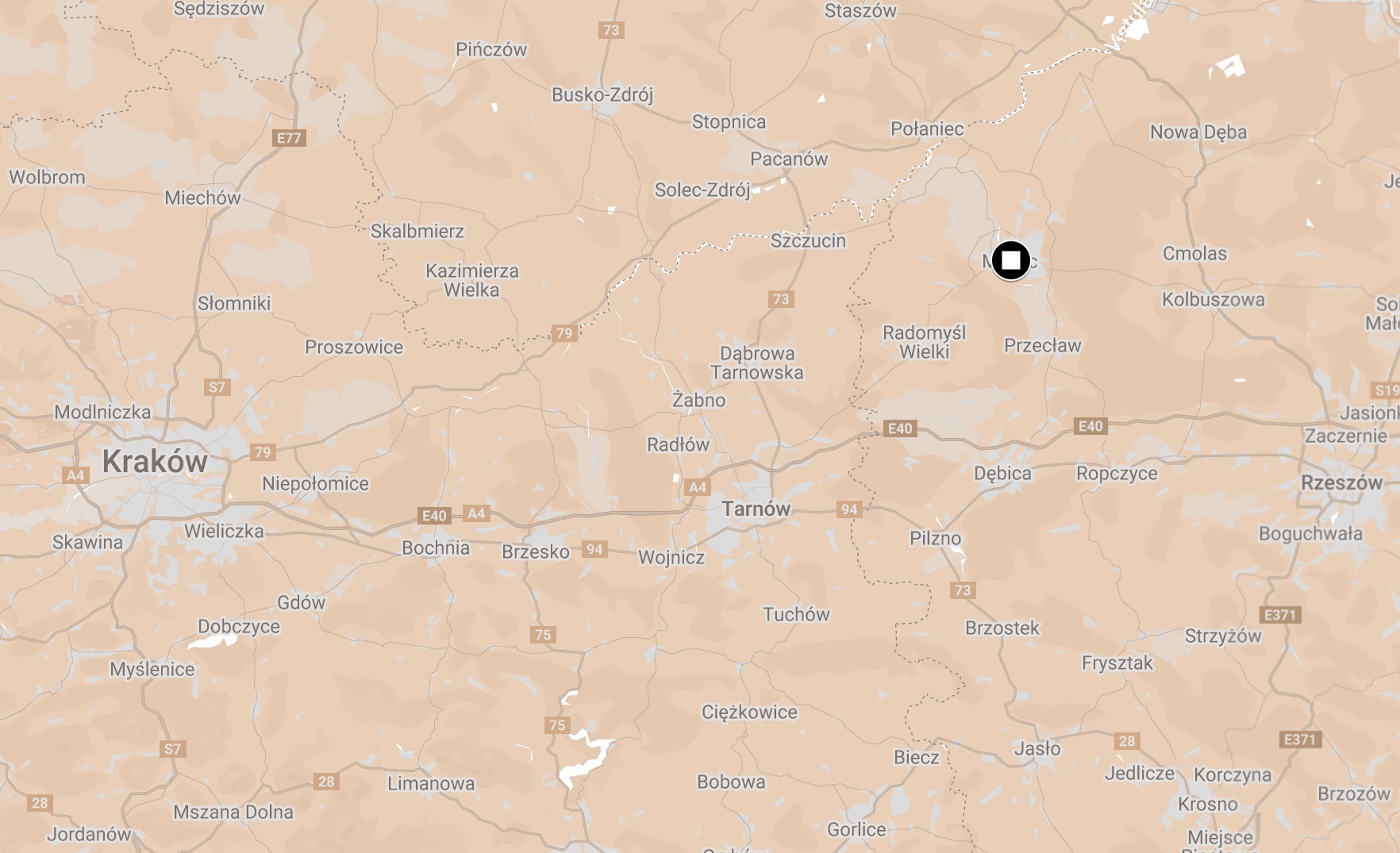
Members of the Boys were slave labourers in the Mielec concentration camp, a subcamp of the Kraków-Płaszów concentration camp.
Kraków-Płaszów concentration camp was operated by Nazi Germany.
The Boys were child-Holocaust survivors, who were brought to the UK after the war for rest and rehabilitation.
History
After the Jews who lived in Mielec, near Rseszów in southeastern Poland, were deported to the death camps a slave labour camp was established on the outskirts of the town. The Germans had taken over the Mielec Flugzeuwerke, an aeroplane factory and needed slave labourers to work there.
Many of the Boys who arrived in Mielec were still in family groups. The men and women were separated, and this is when many of their families were broken up.
“We are taken to a large room where we are told to remove our clothes. I am embarrassed, but notice how deeply uncomfortable the women are. The guards take each piece of clothing we remove and check it for jewellery sewn into the lining, which they proceed to confiscate …
My striped uniform includes a button up shirt with long sleeves. There are also long pants with no zipper, just a cord to pull them tighter around my waist. Neither of these is enough to keep me warm in the winter cold. We also each get a pair of wooden clogs that are very uncomfortable and do not keep our feet warm. We have no socks or underclothes of any kind. I never dreamed I would miss my clothes, but I do now …
Soon after donning our blue and white uniform, we enter a long line that moves very slowly … one man shows us his forearm as he passes us and blurts in Yiddish, ‘They are tattooing these letters on our arms. How will our God view this?’ He must be an Orthodox Jew. Our faith forbids us to have tattoos. In this, I am thankful that we are not Orthodox and were raised to be more relaxed about our faith.”
Max Schindler, Two Who Survived: Keeping Hope Alive While Surviving the Holocaust (MRS, 2020).
Schindler was 14 years old when he was in the camp and his brother was 12 years old.
Structure
The conditions in the camp were extremely harsh and many of the prisoners died of starvation. There was only cold water, no soap or toilet paper and no showers. The camp was overridden with vermin and many of the prisoners fell ill. During a typhus epidemic in 1942, sick prisoners were shot in the nearby forest.
“Here they [ed: the Heymanns] had to work 18 hours a day in the factory whilst their only food was a small quantity of sauerkraut.
The camp was vermin ridden and the prisoners slept on boards as the straw was too filthy. The oldest man in the camp was 50 and only the youngest survived. Mr Heymann became weaker and weaker.”
Manfred Heyman’s 1955 testament held in the Wiener Library.
Heyman was 14 years old when he was in the camp.
Dissolution & Liberation
In February 1944 prisoners and machinery were moved to the Wieliczka subcamp of Kraków-Płaszów. Other prisoners were moved to different camps in overcrowded freight wagons in which many died. The camp was finally closed in August 1944.
On 23 January, the Red Army liberated Mielec.
 About
About History
 Education
 Quilts
 FIlms
FIlms Photos
 News Media & Events
 Publications
 Donate