Members of the Boys were slave labourers in the Majdanek concentration camp.
The Boys were teenage and child-Holocaust survivors, who were brought to the UK after the war for rest and rehabilitation.
Majdanek concentration camp was operated by Nazi Germany. It was also an extermination camp.
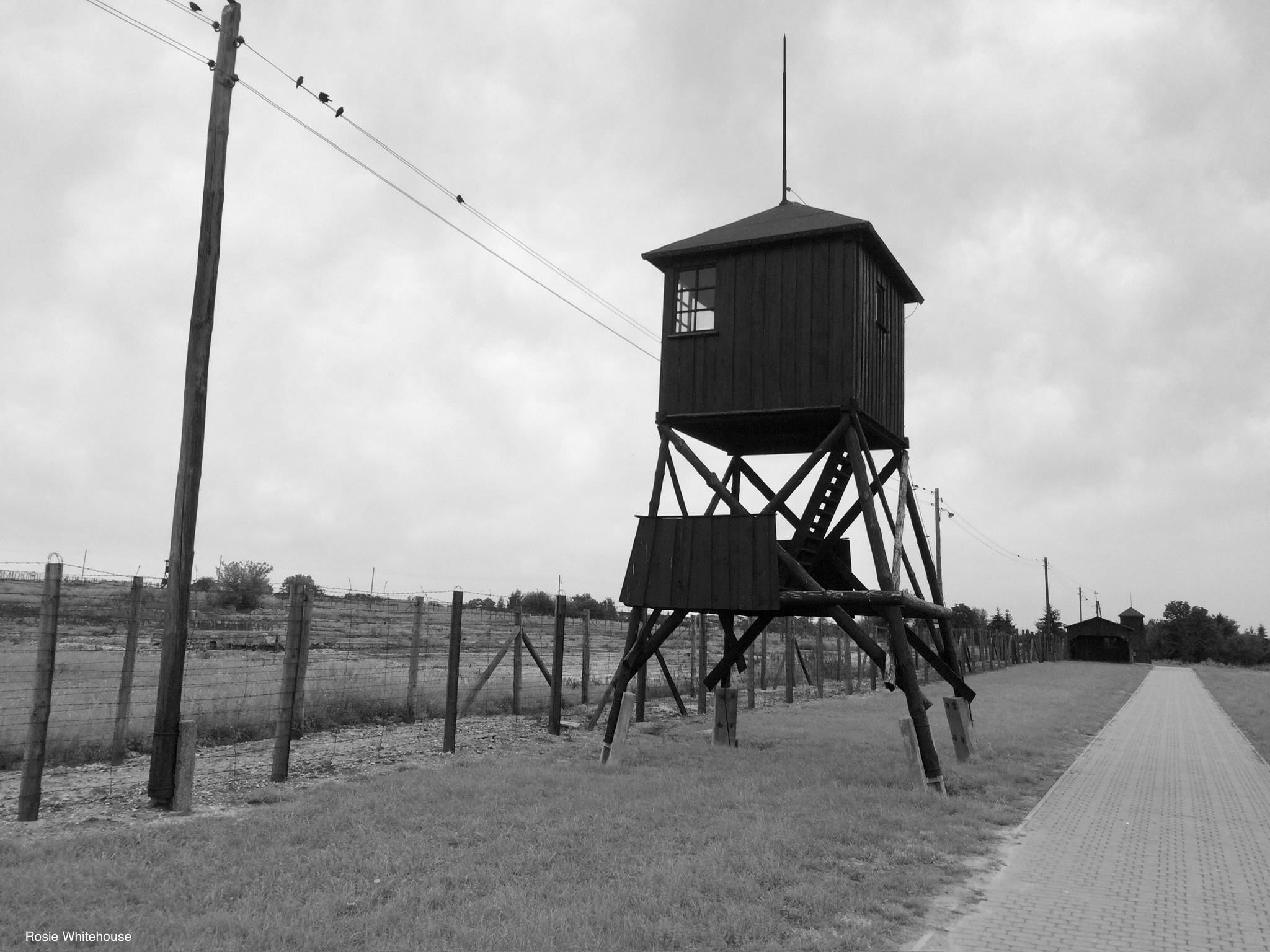
Majdanek was the only concentration camp besides Auschwitz where the mass murder of Jews by poison gas was carried out.
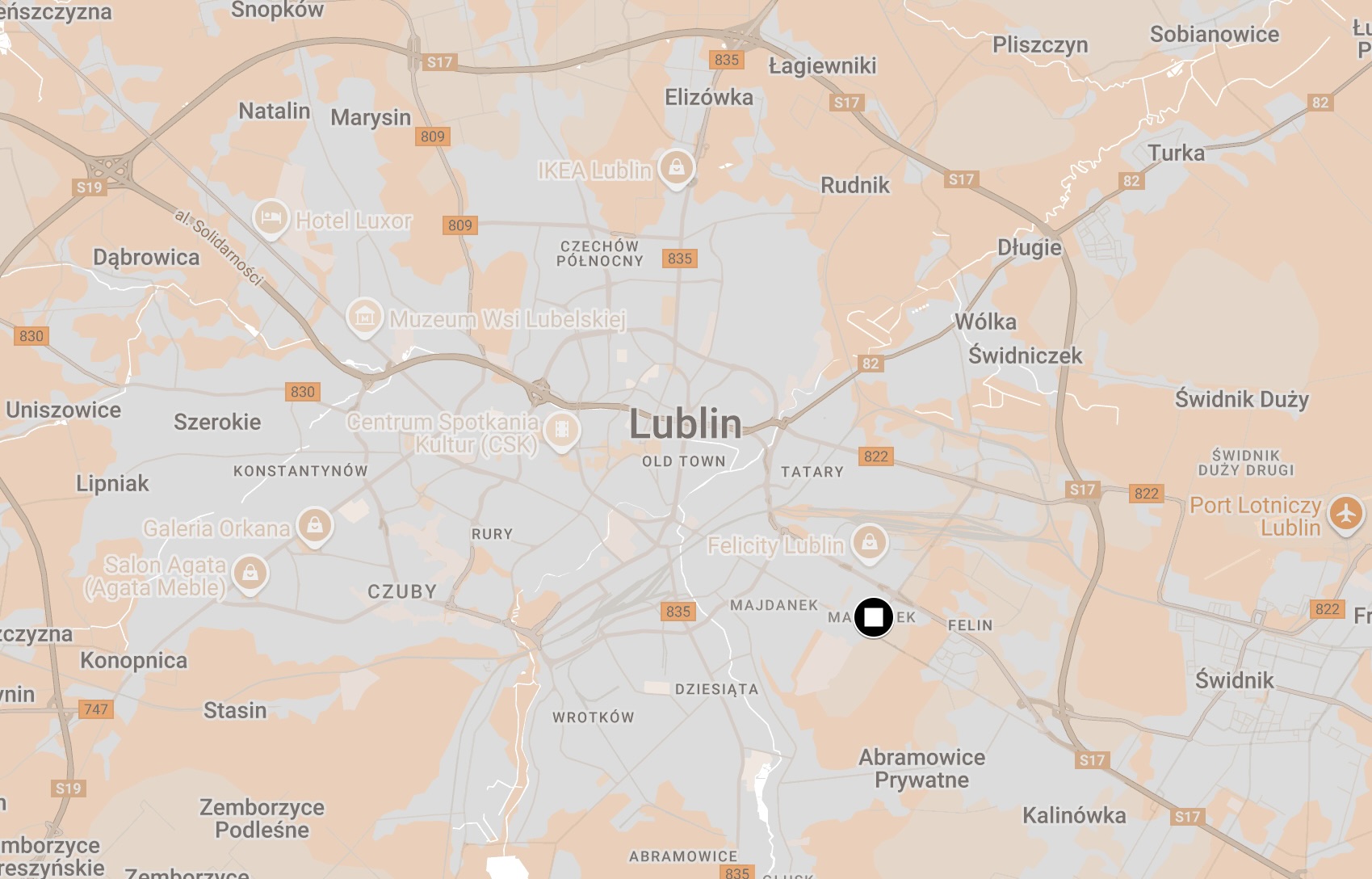
The camp came to be known as Majdanek taking its name the area of Majdan Tatarski where it was located.
History
The camp played a key role in Operation Reinhard, that was run from Lublin. It was a programme to carry out the mass murder of Jews in the General Government. Majdanek was to realise three of the operation’s goals: exploit Jewish slave labour, utilise Jewish assets, and carry out mass murder of Jews.
Between April 1942, and November 1943, Jews constituted the overwhelming majority of prisoners registered at Majdanek. Research indicates that the SS deported between 74,000 and 90,000 Jews to the Majdanek main camp.
At least 56,500 of these were Polish Jews: 26,000 were from the Lublin District; 20,000 were from the Warsaw ghetto; 6,500 were from the Białystok ghetto; and roughly 4,000 were deported between November 1943 and May 1944 from other labour camps. At least 17,500 came from other Nazi occupied countries.
Poles represented the largest minority in the camp. Other prisoners at Majdanek included Germans, Austrians, Czechs, Ukrainians, Soviet POWs, Soviet civilians, and a handful of others. Majdanek also frequently served as a transit camp or a temporary stop for Polish and Soviet civilians being deported to the Reich for forced labour.
Many of the Boys arrived in Majdanek in the deportations from Warsaw among them Pinchas Gutter.
“We arrived in Majdanek in the first week of May 1943. When we got off the train, we were led into a large field and selections, where people were separated – men from women, children from parents – began right away. My father instructed me to go with him, with the men, and to say, when asked, that I was five years older than I actually was. He must have understood that young children were going to be killed because they were too weak to work. I was tall for my age so the Germans believed me when I said I was sixteen … That was the last time I saw my mother and sister …”
In the showers Gutter’s father was selected to be gassed as well. Gutter was just 11 years old.
“In Majdanek I was in a kind of cloud. We were always in the shadow of the gas chamber and that obliterated any other thoughts from our minds. I was always concerned with whether or not I was going to be selected to go to a work group and always thinking how to get out of either option.”
Structure
Eventually the camp consisted of five compounds known as “fields,” with a capacity for 25,000 prisoners. One more compound was still under construction when the camp was liberated.
Majdanek officially became Lublin concentration camp, Konzentrationslager Lublin, in February 1943.
There were at least 270 labour details in the camp, many employed in maintaining the camp and its farm, vegetable gardens, and green houses. Majdanek’s intended purpose, however, was to supply prisoners for SS-owned workshops and enterprises that grew up around Lublin. Prisoners were also moved quickly out of Majdanek to other labour camps.
The SS destroyed most of Majdanek’s records before evacuating the camp, so figures for arrivals or deaths are estimates. The accepted minimum number of registered prisoners is 240,000 to 250,000, but that does not include those who were killed immediately. Estimates of the number who died in Majdanek range from 80,000 to 110,000 for the main camp and another 15,000 to 20,000 in the subcamps.
Conditions were so bad that they shocked even experienced prisoners. Inmates suffered from extreme over- crowding, bad and scarce water, inadequate food, and practically non-existent sanitary facilities. Epidemics inevitably resulted from these conditions.
Numerous Majdanek prisoners died at the hands of the camp’s staff, guards, or prisoner-functionaries, many of the latter professional criminals from the Reich. Prisoners were also hanged or clubbed to death or murdered with lethal injections.
Mass Murder
The three gas chambers known to have operated at Majdanek were constructed in late 1942 and 1943. The two smaller chambers could hold 150 people, the larger one 300. All three used Zyklon B and at least two could also used carbon monoxide.
Selections began in the Autumn of 1942. Primarily, the elderly children and mothers of young children were selected to be gassed. They waited often for days without food or water in a barbed wire enclosed area known as the Rose Garden.
The gas chambers ceased operating at Majdanek sometime in late 1943. Some scholars estimate that 50,000 victims were gassed at Majdanek, but this number may be revised. Witnesses and historians agree that the majority of those gassed at Majdanek were murdered in 1943. However, the fact that nearly 25,000 Operation Reinhard victims were murdered at Majdanek in 1942 alone suggests that Majdanek’s role in the “Final Solution” may have been larger than most historians have heretofore assumed.
As Majdanek’s gas chambers were relatively small many victims were shot and then cremated. Shooting was also used to dispose of the 10,000 Polish prisoners brought to Majdanek in “death transports” from Polish prisons between December 1943 and March 1944. After the gassings ceased, the prisoners selected for death because they could no longer work were shot in the crematorium.
Dissolution & Liberation
After Majdanek was almost completely evacuated in April 1944, the German army opened a camp for Poles conscripted to build fortifications. Majdanek was finally evacuated on July 22, 1944. Soviet troops arrived the next day.
Aftermath
Majdanek was the first concentration camp to be liberated, in late July 1944, and newsreels and photos from the camp were splashed across the front pages of the world’s newspapers.
The camp became a ghoulish attraction as locals came to stare at the crematoria and gas chambers. One of those was the Jewish partisan leader from the Vilnius Ghetto, Abba Kovner. The visit reinforced his convictions that there was no future for the Jews of Europe and that he must lead the survivors out of eastern Europe and find a way of breaking through the Royal Navy blockade of the Palestine Mandate.
A handful of low-level SS camp officials and kapos, prisoners used as commandos, seized at the camp were tried and executed in the autumn of 1944. A number of Majdanek’s leading SS officials were also tried after the war, but few for their activities at Majdanek. The only postwar trial to deal at length with crimes at Majdanek was held in Düsseldorf in the 1970s.

 About
About History
 Education
 Quilts
 FIlms
FIlms Photos
 News Media & Events
 Publications
 Donate