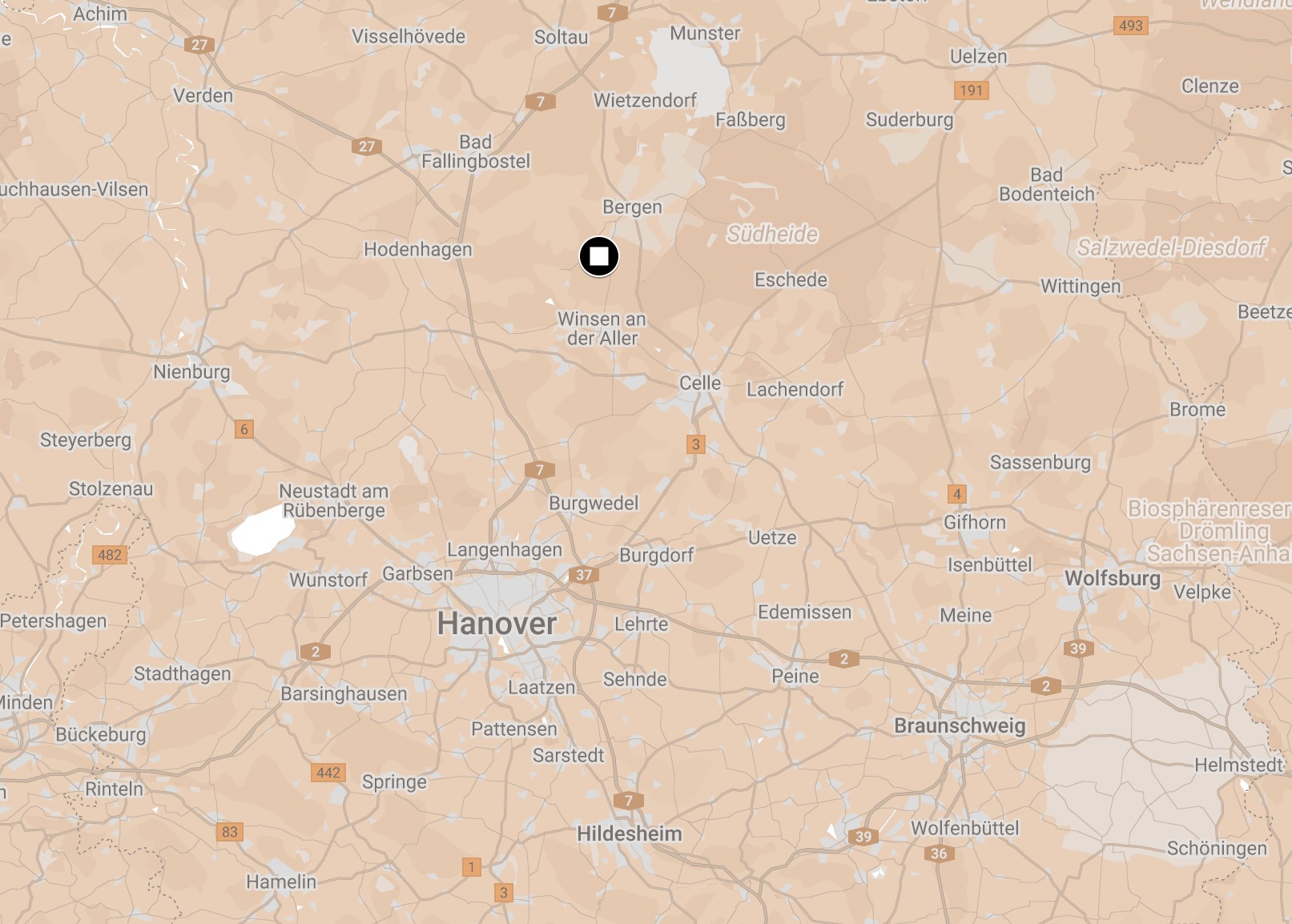
Members of the Boys were taken to Bergen-Belsen, a Nazi concentration camp in northern Germany.
The Boys were teenage and child-Holocaust survivors, who were brought to the UK after the war for rest and rehabilitation.
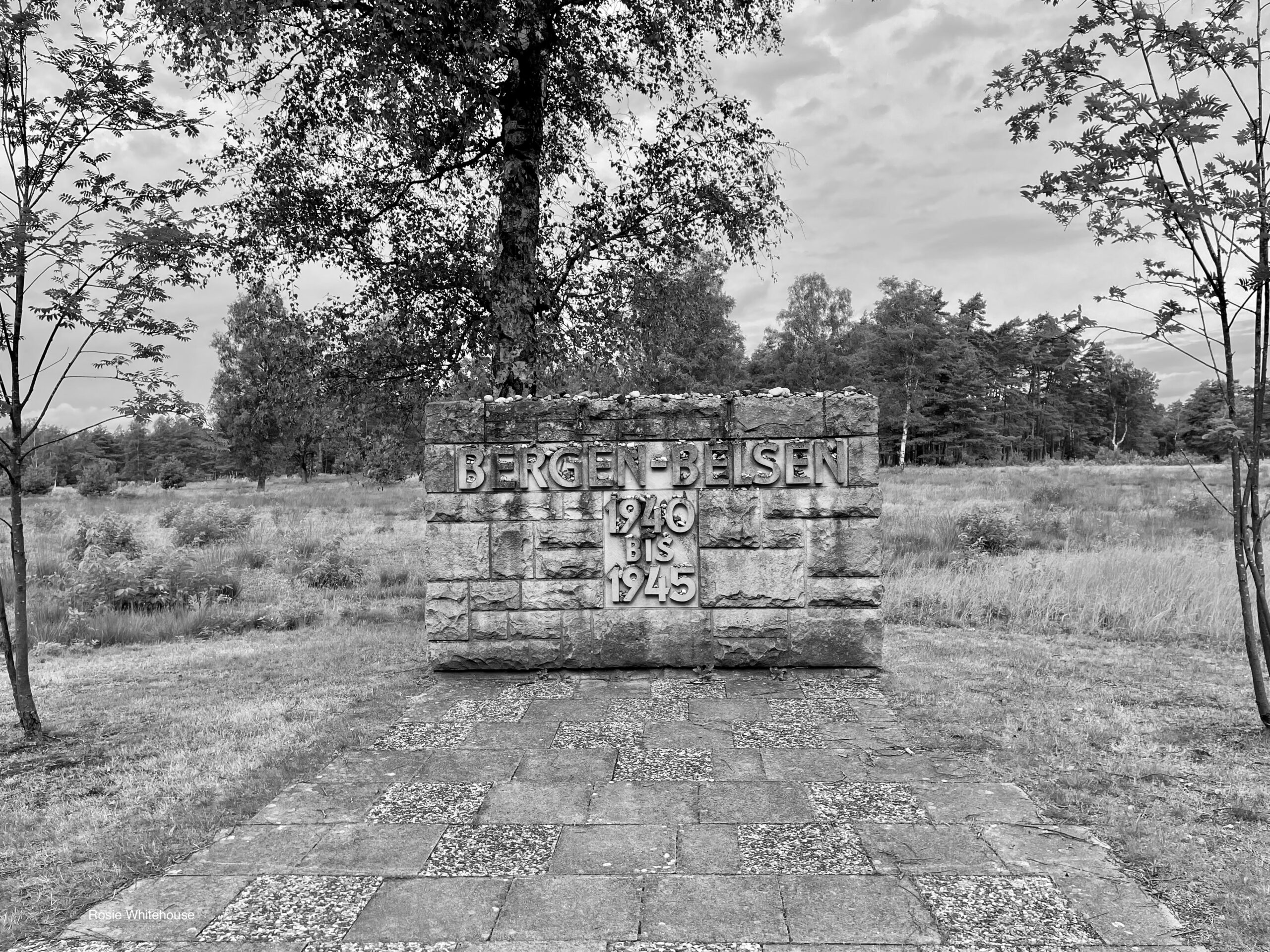
For some members of the Boys, Bergen-Belsen was the last place that they suffered in the Nazi concentration camps.
History
The camp was established as a prisoner of war camp in 1943 and was next to a major Wehrmacht training centre. It was used as a holding camp, an Aufenthaltslager, for Jewish ‘hostages’ that the Germans hoped to exchange for German prisoners of war held overseas. The camp was then expanded to hold Jews from other concentration camps. Among them were Paul Oppenheimer and his sister Eve Oppenheimer who were members of the Boys.
Over 20,000 Soviet prisoners of war and a further 50,000 inmates of Belsen died during its period of operation.
Bergen-Belsen had three subcamps that produced armaments. They were Außenlager Bomlitz-Benefeld, Außenlager Hambühren-Ovelgönne (also known as Lager III or Waldeslust), and Außenlager Unterlüß-Altensothrieth (also referred to as Tannenberglager).
Of the 120,000 estimated prisoners who passed through the camp only 55,000 are known by name as the SS destroyed many of the camps files. There were no gas chambers at Bergen-Belsen.
The Last Months & Liberation
In March 1944, the camp became a recovery camp, an Erholungslager, where prisoners too sick to work were brought from other concentration camps. The prisoners were kept in terrible conditions and many died of starvation and disease. There was no medical care. It was in the final months that many of the Boys arrived in the camps on death marches. Some members of the Boys were housed in the Hohne Barracks after enduring death marches to Bergen-Belsen. They were among 15,000 people held there.
Mala Tribich describes her arrival at Bergen-Belsen:
In August 1944, a women’s camp was created. Among those held in the camp were members of the Boys transferred from Auschwitz. Anne and Margot Frank were also held in the camp.
In December 1944 mass transports of prisoners from other camps arrived in Bergen-Belsen and the conditions that were already dire worsened. About 30,000 people died in the months before the liberation.
“By some miracle, I found myself selected for a transport to a labour camp situated on the outskirts of Hanover. Conditions were appalling; we were subjected to hard labour, but at least we each had a bunk to sleep on at night and a daily food ration. But in mid-January 1945, our labour camp was disbanded and we were forced to march to Bergen-Belsen. On the way we saw nice, neat little houses, people peering out of their windows and even some civilians. So why is it that most Germans say they did not know what was going on?
We marched to Belsen quite unaware of the place and what might greet us there. My memory of my arrival there is hazy. There were 400 of us and we were herded into different barracks, which were already overcrowded with living and decaying corpses. Total chaos and the stench of dead bodies everywhere: that is how I remember Belsen, a living ‘inferno’. I see myself – a skinny, bewildered 16-year-old – running from hut to hut, looking, searching, hoping to find a friend, a cousin or maybe an aunt still among the living. Everything seemed so unreal.
One day a friend told me to go very early next day to a certain point where a few women would be chosen to work in the kitchen, peeling potatoes and vegetables. I got very excited at the mere thought of perhaps having a little extra food. Luck was with me. I was chosen. I worked in that kitchen barrack for a few days and it was there, one day, sitting with my cold feet deep in mud that I felt a fever taking possession of my body. I was quite aware that it was probably the end of the road for me.
When moments of consciousness returned, I vividly remember feeling hollow and devoid of emotion. To experience emotion requires some physical effort, of which I was no longer capable. I was resigned to my fate, but felt deep regret that after so much suffering and the struggle I had to put up, I would not make it after all. I recalled the images of all those who were dear to me.
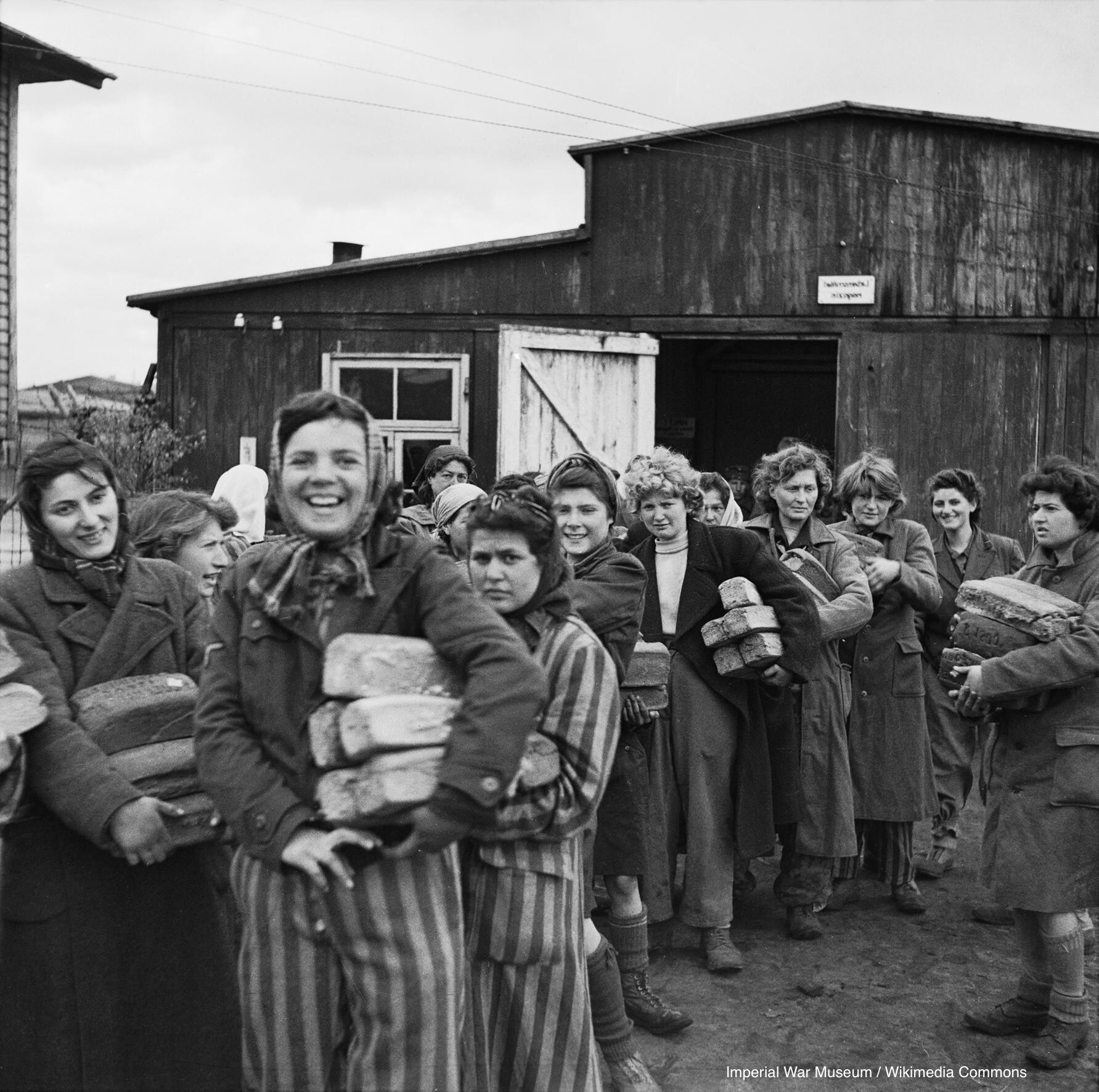
When I awoke from a dreadful nightmare, there were friendly, smiling faces around me telling me it was all over. I was too numb and too confused to make sense of what they were saying. I was liberated on 15 April, but have no memory of it as I lay unconscious. When I regained consciousness, I found four portions of black bread and four tins of Nestlé’s condensed milk beside my bunk. I looked at the bread and burst out crying. I had so longed for, and dreamed of the day when I could just eat and eat, but I was too ill even to taste the food.
The first few days after liberation were joyous and yet sad, confusing and bewildering. I did not know how to cope with freedom after years of painful imprisonment. Looking out of the window, I could see German soldiers being made to clear the mountain of corpses. The inmates had to be restrained from attacking them.”
Esther Brunstein testament to the Aegis Institute 2003. Brunstein was 16 years old when she was held in the camp.
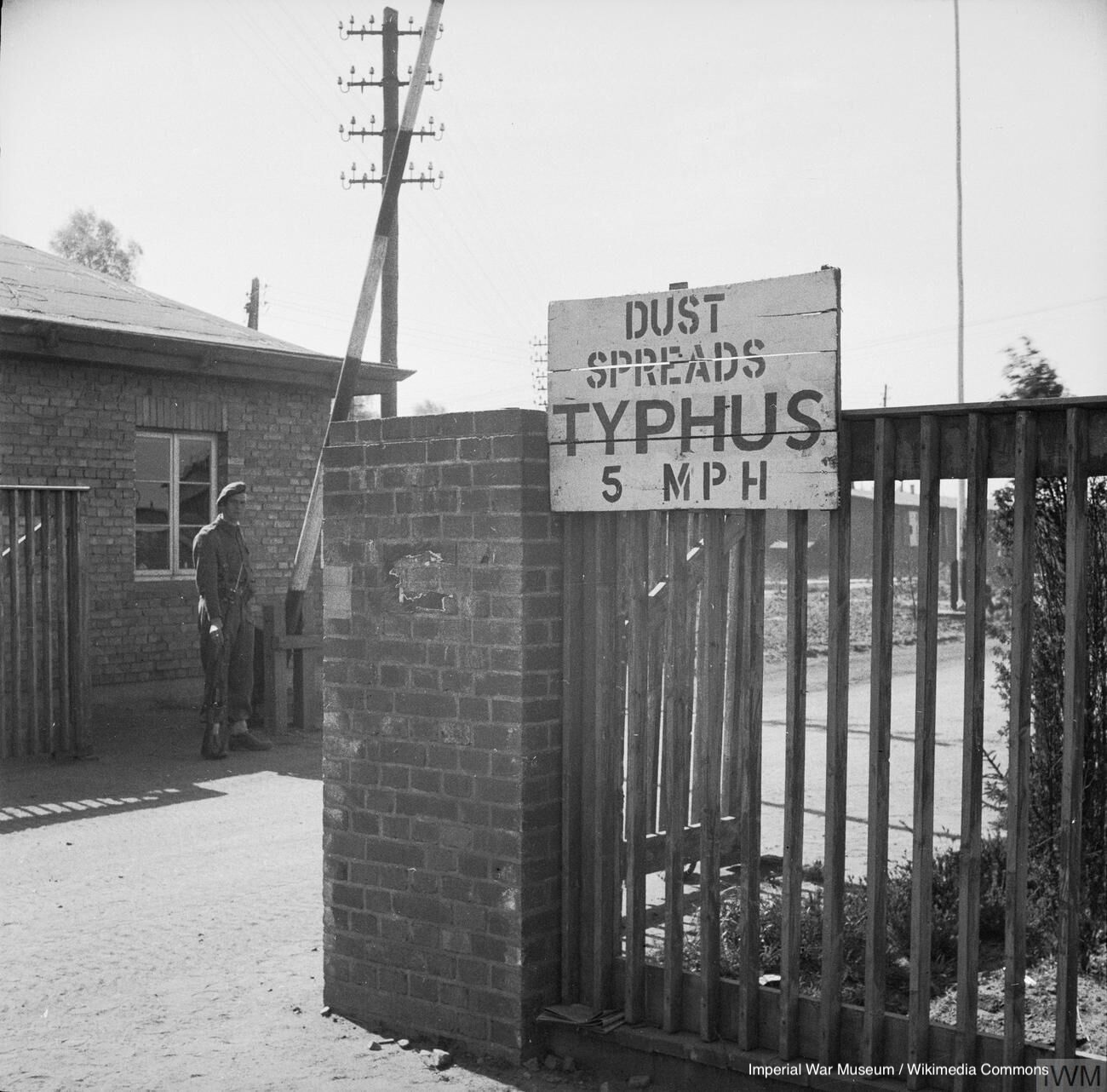
The camp was liberated by the British army on 15 April 1945. The camp held 60,000 most half-starved and dying. 13,000 corpses lay unburied.
Embedded with the British army was the BBC reporter Richard Dimbleby who described what he saw in a broadcast on 15 April 1945 (source: BBC archive)
“…Here over an acre of ground lay dead and dying people. You could not see which was which… The living lay with their heads against the corpses and around them moved the awful, ghostly procession of emaciated, aimless people, with nothing to do and with no hope of life, unable to move out of your way, unable to look at the terrible sights around them … Babies had been born here, tiny wizened things that could not live … A mother, driven mad, screamed at a British sentry to give her milk for her child, and thrust the tiny mite into his arms, then ran off, crying terribly. He opened the bundle and found the baby had been dead for days. This day at Belsen was the most horrible of my life.”
Aftermath
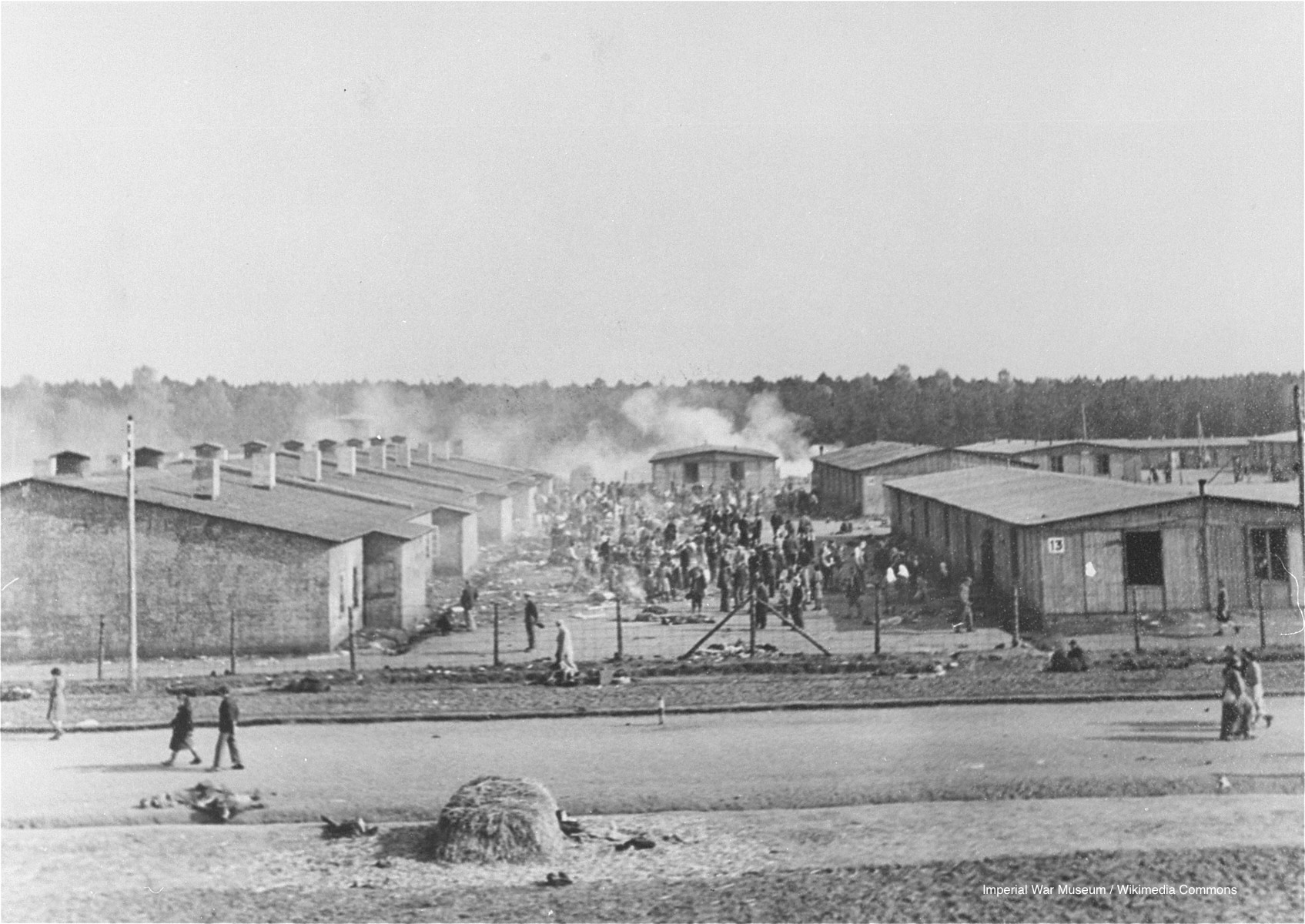
Although the British soldiers tried to care for survivors, about 14,000 people died between April 15 and the end of June 1945.
A displaced persons’ camp was set up in Belsen-Hohne Barracks and the Belsen-Bergen concentration camp was burned to the ground to eradicate the typhus endemic. For more information on the DP camp click here.
Many of the former SS staff were tried by British military courts. Eleven of the defendants were sentenced to death. Fourteen defendants were acquitted and the rest imprisoned.
Memorialisation
Survivors began immediately to build a memorial at the camp, which only gained notoriety after the publication of Anne Frank’s diaries. In October 2007, the redesigned memorial site was opened, including a large new Documentation Centre and permanent exhibition on the edge of the newly redefined camp, whose structure and layout can now be traced. Only since 2009, the memorial has been receiving funding from the Federal government on an ongoing basis.
The Belsen-Hohne barracks is currently used by NATO forces.
 About
About History
 Education
 Quilts
 FIlms
FIlms Photos
 News Media & Events
 Publications
 Donate