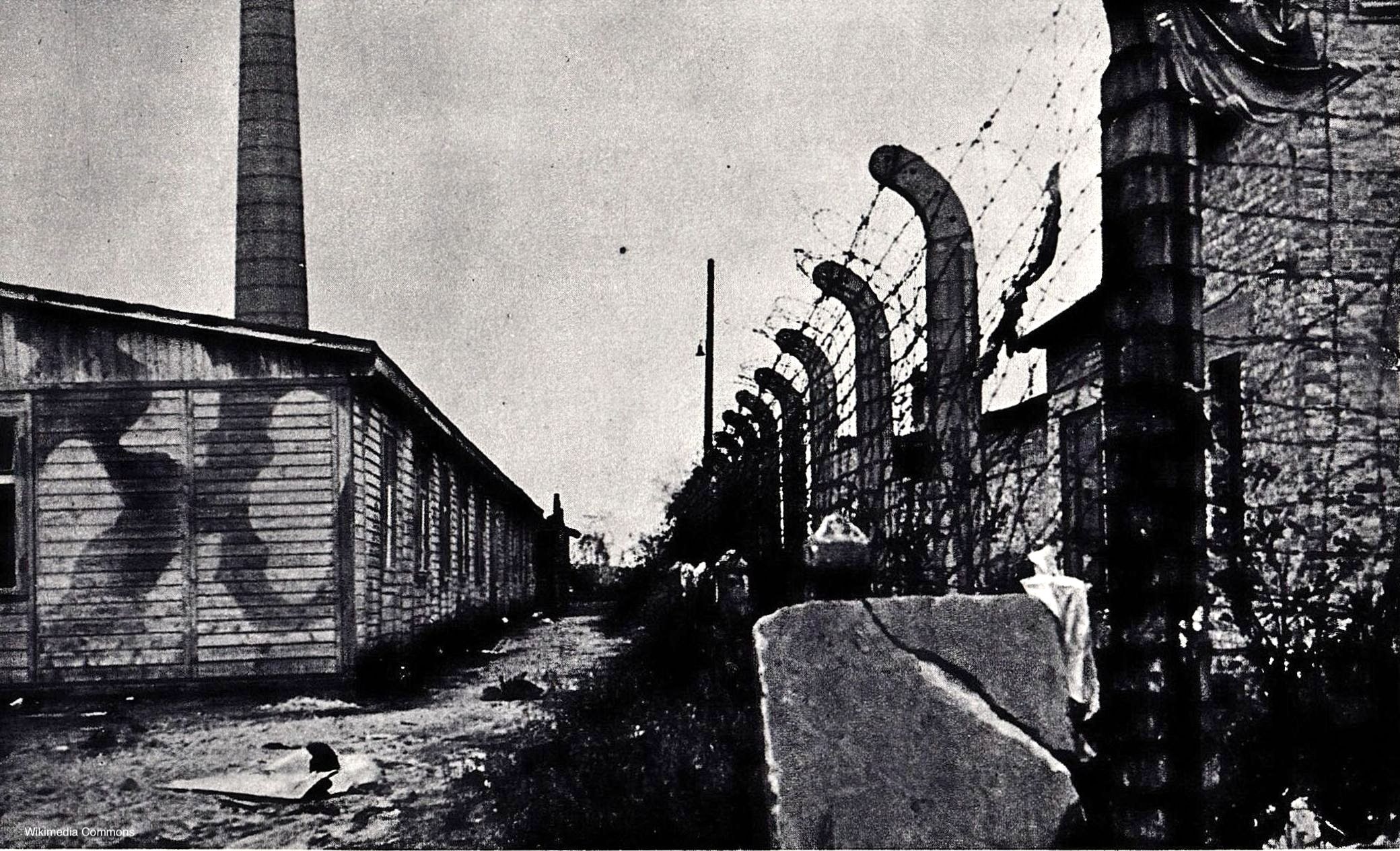
Members of the Boys were slave labourers in the Częstochowa-HASAG labour camp in Częstochowa, Poland.
The Boys were teenage and child-Holocaust survivors, who were brought to the UK after the war for rest and rehabilitation.
In the Third Reich, the German Leipzig based company HASAG, Hugo Schneider AG, became a Nazi arms-manufacturing conglomerate with dozens of factories across German occupied Europe. They used slave labour on a vast scale and tens of thousands of Jews from Poland died producing armaments in HASAG factories.
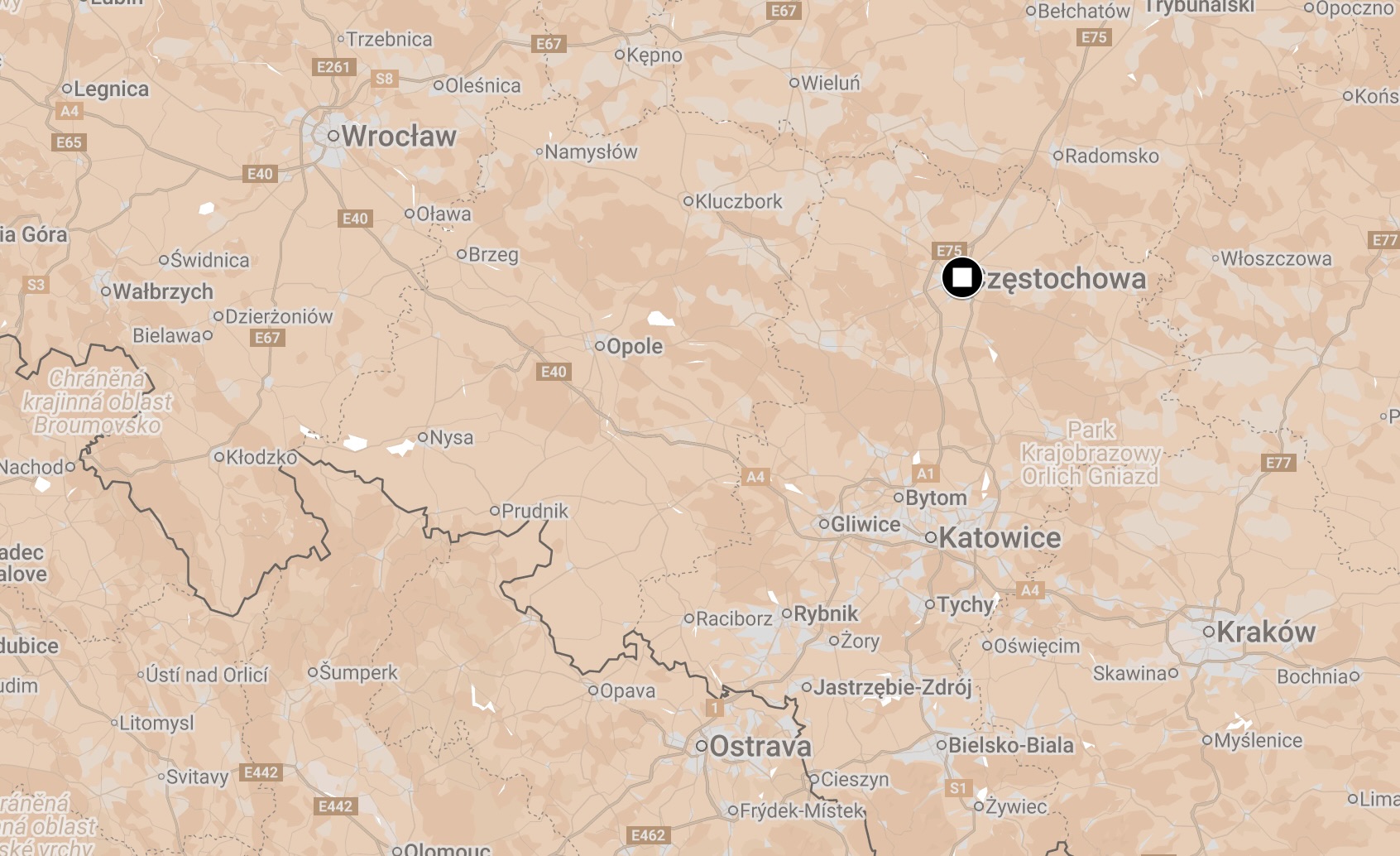
Częstochowa is located about 200km southwest of Warsaw.
History
After the liquidation of the Small Ghetto in the Częstochowa Ghetto the surviving Jews were taken as slave labourers and HASAG set up two factories in Częstochowa:
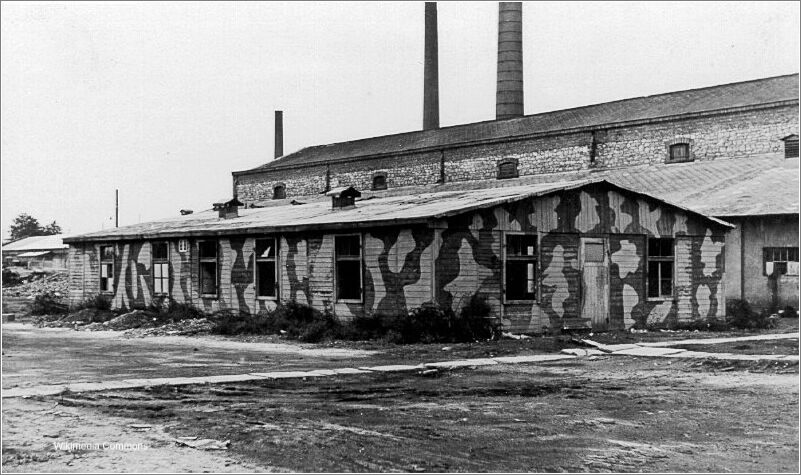
The HASAG-Apparatebau, the Peltzery labour camp was in a former textile factory that had been converted into an armaments factory. The camp held 5,000-7,000 people.
The HASAG-Eizenhuta, the Raków labour camp was located at the steelworks and held between 500-1,000 prisoners.
Prisoners were then moved from Skarsżysko-Kamienna to provide a slave labour force.
Two more factories and camps were set up after Jews were brought from Kraków-Plaszów and the Łódź Ghetto: Czestochowianka and HASAG-Warta. The Warta labour camp was also a converted textile factory and produced armaments. It held 2,000 people. Among the Boys, Perec Zylberberg worked at the Warta factory and Chaim Fuks at Czestchowianka.
Conditions in Częstochowa where better than at both Kraków-Plaszów and Skarsżysko-Kamienna.
“We were woken up early in the day. After being given some kind of a coffee-coloured brew with out daily ration of bread, and now and again some marmalade, we marched off to the nearby factory complex. The work was hard. Very little mechanical help was available. Most of the hauling, carrying of machine parts, and positioning was done with sheer muscle power. We were not overtly mistreated. We were not beaten too often …
Some of the overseers were dyed-in-the-wool anti-Semites. The bulk of the staff was an elderly lot of army exemptees. They were thinking very often about their families in Germany.”
Perec Zylberberg, quoted in Martin Gilbert, The Boys: The Story of 732 Young Concentration Camp Survivors (Wiedenfeld & Nicholson, 1996).
Zylberberg was 19 years old when he was held in the camp.
Dissolution & Liberation
In the first half of January 1945, about half of the Jews imprisoned in the Częstochowa labour camps were deported to concentration camps in the Reich. The HASAG camps were liberated on 17 January 1945.
The total number of Jews in the Częstochowa Large Ghetto, Small Ghetto, and the various forced labor camps has been estimated at around 58,000. Some 50,000 were killed, and more than 5,000 were liberated by the Allied armies. Of these, however, probably only around 1,500 were originally from Częstochowa itself.
Aftermath
After the war, a textile factory operated on the site of the former camp.
In 1949, Dr. Herbert Böttcher was sentenced to death and executed by the Polish authorities. Paul Degenhardt was tried by a West German court in Lüneburg in 1966 and sentenced to life imprisonment.
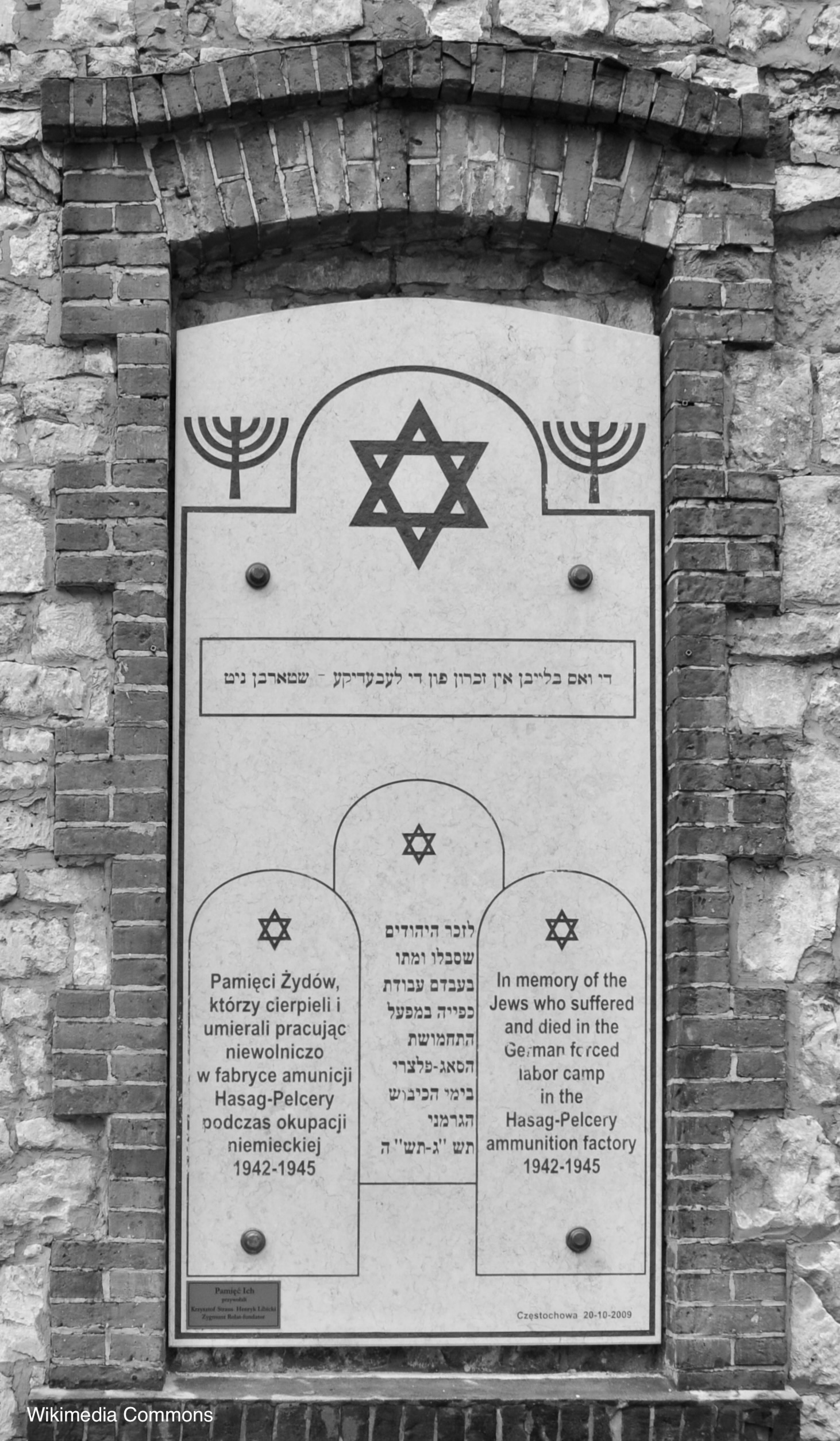
Today, there are several buildings and a plaque commemorating the Jewish workers of the camp.
 About
About History
 Education
 Quilts
 FIlms
FIlms Photos
 News Media & Events
 Publications
 Donate