Members of the Boys were slave labourers in the Malchow labour camp, a subcamp of the Ravensbrück concentration camp.
Ravensbrück concentration camp was operated by Nazi Germany. The camp had 70 subcamps.
The Boys were teenage and child-Holocaust survivors, who were brought to the UK after the war for rest and rehabilitation.
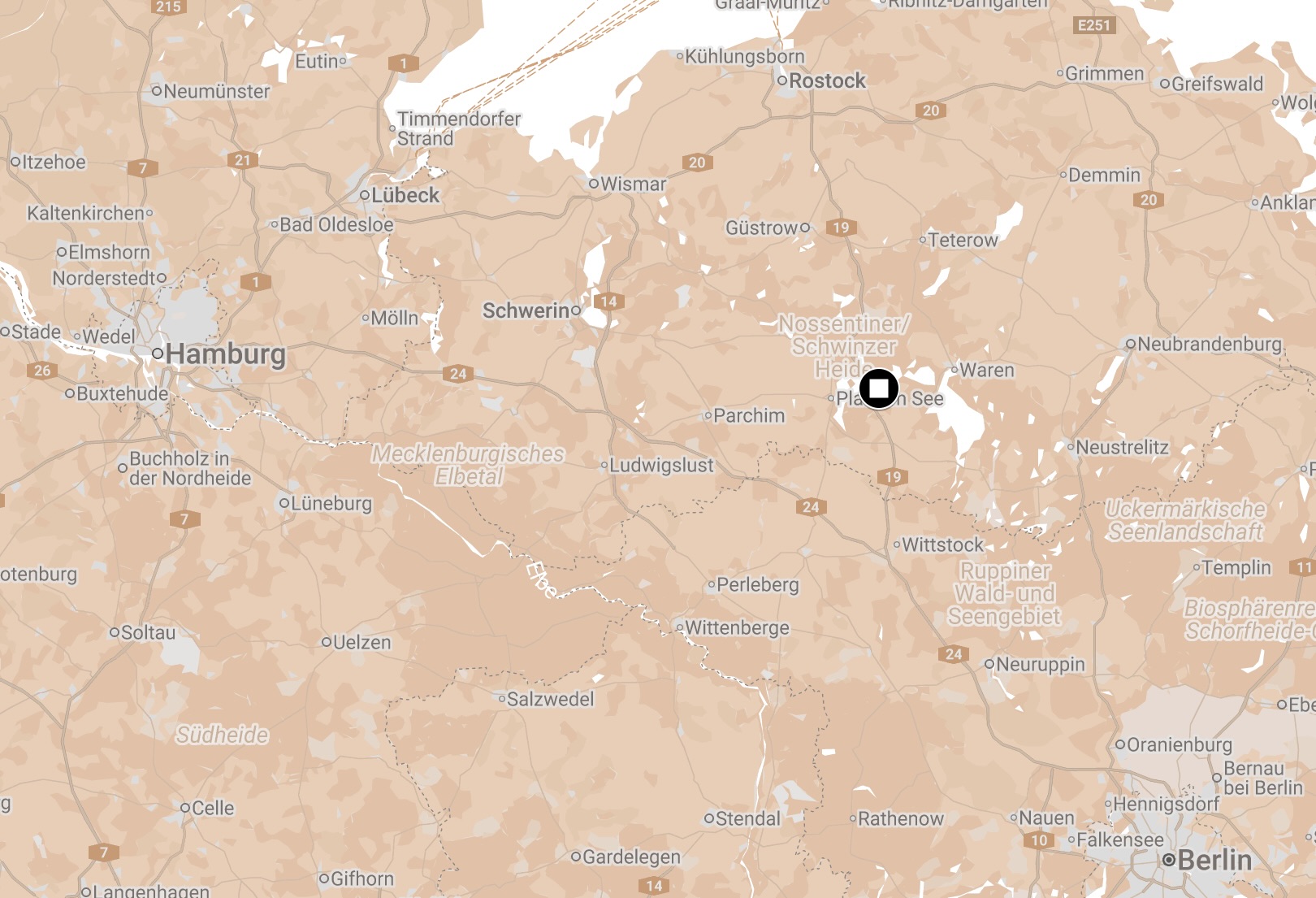
Malchow in Mecklenburg was a women’s concentration camp set up in 1943 to produce armaments.
The ammunition plant Munitions-und Sprengstoffwerk Malchow had been established in 1938. The plant was part of the Dynamit Aktien Gesellschaft vormals Alfred Nobel und Co. The order to build the plant came from the supreme command of the army.
History
During the first months of the camp’s operation about 900 women were imprisoned in the camp. The women who reached Malchow during this time were surprised to find bearable living conditions as the factory was indoors and both warm and clean. They worked 12-hour shifts night and day. The work included weighing the explosive material, filling different moulds with it, then compressing it, and packing the final product.
From February 1945 conditions deteriorated. The 3,000-4,000 Jewish women who arrived Malchow in February 1945 had been taken to Ravensbrück from Auschwitz II-Birkenau. The shortage in raw materials had curtailed production in the plant so that most of the new prisoners were not assigned to work there.
About 1,000 women were put in what some of they referred to as the ‘stable’ where they lay on straw on the floor. The rest were squeezed into the main living quarters which were designed to hold 100 prisoners but now accommodated 500. Disease spread rapidly. The policy was to keep the women who would be put to work alive while those who were not would be starved to death. The shortage of food made Malchow one of the worst camps that the survivors endured.
Structure
The camp consisted of 10 barracks, a wash barrack, a kitchen, and an infirmary. The prisoners were guarded by SS men in the outer circle and by female guards in the inner circle. Wehrmacht soldiers disqualified for the front guarded the women prisoners on their way to and from work. The ammunition plant was divided into four separate areas. The different departments of the plant were scattered in separate bunkers to avoid having to shut down the entire plant in case of an explosion.
Several of the female guards had come from Ravensbrück while others had been transferred from the evacuated camps in the east. Among them was Luise Danz, who was made the head of the female guards Malchow during the last months of the war. She was extremely violent and beat prisoners to death.
During 1944, Malchow served as a transit camp for other prisoners arriving from other concentration camps on death marches. Etelka Noe was one of those who arrived in the camp after the evacuation of Auschwitz in January 1945.
Many Malchow survivors say that a transport of about 1,000 concentration camp prisoners arrived at the camp on 24 November 1944. They had travelled on a death march for several weeks. They were taken from Malchow and sunk on barges in the Baltic Sea.
Dissolution & Liberation
On 2 April 1945 about 2,000 women were put on a transport to Leipzig. The train, which travelled along a heavily bombarded route was expected to be bombed but contrary to expectations, the train arrived in Leipzig, where the prisoners were divided into two groups, one being sent to Taucha, the other to Hugo-Schneider AG (HASAG) Leipzig- Schönefeld.
During the last days of April, Red Cross packages were brought into the Malchow camp but most of them were stolen by the SS. As part of the agreement among Folke Bernadotte, the representative of the Swedish Red Cross, Norbert Masur, representative of the World Jewish Congress in Sweden, and Heinrich Himmler, Red Cross trucks set out for Sweden on 26 April with 300 to 500 prisoners from the camp. At that stage, the remaining prisoners in the camp were given food only every 36 hours.
On 1 May the remaining women, who were still strong enough to walk were led out of the camp, were marched for about four days, during which several of them who were too weak to continue were shot.
The sick and wounded remained in the camp’s infirmary. On 2 May the Red Army liberated the camp.
Aftermath
The Polish court in Kraków sentenced Oberaufseherin Luise Danz to life imprisonment in 1947, but she was released in 1957 and returned home to Germany. In 1996, investigations were reopened into her involvement in the murder of a young Jewish girl in Malchow. The case was closed in 1997.
The barracks were demolished after the end of the war. The factory was initially roughly dismantled and then blown up between 1948 and 1952.

 About
About History
 Education
 Quilts
 FIlms
FIlms Photos
 News Media & Events
 Publications
 Donate