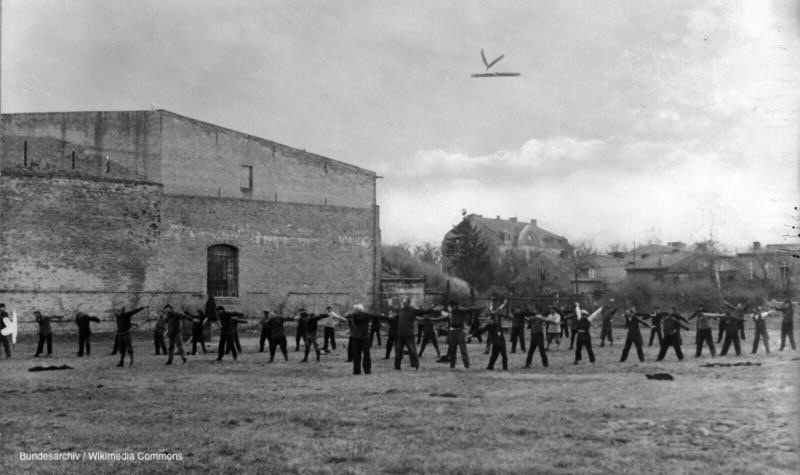
Members of the Boys were slave labourers in the Orianienurg-Heinkelwerke labour camp, a subcamp of the Sachsenhausen concentration camp.
Sachsenhausen concentration camp was operated by Nazi Germany. The camp had 92 subcamps.
The Boys were teenage and child-Holocaust survivors, who were brought to the UK after the war for rest and rehabilitation.
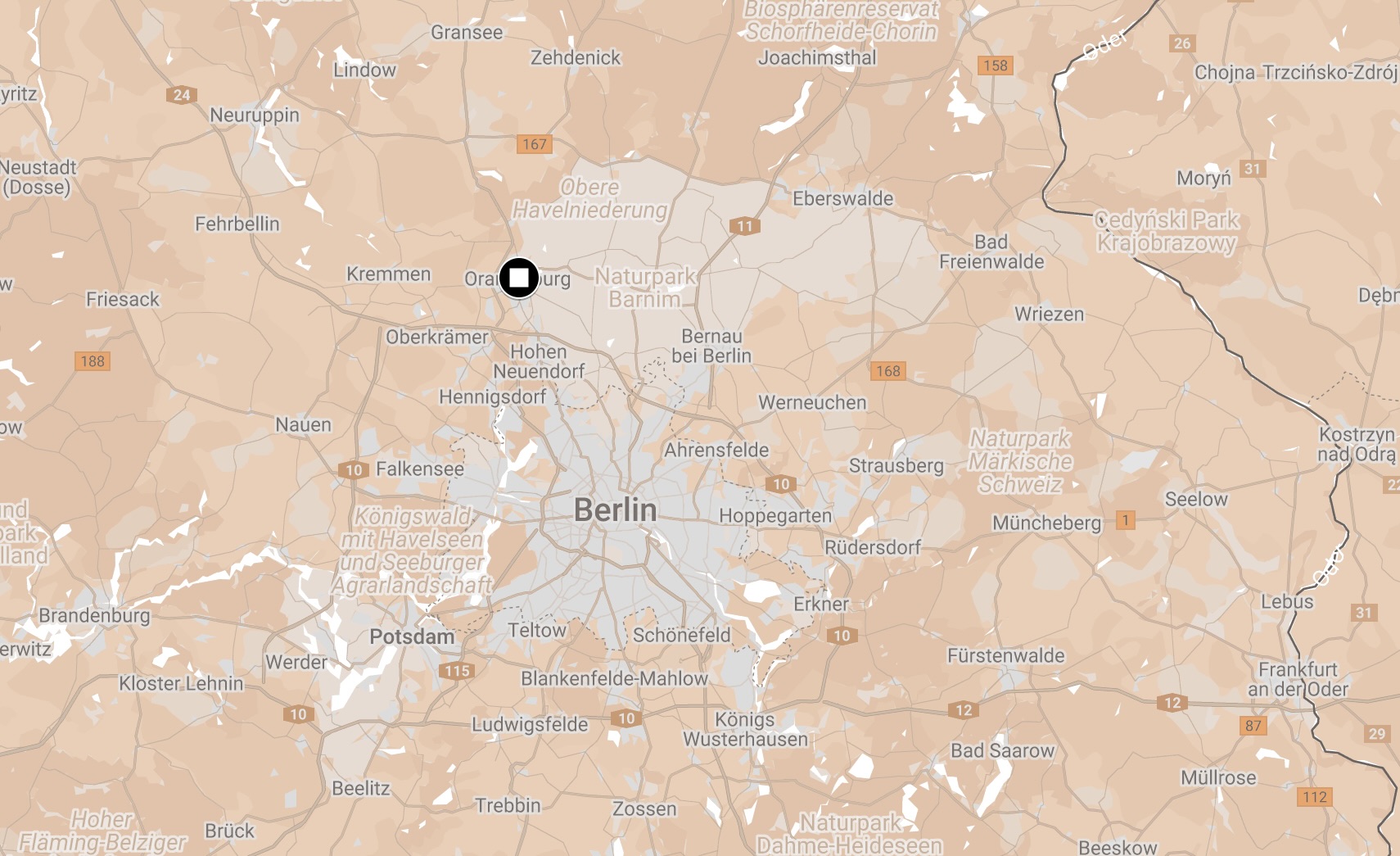
The camp was in Oranienberg 35km north of Berlin
History
The Heinkewerke in Oranienburg was of enormous importance to the German war effort. In the autumn of 1941, Heinkel Oranienburg began the first German aircraft company to work with the SS. The SS sent small groups of prisoners from the Sachsenhausen concentration camp as temporary workers to the factory buildings. Initially, the prisoners were forced to work during the day at the Heinkel factories and returned every evening to the concentration camp.
During the summer of 1942, authorities constructed a prison camp in the grounds of the Heinkel factory Werk I. The prisoners were forced to work in the construction of the Heinkel (He) 177 fighter plane.
The camp held almost 7,000 prisoners in June 1944, making it the largest subcamp of Sachsenhausen.
Dissolution & Liberation
From 1944 onwards, the Heinkel subcamp developed into a reception camp for prisoners evacuated from camps further east. When prisoners arrived there was a selection and many prisoners were shot. It was at this point that members of the Boys arrived in the camp.
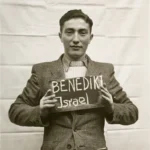
“At night, the train would stop and we were ordered to remove the dead. Occasionally, bread would be thrown in.
Within the first week, the elements caused more deaths than starvation. Soon, there was enough room in the wagon for all of us to sit. It was snowing most of the time. We huddled together, trying to get some heat from each other. The train was also stopping at concentration camps en route. We could hear wagons being uncoupled at the rear and prisoners being marched off.
The wagon I was in was close to the locomotive and we travelled the whole distance to Oranienburg, Sachsenhausen. The Sachsenhausen Concentration Camp was full to overflowing. We were accommodated in the adjacent Heinkel Werke.
After reveille the following morning, we were led to an empty hangar. There I spotted Kazio, my bunk male from Buna Monowitz . We were both happy to meet again and decided to stick together.
Soon, we were ordered to register. Our files got lost in transit, we were told. A queue was formed in front of a trestle-table at which an SS officer presided, helped by two capos. Whilst wailing our turn, Kazio met an acquaintance of his father. He advised us to register as being under sixteen years old. He did not give us a reason. “Just do it’· he said. We did.
It was not long afterwards that we were divided into several groups to be transported to other camps. I was in a group destined to be sent to Flossenbürg Concentration Camp. At this stage I was separated from Kazio.”
The camp was evacuated on 20 April 1945.

 About
About History
 Education
 Quilts
 FIlms
FIlms Photos
 News Media & Events
 Publications
 Donate