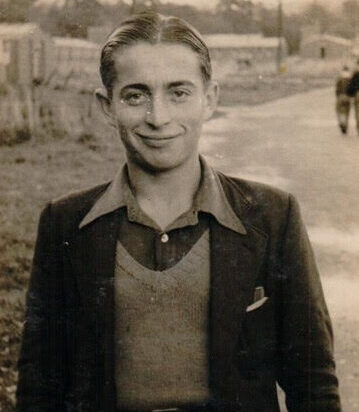
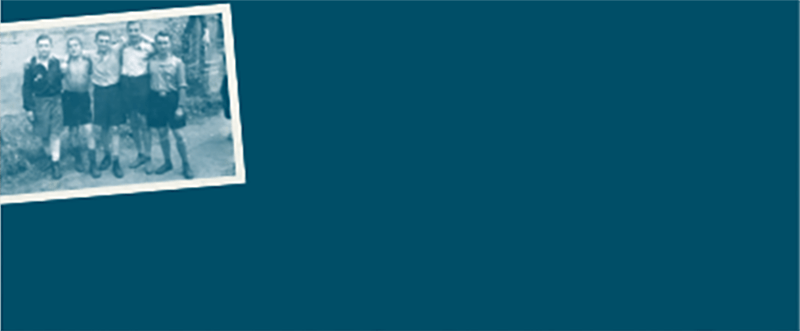
Members of the Boys were slave labourers in the Neu-Dachs-Jaworzno labour camp, a subcamp of the Auschwitz concentration, extermination and labour camp complex.
The Auschwitz complex was operated by Nazi Germany in occupied Poland. The camp had 40 subcamps.
The Boys were teenage and child-Holocaust survivors, who were brought to the UK after the war for rest and rehabilitation.
History
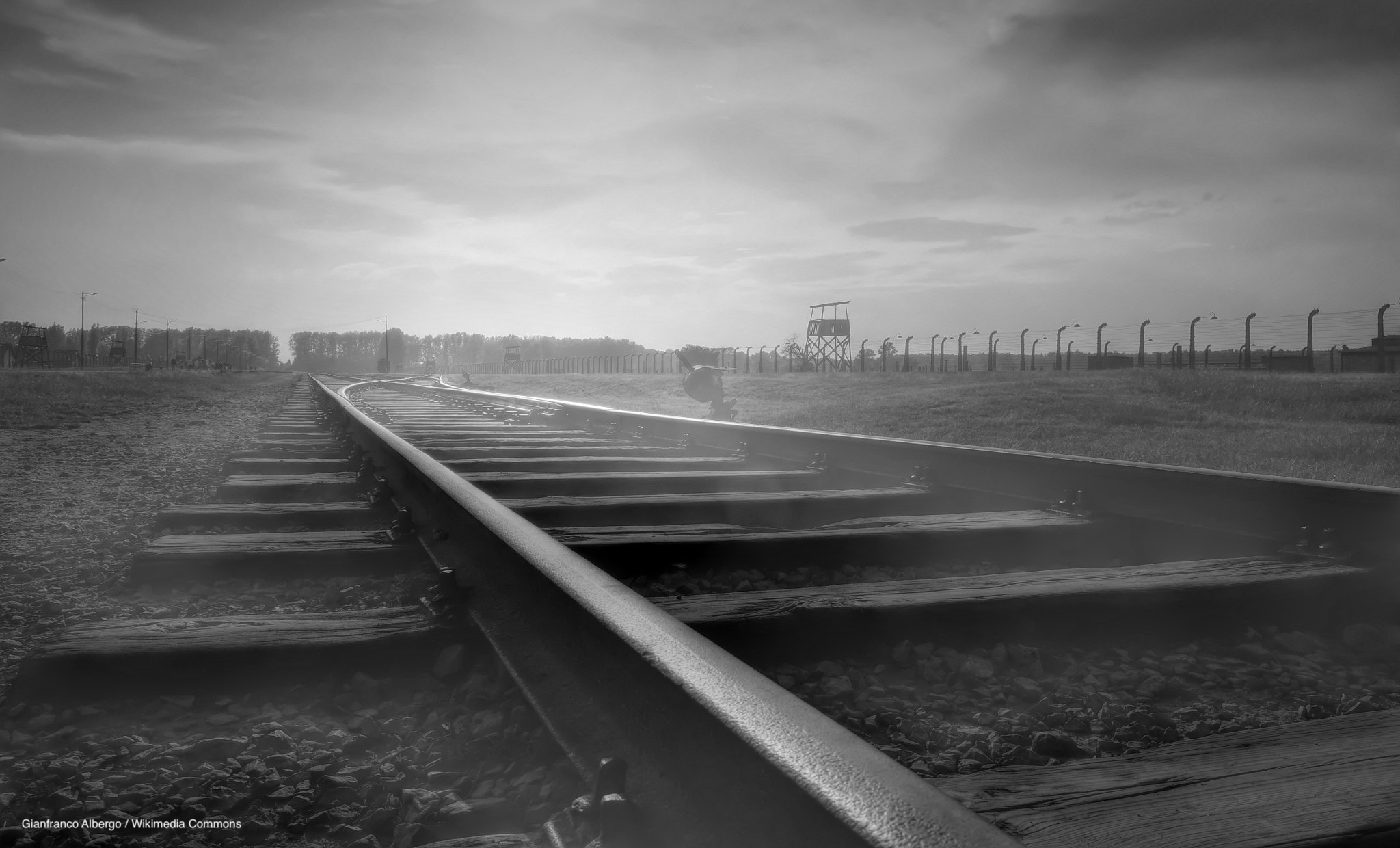
Neu-Dachs-Jaworzno was one of the largest subcamps of Auschwitz and was established in June 1943.
Prisoners were put to work in at the Dachsgrube coal mine on the outskirts of Jaworzno and the ‘Wilhelm’ powerplant run by Albert Speer’s EnergieVersorgung Oberschlesien AG (EVO).
Structure
There were about 5,000 prisoners in the camp at any given time. About 80% were Jews. The camp covered an area of about six hectares and was surrounded by an electric barbed-wire fence. Prisoners were housed in 14 barracks.
Survival rates were low due to the poor conditions and about 2,000 prisoners died in the camp while thousands of others were taken to be gassed in Auschwitz II-Birkenau. The commandant SS-Obersturmführer Bruno Pfütze had 200 to 300 SS men under his control, who were mostly ethnic German Volksdeutsche.
Dissolution & Liberation
The camp was bombed by the Soviet air force on 15 January and evacuated on 17 January. In one of the largest evacuation marches about 3,200 prisoners were marched westwards to the Gross Rosen concentration camp 250km away. Hundreds died including 300 shot on the second night of the march.
Aftermath
After the liberation, the camp was used by the Soviet NKVD from 1945 to 1956. Today the site is an apartment complex and there is a memorial. The powerplant was renamed Jaworzno after the war.
 About
About History
 Education
 Quilts
 FIlms
FIlms Photos
 News Media & Events
 Publications
 Donate