After liberation, members of the Boys spent months living in displaced persons (DP) camps. Many of the Boys had been slave labourers in the Nazi concentration camp system.
DP camps were temporary housing established for displaced persons and former inmates of the Nazi concentration camps. The camps were set up in Germany, Austria and Italy after World War II by the Allied forces.
Members of the Boys were also cared for in children’s homes set up and run by UNRAA, charitable organisations and the surviving Jewish community. The children’s home at Kloster Indersdorf, Germany was one of these.
The Boys were teenage and child-Holocaust survivors, who were brought to the UK after the war for rest and rehabilitation.
Overview
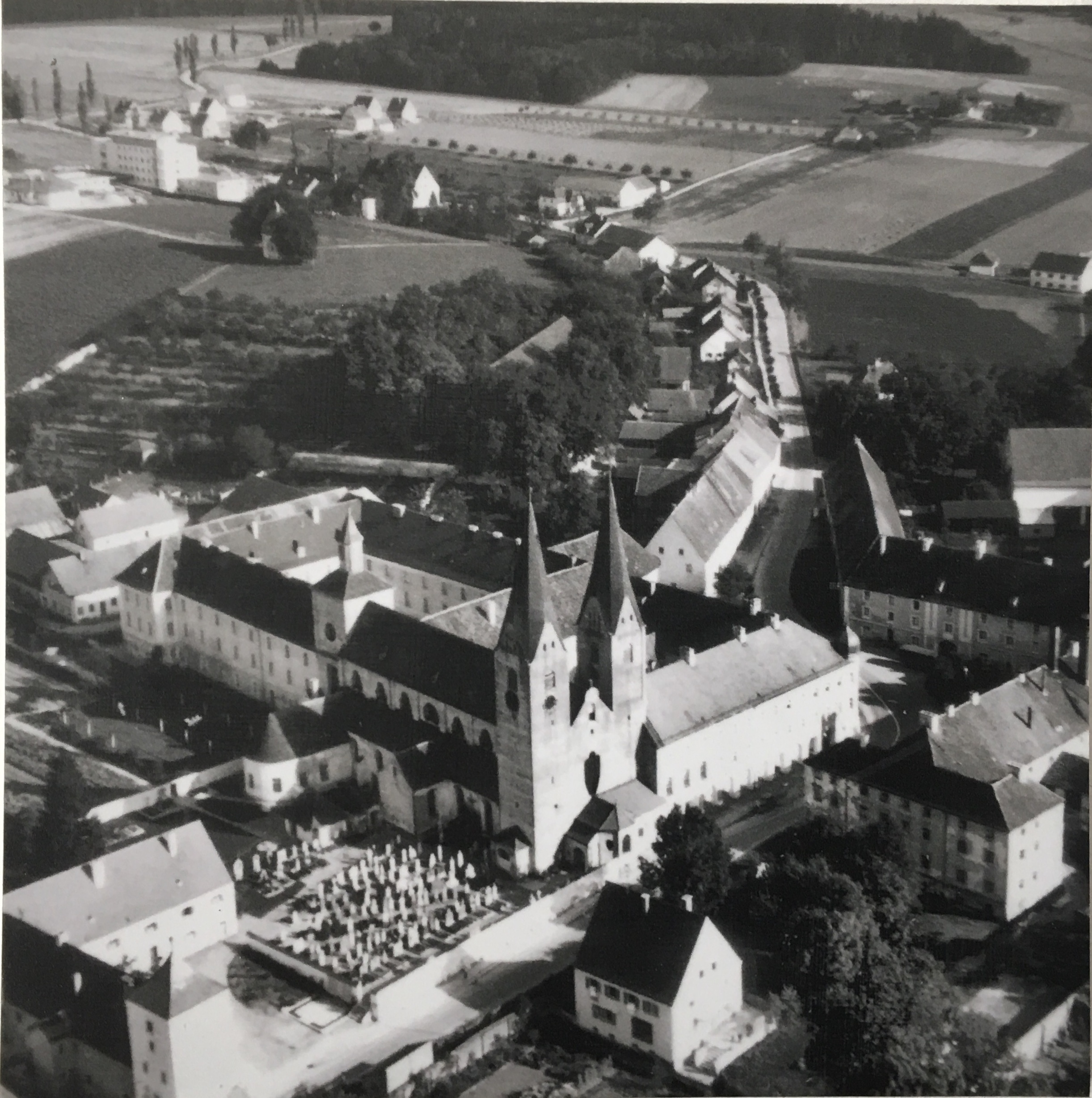
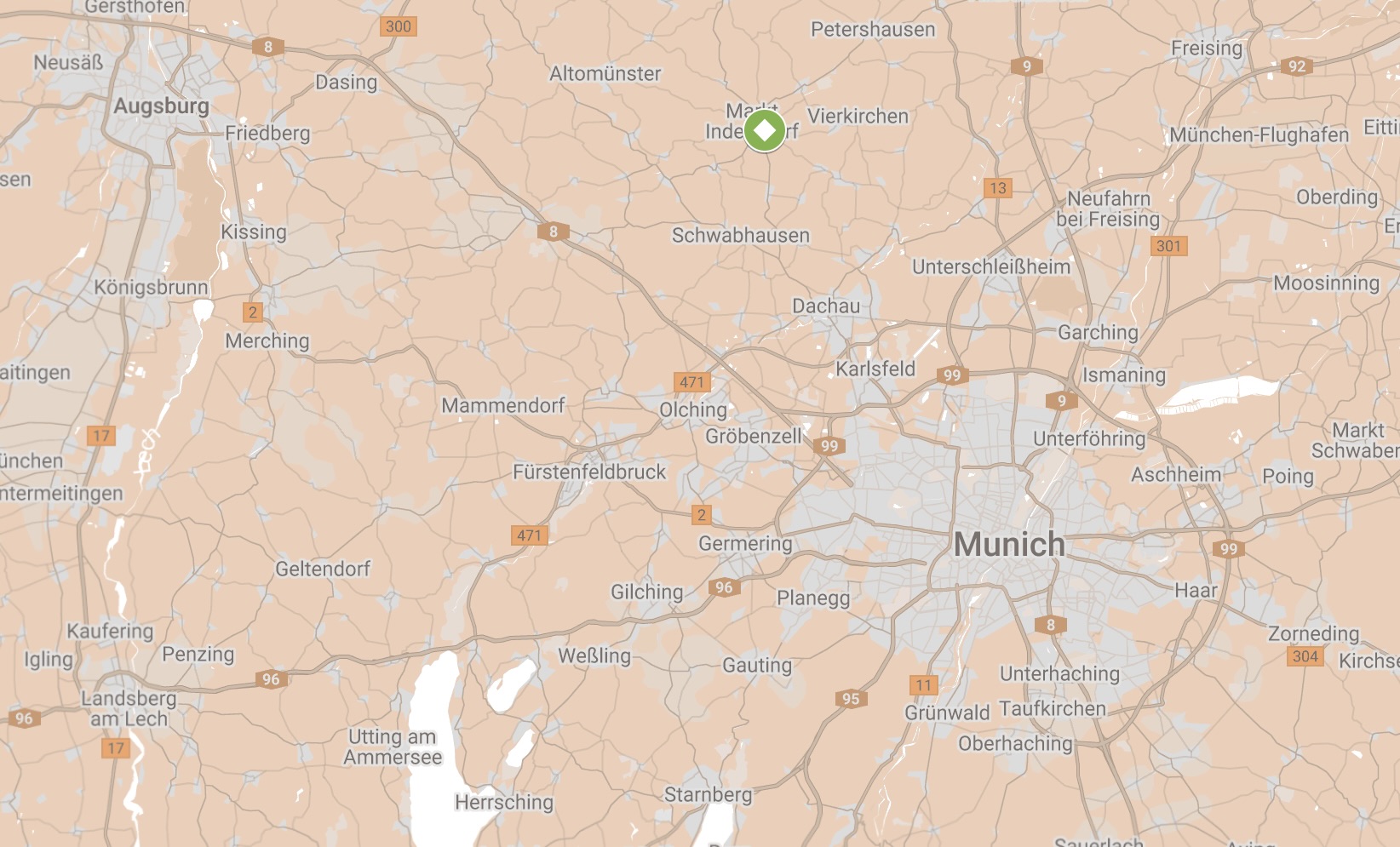
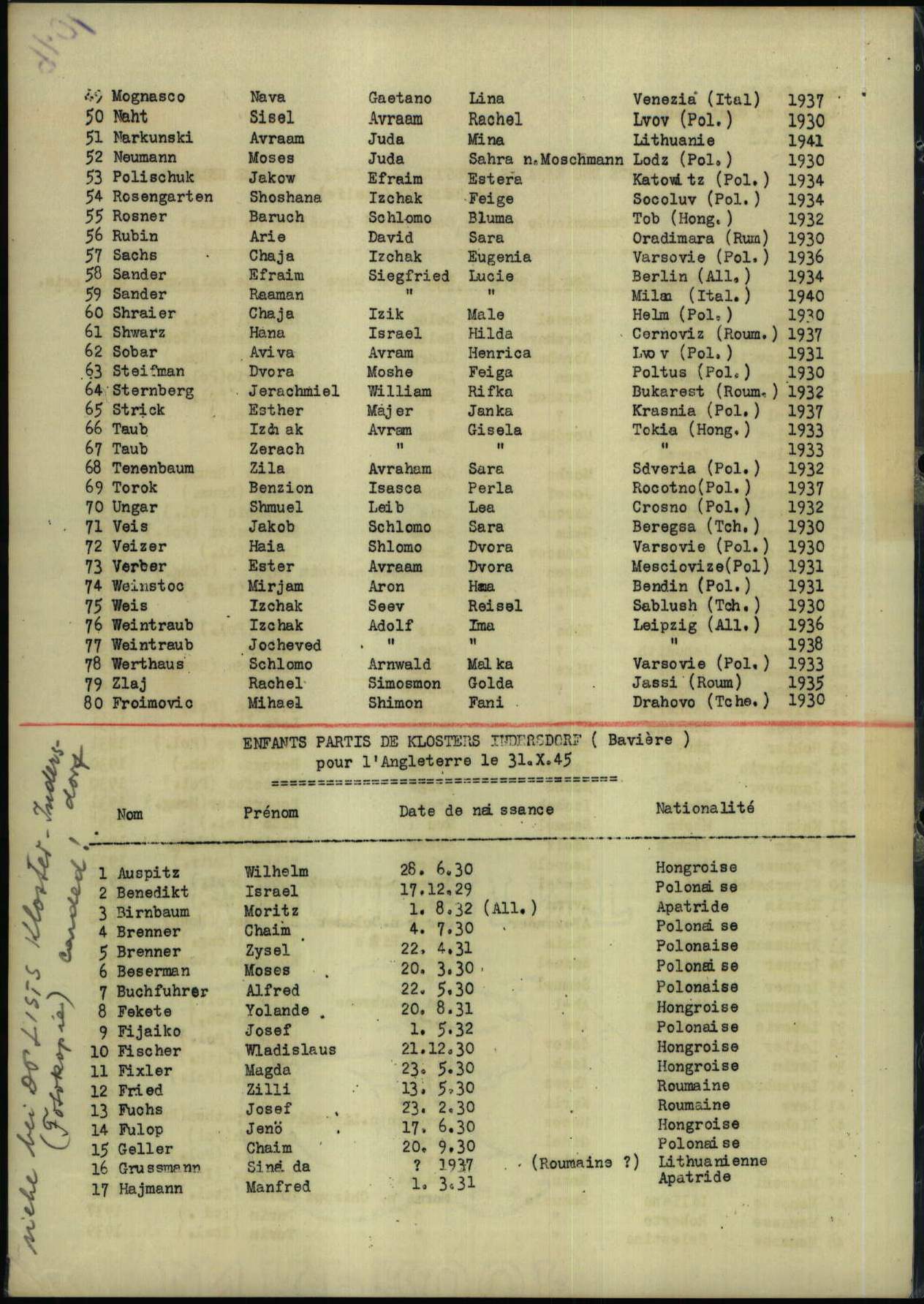
Fifty of the Boys who came to the UK in October 1945 spent the months after the liberation at the children’s home that was set up in a 12th century convent, Kloster Indersdorf, in Markt Indersdorf in southern Germany, 15km north of the former Dachau concentration camp.
The former Augustinian monastery, founded in 1120, cared for both Jewish and non-Jewish orphans and was run by the United Nations Relief and Rehabilitation Administration (UNRRA). It was the first such home set up in the American sector. The home was operated by UNRRA’s Team 182, a specialist child welfare unit led by American social worker Lotte Strauss, with staff including psychologists, teachers, and medical personnel. The team was tasked with providing physical, psychological, and educational rehabilitation.
Team 182
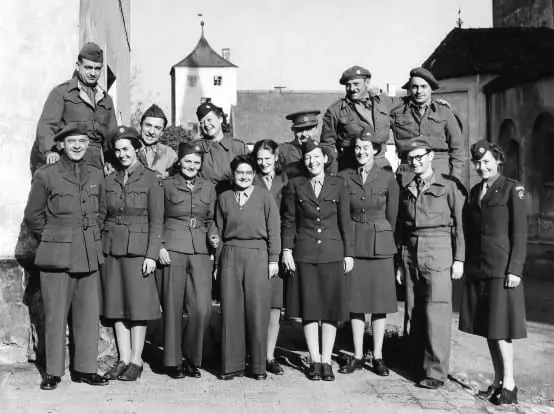
Led by a small group of UNRRA welfare workers, Team 182 provided medical care, schooling, psychological rehabilitation, and help tracing surviving relatives for more than 600 children from more than 20 nationalities, many of whom later travelled to Britain with the second group of the Boys. Staff wore uniforms from their home countries with UNRRA insignia.
Lillian D. Robbins
Lillian D. Robbins was an American welfare officer with UNRRA who led Team 182 at Kloster Indersdorf. Under her direction, the monastery was transformed into a pioneering children’s centre for young survivors. She oversaw every aspect of its operation.
Robbins was known for her compassion and personal dedication. Before each child left the centre to begin a new life abroad, she wrote them a personal letter, encouraging them to stay in touch and reminding them that they were no longer alone. She coordinated closely with the British Army, the American Joint Jewish Distribution Committee, and other Jewish welfare organisations, ensuring that each child received care and support suited to their needs. In 1946, Robbins was succeeded by Jean Margaret Henshaw, a Canadian UNRRA officer. Little is known of Robbins’s later life, but her work at Indersdorf became a model for post-war child rehabilitation across Europe.
Greta Fischer
Greta Fischer, a Czech Jewish social worker and Holocaust survivor, served as deputy director at Kloster Indersdorf. Fischer was instrumental in the psychological and educational recovery of the children. Trained as a kindergarten teacher in London, she had worked with war-traumatised children and was familiar with the early psychoanalytic approaches of Anna Freud — experience that proved vital in Indersdorf. Fluent in German, English, Czech, French, and some Polish, she played a key role in the tracing of relatives and in preparing documentation for the children’s emigration. She helped design the in-house school curriculum and organised group activities aimed at restoring a sense of normality and trust.
Fischer remained in post until 1946, when she continued her humanitarian work with child survivors in Europe. She later emigrated to Israel, where she built the Social Work Department at Jerusalem’s Hadassah Hospital and founded Melabev, an NGO supporting dementia patients and their families.
Lottie Strauss
Lottie Strauss, a German Jewish refugee, worked as a welfare officer and educator within Team 182. She played a vital role in the children’s educational programme and in tracing their surviving relatives. Strauss was particularly involved in helping older children prepare for emigration and integration into new communities. Her fluency in several languages and her understanding of European Jewish life made her an invaluable bridge between the children, the UNRRA administration, and the various welfare agencies assisting at Indersdorf.
Other Team Members
Dr Gaston M. Gérard (Belgium) served as Medical Officer, conducting health screenings and treatment. André Marx, a Jewish survivor from Luxembourg and trained cantor, supervised the school curriculum and Jewish holidays.
The welfare team also included Helen Steiger (Switzerland), Catherine Tillman (USA), Edna Davis (Australia), Anna Marie Dewaal-Malefyt (Netherlands) and Marion E. Hutton (USA). Mary W. Taylor (USA) was the secretary, John Gower and Harry C. Parker (UK) managed supplies and logistical support, catering was overseen by Josef Conrady (Luxembourg) and Gustave de Sile and Lucien Picou (France) were the drivers.
Arrival of the Boys
The Kloster Indersdorf children’s home opened on 7 July 1945, over two months after the liberation of Dachau.
Many of the Boys who spent time at Kloster Indersdorf had been liberated by the US Army on 23 April 1945 on a death march from the Flossenbürg concentration camp to Dachau. Some spent time with the units that liberated them as the soldiers tried to help as best they could. Others had lived in abandoned houses, surviving by stealing and selling both watches and bicycles on the black market.
This group of the Boys only arrived in Markt Indersdorf in late August. They were all given hand-knitted white pullovers which they can be seen wearing in photographs taken later in the UK. The UNRRA team noted that they had a fierce loyalty to each other, and the sweaters symbolised their unity as a group, which coalesced around the leadership of Kurt Klappholz.
Other members of the Boys, like Hans Neumann, who had been liberated in Theresienstadt, made their way separately to Kloster Indersdorf. In Neumann’s case, he had spent some weeks in the Deggendorf DP camp.
Structure
Every new arrival was examined by the medical team, deloused, and inoculated against typhus, smallpox, typhoid and diphtheria. Not all the Boys were keen to have the vaccinations, fearing a Nazi-style plot, and Jacob Hecht had to be held down by his friends.
The months that the Boys spent at Kloster Indersdorf were highly significant in their rehabilitation. The large Baroque hall was used as a dining room and meals were taken in groups at individual tables led by an adult, as the children had to learn even the simplest table manners.
Daily Life
Dormitories provided space for up to 25 young people per room. There was also a gymnasium and a working farm with cows, pigs, horses, hundreds of hens and extensive vegetable and flower gardens.
German was the lingua franca of the home. Schooling was compulsory for children between the age of 5-16 years old but many of the older Boys attended the classes and training sessions. Kurt Klappholz remembered boycotting two of the classes that were taught by antisemitic Polish teachers, who were themselves DPs.
The nuns who had just returned to the convent ran the farm and the laundry, cooked, and looked after for the smallest children. The older children were encouraged to help with the housework and caring for the smaller children. Recreation and sport were also important, and there are photographs of the Boys playing ping-pong and football.
Although some of the Boys rejected their faith, others began to be drawn back to their religious traditions and customs. Manfred Heymann recalled celebrating Sukkot in the garden and fasting on Yom Kippur. The sisters at the convent respected the Jewish holidays and at Rosh Hosannah covered the crucifixes with bed sheets.
Team 182 placed great emphasis on psychosocial recovery. They spent time listening to the children’s stories and not only asked about their wartime experiences but also about their lives before the war—something many of the Boys later said helped restore their sense of self. This was unusual for the time, when it was commonly believed that the best way to overcome trauma was to suppress the memory.
At Kloster Indersdorf the children were encouraged to express their experiences in art and drama and they re-enacted scenes from the camps in a play performed in front of General Eisenhower. Erwin Farkas, who later became a psychologist, said he benefitted from telling his story repeatedly, as it allowed him to distance himself from the trauma.
Returning Home
All the children knew that if their relatives had survived, they would try to make their way back home. Although they were aware of the dangers involved and feared for their safety, Team 182 did not stop the children from going home. Lazar Kleinman went to Prague to see his sister who was ill in hospital but she died just before he arrived.
At first Team 182 thought that the children would be speedily repatriated, but the Boys’ journeys home made it clear that the Jewish children could not or would not return home. Before arriving at Kloster Indersdorf, Moshe Birnbaum had been beaten up by the people living in his former family house in the German city of Fulda, when he had arrived home immediately after the liberation.
The Photographs
In September 1945, a newsreel team led by the director Hanus Burger arrived at Kloster Indersdorf. The footage he shot features some of the Boys.
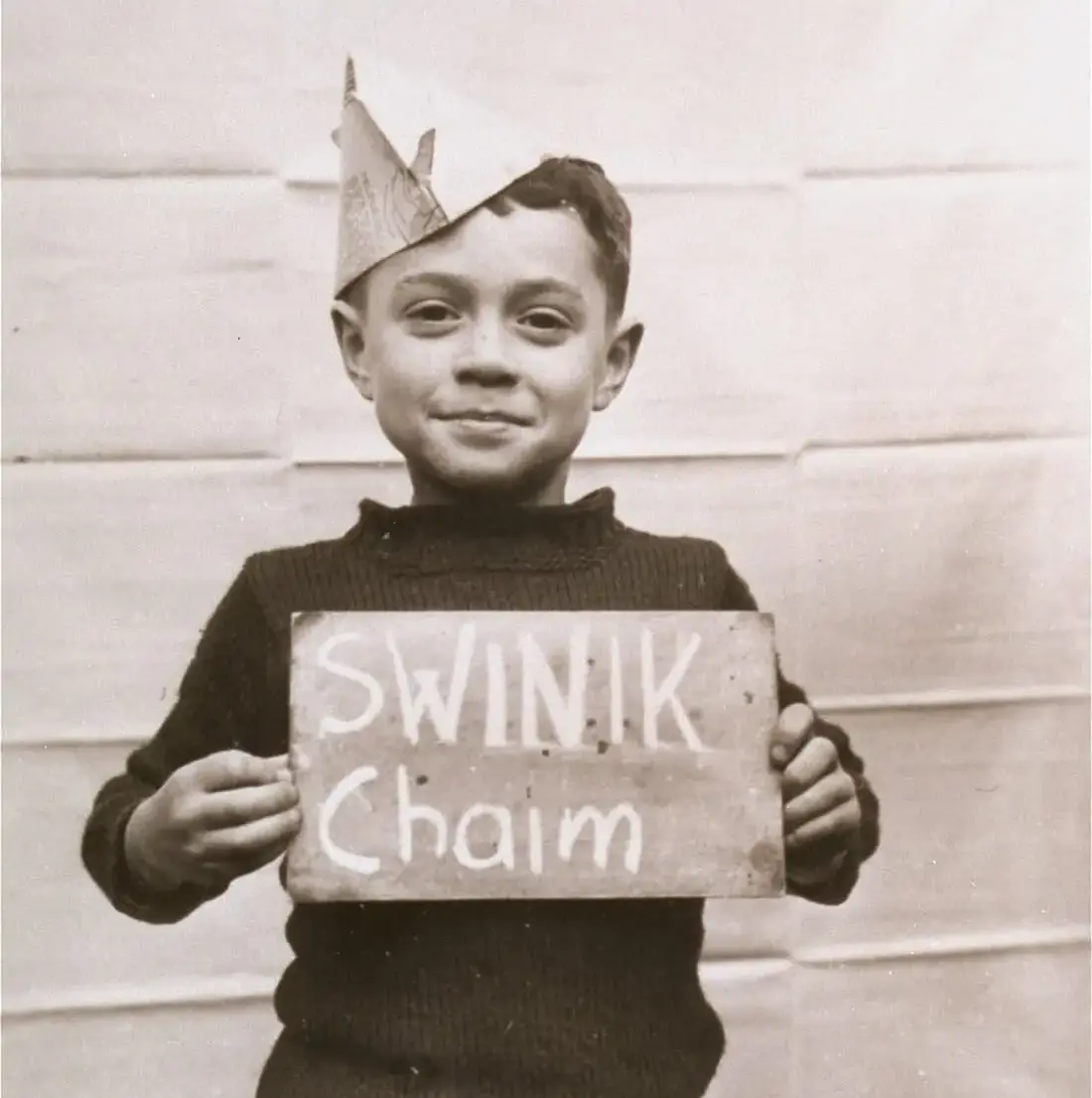
Then in mid-October 1945, photographs were taken of the children that were published in newspapers across the world in the hope that relatives might be found. They were taken by the well-known American photographer Charles Haacker. A bed sheet hung behind the children provided a neutral background and one of the Boys, Salek Benedikt, had the idea of writing each of their names on a piece of wood in chalk so that their names featured clearly in each of their photos. Benedikt would later become a successful graphic artist.
Leaving for the UK
A list of 50 Jewish children who could travel to Britain under the Central British Fund scheme was drawn up, but names were added and removed as relatives were found and children were diagnosed with tuberculosis. The UNRRA staff falsified some of their dates of birth so they could join the transport to the UK. Finally, on 15 October, there was tremendous excitement when the group were given their ID cards. permitting them to travel to the UK.
As they climbed aboard the planes, most of the Boys had bread in their pocket but Martin Hecht had filled his with stones, in the hope he could throw them down on to Germany during the flight.
After the Boys’ Departure
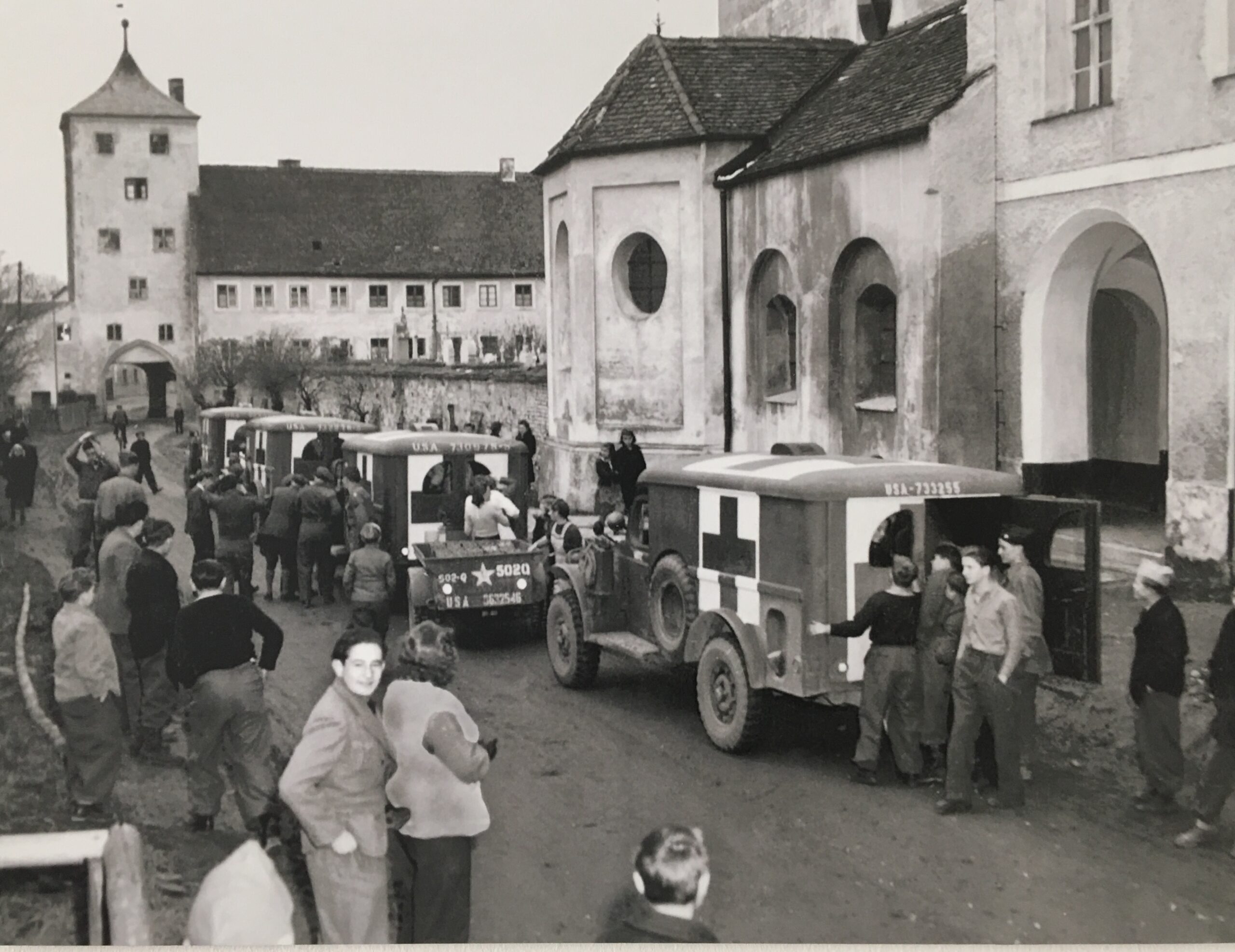
The remaining Jewish children at Indersdorf hoped they would follow in a second transport to Britain, but it never materialised. In the months that followed, they became increasingly demoralised until arrangements were made for them to settle either in Canada, the Palestine Manadate or the United States.
Today, there is a small exhibition in the convent at Kloster Indersdorf that tells the children’s story.

 About
About History
 Education
 Quilts
 FIlms
FIlms Photos
 News Media & Events
 Publications
 Donate