Members of the Boys were imprisoned in a network of ghettos by the Nazis across eastern Europe between 1939-45.
The Boys were teenage and child-Holocaust survivors, who were brought to the UK after the war for rest and rehabilitation.
The Boys and their families spent years living in dire conditions. The ghettos were not designed for the vast numbers of people forced to find space to live within them. As a result, multiple families shared cramped and insanitary accommodation.
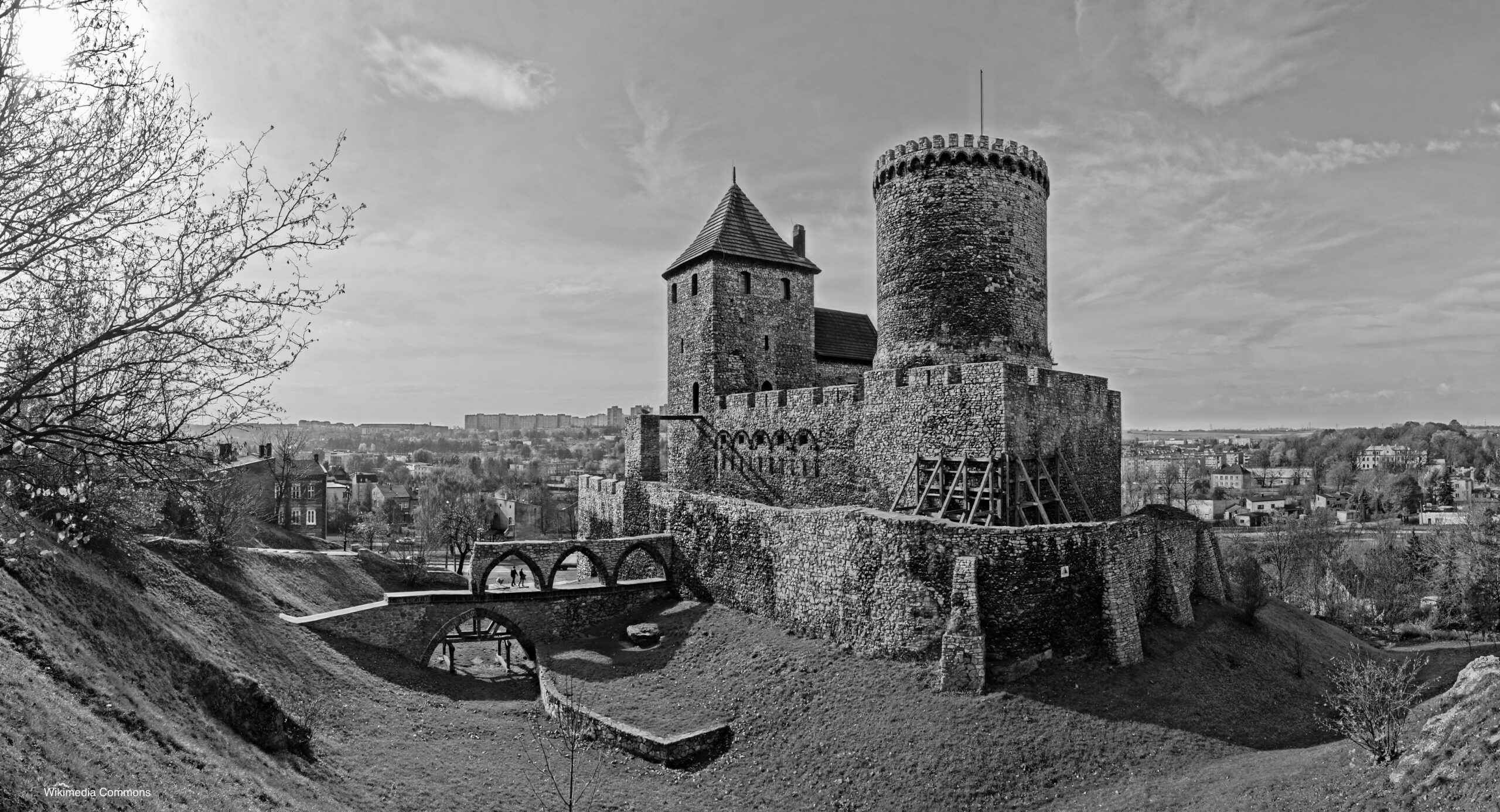
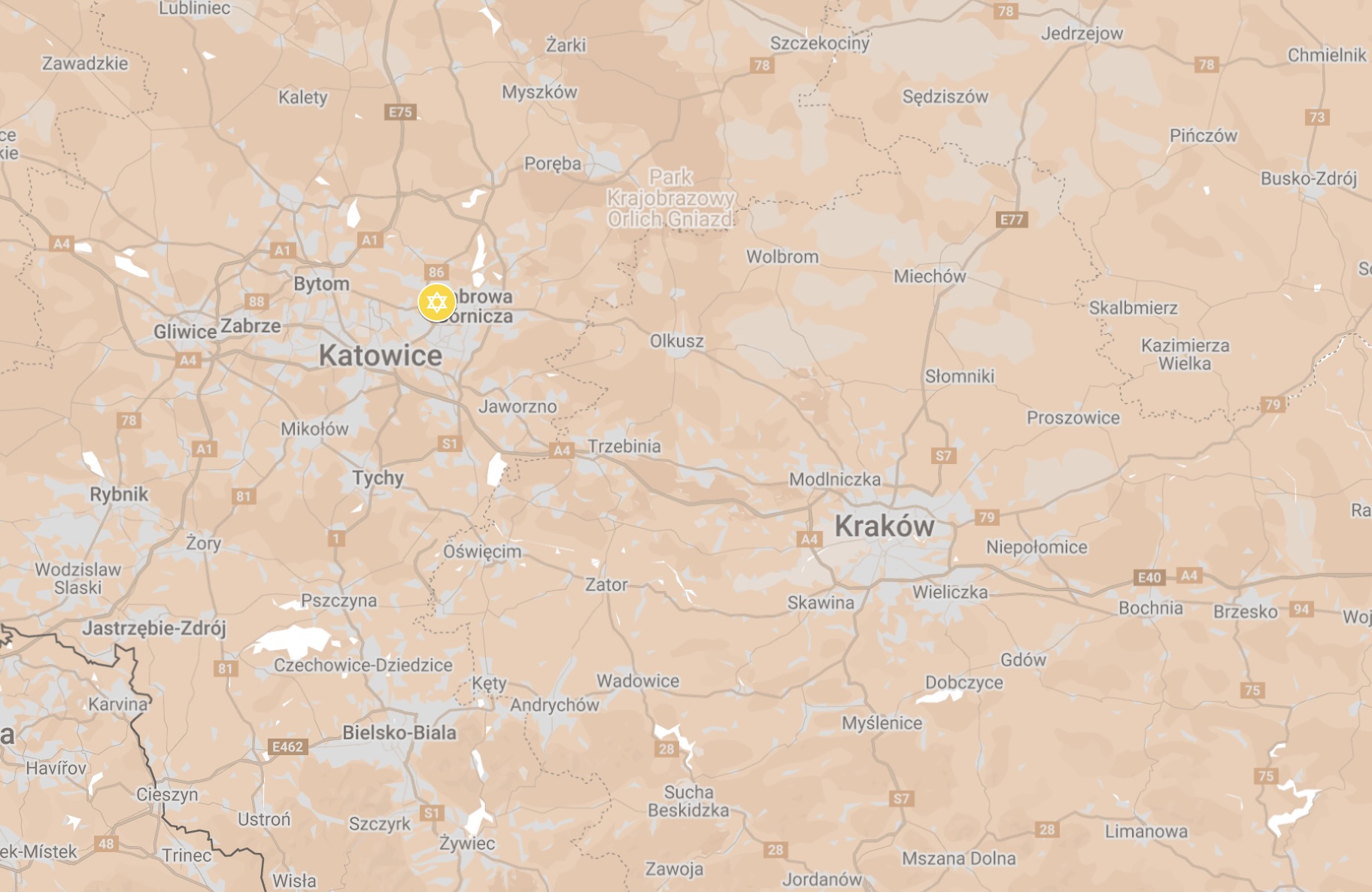
Będzin is 91km northwest of Katowice in southwestern Poland. To find out more about the Boys who grew up there click here.
Overview
After the German occupation in September 1939, the town was known by its German name of Bendsburg. The town was part of Polish territory that was annexed directly to the Third Reich on 8 October 1939.
Jews from the region were forced into the Będzin Ghetto, including those deported from Oświęcim, Auschwitz in German.
About 30,000 Jews were held in the ghetto until the deportations began in the summer of 1942.
Layout
In May 1942, an open ghetto was established. It was not fenced in but guarded by Jewish police. It was made up of the following streets: Modrzejowska, Stary Rynek, and the smaller streets around it, and the beginning of Kollataj, Czeladzka and Podgorna streets. Jews were not allowed to live or walk along Malachowski Street, but some resided in annexes of buildings on that street. As a result, passage had to be dug through the basements so they could exit onto Modrzejow Street.
In mid-March Jews were relocated to Kamionka and Mala Srodula, in October 1942.
Daily Life
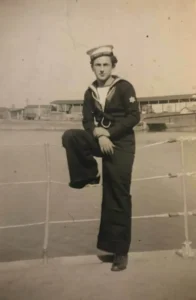
Most men were forced to work in munitions factories, where the work was very dangerous.
The living conditions in the ghetto were extremely harsh, with filthy cramped, overcrowded accommodation with poor sanitation. A Jewish post office was organised in the ghetto. The Judenrat’s construction department built or renovated homes. Several barracks, with plumbing and electricity were constructed for the workers in Rossner’s shop.
Deportations
In May 1942, the Germans began the mass deportation of the Jews in Będzin to Auschwitz II-Birkenau extermination and concentration camp, 45km away, about 2 hours by deportation train.
The largest deportation took place on 12 August 1942, when 23,000 Jewish people were gathered at the city’s two football pitches. After a selection which lasted several days over 5,000 people considered by the Nazis to be unable to work were sent to their deaths. Others were selected to work in the forced labour camps.
Some Jews fled in panic and were shot; others committed suicide. The youth movements smuggled some children away to safety. A local Pole offered to take in the five-year-old brother of Sam Pivnik but his father refused as he thought it was safer to keep the family together.
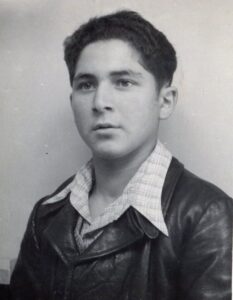
“12 August 1942. It was a sweltering day, the sky over Będzin a cloudless blue. This was the the day of the Aktion, the day the Judenrat had been threatening for months. Every Jew in Będzin and its outlying villages was to report to one of the two football stadiums in the town and we were to bring our papers. Jews had always had to be prepared to show their papers but the war had brought a new urgency to this. Every Jewish male now had ‘Israel’ appended to his name; every female, ‘Sara’. The Pivniks made their way to Hakoah, the stadium on the edge of town. I’d often been there before, cheering on the local teams on the terraces, hoping to catch a sight of my schoolboy heroes, like Nunberg, the best goalie in Poland. But the day of the action was different.
There must have been 20,000 of us crammed into that football field, most people sitting in their family clusters, talking in muttered asides, anxious, apprehensive … We were told a selection was to be made – the first time I had come across the idea. We were all to be divided into three groups …
If ever we believed in omens – and the Jews are prone to it – what happened next made the hairs on the back of my neck crawl. There was a rumble of thunder directly overhead and the sky crackled with lightening. In minutes, day had turned to night and the sky was black as pitch. The rain stung down on us.”
Sam Pivnik Survivor: Auschwitz, the Death March, and My fight for Freedom (St Martin’s Press, 2012).
Pivnik, his brother and his parents survived the selection but it was the last he saw of his 84 year old grandmother, Ruchla-Lee. Pivnik was 16 years old.
A further 5,000 Jews were sent to Auschwitz II-Birkenau between August 1942 and summer 1943.
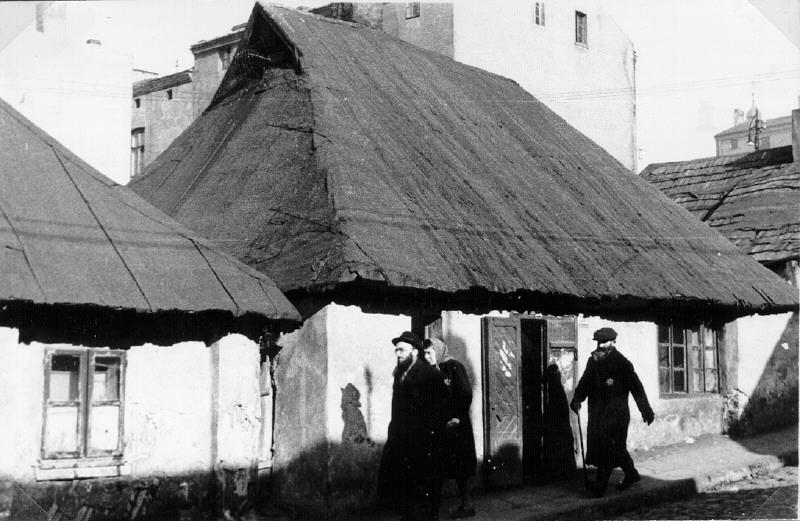
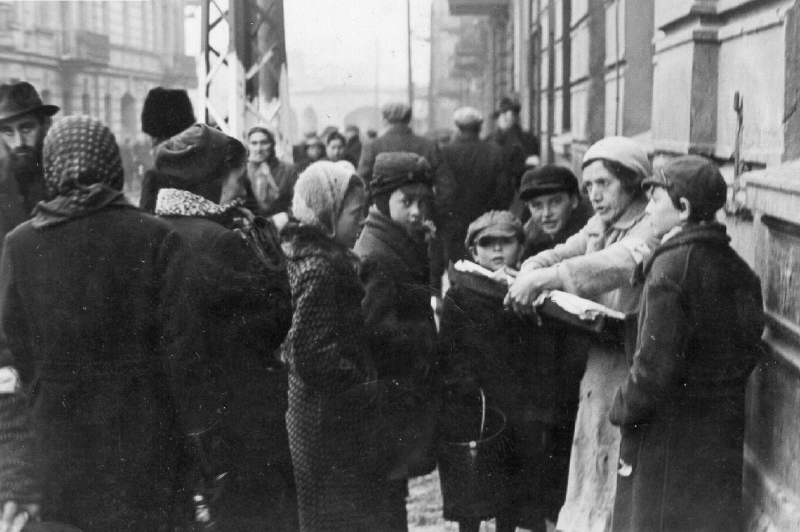
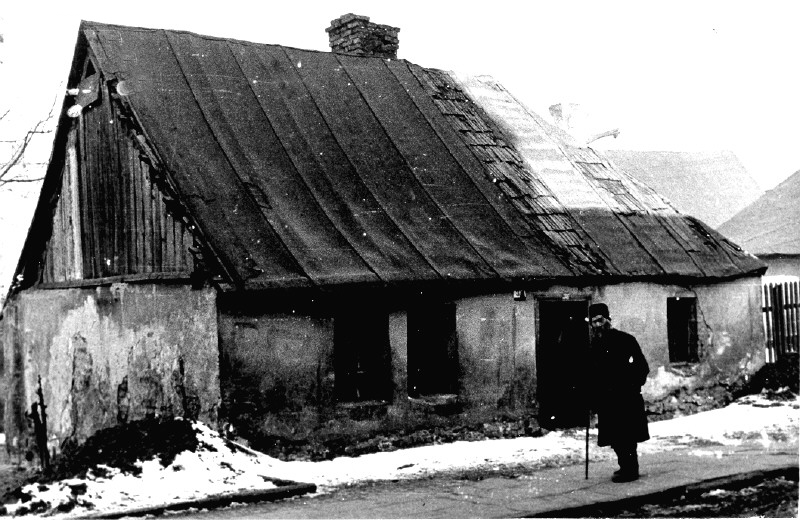
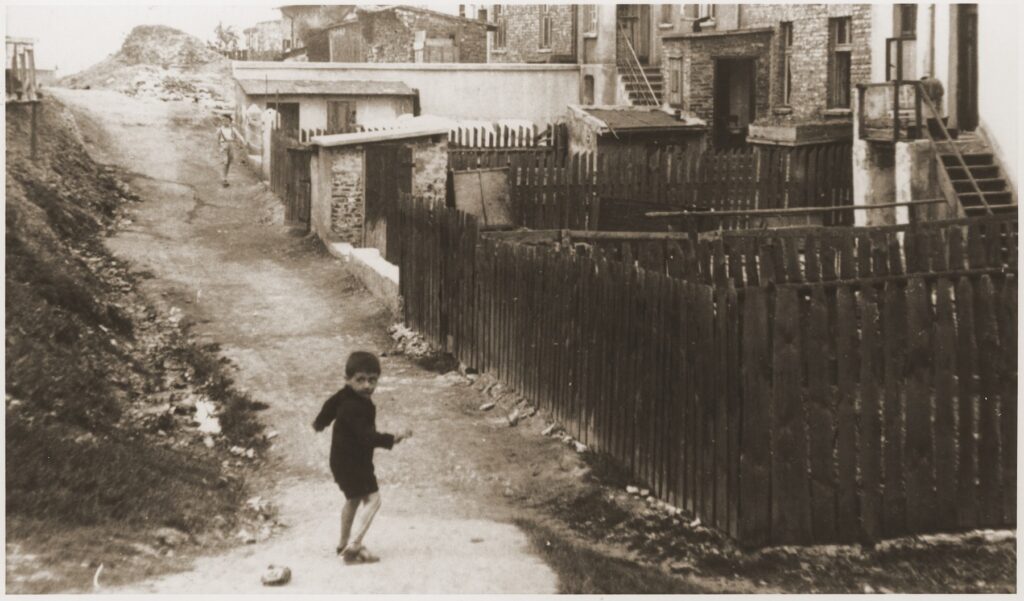
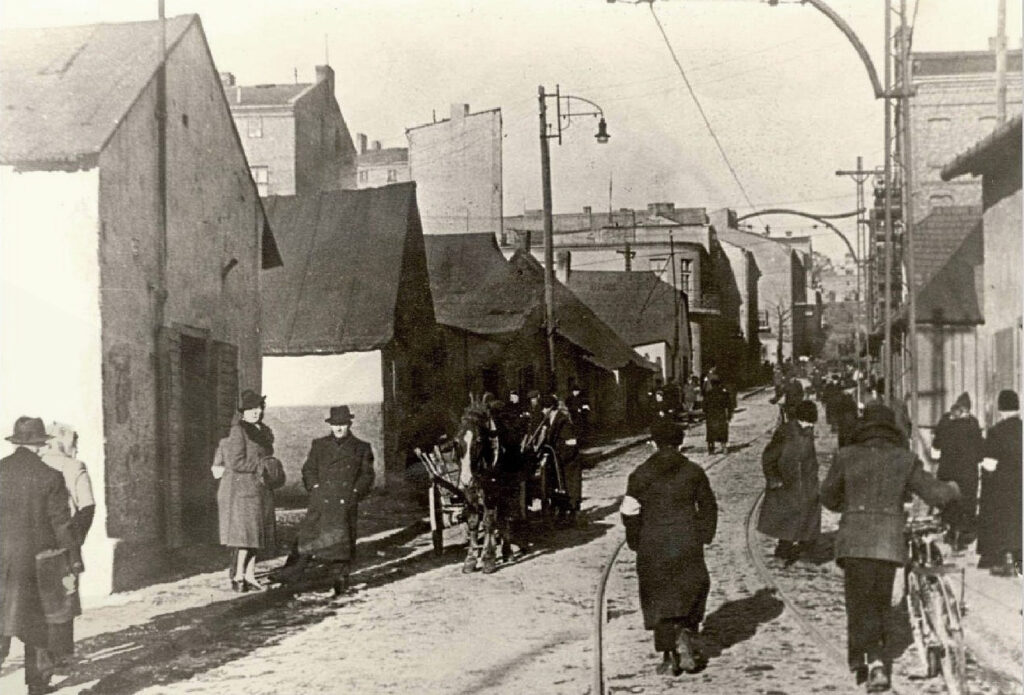
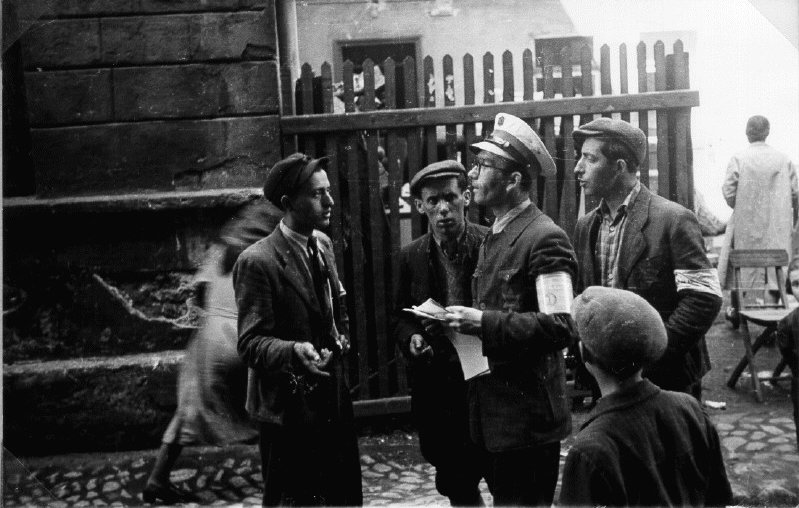
Nazi propaganda photographs taken in the Będzin Ghetto
Liquidation
The ghetto was liquidated on 1 August 1943. Over a period of four days in several transports a day 12,000 Jewish men, women and children were deported to Auschwitz II-Birkenau, among them the Pivnik family.
Jewish Resistance
Ha-Noar Ha-Zioni, a Zionist organisation, remained active in the ghetto who formed a Jewish resistance with the Ha-Shomer Ha-Zair and Gordonia youth movements.
On 1 August during the liquidation of the ghetto the Jewish resistance staged an armed resistance broke out led by the the Jewish Fighting Organisation, ŻOB, which had been founded in the autumn of 1942. The uprising lasted only a few days, and its leaders were shot by the Germans after they ran out of ammunition.
Weapons were obtained from the Jewish underground in Warsaw. Pistols and hand-grenades were smuggled into the ghetto and Molotov cocktails prepared. The Judenrat was originally opposed to armed resistance but after the ghetto liquidation began they dropped their opposition.
Aftermath
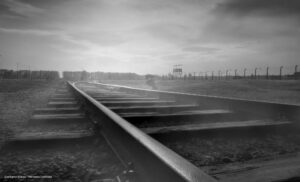
About 600 Jews remained in the ghetto as slave labourers. They were all eventually sent to Auschwitz II-Birkenau.
After World War II several German officials responsible for the deportations from Będzin were prosecuted. Friedrich Karl Kuczynski was sentenced to death in Sosnowiec on September 23, 1948.
A number of non-Jewish residents of Będzin tried to help the Jews and save them from being murdered by the Nazis. They have been recognised at Righteous Among Nations by the Israeli Holocaust memorial, Yad Vashem.
Memorialisation
In 1986 a collection of 2,000 photographs of the Będzin ghetto were found and are curated online by the Eyes from the Ashes Foundation. In 2004, a square in Będzin was renamed in honour of the Jewish Ghetto Uprising and in 2005 a new memorial was unveiled at the site of the ghetto. To find out more about visiting Będzin click here.
 About
About History
 Education
 Quilts
 FIlms
FIlms Photos
 News Media & Events
 Publications
 Donate