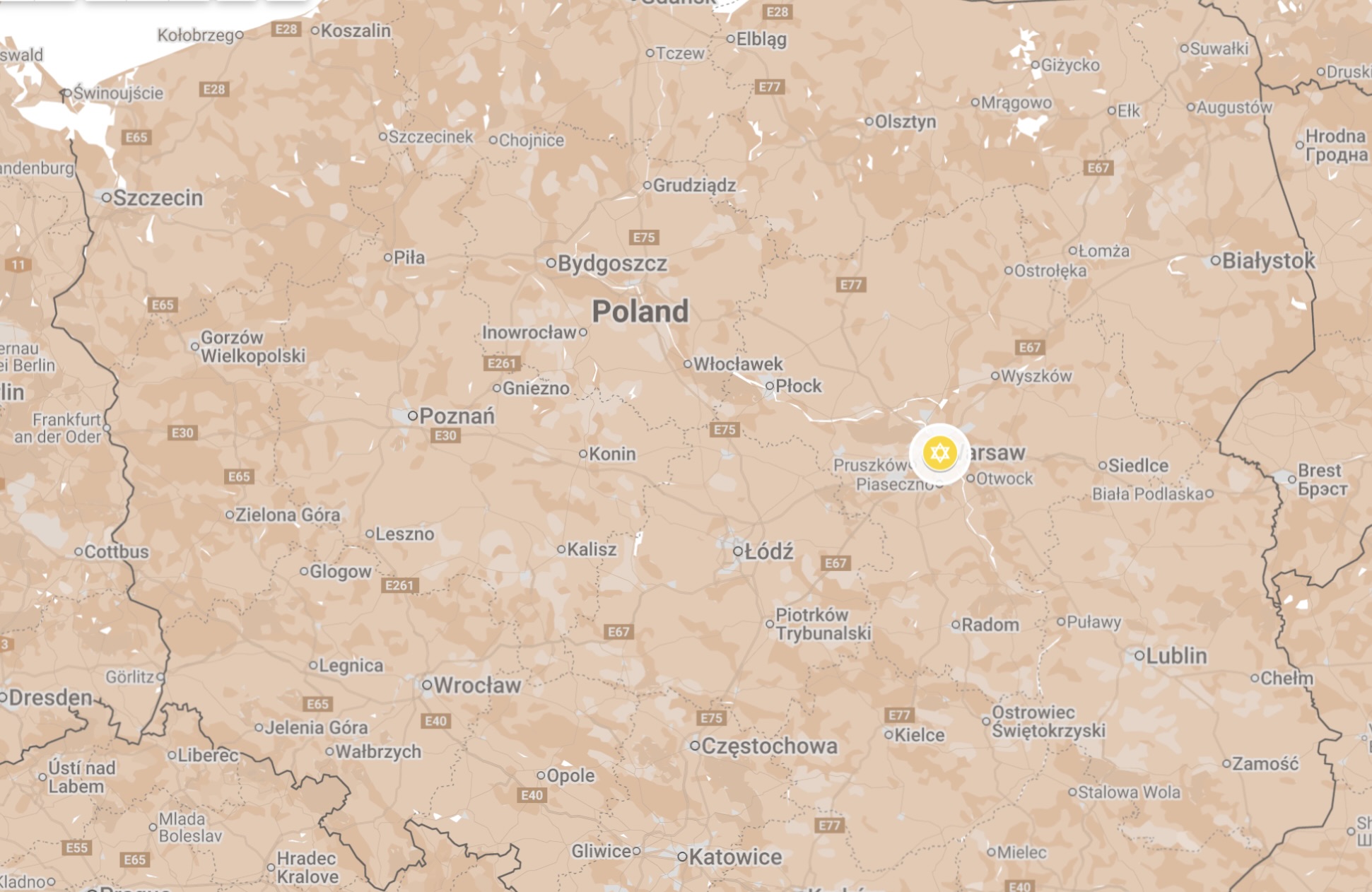
Members of the Boys were imprisoned in the Warsaw Ghetto.
The Warsaw Ghetto was one of a network of ghettos set up by Nazi Germany in which Jews were forced to live in occupied Poland. As with other ghettos in Czechoslovakia, Latvia, Lithuania and Poland, the Warsaw Ghetto was established to contain the region’s Jews and isolate them from the rest of the population until the Nazi leadership could decide on an answer to the so-called “Jewish Question.”
The Boys and their families spent years living in dire conditions. The ghettos were not designed for the vast numbers of people forced to find space to live within them. As a result, multiple families shared cramped and insanitary accommodation.
The Boys were teenage and child-Holocaust survivors, who were brought to the UK after the war for rest and rehabilitation.
Overview
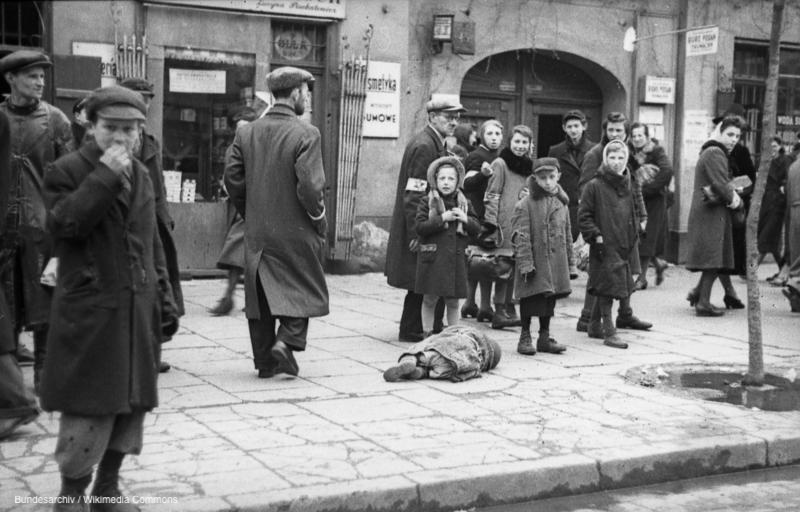
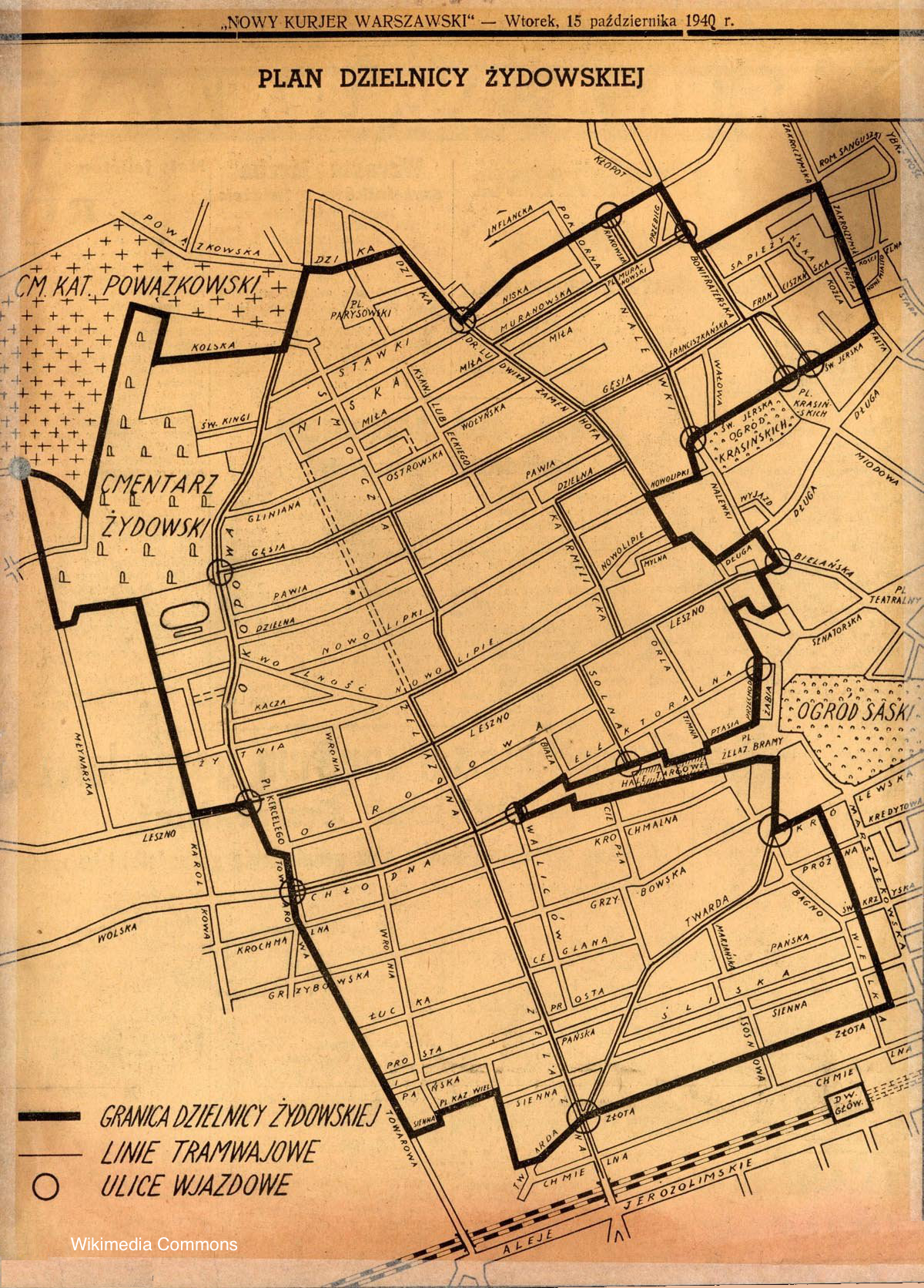
In the autumn of 1940, some 113,000 Poles were moved out of the area designated as the Jewish ghetto in the north of the city. The ghetto was sealed on 16 November 1940, and by March 1941 some 445,000 Jews from the city and surrounding area were imprisoned inside its 3m-high walls that the inmates were forced to build themselves. The Nazis intention was to isolate the Jewish population from the rest of the city.
To find out more about Warsaw and the Boys who grew up there click here.
Layout
The heart of the Warsaw Ghetto was the Murańow district, 1km east of Warsaw’s Old Town. The ghetto was divided in two sections: the Great Ghetto to the north of the busy Chłodna street (excluded from the ghetto) and the Small Ghetto to the south, where the richer inmates, intelligentsia and members of the Judenrat (Jewish council) lived. In January 1942, a wooden footbridge was erected across Chłodna to link the two areas and to streamline the traffic flow that had previously been impeded by Jews crossing the road, under supervision, between the two ghettos.
Plac Grzybowski was the site of the Judenrat office. The head of the Judenrat committed suicide here on 22 July 1942 after refusing to supply 6,000 Jews per day for deportation.
After the deportations in July 1943, the Small Ghetto was closed, and the bridge became defunct. The bridge features in many memoirs of the ghetto, among them Adolf Rudnicki’s story The Great Stefan Konecki. It is also depicted in the film The Pianist (2002).
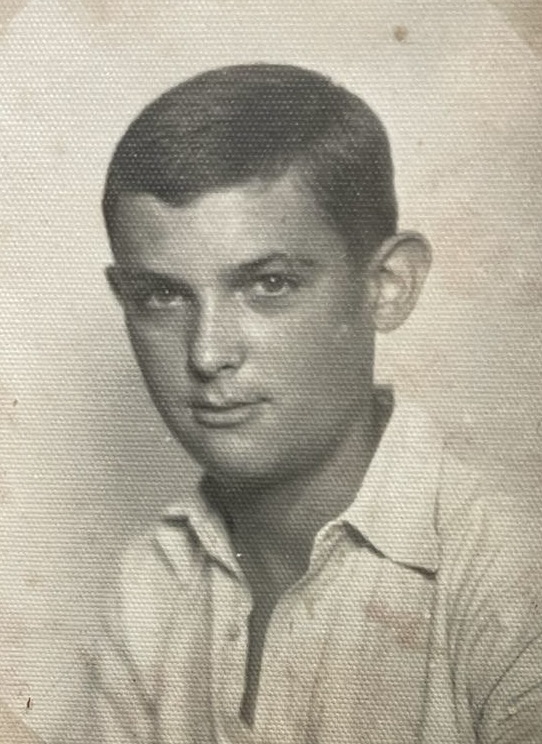
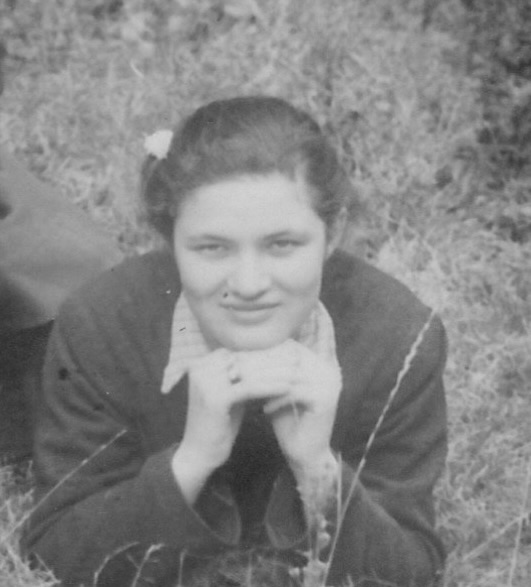
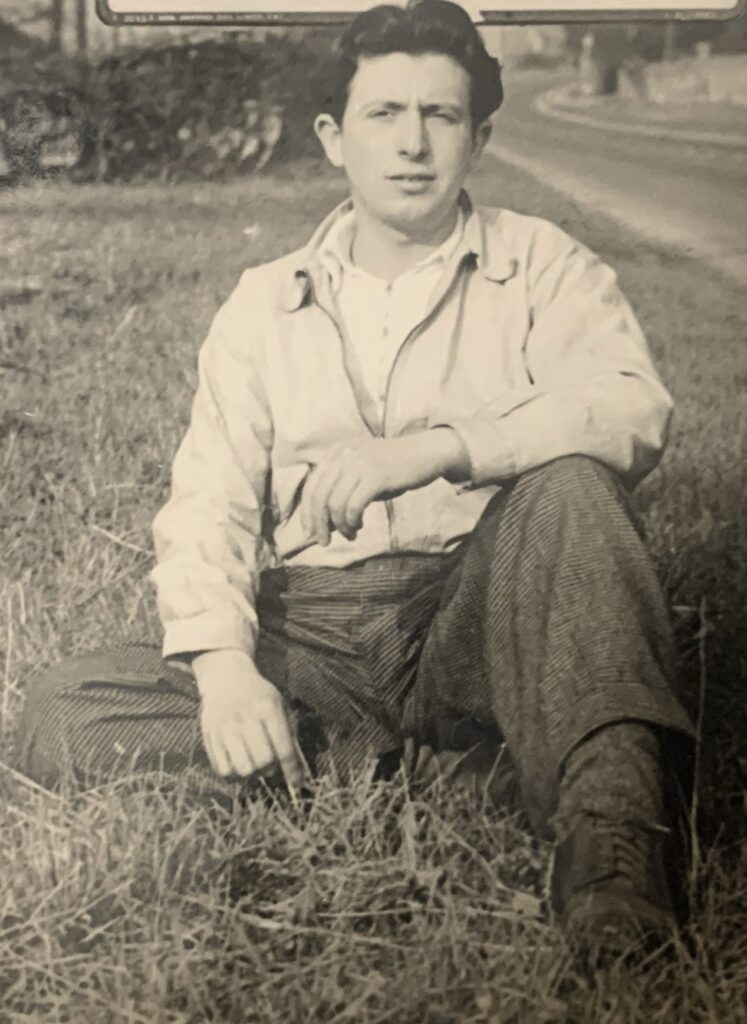
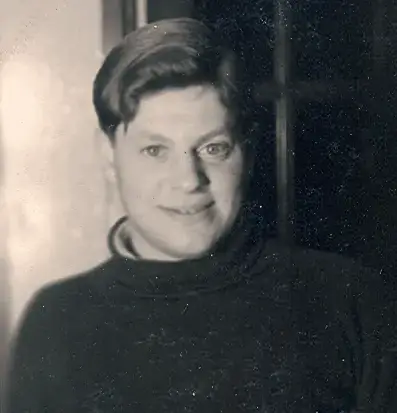
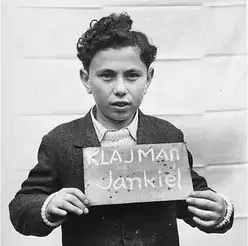
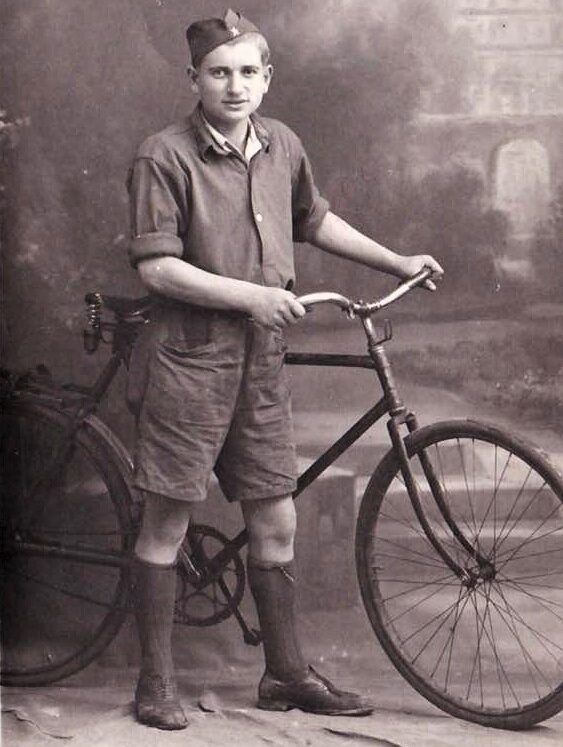
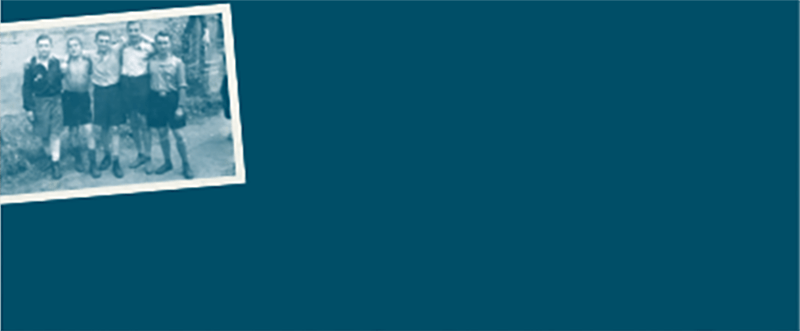
Some of the Boys held in the Warsaw Ghetto. These pictures were all taken after the liberation.
Daily Life
Tens of thousands of Jews were also brought into the Warsaw Ghetto in the months that followed along with Jews from both western Poland and Bohemia and Moravia, now Czechia. Penniless, they found themselves destitute and starving. Typically, one room was inhabited by seven to eight people; typhus and tuberculosis were endemic. At least 100,000 people died in the ghetto.
Only a small proportion of the inhabitants had any regular kind of employment. Some men managed to keep their forced labour jobs but most were made redundant. Payment for forced labour was minimal. In the summer of 1940 able bodied men began to be sent to forced labour camps.
Most economic activity was illegal and those who had savings were able to get by in the black economy and manage to smuggle food into the ghetto. The father of Pinchas Gutter, one of the Boys, was a wine producer and had had the money to buy raisins before the ghetto was sealed that he distilled to make wine.
As a result of social differences there was considerable inequality in the ghetto. Between October 1940 and July 1942 about 92,000 people died in the ghetto of starvation, cold and disease.
Cultural life flourished in the ghetto and there were secret schools, youth movements and synagogues. There were also charitable organisations that ran soup kitchens.
Yossi Gerstein was told by his mother to run away from the Warsaw Ghetto after his father disappeared. He was six years old:
Aleynhilf
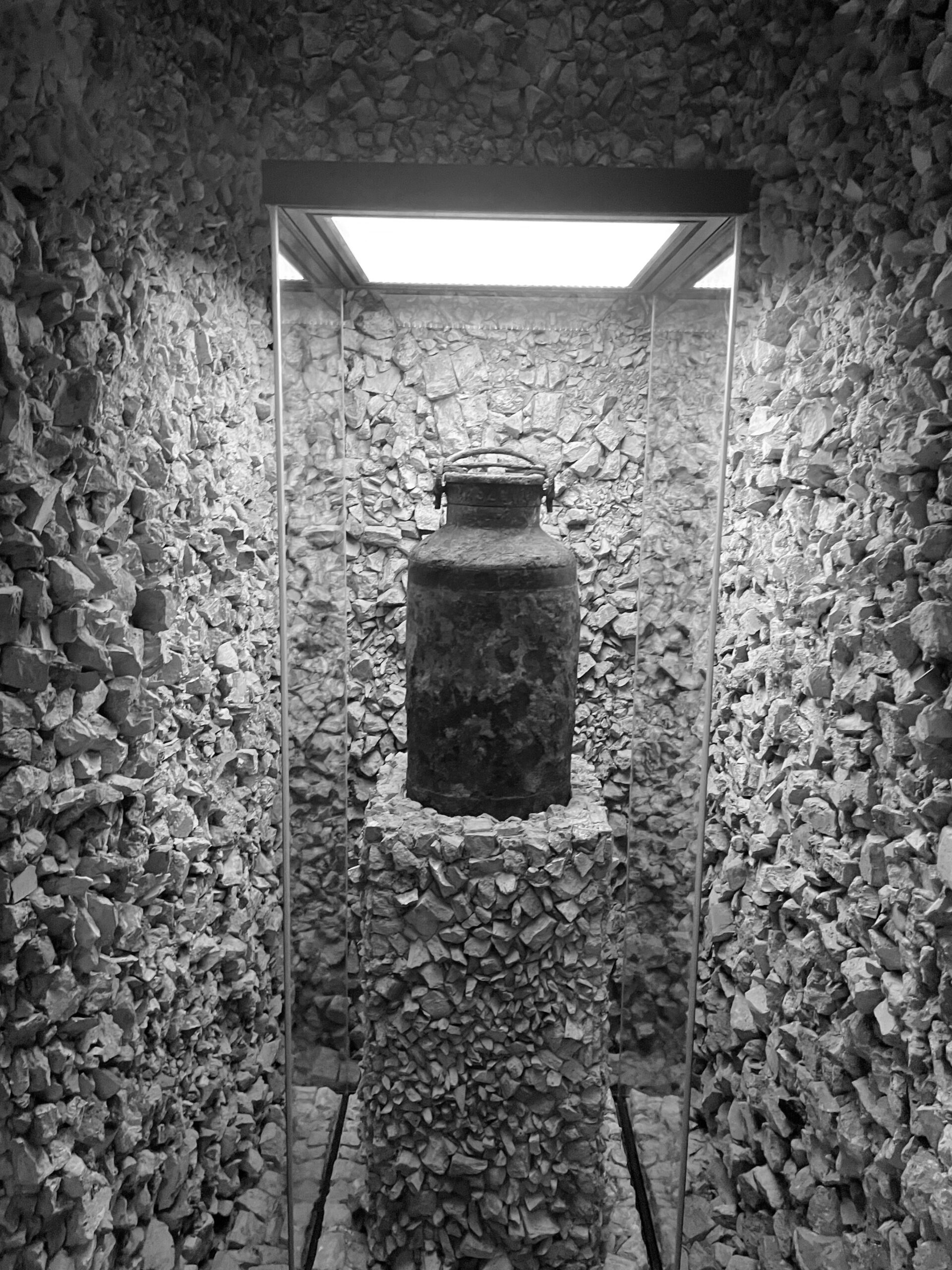
One of the most important items to survive the Warsaw Ghetto is a milk churn.
In it was hidden one of the most significant collections of documents relating to the destruction of Poland’s Jewish community. The churn is on display at the city’s Jewish Historical Institute, which was founded by survivors in 1947. The building dating from 1936 was formerly the Main Judaistic Library, which had a collection of more than 30,000 volumes until it was plundered and the contents taken to Germany. It was included in the ghetto and housed the offices of a German-approved Jewish relief organisation, Aleynhilf (Self-Help).
One of its leaders was the social worker and historian Emanuel Ringelblum (1900–44), who believed that at this dramatic moment in Jewish history, it was vital that the Jews told their story in their own voices. In an act of intellectual resistance, Ringelblum and his colleagues created a secret group, calling themselves Oyneg Shabes (Yiddish for ‘Joy of the Sabbath’) as they met at the institute on the Sabbath. They documented all aspects of life in the ghetto.
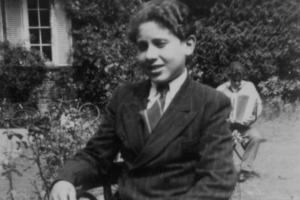
“Even if this world exists for a thousand, million, trillion light-years, no one could ever be able to tell all the stories of the Warsaw Ghetto during the years from 1940 until the end of the uprising in the middle of 1943. And I, this little boy, saw it all. I watched the depravity and the kindness, people doing business, children selling cigarettes, women prostituting themselves. I saw every aspect of humanity, from evil to goodness. I saw people living and dying in the street, and Jewish police beating children who were trying to stay alive by stealing a potato and selling it. I saw Germans beating Jews and German officers conducting tours of the ghetto with cameras, smiling and laughing and pulling Jewish beards and peyes and giving out sweets to children as if to little animals in a zoo.”
Pinchas Gutter, Memories in Focus (Azrieli, 2018).
Gutter was seven years old when he was imprisoned in the Warsaw Ghetto
The Germans deliberately limited food supplies, which caused near starvation. Smuggling was one of the few ways to survive – since Jews under 12 years did not have to wear armbands with the Star of David, boys, among them Jack Klajman, would sneak out to find food. Some parents who could see there was no future told their children to run away – among them were Joseph Gerstein, who just six years old when he found himself living on the streets of Warsaw, and Sam Freiman.
“We lived in extremely cramped conditions in the confines of the Warsaw Ghetto until the time of the Warsaw Ghetto Uprising in 1943. The conditions were unbearable – overcrowding, severe shortage of basic foods, illness, no medical care and people dying of starvation. The Germans offered free transport to work camps in the east and a free loaf of bread for each family when they reported to the railway station. This was a big incentive. Over 100 members of my family succumbed to the temptation and were transported to the death camps created by the Germans, never to be seen again.”
Stanley Faull, testament to the ’45 Aid Society.
Faull was 11 years old when he was imprisoned in the Warsaw Ghetto.
Deportations
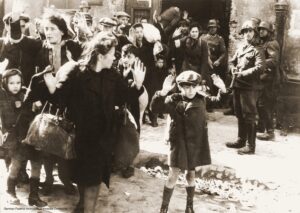
Warsaw Ghetto Uprising 1943.Before the war, the station in the north of Muranów had been used as a freight terminal. The Germans turned it into an Umschlagplatz, a collection point, where up to 300,000 Jewish people were gathered prior to deportation to the extermination camps. Many families chose to stay together, so even those who had work permits exempting them from deportation joined the transports.
On 22 July 1942, the eve of the Jewish holiday of Tisha B’Av, a major round-up began which lasted for 46 days. Roundups were often timed to coincide with important events in the Jewish calendar.
During this period, almost 300,000 Jews were deported and taken to their deaths at the Treblinka extermination camp. One escapee, Dawid Nowodworski, brought news of the mass murder back to the ghetto in late August 1942, which left the remaining 70,000–80,000 inhabitants under no illusions regarding their fate. Fewer than half had work permits which would allow them to remain in the ghetto. Many Jews, helped by the Polish resistance, went into hiding on the Aryan side, where there were more than 20,000 Jews living undercover among them members of the Boys.
Jewish Resistance
Youth leaders of the left-wing Jewish Fighting Organisation, ZOB, and the right-wing Jewish Military Union joined forces and began to liaise with the Polish resistance. When deportations began again in January 1943, the resistance fought back.
Nevertheless, a further 5,000 were deported and 1,200 shot inside the ghetto.
Significantly, the resistance changed the attitude of the Polish underground, who until now had been reluctant to arm the Jewish fighters.
Warsaw Ghetto Uprising
On 19 April 1943, on the eve of Passover, when German soldiers entered the Warsaw Ghetto intent on its liquidation, they were greeted by a shower of Molotov cocktails. The street battles continued for two months. The uprising was the first large-scale civilian resistance in Europe and inspired Jews across the continent. About 700 Jewish fighters participated in the Uprising. They were led by 24-year-old Mordecai Anielewicz. Despite their bravery the resistance was defeated and by 16 May 1943 the Germans had crushed the insurgency and the ghetto was razed.
Aftermath
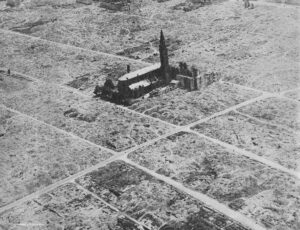
Warsaw Ghetto after the World War II. The surviving church is St Augustine.Many Jews hid in bunkers, as did the family of Pinchas Gutter, hoping to avoid capture, but most like the Gutter family did not escape.
In July 1943, the Germans opened a concentration camp. They brought 4,000 foreign Jews to sort through the rubble after the Ghetto Uprising, retrieving 30 million bricks and 6,000 tonnes of scrap metal. Among them were members of the Boys. Conditions were horrific and prisoners were often shot, and their bodies burned in funeral pyres on the top of the rubble.
Memorialisation
Modern-day Murańow offers a haunting reminder of what the Holocaust was – destruction and devastation. The reality of what had happened to Jewish life in Poland was summed up in the rubble of the ghetto. There was to be no rising from the ashes for Poland’s Jewish community; the ghetto area was not rebuilt unlike Warsaw’s Old Town. Today it is covered in modern apartment blocks.
Memorialisation, however, began immediately after the war. The Monument of the Ghetto Heroes was designed by the sculptor Nathan Rapoport while he was in exile in the Soviet Union. Immediately after the war, the Jewish community set about raising money to build it and monument was officially unveiled in 1948.
The main act of Holocaust remembrance during communist rule was an annual commemoration of the Warsaw Ghetto Uprising. In 1970, the West German chancellor Willy Brandt visited Warsaw and knelt in front of Warsaw Ghetto memorial. Brandt was a Social Democrat who had resisted the Nazis. To find out more about visiting Warsaw click here.
The Jewish Historical Institute
The institute in Warsaw (Tłomackie 3/5) holds a number of surviving death certificates from the Warsaw Ghetto (sterbeukunde) 1940-1943.
They often include the cause of death, usually starvation or typhus. They were issue by the Jewish Council, the Judenrat. Those who were issued with these certificates were buried in mass trenches that are identifiable.
 About
About History
 Education
 Quilts
 FIlms
FIlms Photos
 News Media & Events
 Publications
 Donate