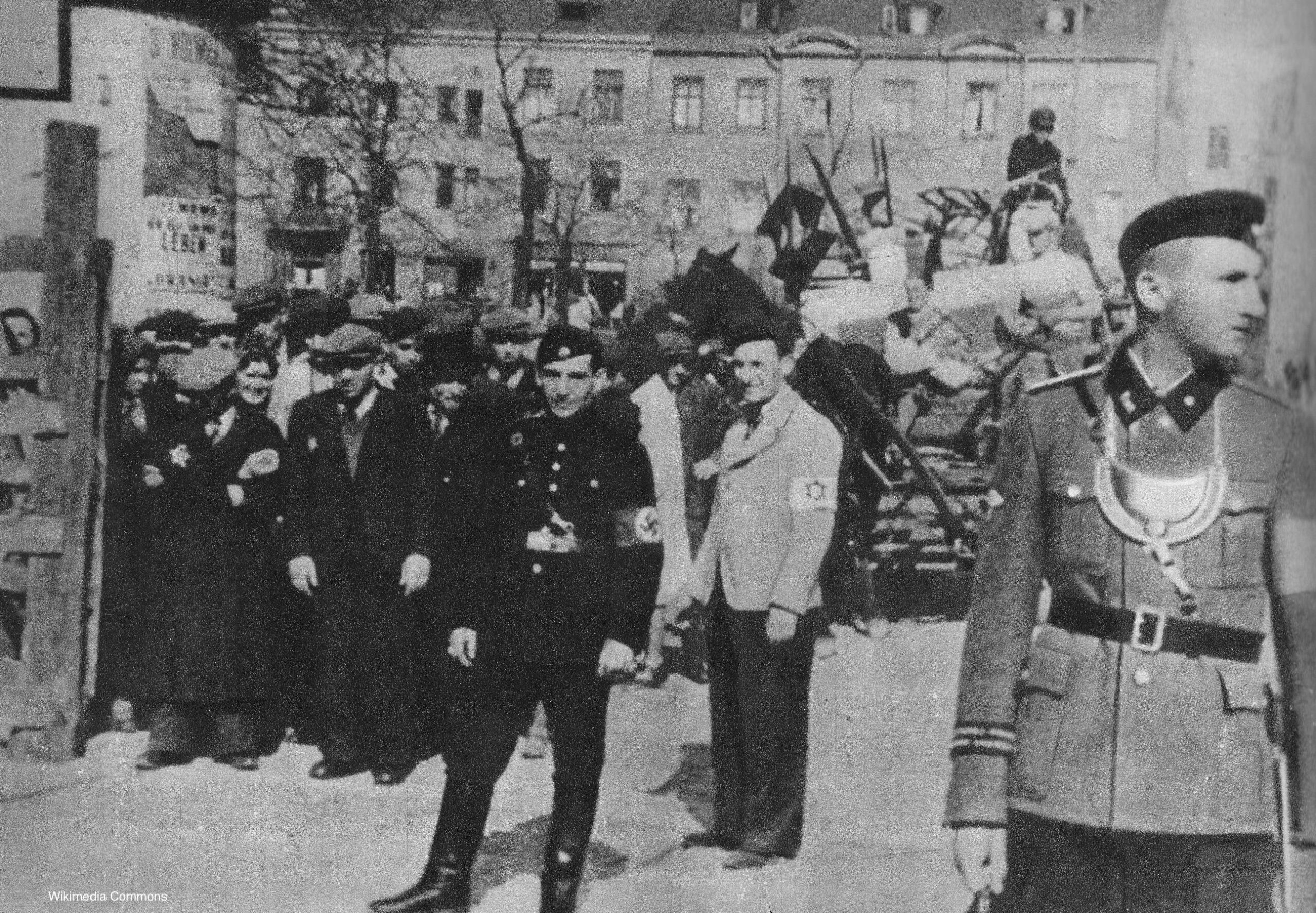
Members of the Boys were imprisoned in the Litzmannstadt Ghetto in Łódź, Poland.
The Litzmannstadt Ghetto was one of a network of ghettos set up by Nazi Germany in which Jews were forced to live in occupied Poland. As with other ghettos in Czechoslovakia, Latvia, Lithuania and Poland, the Litzmannstadt Ghetto was established to contain the region’s Jews and isolate them from the rest of the population until the Nazi leadership could decide on an answer to the so-called “Jewish Question.”
The Boys and their families spent years living in dire conditions. The ghettos were not designed for the vast numbers of people forced to find space to live within them. As a result, multiple families shared cramped and insanitary accommodation.
The Boys were teenage and child-Holocaust survivors, who were brought to the UK after the war for rest and rehabilitation.
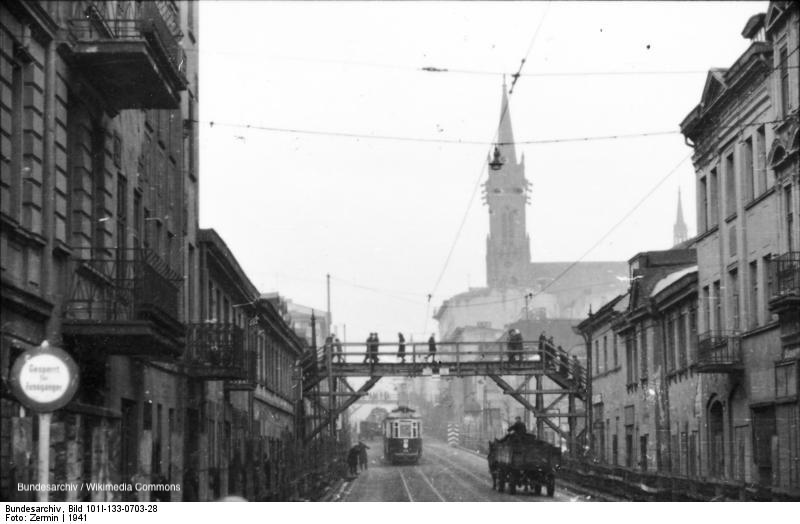
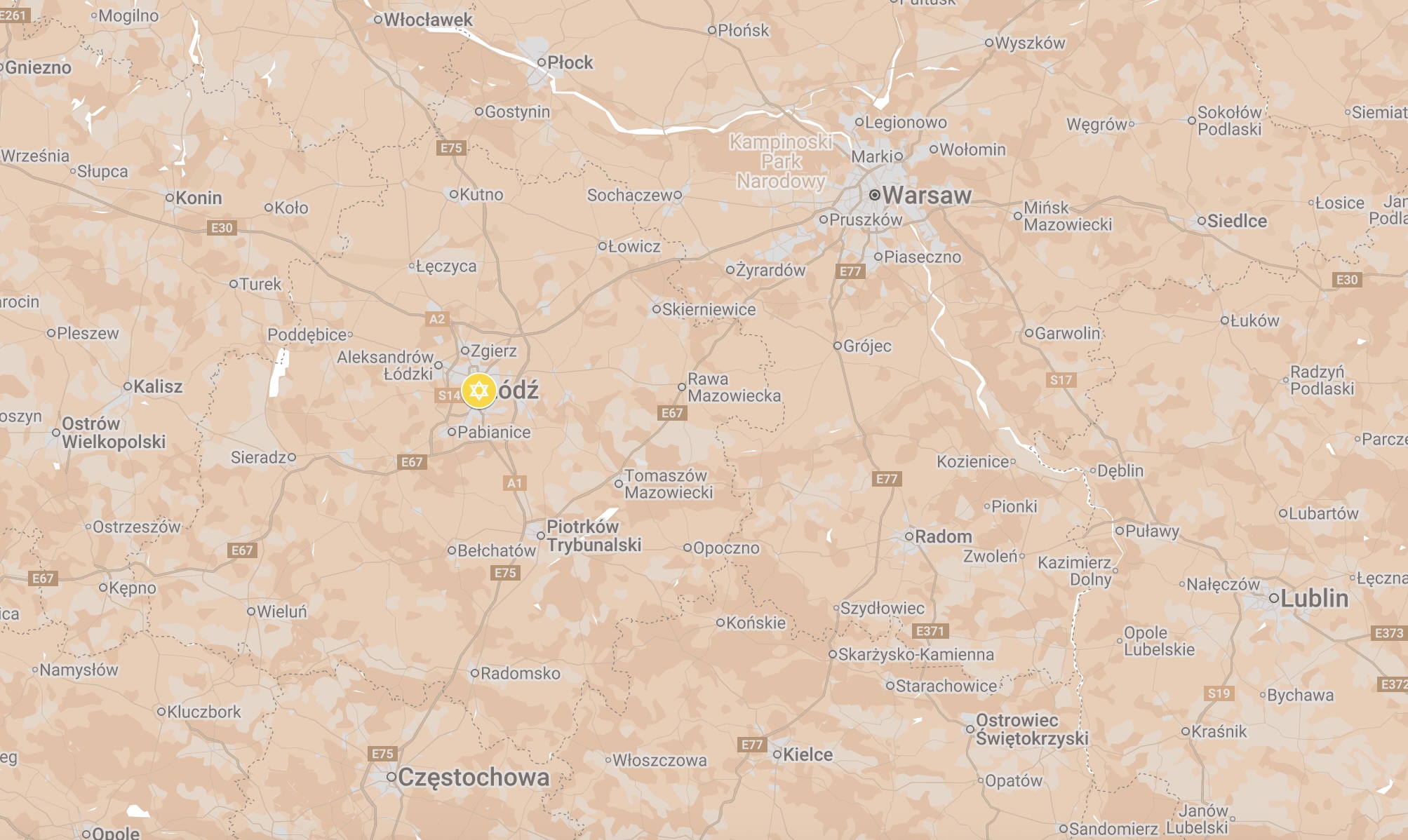
Litzmannstadt is the German name for the Polish city of Łódź. To find out more about Łódź and the Boys who grew up there click here.
In 1939, Łódź was Poland’s second largest city and a major industrial centre. After the German invasion of Poland in September 1939, the city and surrounding area were incorporated into the Third Reich. The city was then known by its German name of Litzmannstadt.
Overview
In the spring of 1940 some 164,000 Jews were imprisoned in the Litzmannstadt Ghetto. Nearly 25% of the Jews living in the city had fled the city by the time the ghetto was set up. The ghetto lasted for four years and was under the leadership of the controversial Chaim Rumkowski. The commandant was the equally controversial Hans Biebow.
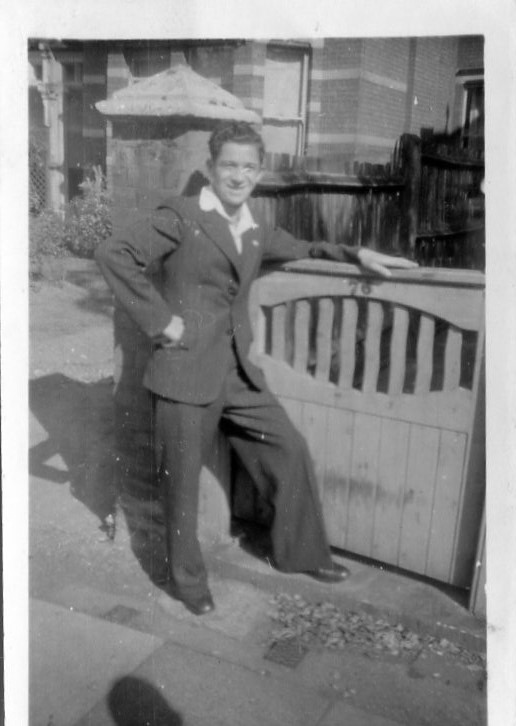
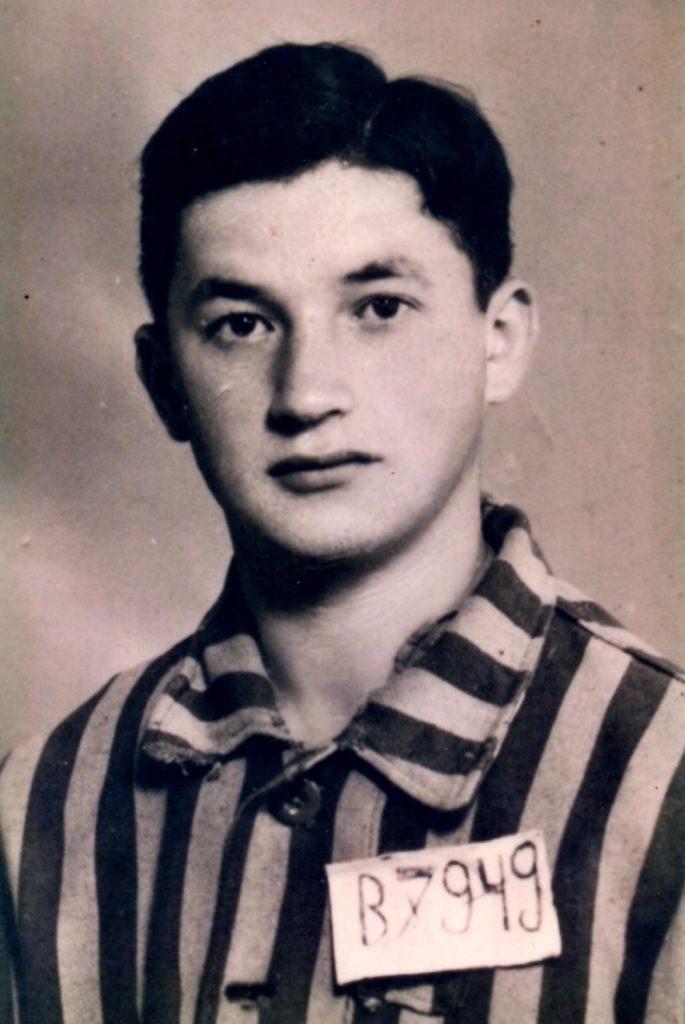
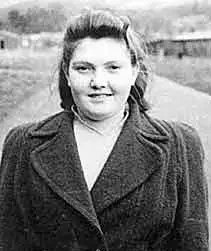
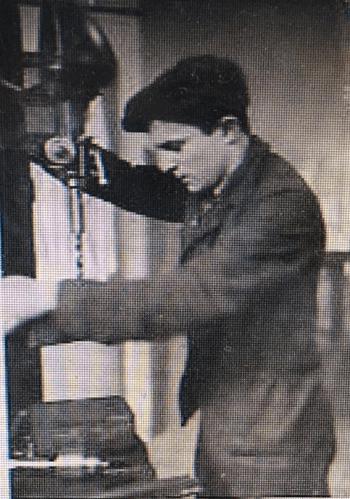
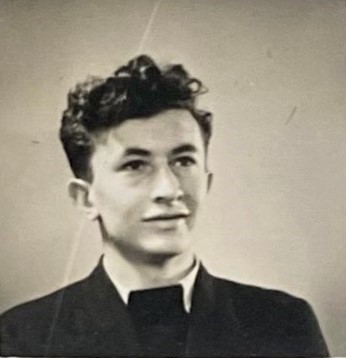
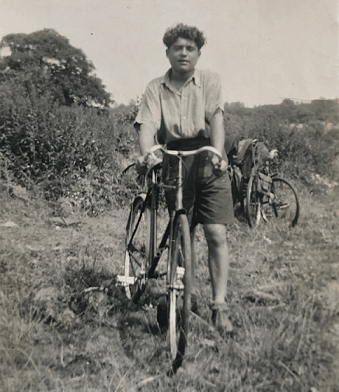
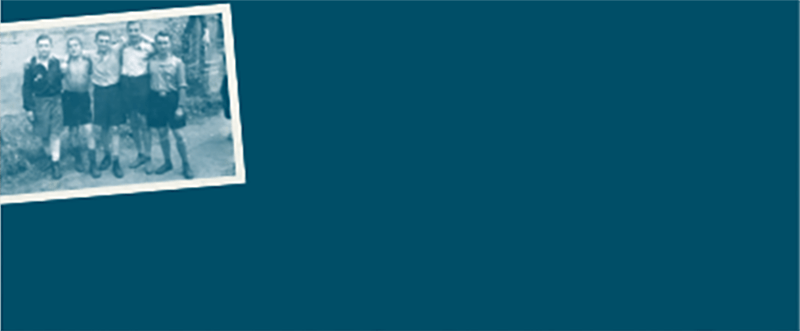
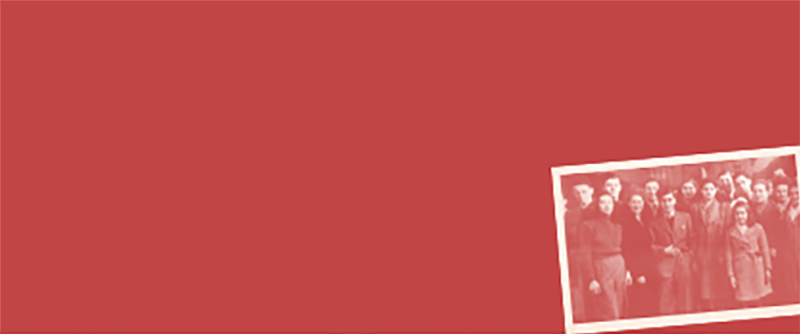
Some of thew Boys held in the Litzmannstadt Ghetto. The photographs were all taken after the liberation.
Litzmannstadt was the second largest ghetto in German occupied Poland. It was originally intended that the ghetto would be a temporary transit camp and that the Jews would be deported to the east, rendering the newly incorporated territories free of Jews. When this proved impossible, the ghetto was transformed into a major industrial centre, manufacturing war supplies for Germany and especially for the Wehrmacht.
Layout
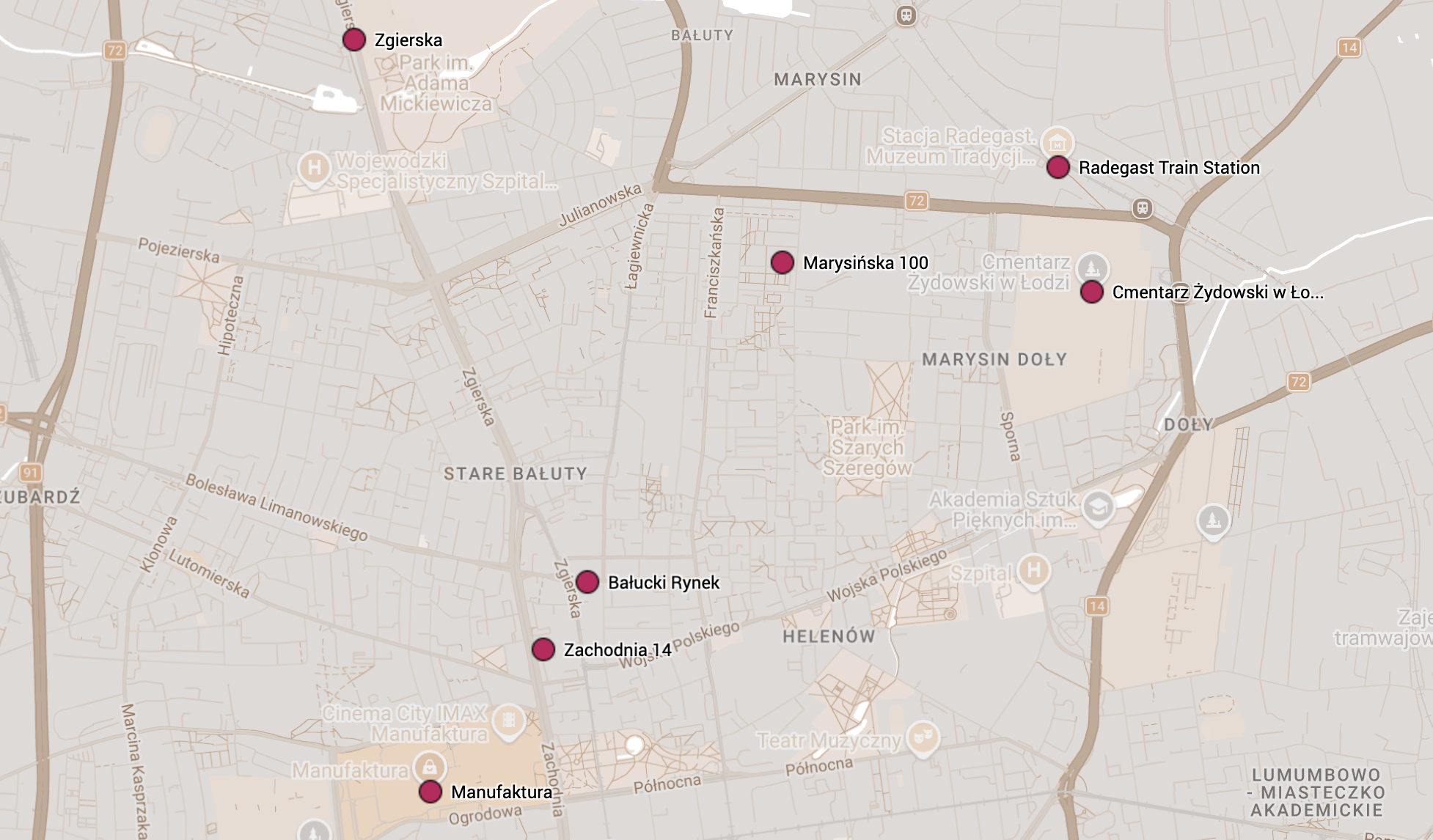
The ghetto centred on the norhern Bałuty quarter of the city, an impoverished area.
The ghetto was sealed from the rest of the world by a wooden fence surrounded by additional barbed-wire fences.
German Order Police battalions were assigned to patrol the perimeter of the ghetto, a Jewish Police force was created to ensure that no prisoners tried to escape. On 10 May 1940 orders went into effect prohibiting any commercial exchange between Jews and non-Jews in Litzmannstadt. By the new German decree, those caught outside the ghetto could be shot on sight.
The ghetto population were further isolated by the introduction of a separate currency in the ghetto. The Jews were entirely dependent on the German authorities for food, medicine and other vital supplies.
Daily Life
Food was in such short supply that many people died of starvation. Overcrowding meant that disease was rife.
Rumkowski adopted an autocratic style of leadership in order to transform the ghetto into an industrial base manufacturing war supplies.
Overcrowding in the ghetto was exacerbated by the influx of some 40,000 Polish Jews forced out from the surrounding Warthegau areas, as well as transports of foreign Jews resettled in Litzmannstadt from Vienna, Berlin, Cologne, Hamburg and other cities in Nazi Germany, as well as from Luxembourg, and the Protectorate of Bohemia and Moravia. These cohorts included members of the Boys.
I am Because I Did Not Think
Those who kept diaries in the ghetto
Did not survive
Those who tried to understand
What was going on
Did not survive
Those who tried to comprehend
What was happening to them
Were the first to disappear
I am because I did not think
Because I knew how not to be
And to abandon myself
My past
My future
And my here and Now
I am because I knew how Not to think
Michael Etkind, A Gust of Wind (2015).
Etkind was 15 years old when he was imprisoned in the Łódź Ghetto.
Deportations
On 20 December 1941, Rumkowski was ordered by the Germans to announce that 20,000 Jews from the ghetto would be deported to undisclosed camps, based on selection by the Judenrat. This was a direct result of the overcrowding caused by the deportation of foreign Jews to the ghetto.
Deportations from Litzmannstadt began in January 1942 when Jews in the ghetto were taken to the Chełmno extermination camp. Over half of the Jews in the ghetto were murdered in the camp. Deportations continued intermittently until the ghetto was liquidated.
By September 1942, Rumkowski and the Jews of Litzmannstadt had realised the fate of the evacuees, because all baggage, clothing, and identification papers of their fellow inmates, were being returned to the ghetto for “processing”.
A debate raged in the ghetto over who should be given up for ‘deportation’. Rumkowski believed productivity was necessary for survival, he thought that the Jews in the ghetto should hand over their 13,000 children and 11,000 elderly. Some families committed collective suicide to avoid the inevitable.
Jewish Resistance
The peculiar situation of the Litzmannstadt Ghetto prevented armed resistance, which occurred within other ghettos in Nazi-occupied Poland. There was however considerable cultural and religious resistance. Since production was essential to the German war effort, the slowing down of work was also a form of resistance.
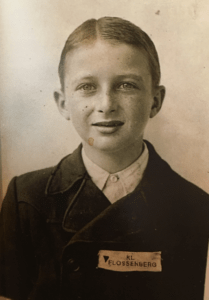
“In 1942, Rumkowski was ordered to remove those unfit for work and the elderly, which he did. He was also ordered by the Germans to take all children nine years of age and under from their parents. There were about 20,000 such children in the ghetto. Rumkowski made a speech to the ghetto inhabitants, now known as the ‘Give me your Children’ speech, ‘justfying’ his actions.
When the day came for the children to be taken away, my parents told me to run and hide in the attic. I hid in a corner of the attic behind a wall of boxes. The Jewish police searched the entire flat, including the attic, but did not find me. This only happened once, but it was terrifying. I was eight years old.”
Dissolution
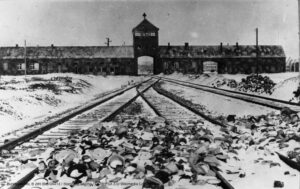
Litzmannstadt was last ghetto in occupied Poland to be liquidated. As the front approached, German officials decided to deport the remaining Jews to Auschwitz II-Birkenau extermination and concentration camp, including Rumkowski. On 28 August 1944, Rumkowski’s family were gassed along with thousands of others. About 10,000 Jewish residents of Litzmannstadt survived the Holocaust among them many members of the Boys.
Memorialisation
There is considerable memorialisation in Łódź. The main memorial is in the former Radegast Station from where the deportation trains left. To find out more about visiting the city click here.
 About
About History
 Education
 Quilts
 FIlms
FIlms Photos
 News Media & Events
 Publications
 Donate