Members of the Boys were imprisoned in a network of ghettos by the Nazis across eastern Europe between 1939-45 of which the Skalbmierz Ghetto was one.
The Boys were teenage and child-Holocaust survivors, who were brought to the UK after the war for rest and rehabilitation.
The Boys and their families were forced to move from their homes and were held in ghettos in Nazi controlled Czechoslovakia, Latvia, Lithuania and Poland, where they spent years living in dire conditions. The ghettos were not designed for the vast numbers of people forced to find space to live within them. As a result, multiple families shared cramped and insanitary accommodation.
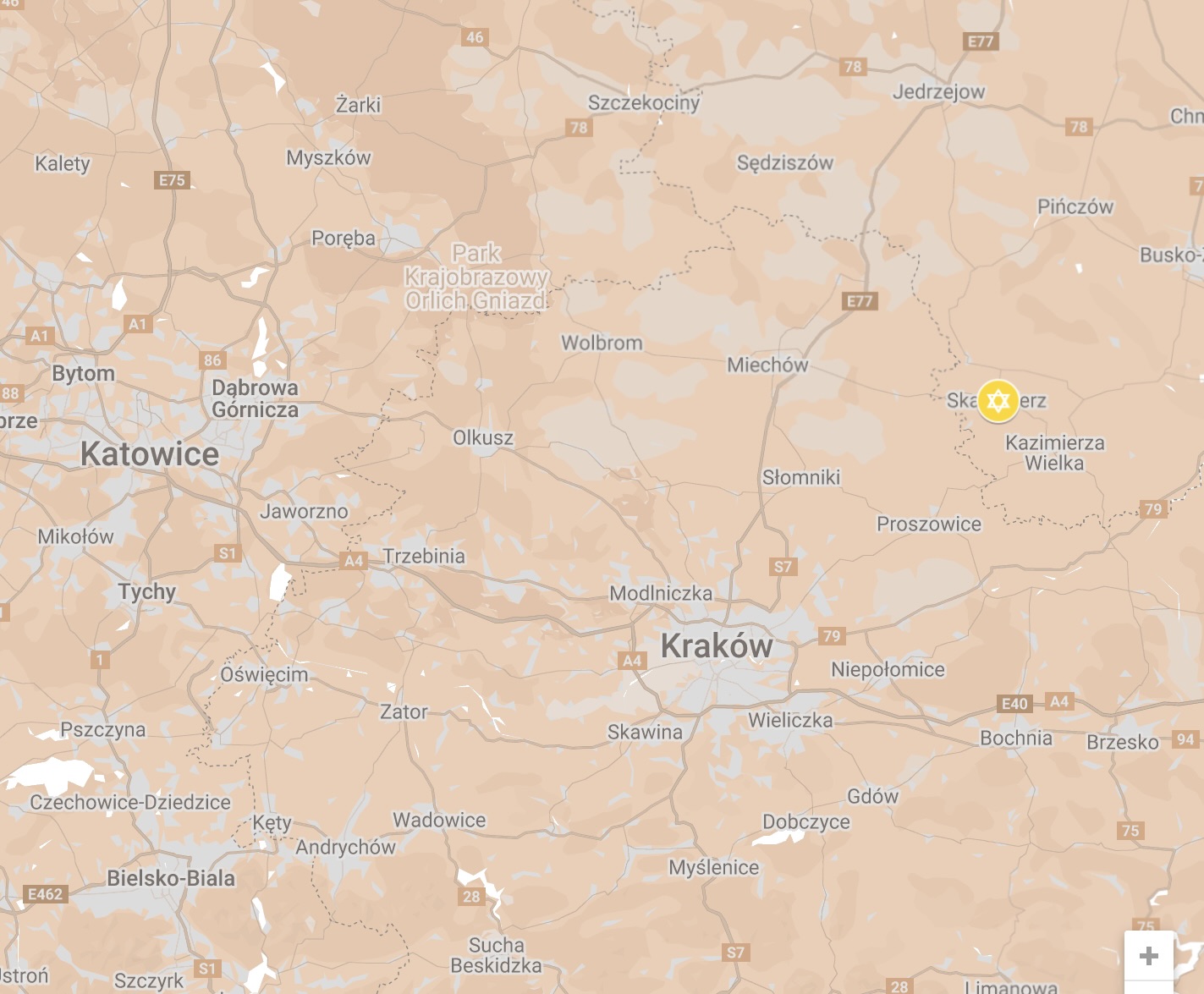
Skalbmierz is a town in southern Poland, in Świętokrzyskie Voivodeship. To find out more about the region and the Boys who grew up there click here.
Overview
The Skalbmierz Ghetto was established in 1941. At its peak, the ghetto held an estimated 1,500 Jews, including residents from Skalbmierz and those deported from surrounding villages.
Layout
The ghetto was concentrated in the centre of Skalbmierz, near the town square and surrounding streets where many Jewish families had lived before the war. It was enclosed with wooden fences and guarded by Nazi and Polish police. Movement in and out of the ghetto was strictly controlled, and curfews were enforced.
Daily Life
Jews were crowded into small wooden and brick houses, with multiple families often occupying a single building. Sanitation was poor, leading to outbreaks of typhus and other diseases. The Judenrat (Jewish council) attempted to organise medical assistance, but the shortage of supplies and medical personnel made it nearly impossible.
Food rations provided by the German authorities were inadequate, forcing many to barter possessions or rely on smuggling for survival. Malnutrition and hunger were widespread, and deaths from starvation occurred frequently. Despite these conditions, clandestine religious and cultural activities persisted, including makeshift prayer gatherings and secret lessons for children.
Most able-bodied men and older boys were forced into labour, including road construction and agricultural work. Women were assigned to sewing workshops or food production.
Deportations
The first major deportation from the Skalbmierz Ghetto took place in June 1942, when hundreds of Jews were taken to labour camps. Many elderly and sick Jews were executed as they were unable to comply with deportation orders.
Liquidation
The liquidation of the Skalbmierz Ghetto took place in September 1942. German forces, assisted by local auxiliary police, carried out the operation. Those who resisted or attempted to hide were executed in the streets or in mass graves on the outskirts of the town.
A small number of individuals, primarily skilled labourers, were selected for forced labour camps, including those in Kraków and Płaszów.
Jewish Resistance
While there was no organised uprising in the Skalbmierz Ghetto, individuals and small groups engaged in acts of resistance. Some managed to flee into the forests and join partisan units. A number of young men attempted to resist during the final liquidation, but they were quickly overpowered.
Memorialisation
Today, the Skalbmierz Ghetto is commemorated by a memorial at the site of the town’s Jewish cemetery. To find out more about visiting the region click here.
 About
About History
 Education
 Quilts
 FIlms
FIlms Photos
 News Media & Events
 Publications
 Donate