Members of the Boys were imprisoned in a network of ghettos by the Nazis across eastern Europe between 1939-45.
The Boys were teenage and child-Holocaust survivors, who were brought to the UK after the war for rest and rehabilitation.
The Boys and their families were forced to move from their homes and were held in ghettos in Nazi controlled Czechoslovakia, Latvia, Lithuania and Poland, where they spent years living in dire conditions. The ghettos were not designed for the vast numbers of people forced to find space to live within them. As a result, multiple families shared cramped and insanitary accommodation.
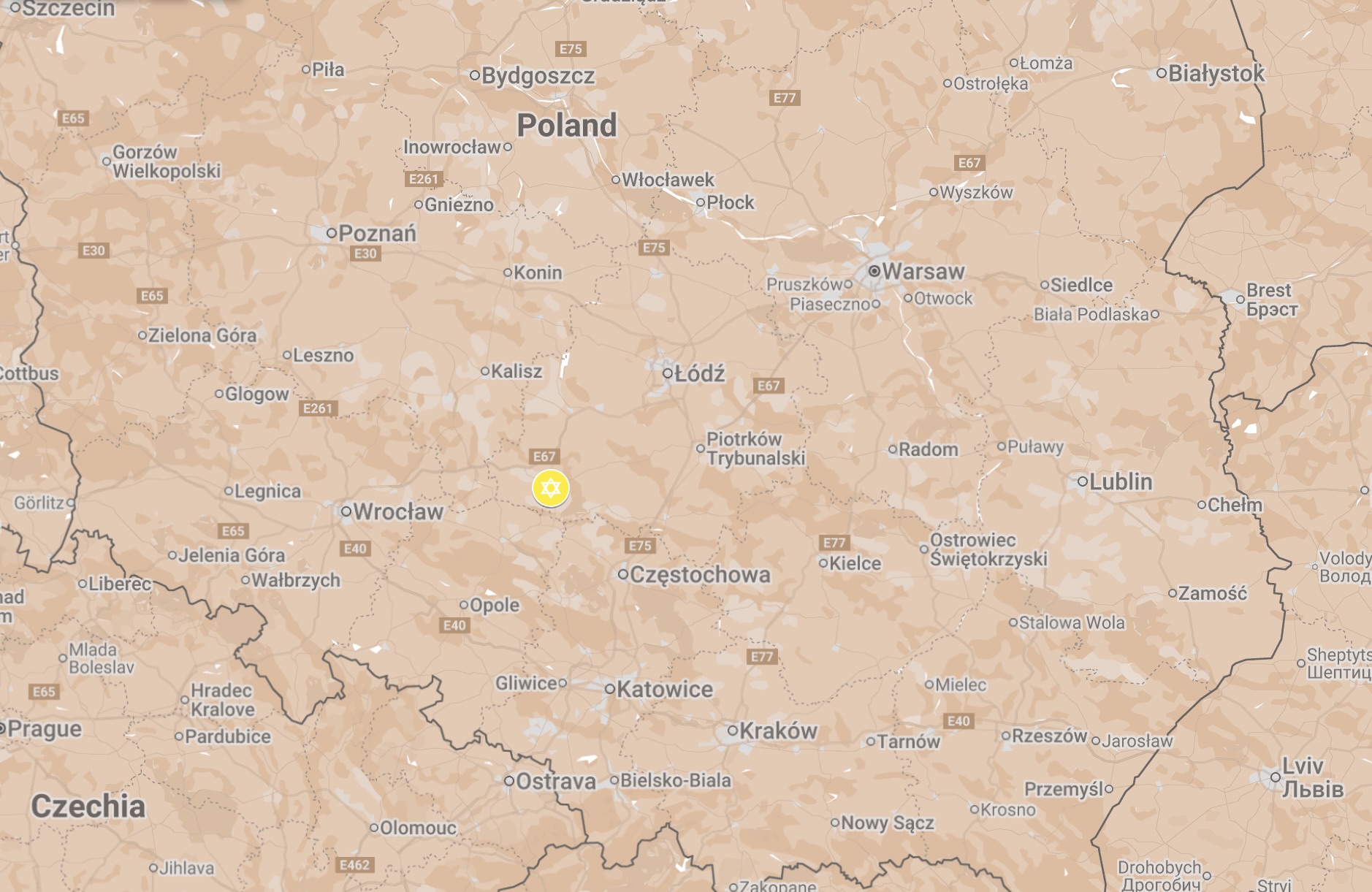
Wieluń is a small town in south-central Poland 62 kilometres northwest of Częstochowa.
Overview
In the spring of 1941, the Germans established a ghetto in Wieluń, located in the area of Plac Targowy, Targowa, Krakowski Zaułek, Kilińskiego streets. Around 7,000 Jews were imprisoned inside it.
Life in the ghetto
The conditions were harsh. People lived on starvation rations in poor sanitary conditions and severe over crowding. The mortality rate caused by infectious diseases was extremely high. There were summary executions in the ghetto – in the winter of 1942, the Germans hanged ten people in the square between Różana and Palestrancka streets.
Deportations
The liquidation of the Wieluń ghetto took place in August 1942. At this point a number of Jews were also brought to Wieluń from nearby towns, including Bolesławiec.
About 5,000 Jews were held in terrible conditions in the church without food or water. A number of them, especially the elderly and sick, died of exhaustion or were murdered by the SS. After a week, representatives of the Gestapo and the German Ghetto Administration (Gettoverwaltung, GV) in Łódź selected about 900 people (of which about 250 were from Wieluń) for forced labor in the Łódź ghetto.
The vast majority Jews were transported to the extermination camp in Chełmno, where they were murdered in gas vans.
 About
About History
 Education
 Quilts
 FIlms
FIlms Photos
 News Media & Events
 Publications
 Donate