Members of the Boys were imprisoned in a network of ghettos by the Nazis across eastern Europe between 1939-45.
The Boys were teenage and child-Holocaust survivors, who were brought to the UK after the war for rest and rehabilitation.
The Boys and their families spent years living in dire conditions. The ghettos were not designed for the vast numbers of people forced to find space to live within them. As a result, multiple families shared cramped and insanitary accommodation.
Overview
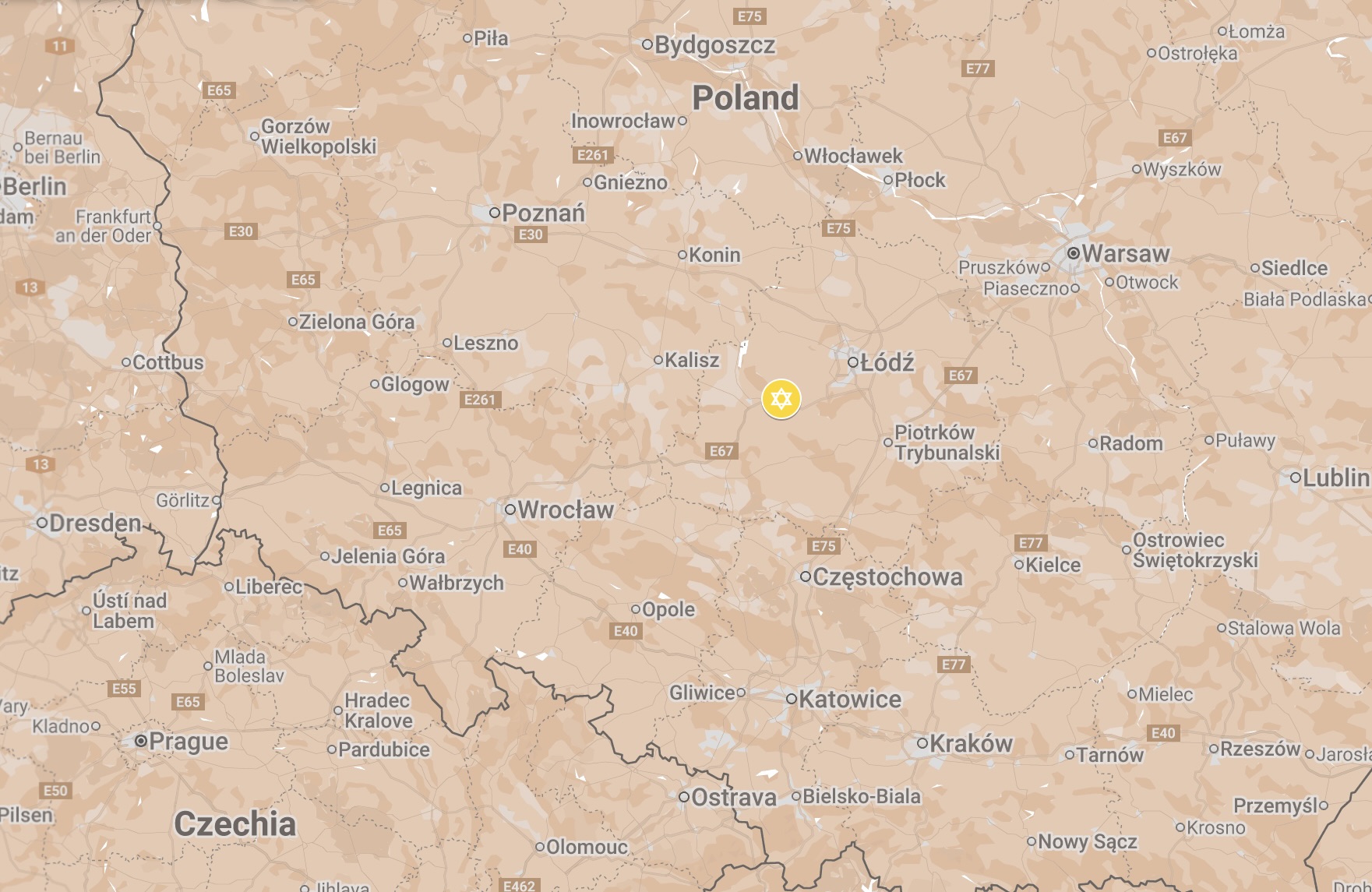
After the German occupation of Poland, Zaduńska Wola was incorporated into the Third Reich and renamed Freihaus. To find out more about the Łódź Voivodeship and the Boys who grew up there click here. The Nazis established the ghetto at either the end of 1939 or in May/June 1940.
Layout
The ghetto borders were closed in the autumn of 1940. They ran along Juliusza Street and the current Jewish Ghetto, up to Sieradzka Street. They also included the western and northern sides of Wolności Square. From the northern side of the city, they reached the intersection of Opiesińska and Szadkowska streets, up to Narwiańska and Sieradzka streets. The ghetto was surrounded by barbed wire. The borders ran between courtyards. Five gates led to the ghetto, guarded from the inside by the Jewish Order Police, and from the outside by German police.
Daily Life
Similarly to other ghettos, the Nazi authorities established a Judenrat (Jewish council) in the ghetto. Difficult working conditions, malnutrition, as well as overcrowded accommodation, where several families often lived on a dozen or so square meters, led to many deaths.
Liquidation
The liquidation of the ghetto in Zduńska Wola took place on 24-26 August 1942.
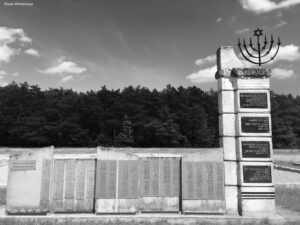
Jews were ordered to gather on what is now Getta Żydowskiego Street. An initial selection was made there. Those not selected for slave labour were sent to the Chełmno extermination camp. All the rest were driven to the Jewish cemetery, where selections were again made.
Those gathered at the cemetery remained under heavy guard for two days without food or water. Witnesses to those events testified that the Germans fired into the crowd without reason, as a result of which several dozen more people died. 1,169 people who were transported to the Łódź Ghetto. A further 8,594 were transported to Chełmno.
Jewish Resistance
A large part of the Jews understood the approaching danger. Many people hid, not wanting to willingly obey the Germans’ orders. Those who were caught were shot on the spot. In total, at least 50 people were murdered in the ghetto on the first day of the operation.
Memorialisation
The story of the ghetto is told in the Zduńska Wola History Museum. There is a memorial in the cemetery.
 About
About History
 Education
 Quilts
 FIlms
FIlms Photos
 News Media & Events
 Publications
 Donate