Members of the Boys were held in Nazi labour and concentration camps and used as slave labourers.
From 1933-1945 Nazi Germany operated over 1,000 concentration camps and subcamps in its own territory and across German occupied Europe. Among them was the Ohrdorf-Crawinkiel concentration camp, a subcamp of the Buchenwald concentration camp in Germany.
As the camps were dissolved thousands of people, among them members of the Boys, endured horrific evacuations from the camps on foot, in freight wagons and open top trains, as well as perilous journeys across the Baltic Sea.
The Boys were teenage and child-Holocaust survivors, who were brought to the UK after the war for rest and rehabilitation.
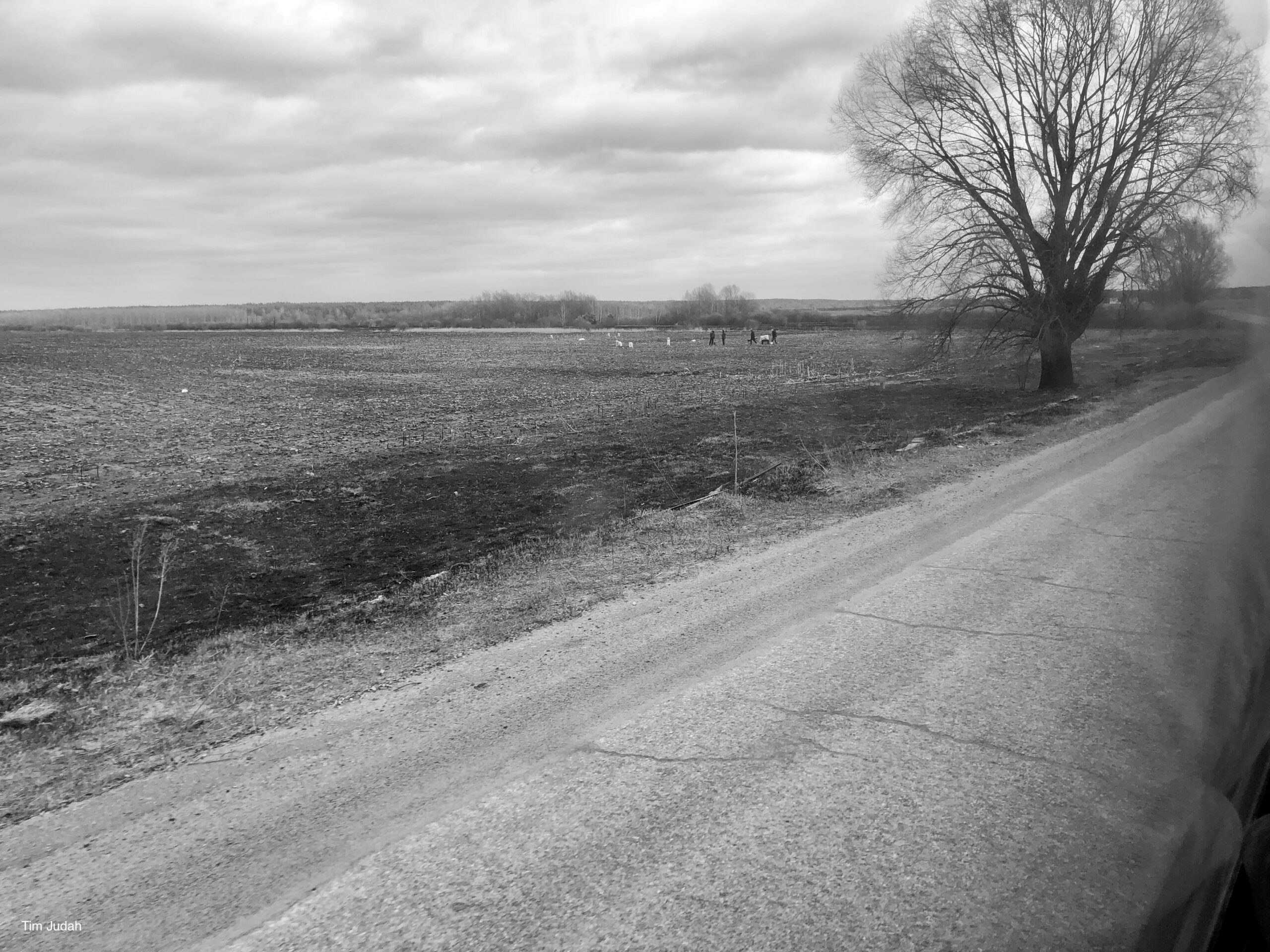
As the American troops closed in 13,000 prisoners were marched to Buchenwald concentration camp.
For those members of the Boys who have been on the death marches from Auschwitz – just months before – the agony was now repeated.
Three marches left from Ohrdurf between 1-3 April.
About 1,000 prisoners were killed on the marches.
Route
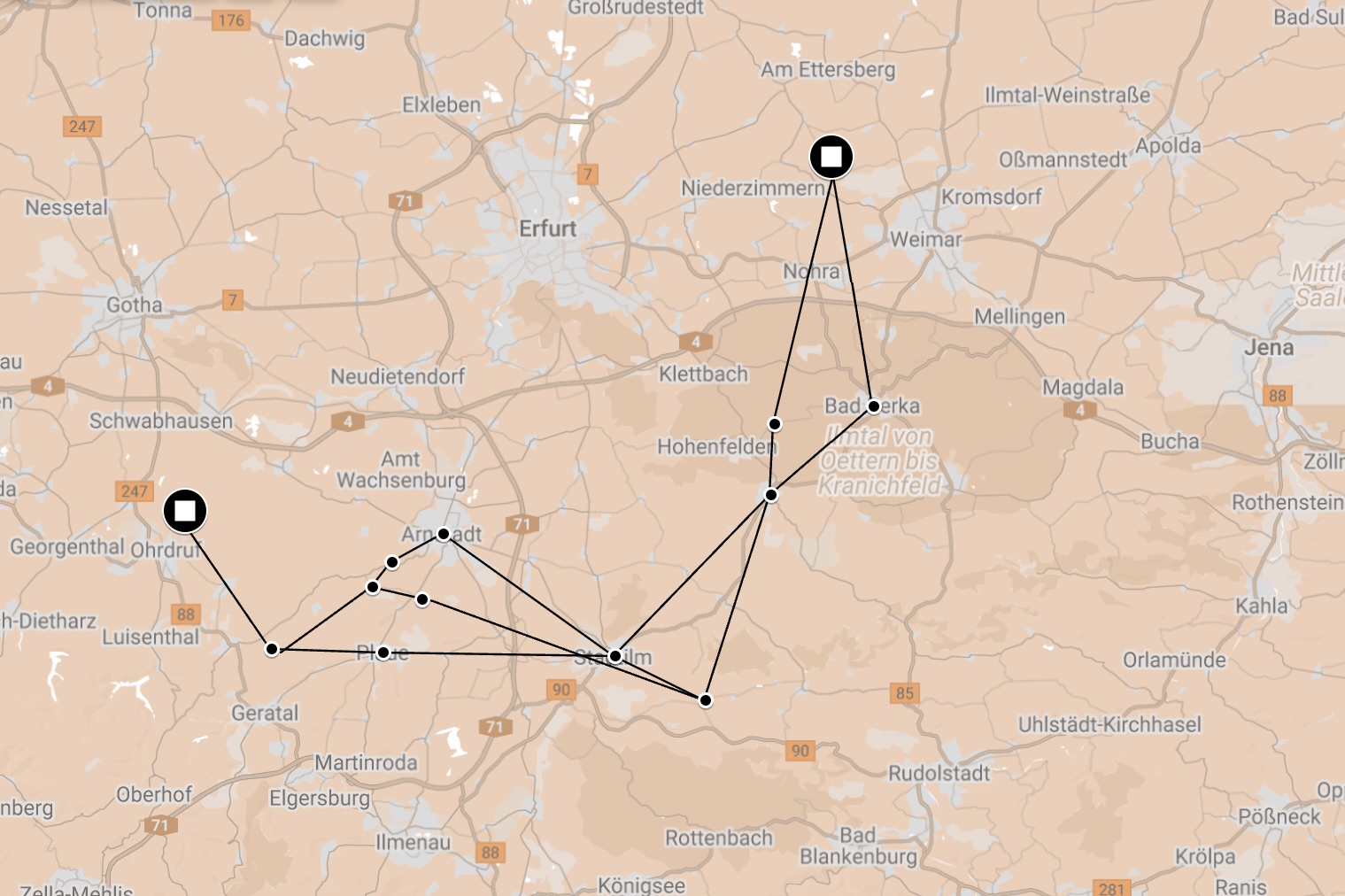
One march left from the main Ohrdurf camp and the others from Crawinkel and Espenfeld.
The march from Ohrdruf went through Crawinkel to Plaue – Stadtilm – Kranichfeld – Bad Berka and finally Buchenwald.
The march from Crawinkel went to Espenfeld – Siegelbach – Nahwinden – Kranichfeld – Tonndorf and finally arrived at Buchenwald.
The march from Espenfeld went via Jonastal – Arnstadt – Stadtilm – Nahwinden – Kranichfeld – Tonndorf before finally arriving at Buchenwald.
According to the records of the local police, victims of the death march were still being found seven years later, on January 28, 1952, on the roadside along the Espenfeld–Siegelbach route.
After just one night in Buchenwald the members of the Boys who had walked from Ohrdurf-Crawinkiel were put on the death train that left from the main camp for the Theresienstadt Ghetto.
 About
About History
 Education
 Quilts
 FIlms
FIlms Photos
 News Media & Events
 Publications
 Donate