Members of the Boys were held in Nazi labour and concentration camps and used as slave labourers.
From 1933-1945 Nazi Germany operated over 1,000 concentration camps and subcamps in its own territory and across German occupied Europe. Among them was the Mittelbau-Dora labour camp, a subcamp of the Buchenwald concentration camp in Germany.
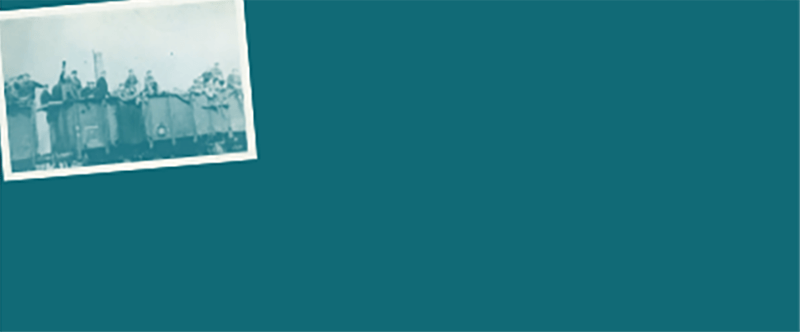
As the camps were dissolved thousands of people, among them members of the Boys, endured horrific evacuations from the camps on foot, in freight wagons and open top trains, as well as perilous journeys across the Baltic Sea.
The Boys were teenage and child-Holocaust survivors, who were brought to the UK after the war for rest and rehabilitation.
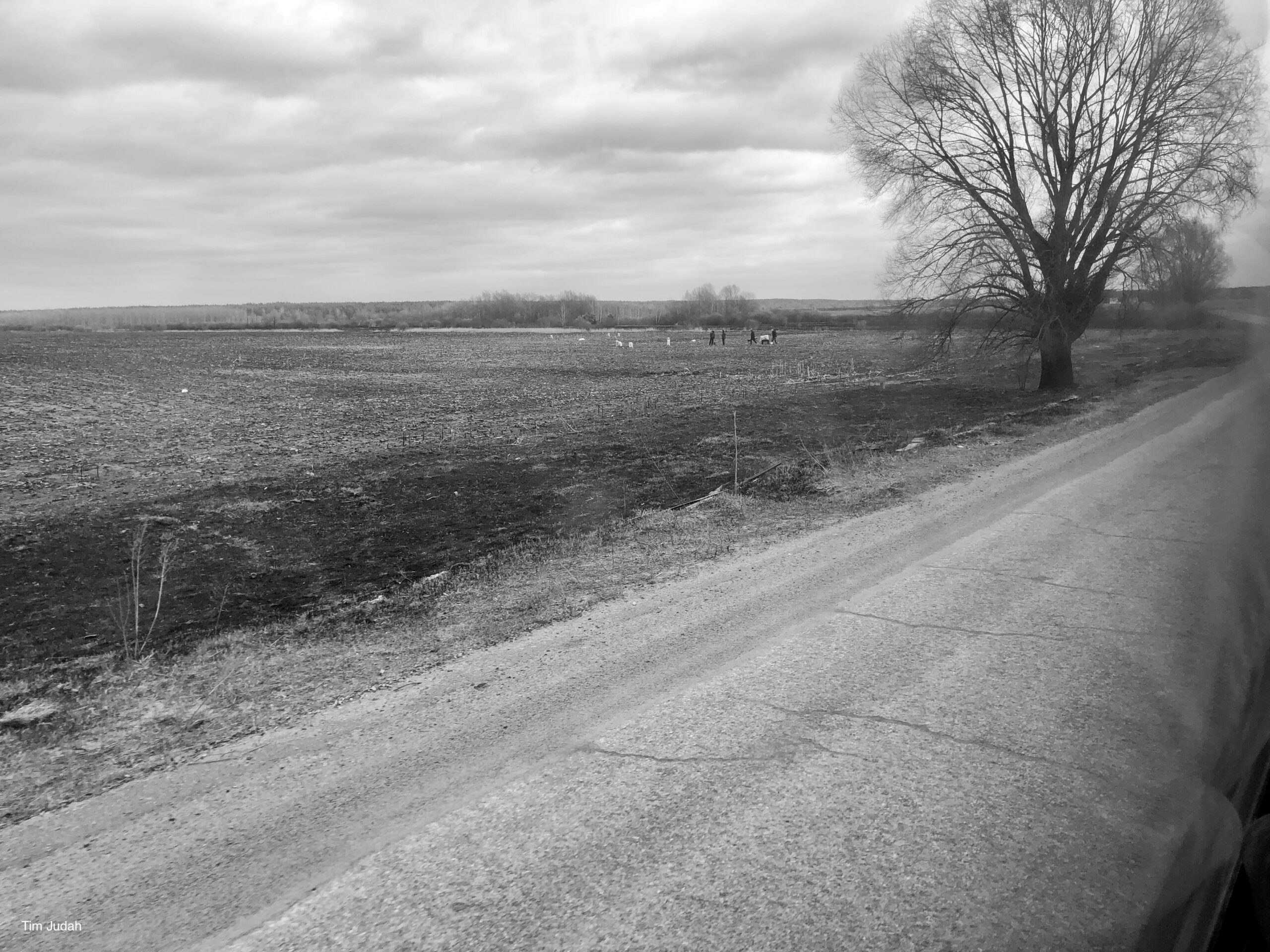
As the Americans approached the Harz mountains in the spring of 1945 the camp was evacuated.
On 1 April, all work stopped in Mittelbau-Dora.
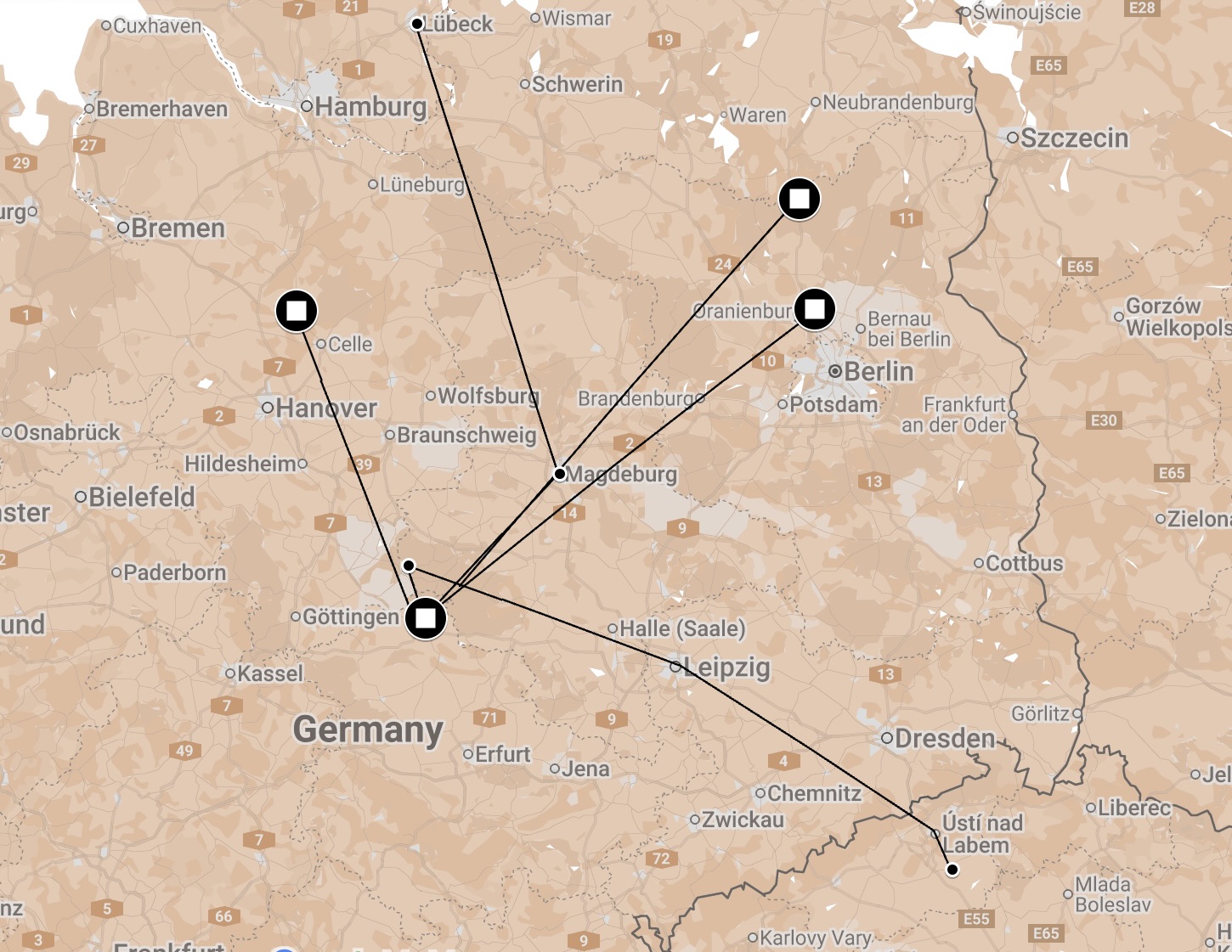
Route
The evacuation of the camp began on 3 April by both train and foot. For those members of the Boys who have been on the death marches from Auschwitz – just months before – the agony was now repeated.
Some prisoners were taken by freight train to Bergen-Belsen, among them were Henry Ellen and Ignatz Wieder.
“We were in Dora for a couple of months, and from Dora, we were taken to Bergen Belsen concentration camp by train. We had to march there from the station but so many people were too weak to walk, and when they fell, the Germans killed them right away. People used to fall shouting, “Help me! Help me get up!” However again, you couldn’t help because they would’ve dragged you down. The Germans couldn’t care less who they shot.”
Trains also took prisoners to Sachsenhausen and Ravensbrück.
It is not known if any members of the Boys were on these death trains.
Sam Pivnik was sent on a death march to Madeburg where he was put on a barge in the Elbe river and taken to the Baltic Sea.
Others were death marched through the Harz mountains to the Theresienstadt Ghetto on 3 April 1945.
These included: Joshua Segal, Peter Frank, Harry and John Fox, as well as David and Moniek Hirschfield.
The last train left the complex on the evening of 5 April 1945.
Historians estimate 8,000 people died in the evacuations. The most infamous crime of the evacuation took place at the village of Gardelegen, where 1,016 prisoners were locked in a barn and burned alive.

 About
About History
 Education
 Quilts
 FIlms
FIlms Photos
 News Media & Events
 Publications
 Donate