Members of the Boys were held in Nazi labour and concentration camps and used as slave labourers.
From 1933-1945 Nazi Germany operated over 1,000 concentration camps and subcamps in its own territory and across German occupied Europe. Among them was the Sonneberg labour camp, a subcamp of the Buchenwald concentration camp in Germany.
As the camps were dissolved thousands of people, among them members of the Boys, endured horrific evacuations from the camps on foot, in freight wagons and open top trains, as well as perilous journeys across the Baltic Sea.
The Boys were teenage and child-Holocaust survivors, who were brought to the UK after the war for rest and rehabilitation.
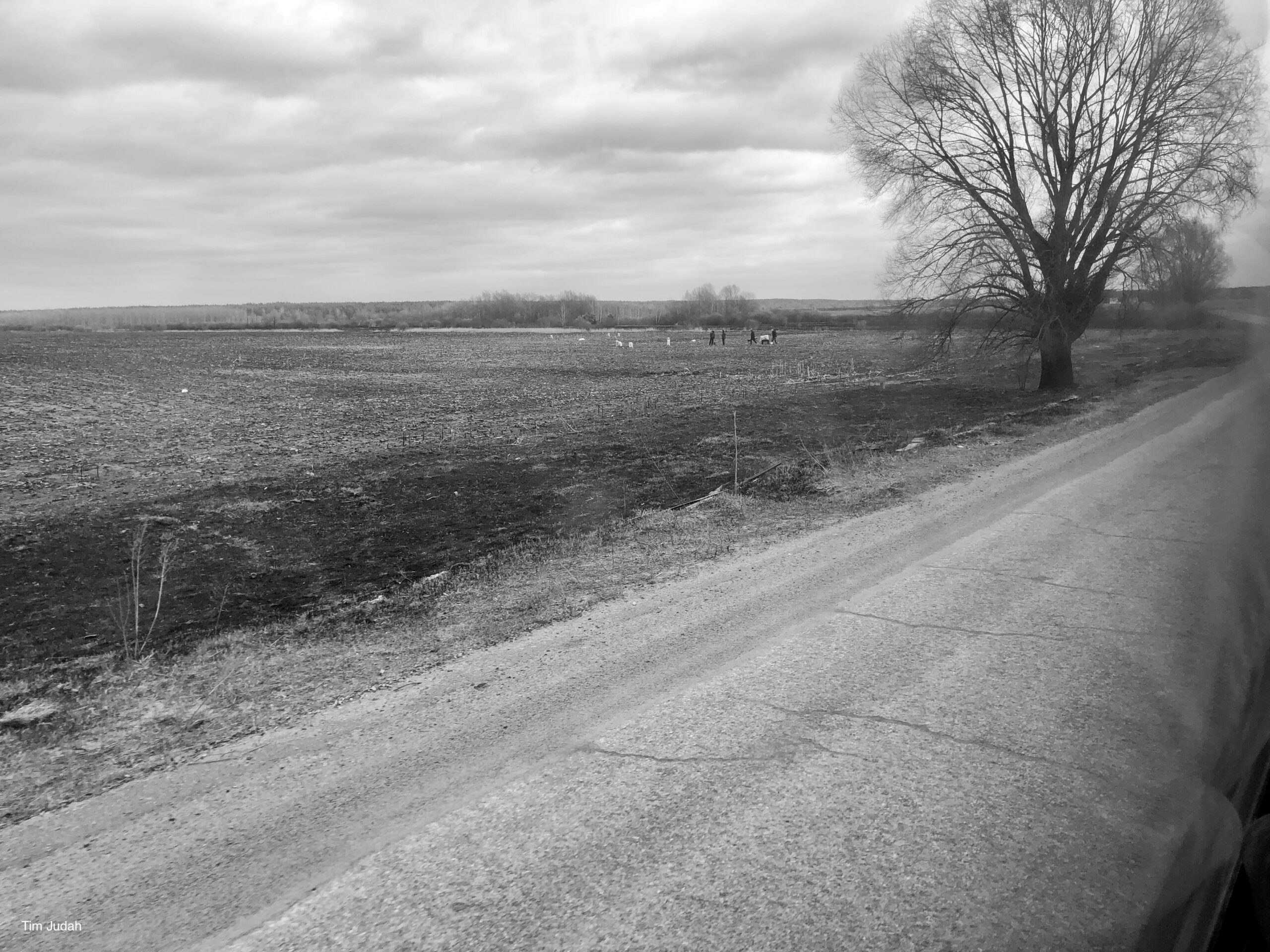
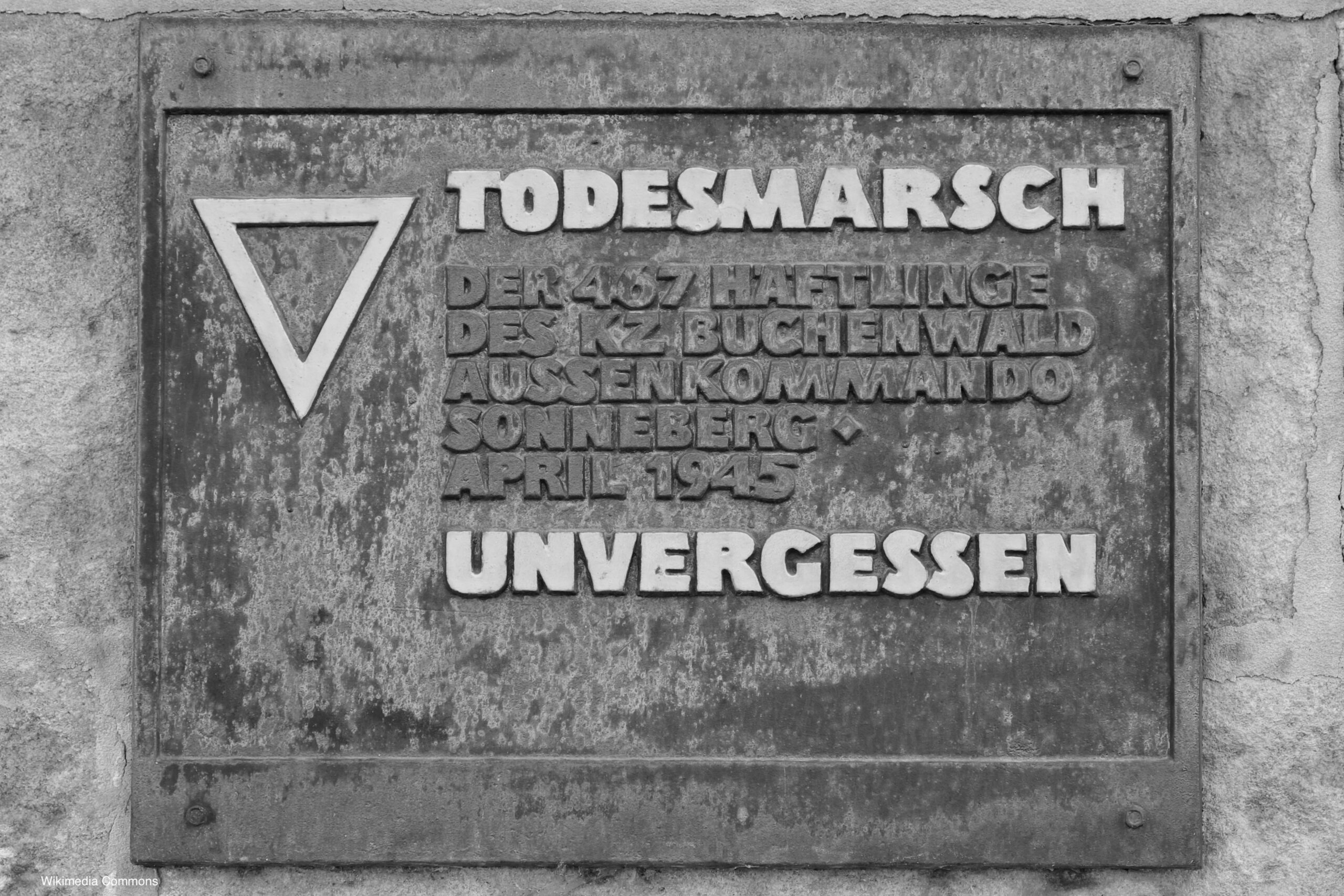
A death march set off from Sonneberg on 4 April 1945 but was turned back as the American army were approaching. The 467 prisoners were then marched out again.
The prisoners wore their stripped concentration camp clothes that were no protection from the cold and wooden clogs. At the end of the column SS guard walked with guard dogs. Many prisoners were shot on the march or died of starvation and exhaustion.
Route
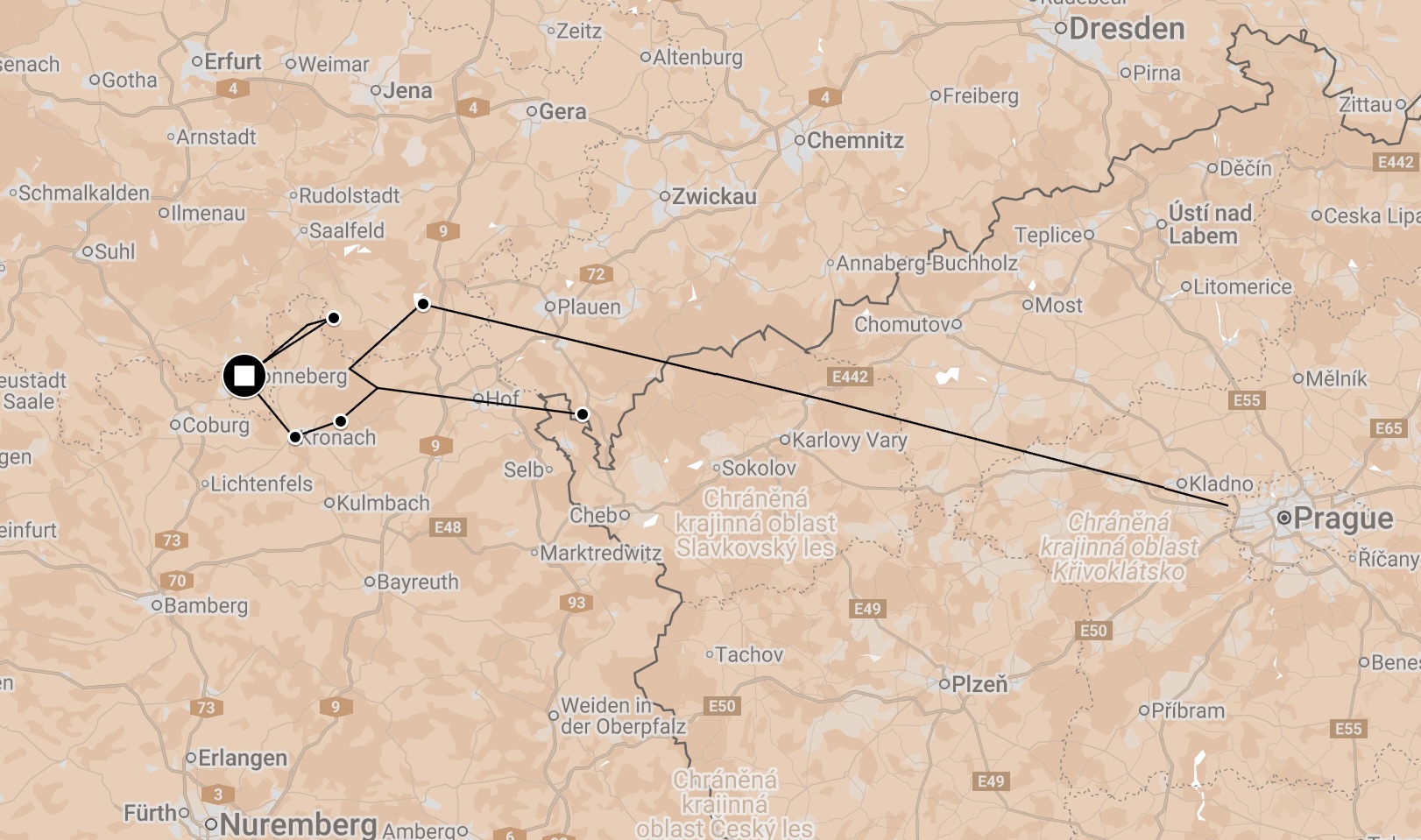
There were two march routes. The longer of the two led from the camp through the upper town of Sonneberg , to Schusterhieb and Steinach , then towards the Laura subcamp of the Neuengamme concentration camp near Lehesten on the Rennsteig trail , before returning to Sonneberg. From Sonneberg, the march led through the Bavarian towns of Kronach, Wallenfels, Geroldsgrün (12/13 April), and Nordhalben, and through the Thuringian town of Saalburg. The route continued through Thuringia and Saxony into modern-day Czechia.
The second march route probably led via Köppelsdorf and Friedrichsthal to Bad Elster.
Only half of the prisoners survived.
”The SS officers would consult their maps from time to time, and some of them riding bicycles , would go ahead of the column. Although the time was early April (the first or second day of April), the weather was cold. There was sleet, which would quickly turn into mud beneath our clogs … One of my friends became feverish. His face was red, and his steps became unsteady … He began to talk incoherently (I cannot even remember his name) and by now his temperature must have been very high. Before long he was at the end of the column. We heard a shot but dared not look back.”
Michael Etkind, quoted in Martin Gilbert, The Boys: The Story of 732 Young Concentration Camp Survivors (Wiedenfeld & Nicholson, 1996).
There were two marches. One led into what is the modern-day Czech Republic and the SS guards fled when it was 50km from Prague. The other went in the direction of Bad Elster and was liberated by the American army. Moses Etkind was on the second march.
It Was the Last Night
It was the last night
Of the war
We did not know it
Yet
We lay there
Cramped
Upon that barn floor
Three to four hundred
Starving men
We did not count
How many of us were still left
The Germans did
Each day
The living and the dead
The ones they shot
The few who ran away
He lay beside me
And began to speak
‘I’ll never see my wife
Nor eat a slice of buttered toast’
He whispered in my ear
Around us we could hear
The moans and groans
Of slowly dying men
And German voices yelling
‘Schweigen!’
From time to time
They walked
Across the barn floor
To silence someone
Who could not keep still
At dawn
They ordered us to rise
My friend
Who lay beside me
Did not stir
They buried him
Behind the barn in the field
Together
With some other men
Two hours later we were free
It was the eight of May nineteen forty-five

 About
About History
 Education
 Quilts
 FIlms
FIlms Photos
 News Media & Events
 Publications
 Donate