Members of the Boys were held in Nazi labour and concentration camps and used as slave labourers.
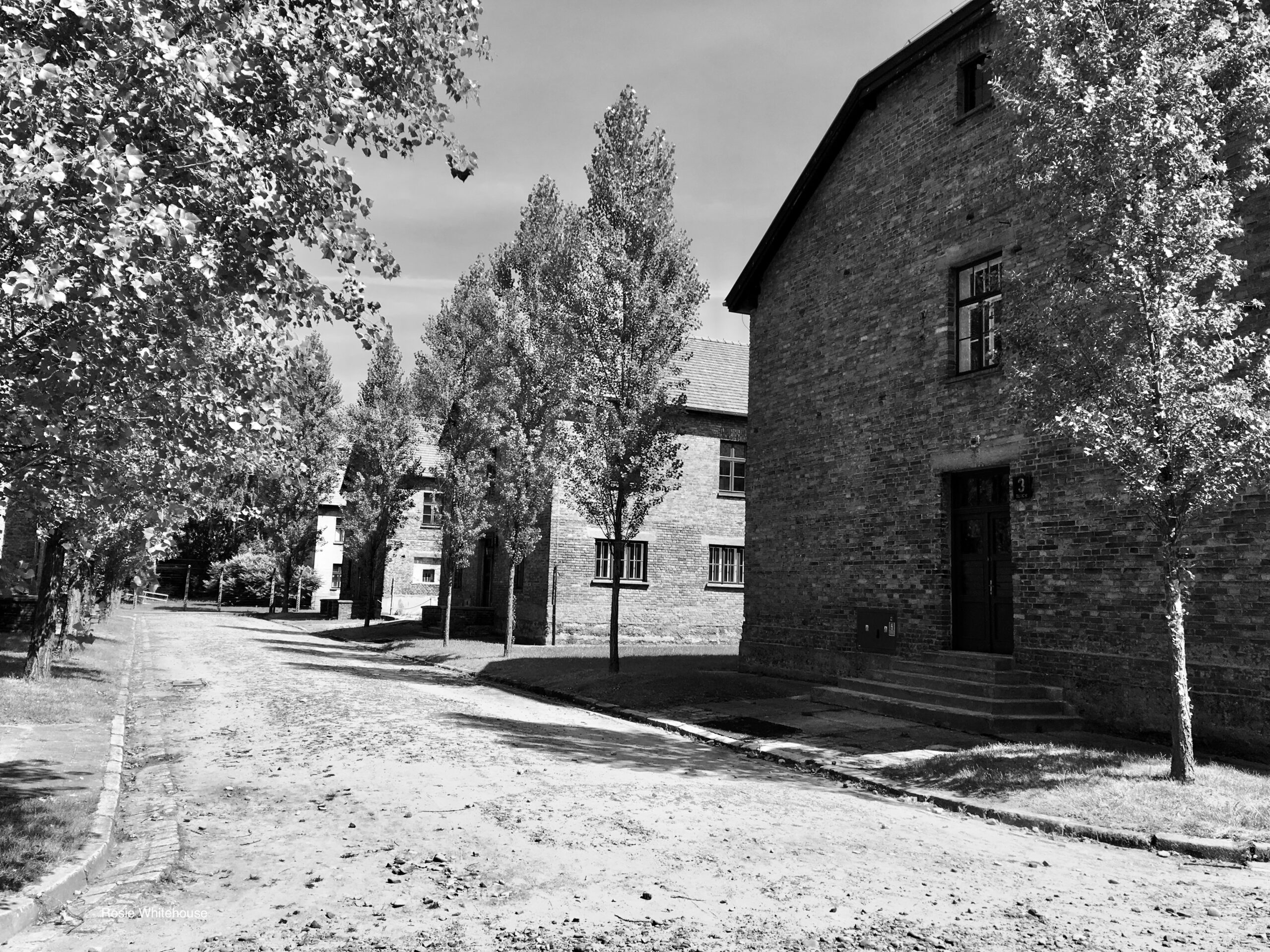
From 1933-1945 Nazi Germany operated over 1,000 concentration camps and subcamps in its own territory and across German occupied Europe. Among them was the Auschwitz concentration camp complex.
As the camps were dissolved thousands of people among them members of the Boys endured horrific evacuations from the camps on foot, in freight wagons and open top trains, as well as perilous journey across the Baltic Sea.
The Boys were teenage and child-Holocaust survivors, who were brought to the UK after the war for rest and rehabilitation.
Overview
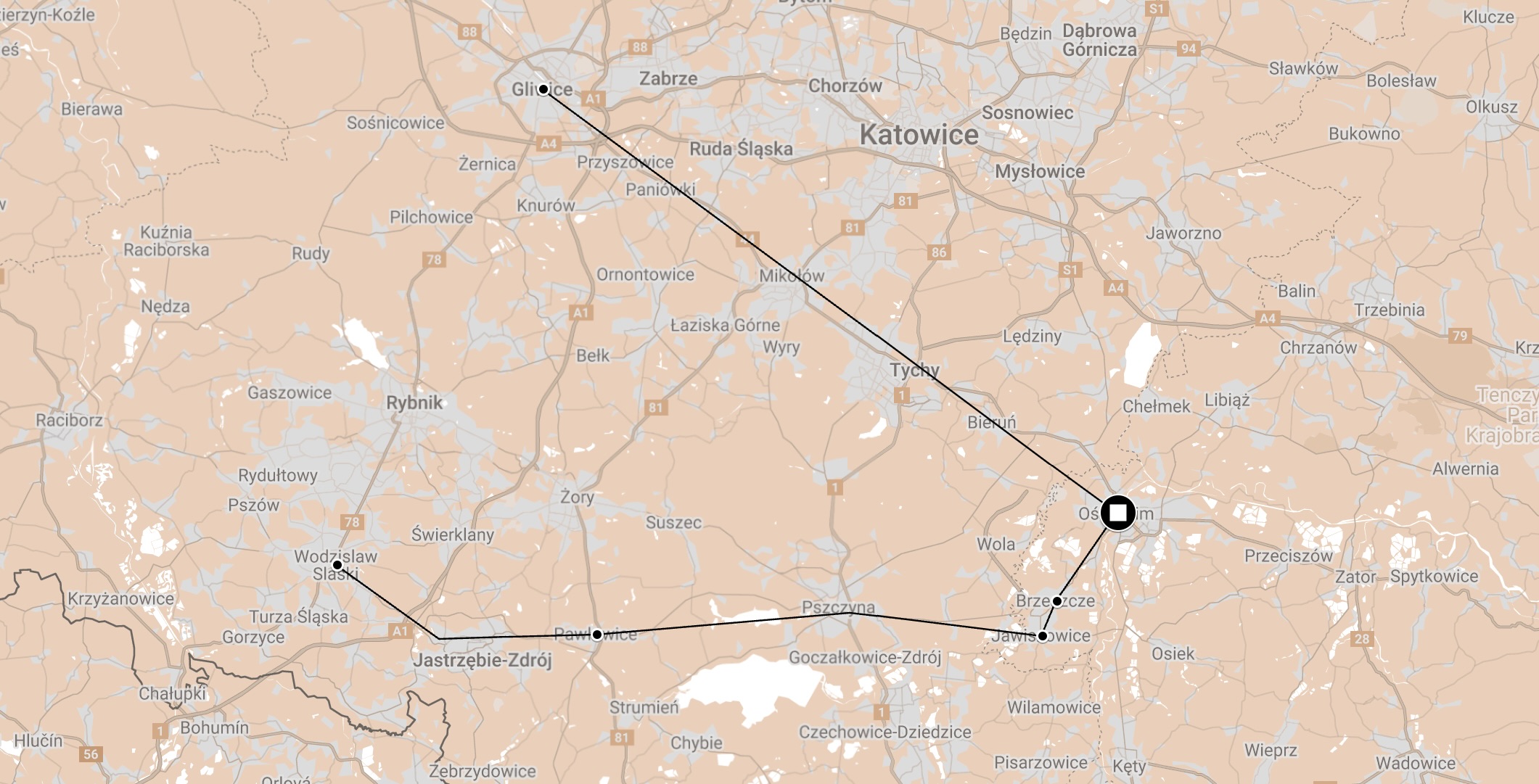
Between 17-21 January 1945, approximately 56,000 prisoners from the Auschwitz concentration camp complex were evacuated westwards as the Red Army advanced across Poland. Preliminary evacuations had begun in the later autumn and early winter of 1944.
Prisoners were marched in columns out of the main complex and its subcamps. The longest death march from Auschwitz was from the Jaworzno subcamp, from which 3,200 prisoners marched 250km to the Gross Rosen concentration camp.
The main evacuation routes led to Wodzisław Sląski, then known by its German name Loslau, and the subcamp of Gleiwitz, now Gliwice in Poland, where many of the prisoners were forced into trains often into open-topped wagons.
The list of Boys on this page gives the names of those of the main death march from Auschwitz. For the names of those on other death marches see the relevant death march from the Auschwitz subcamp.
“We were given a piece of bread and a bit of margarine for the road. At about midnight, we began to march. As we left Auschwitz and approached the main highway, we saw women’s bodies littering both sides of the road. The women’s camp had been emptied ahead of us. I had a piece of bread and the margarine in my armpit. It was bitterly cold out and the margarine was frozen. I tried to rub it on to my bread, but it was too hard. I stepped out of line, put the bread on my knee and tried to spread the margarine on the bread using my knee for support. Suddenly I felt a gun pointing at my neck and heard a guard threatening to shoot me. I got back in line and continued marching.
We lost a lot of people that night.
The following day, as we continued to stagger on the march, I saw German families walking to church. The parents covered the eyes of their children so they would’t look at us. That picture is vivid to me, even now.”
Arnost Friedman, later Arnold Friedman, written testament for the Azrieli Foundation.
Friedman was 16 years old.
He survived the death march to Goss Rosen and was their sent by train to the Dachau concentration camp.
Those unable to keep up with the column on the forced marches were shot by the roadside and many died of exposure and exhaustion. Many of the marches took place at night.
Thousands of corpses, dead horses and overturned vehicles lined the routes of the death marches. Historians estimate that between 9,000-15,000 prisoners died during the evacuation.
Many Polish and Czech residents of localities along or near the evacuation route came forward to help the evacuees. For the most part, they gave them water and food and also sheltered escapees.
The evacuation of the subcamps was not consistent and orders to prevent prisoners falling into Soviet hands were not rigorously applied.
In the Blechhammer subcamp many of the sick who had been left behind were shot by returning SS guards. In Fürstengrube and Gleiwitz IV the retreating SS set fire to the barracks in which the sick prisoners were housed, while in the Laurahütte subcamp the sick were forced onto the death march. The Freudenthal camp was abandoned and the prisoners liberated by the Red Army.
They were transported into the Altreich to camps at Mittelbau-Dora, Buchenwald, Sachsenhausen, Mauthausen, Flossenbürg, Ravensbrück, Bergen-Belsen. Other marches continued onto Gross Rosen were prisoners joined train transports to the Altreich camps.
Memorialisation
There are a number of memorials along the route that mark the site of massacres and mass graves.

 About
About History
 Education
 Quilts
 FIlms
FIlms Photos
 News Media & Events
 Publications
 Donate