The Boys were teenage and child-Holocaust survivors, who were brought to the UK after the war for rest and rehabilitation.
The Boys had survived the Holocaust as slave labourers in the Nazi concentration camp system, in hiding and by living alone.
After arrival in the UK, members of the Boys spent time in the reception centres before being moved to children’s homes known as hostels. Others were sent direct to boarding school or yeshivas, and those who were sick spent time in sanatoriums.
Bunce Court was one of these schools.
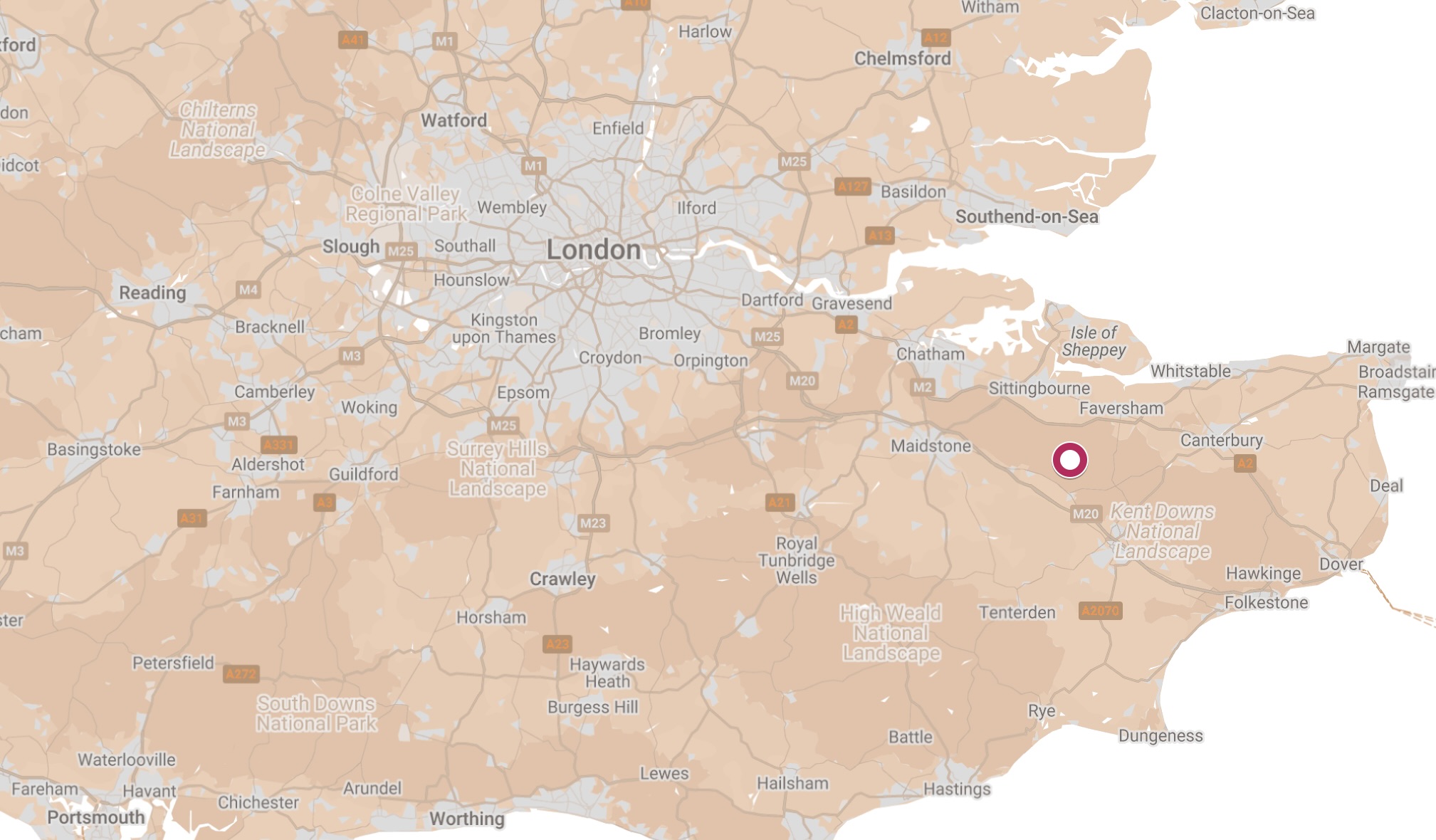
Bunce Court is situated in the village of Otterden, in Kent, south-west England. The house is a historic mansion and Grade II listed building.
The Bunce Court Story
Bunce Court was part of a network of boarding schools oriented towards the German progressive educational reform tradition of Landerziehungsheime (literally “countryside educational homes”). Teachers and educators who were forced out of Germany after 1933 on political grounds or as a result of their Jewish ancestry founded more than 20 schools in exile across the world.
In Britain alone, there were seven such schools, among them Butcombe Court and Stoatley Rough, where other members of the Boys boarded.
“I felt proud that I was chosen to go to school. I travelled to my first school in England, called Bunce Court. I felt adventuresome to have been trusted to travel on my own, and not to be accompanied by an adult. I spoke enough English to follow directions and ask for help if I needed it. I took a bus from London to Otterden, Kent. The bus let me off on the highway that was four miles from the school. I was carrying my little suitcase with me that contained a few articles of clothing, but it held no remnants from my past life. The walk was uphill, but I didn’t mind it as it gave me a chance to look at the English countryside. The scene before me was green rolling hills with scattered farms. The sheep and vivid green landscape were great contrasts to what I had previously experienced. I was seeing a prosperous countryside instead of the impoverished peasants I remember from Poland.”
Sidney Finkel, Sevek and the Holocaust: The Boy who Refused to Die (2006).
The exile schools differed from one another conceptually and organisationally in several respects but they all had one common task: to support the uprooted and confused refugee children as they developed a new and complex identity and came to terms with an alien environment.
Anna Essinger, known to pupils as Tante Anna, opened the school in 1926 in southern Germany, where she grew up. She came from a well-established, non-practising Jewish family. Essinger was influenced by Montessori and Quaker ideas and her school used methods that were child-centred and far removed from the rigid style of the day.
When the Nazi party began to gather strength, it became evident that the school could not survive. So in 1933, more than 65 children and staff went “on holiday”, audaciously eluding the Nazis, to settle at Bunce Court in Kent.
Daily Life
The curriculum at Bunce Court provided a rich mix of practical and academic studies, music, handicrafts and the arts with numerous leisure activities. There were no funds for domestic help or upkeep so every child had chores to do in the house and grounds.
Initially, Essinger had hoped that the children’s parents would be allowed to follow them but the move was not supported by the British government. Essinger also took in a large number of children from the Kindertransports. She also took on additional staff, who were restricted by British wartime regulations from professional posts.
Music and outdoor activities were a key part of the curriculum.
The Boys in Bunce Court
“To help them integrate, Tante Anna arranged for certain pupils to form small teams to ‘adopt’ one of the concentration camp boys. Language was an immediate barrier. British pupil Harold Jackson remembers making ‘a terrible blunder’ right away. The Holocaust survivors all spoke different languages … ‘The first question was, what language shall we teach them?’ recalls Harold. ‘And I said, “we all speak German, why don’t we teach them German?” Well that went down like a lead balloon.’…
Initially much communication was non-verbal. Harold Jackson was part of the small team who ‘adopted’ Russian survivor, Shaya Kushnirowski. ‘We took him down for breakfast on the first day and Shaya looked at his bowl of cornflakes and had absolutely no idea what they were. He sat and stared at the ..’ Harold demonstrated how to eat cornflakes.”
Deborah Cadbury, The School That Escaped the Nazis (Two Roads, 2023).
There were ten child holocaust survivors in the school. Erwin Bruncel, later Emeritus Professor of Organic Chemistry at Queen’s University in Canada, said he left Bunce Court “…with curiosity and a love of learning that has stayed with me ever since”.
Essinger closed the school in 1948 but stayed on in the house until her death in the 1960s. After her death, the house became an old people’s home and then a private residence. A number of houses were built in the grounds in the 1990s.
List of Staff
Anna Essinger
Fridolin Friedmann. Essinger briefly hired Friedmann as headmaster of the school.
Frau Berthe Kahn (née Essinger) was in charge of housekeeping.
Paula Essinger. ‘Tante Paula”, head of the kindergarten and school nurse in charge of the “isolation hut” (school clinic).
Yogi Mayer, known to The Boys as the head of the Primrose Club, was a visiting sports tutor.
Dr Walter Isaacsohn taught history Scripture and Jewish subjects, led Friday evening and holiday services.
Friedman taught History
Mr Horowitz, taught History and English,
Hanna Bergas taught History.
Hannah Goldschmidt taught Geography.
Norman Wormleighton taught English.
Hilde Oppenheimer-Tod taught French.
Helmut Schneider taught maths and played piano at school concerts.
Lotte Kalischer taught Music.
Maria Dehn, taught Biology and was the head gardener
Hans Meyer taught woodwork.
Muriel Shushi was also a teacher
Gretel Heidt was the cook
Pilar Marckwald was the kitchen helper.
Bruno Adler was a staff member.
Miss Clifton was also on the staff.
Willert Denny was also on the staff
Wilhelm Marckwald did odd jobs.

 About
About History
 Education
 Quilts
 FIlms
FIlms Photos
 News Media & Events
 Publications
 Donate