The Boys were teenage and child-Holocaust survivors, who were brought to the UK after the war for rest and rehabilitation.
The Boys had survived the Holocaust as slave labourers in the Nazi concentration camp system, in hiding and by living alone.
After arrival in the UK, members of the Boys spent time in the reception centres before being moved to children’s homes known as hostels. Others were sent direct to boarding school or yeshivas, and those who were sick spent time in sanatoriums.
Some of the members of the Boys were lucky enough to find relatives or were taken in by foster families but the majority were moved to hostels.
Cardross was one of these hostels.
Overview
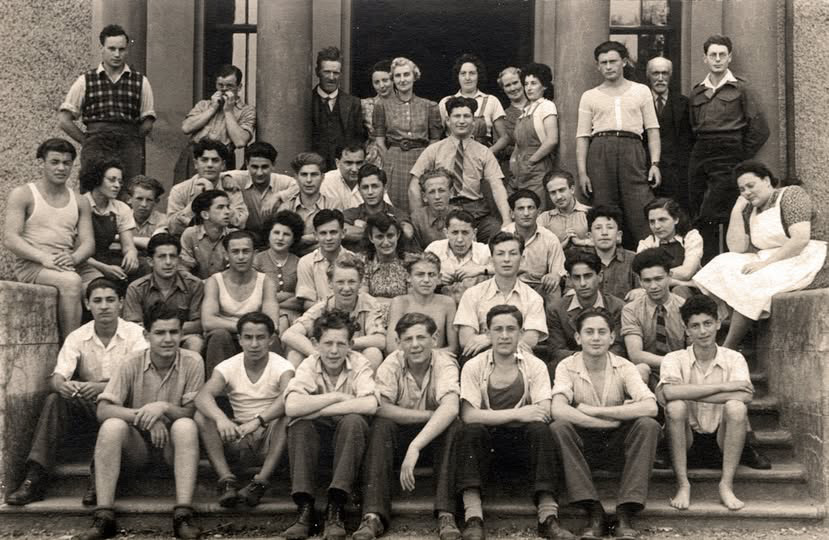
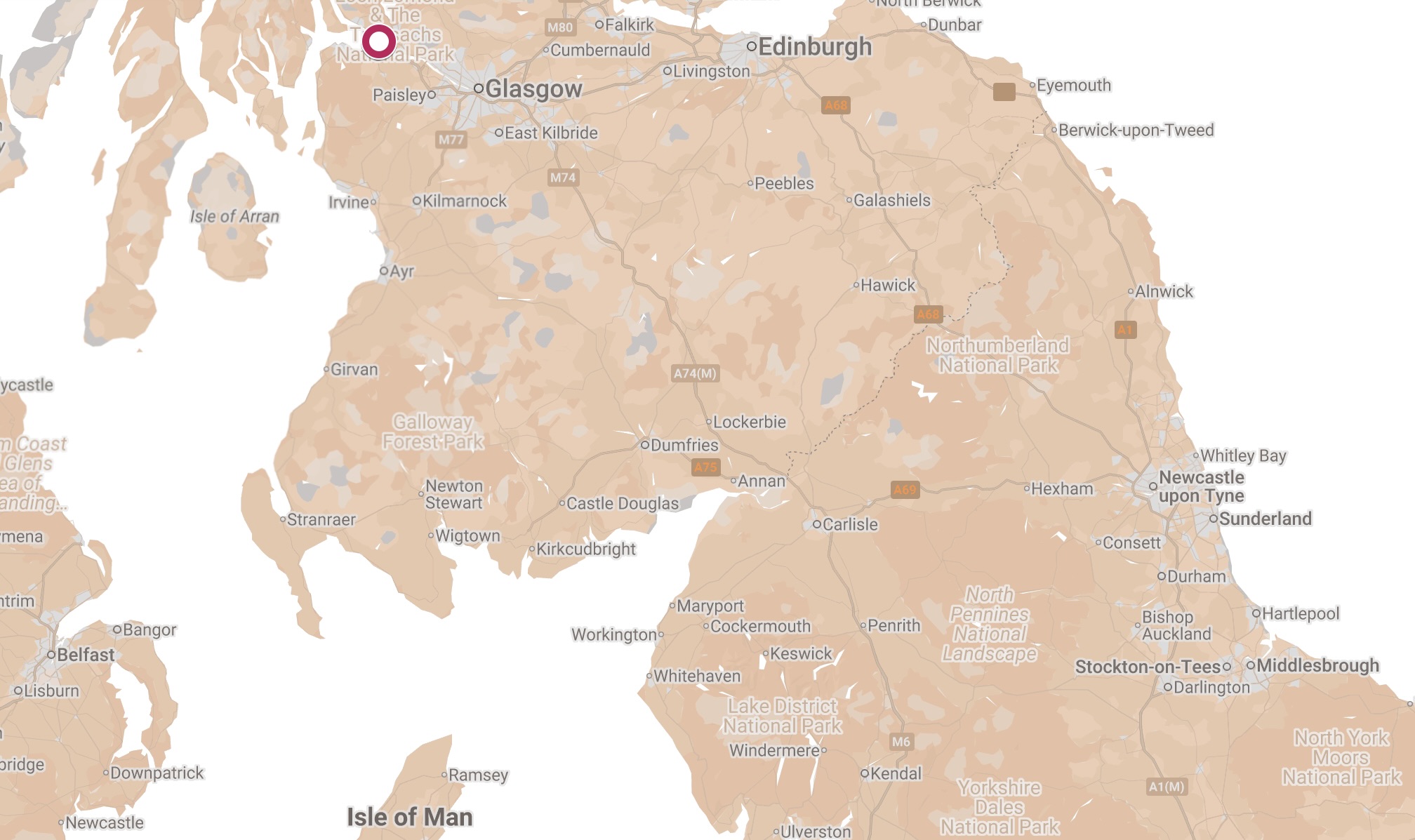
The hostel was in Cardross in Dumbartonshire, western Scotland, 48km from Glasgow. The hostel opened in autumn 1945 and was home to Boys of Polish, Hungarian and Romanian origin.
Nothing is known about the Boys in Cardross today.
The House
Cardross hostel was in Darleith House, a large country mansion with a tennis court.
After being used as a seminary until the mid-1960s the house was then empty and classified as a building “at risk’. It was severely damaged in a fire and has been partly restored, but some parts of the house remain derelict.
The Cardross Story
The children were sent here for recuperation and rest from the Windermere reception centre. It was not intended to keep them in Darleith House for longer than a year.
“It was a beautiful building set in the middle of the countryside. The nearest village was three miles away. We were sent there to recuperate, as most of us still had something wrong, and also for us to learn English and other subjects. A few months later other boys of various nationalities joined us, from Poland, Hungary and Rumania. The hostel became very lively and exciting. The following year I had a fantastic life in the hostel, trying to learn English, which was not very easy, and to begin a new life and try to put the sad and bad memories behind me as best I could.”
Krulik Wilder quoted in Martin Gilbert, The Boys: The Story of 732 Young Concentration Camp Survivors ( Weidenfeld & Nicholson, 1996).
The Committee for the Care of the Concentration Camp Children regarded the Cardross hostel as exemplary but expensive.
Mayer Cornell described Cardross as ‘an ideal place to continue our recuperation’. The emphasis was on learning English and establishing the Boys’ state of health. Teachers were recruited from the nearby town of Dumbarton to teach the boys a range of subjects. Cornell remarked that “we were very hungry to learn, and [the teachers] responded accordingly. They gave up a lot of their time to teach us…we were invited to their homes for Sunday tea.” The Glasgow Jewish Community also provided teachers in Hebrew and Jewish studies.
Harry Olmer recalls that the boys performed plays and were very happy there. Julie Mahrer, the cook, remarked: “It was a pleasure to feed them because they used to eat!”
The Boys stayed in Cardross for about a year. When the hostel closed, 25 boys were moved to Glasgow and those who wished to go to the United States were sent to the hostel in Burnley, Montford Hall.
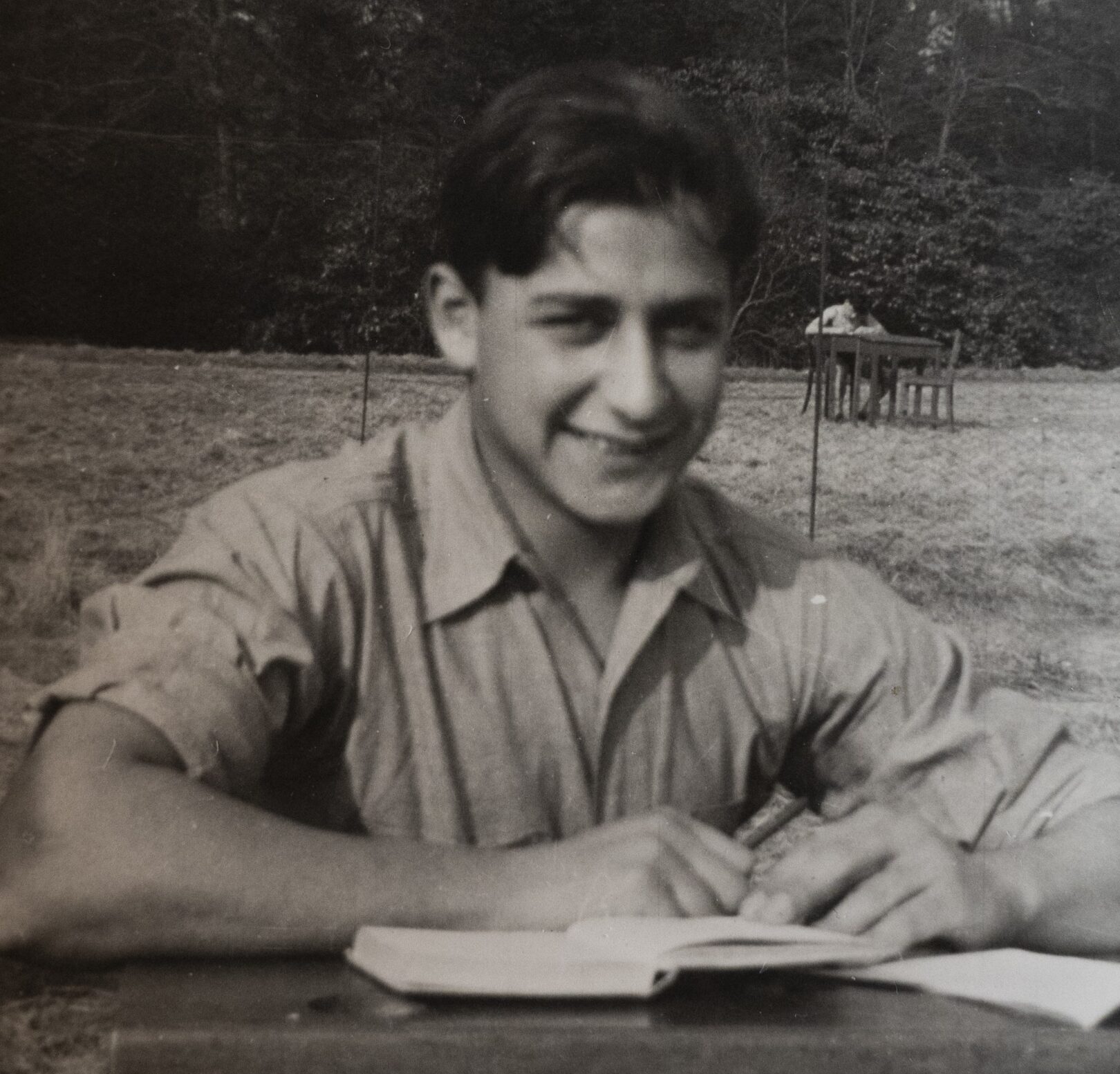
Harry Olmer was one of the Boys in Cardross:
The Staff
The Cardross hostel was run by two Jewish women from Glasgow, Dora Woolfson and Elsie Heilbronn, who had previously set up the Garnethill Refugee Hostel in Glasgow.
Dela Bamberger was sent by Bachad to work there, as it was noted that a more religious madrich was needed.
Maureen Livingston taught English and went to Darleith once a week. She had been in the reception camp in Windermere, where she looked after the smallest children, before taking them to Bulldog’s Bank, where she spent a few months before returning home to Glasgow. Mr Smith also taught English.
Julie Mahrer, the cook, Austrian, came to England before the war. A Miss Curtis and a Miss Belf were both laid off to cut costs in March 1946.
 About
About History
 Education
 Quilts
 FIlms
FIlms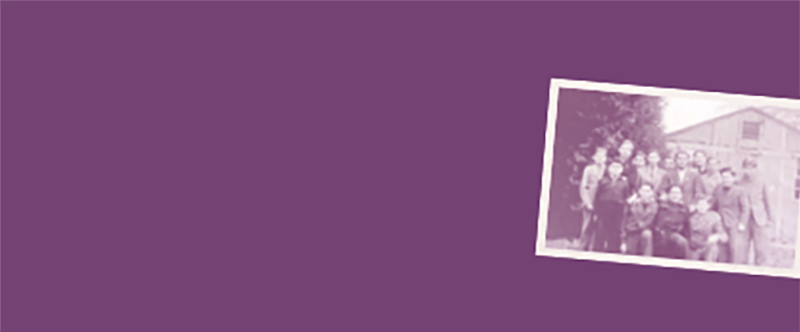 Photos
 News Media & Events
 Publications
 Donate