The Boys were teenage and child-Holocaust survivors, who were brought to the UK after the war for rest and rehabilitation.
The Boys had survived the Holocaust as slave labourers in the Nazi concentration camp system, in hiding and by living alone.
After arrival in the UK, members of the Boys spent time in the reception centres before being moved to children’s homes known as hostels. Others were sent direct to boarding school or yeshivas, and those who were sick spent time in sanatoriums.
Some of the members of the Boys were lucky enough to find relatives or were taken in by foster families but the majority were moved to hostels.
The Boys came in five groups between August 1945 and April 1948.
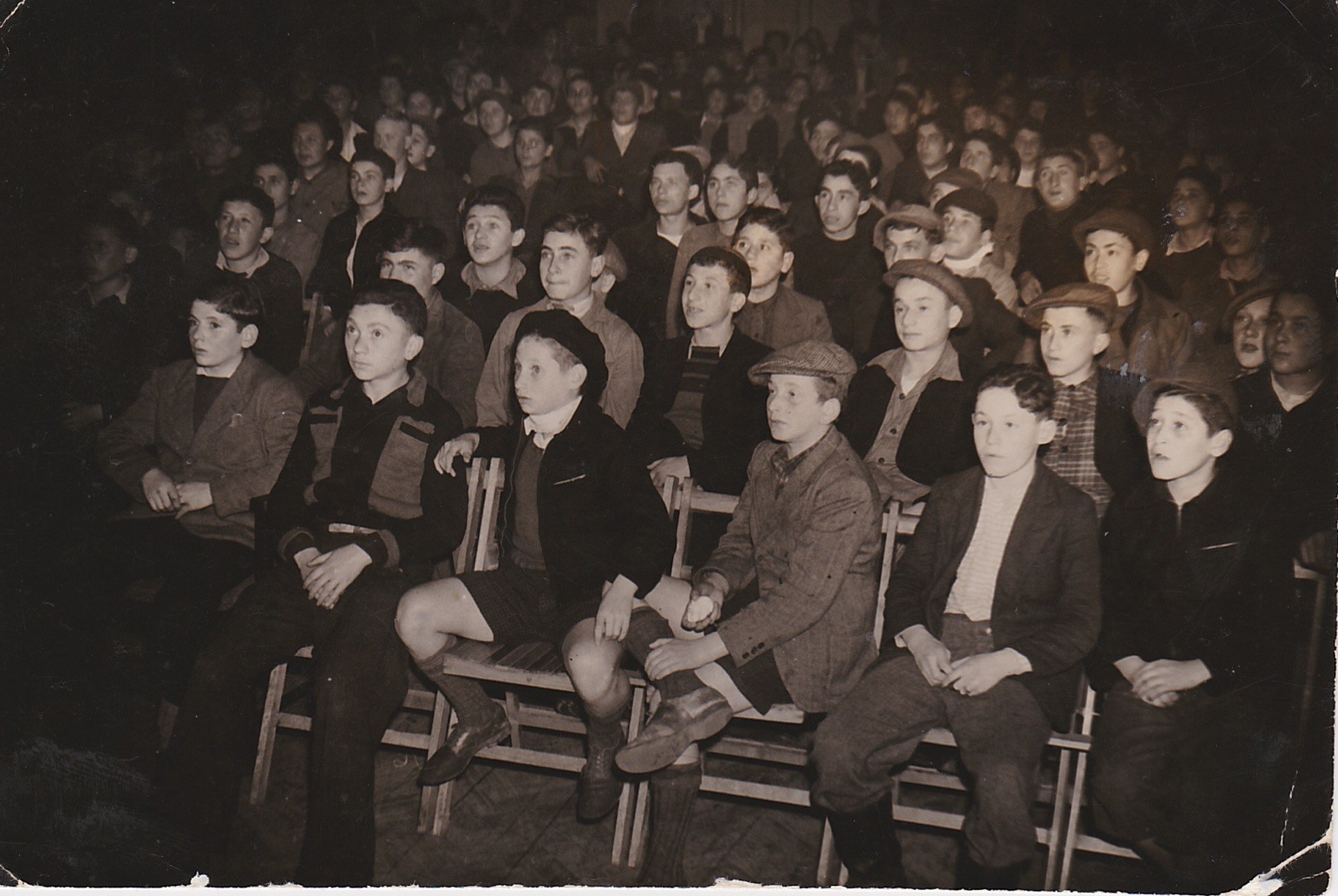
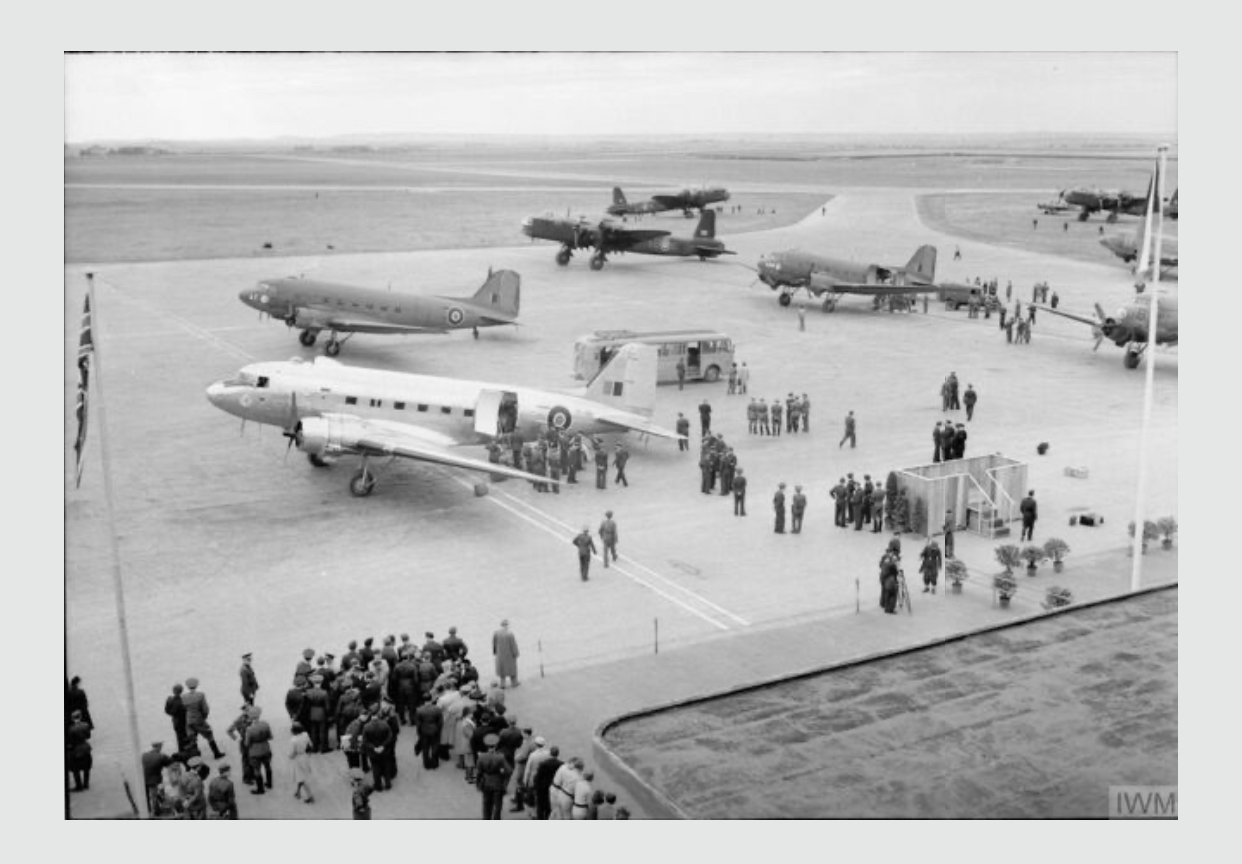
On 14 August 1945, the first group of the Boys were flown from Prague on RAF bomber planes to Carlisle, in the north-west of England.
The first group of the Boys was made up of 300 children and teenagers who had been given visas to come to the UK and one stowaway, who was allocated a visa on arrival.
The group included some of the youngest children who had been imprisoned in the Theresienstadt Ghetto and 43 girls.
The staff at Windermere were extremely apprehensive about the arrival of the children. Margot Hicklin was among them and remembered in her pamphlet, War-Damaged Children, published in 1946, that it was “with a sense of deep apprehension that the thirty teachers, youth leaders and social workers who were to receive the first 300 children from the concentration camps in England in July, 1945, looked forward to their task.”
Overview
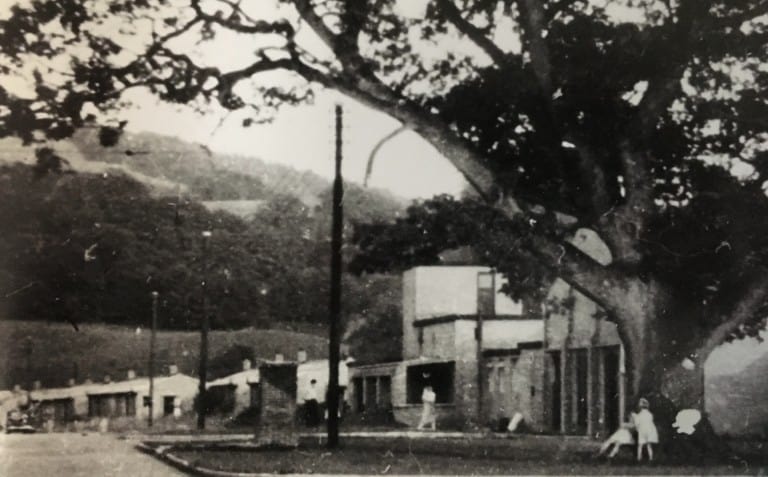
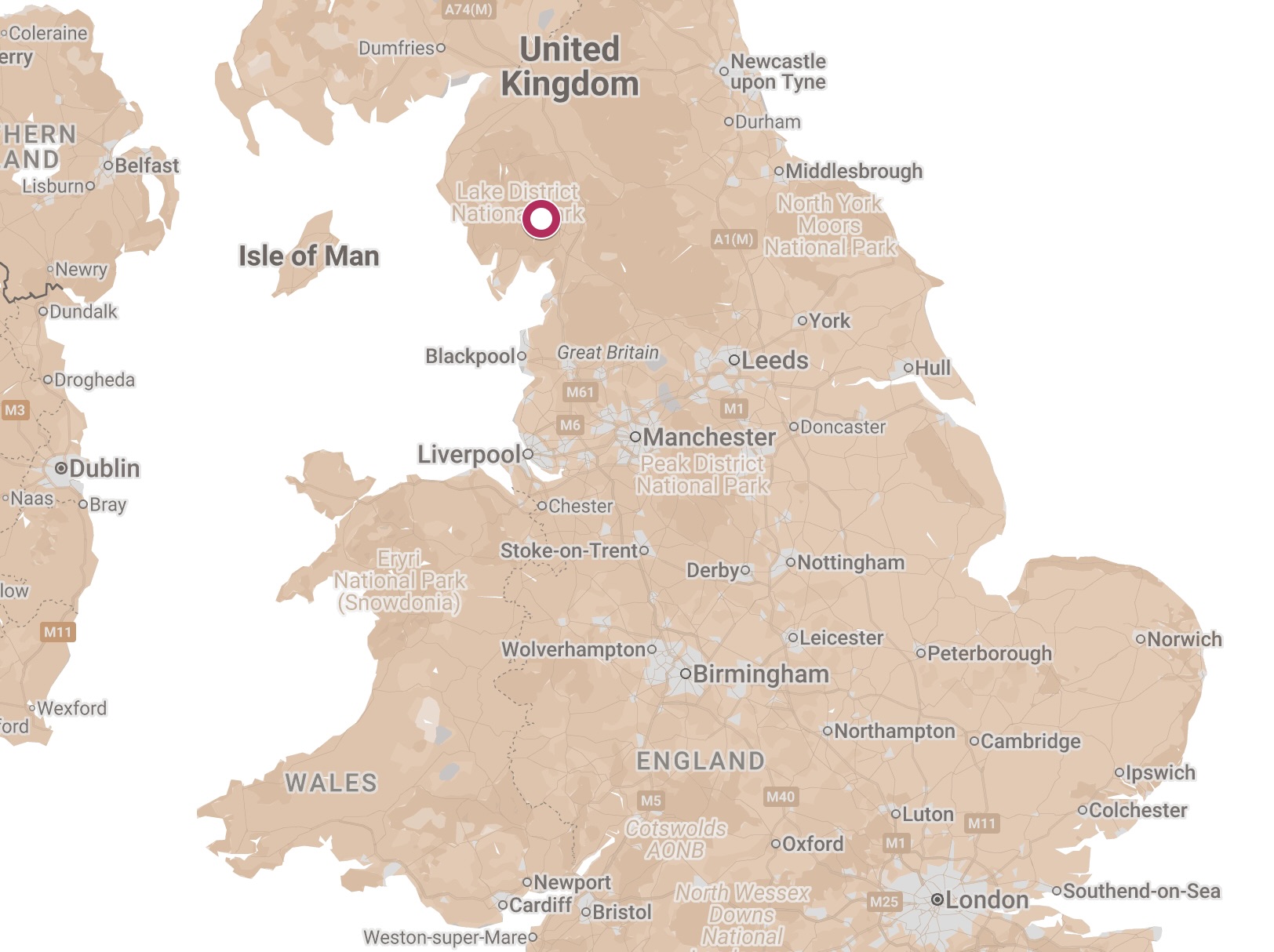
The Windermere reception centre and hostel was near the village of Windermere, in the Lake District, in the county of Cumbria, north-west England.
The site made up the former Calgarth Industrial Estate, which had been used to accommodate aircraft factors workers during the war.
“I was among the first ones to arrive, and we were allocated chalets, which were prefabricated buildings. We each had a bed with white linen on! There were showers and urinals. We couldn’t believe our eyes!”
Arrival
Waiting to greet them was a team from the Central British Fund who had organised their transport and care in the UK. Leading the team was Sir Leonard Montefiore, the chairman of the Committee for the Care of the Children from the Concentration camps.
Among those waiting in the airport building was Alice Goldberger. It was her 48th birthday.
“Plane after plane of youths arrive, mostly boys, but very few girls. They had a grey, aged look which made it difficult to tell how old they were .We were relieved by their happiness on arrival. They joked, they laughed, they asked us whether they would be able to go to school. We welcomed each and asked them their age, most said they were between thirteen and fifteen, but it was hard to tell. (Later we realised that even those who were over sixteen would not admit to it because they would not have been allowed to enter the country as part of the special children’s airlift if they were older.) We began to worry after so many planes of youths arrived that there would be no small children. I thought about the dolls and bears in each of the beds and what a joke they would be to these adolescents when they got to their beds in Windermere. Finally, the last two planes arrived with less than twenty young children in them.”
Alice Goldberger, quoted in Sarah Moscowitz Love Despite Hate: Child Survivors of the Holocaust and their Adult Lives (Schoken, 1983).
Among those waiting to greet the Boys was an 18-year old Jewish reporter from the Carlisle Journal, Joseph Finkelstone. He had not been briefed about the story and did not know who the children were.
He later recalled that when he arrived back at the office and sat down at his desk to write the article he was overcome with emotion. “By that time, I already knew that most of my own close relatives, including cousins of the same age as the youngsters at the airport, had been murdered … Putting my head down on the typewriter, I wept.”
The Windermere Story
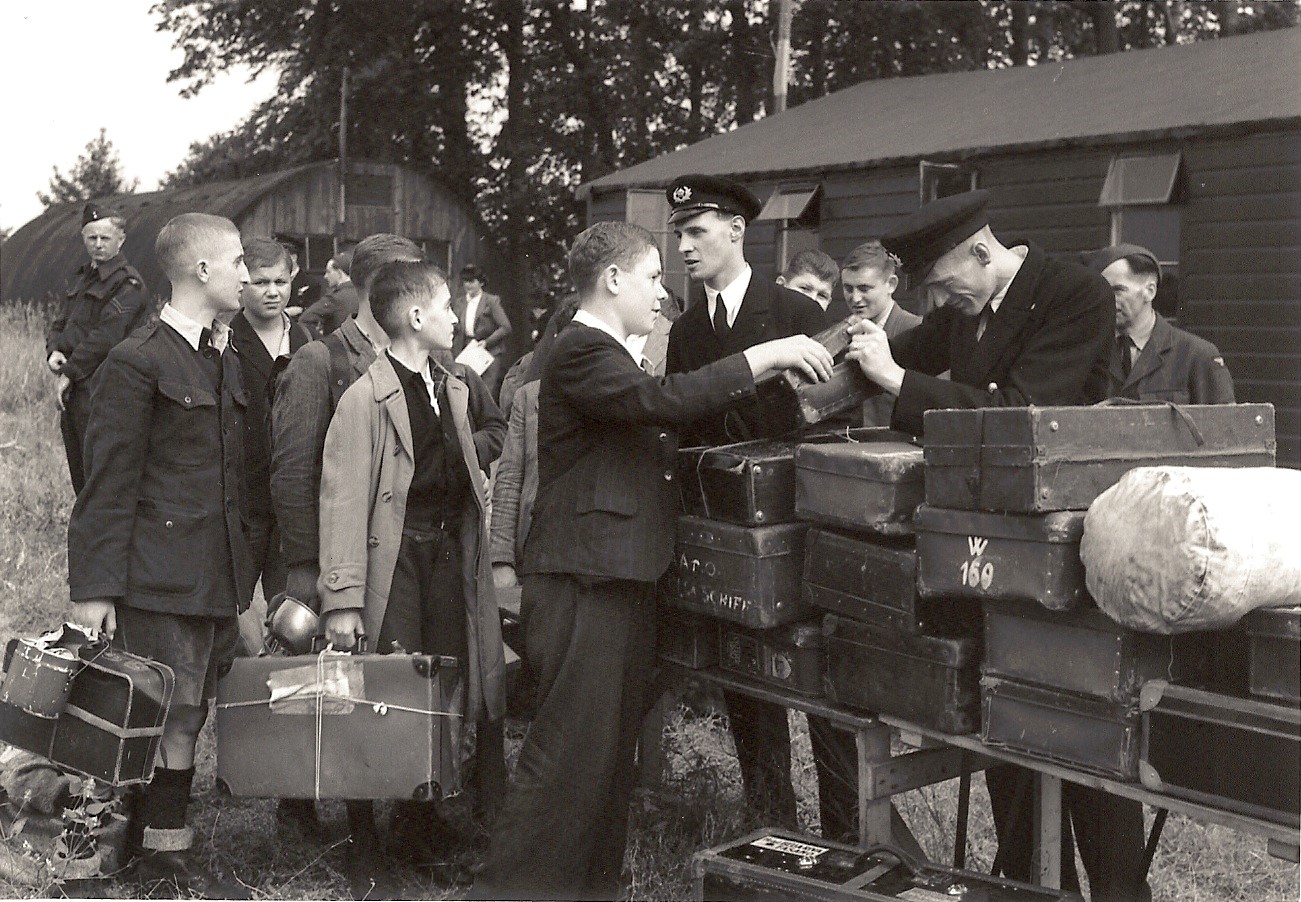
The Boys were taken by bus to Windermere. On arrival, they were given biscuits and hot chocolate. They were then checked for by doctors and nurses, before being shown to their rooms.
Sala Newton-Katz on the Windermere Hostel:
The children each had their own room in small cabins, with a single bed, clean sheets, pyjamas, toothbrush, soap, towel and slipper. As Harry Balsam remarks, “It was sheer heaven, never in my life until then had I known such luxuries.”
“Each part of our lives had to be normalized. Our daily habits needed an incredible amount of modification. We didn’t speak English and began learning the basics … I am/you are/ they are. Rabbi Wise encouraged us to play soccer with him. Everyone supported us. The fear of tomorrow was gradually being replaced with the security of certainty. We knew we would eat, have clothes, shoes and so on. I accumulated five pairs of pants, just to store them away. Someone asked me why I did it and I said, ‘I won’t have any tomorrow.’ It wasn’t long before we started to laugh at ourselves.
The life and habits of the ghetto and the concentration camps began to fade. We had such freedom. One day I swam across the lake. However, I could not stop thinking, ‘What was our future?'”
Victor Breitburg, A Rage to Live: Surviving the Holocaust So Hitler Would Not Win (2020).
Daily Life
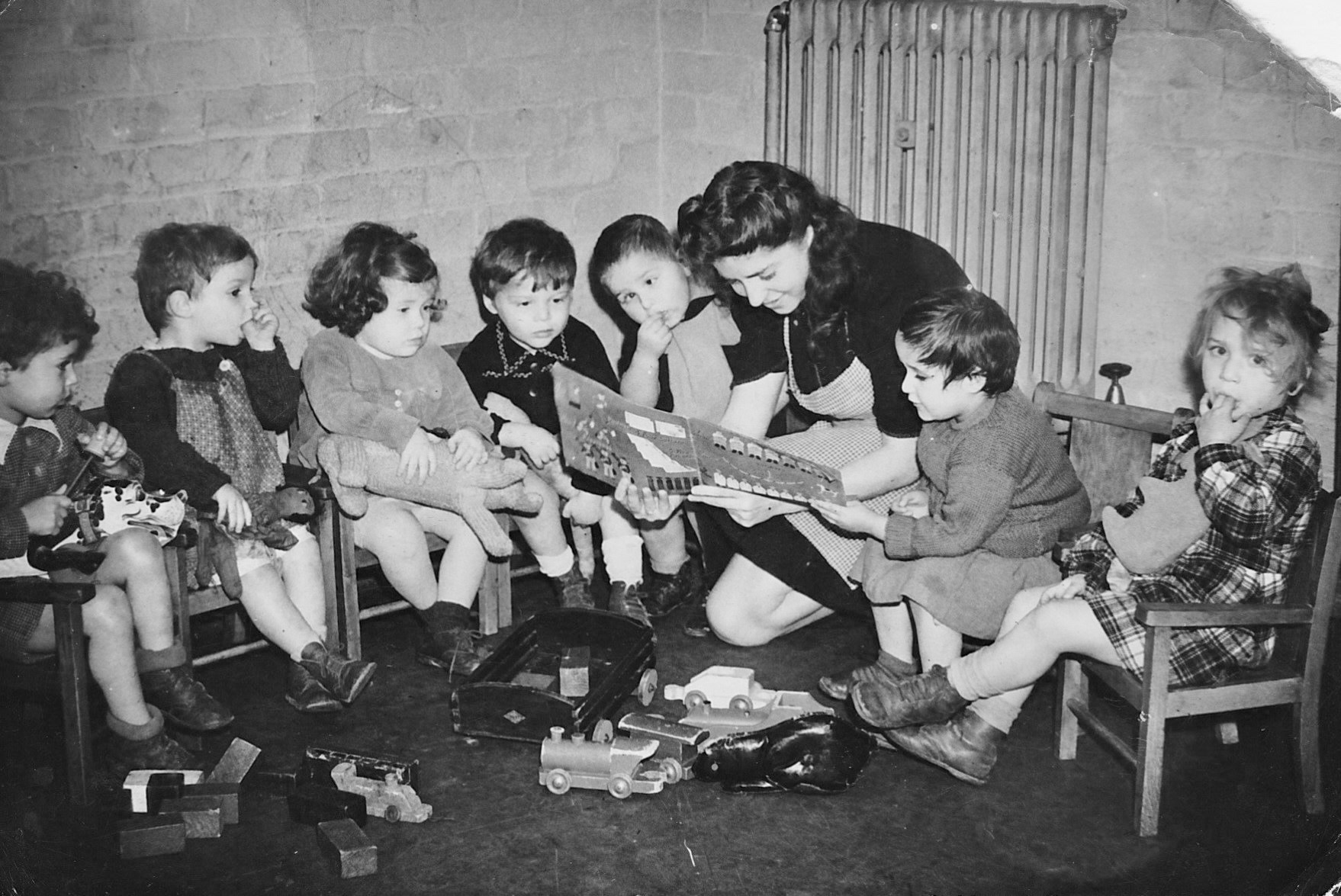
Bela Rosenthal on her experience as one of the six youngest children who came from the Theresienstadt Ghetto:
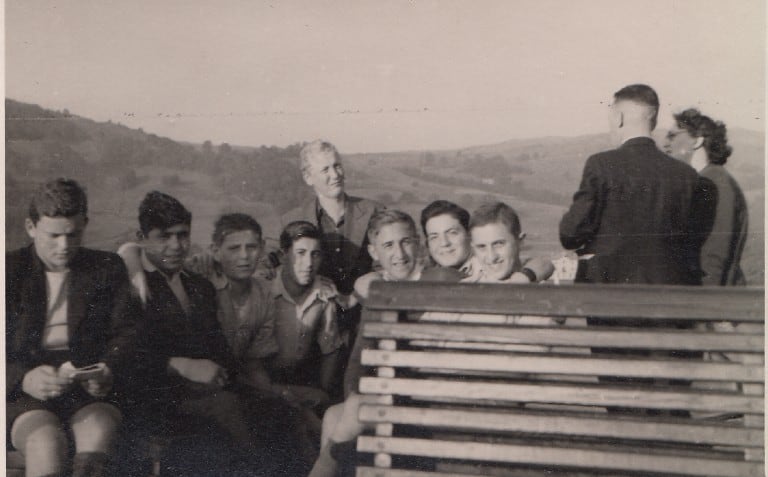
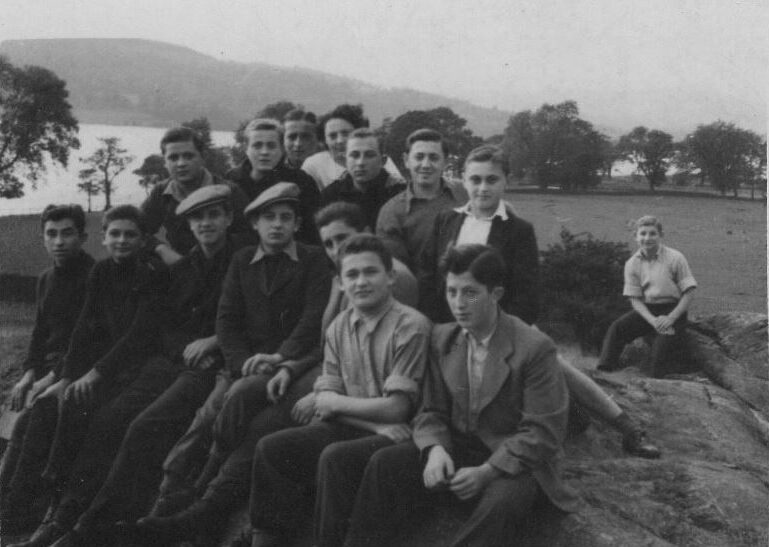
Over the next six months, the children enjoyed sports, education and outdoor activities. They played football, table tennis and many other sports, went on trips to the surrounding countryside, were taken to the local theatre and shown films on a cinema-style projector.
Daily English classes were compulsory, as well as lessons in maths, history and current affairs. One of the youth leaders, Berish Lerner recalled that an effort was made to introduce English customs and to teach them Jewish history.
Wolfgang David Gordon, a pre-war refugee from Germany, was in charge of the school. He was surprised by the children’s enthusiasm and desire to learn. They showed considerable respect for their teachers.
Marie Paneth was one of the therapists in Windermere. She used art as a form of therapy.
“The pictures I now saw laboriously produced spoke of the desolation wrought in each individual child. Many were big and bold – a gravestone filing half a sheet of wrapping paper; a stretch of barbed wire tearing through a white sheet, with one guard in the middle; a plain of grass cut into shreds by black lines – documents which evaporated a screaming emptiness. These were more painful than their tales , and, in their rigidity, gave away the secret of the silent effort which must have enabled survival.”
Marie Paneth, Rock the Cradle (2nd Generation Publishing, 2020).
The hostel was situated next to Lake Windermere, where Roman Halter took up swimming on the advice of a local doctor. “I swam morning and afternoon, and became quite a good swimmer, so much so that by 1950 I took part in the Maccabiah- the Jewish Olympics.”
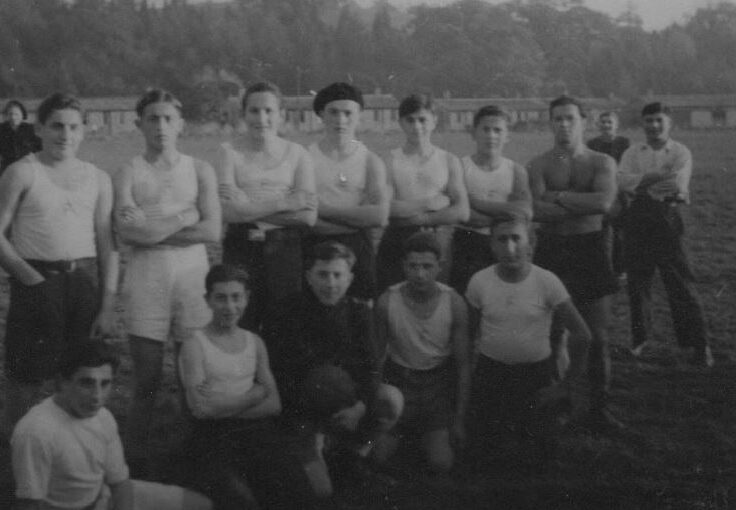
They would visit the local cinema, where “only one or two of us would pay, while the others sneaked in, while the cashier was distracted”, recalls Abraham Zwirek. They were given pocket money and bicycles, and were fitted with clothes in the nearby town of Kendal, donated by Burton tailors.
“I was reborn in Windermere in 1945”, remarked Michael Perlmutter, while David Hirschfeld recalled “It felt like heaven”.
John Fox remembers his time in Windermere:
Gradually, they were moved to other hostels across the country, and the final group left Windermere in early 1946.
Sickness
Within weeks of their arrival at least 40 of the group fell ill and were diagnosed with tuberculosis.
Those who were acutely ill were taken immediately to the Westmorland Sanatorium. They were then taken to the Ashford Sanatorium in Kent, where one of them would die.
Memorialisation
The story of the children has been commemorated by the Lake District Holocaust Project. A permanent exhibition From Auschwitz to Ambleside is on show in the Windermere Library. The project has also carried out an archaeological dig at the site, which is now a school.
The Windermere Children, a feature length film produced for the BBC by Wall to Wall, Warner Bros. and ZDF was produced in 2020.
It was accompanied by a documentary The Windermere Children – In Their Own Words.
Staff
Many staff were involved in the children’s arrival and stay at Windermere. Some of them include:
A large number of staff were recruited from Bachad, a religious Zionist organisation. They acted as counsellors, or madrichim, who cared for the Boys. These included :
Getting there
Windermere is most convenient by train or car, with both options typically taking between 3 to 5 hours from major hubs like London or Manchester.
What to see
The Lake District Holocaust Project (Windermere Library LA23 2AJ; Tel: 0044 (0)1539 713151; w ldhp.org.uk) The Lake District Holocaust Project holds a comprehensive archive of artefacts, documents, photographs and oral history testimonies that tell both the story of the arrival of the Jewish children and of the community who welcomed them.

 About
About History
 Education
 Quilts
 FIlms
FIlms Photos
 News Media & Events
 Publications
 Donate