Members of the Boys were imprisoned in the Międzyzec Ghetto.
The Międzyzec Ghetto was one of a network of ghettos set up by Nazi Germany in which Jews were forced to live in occupied Poland. As with other ghettos in Czechoslovakia, Latvia, Lithuania and Poland, the Międzyzec Ghetto was established to contain the region’s Jews and isolate them from the rest of the population until the Nazi leadership could decide on an answer to the so-called “Jewish Question.”
The Boys and their families were forced to move from their homes and were held in ghettos in Nazi controlled Czechoslovakia, Latvia, Lithuania and Poland, where they spent years living in dire conditions. The ghettos were not designed for the vast numbers of people forced to find space to live within them. As a result, multiple families shared cramped and insanitary accommodation.
The Boys were teenage and child-Holocaust survivors, who were brought to the UK after the war for rest and rehabilitation.
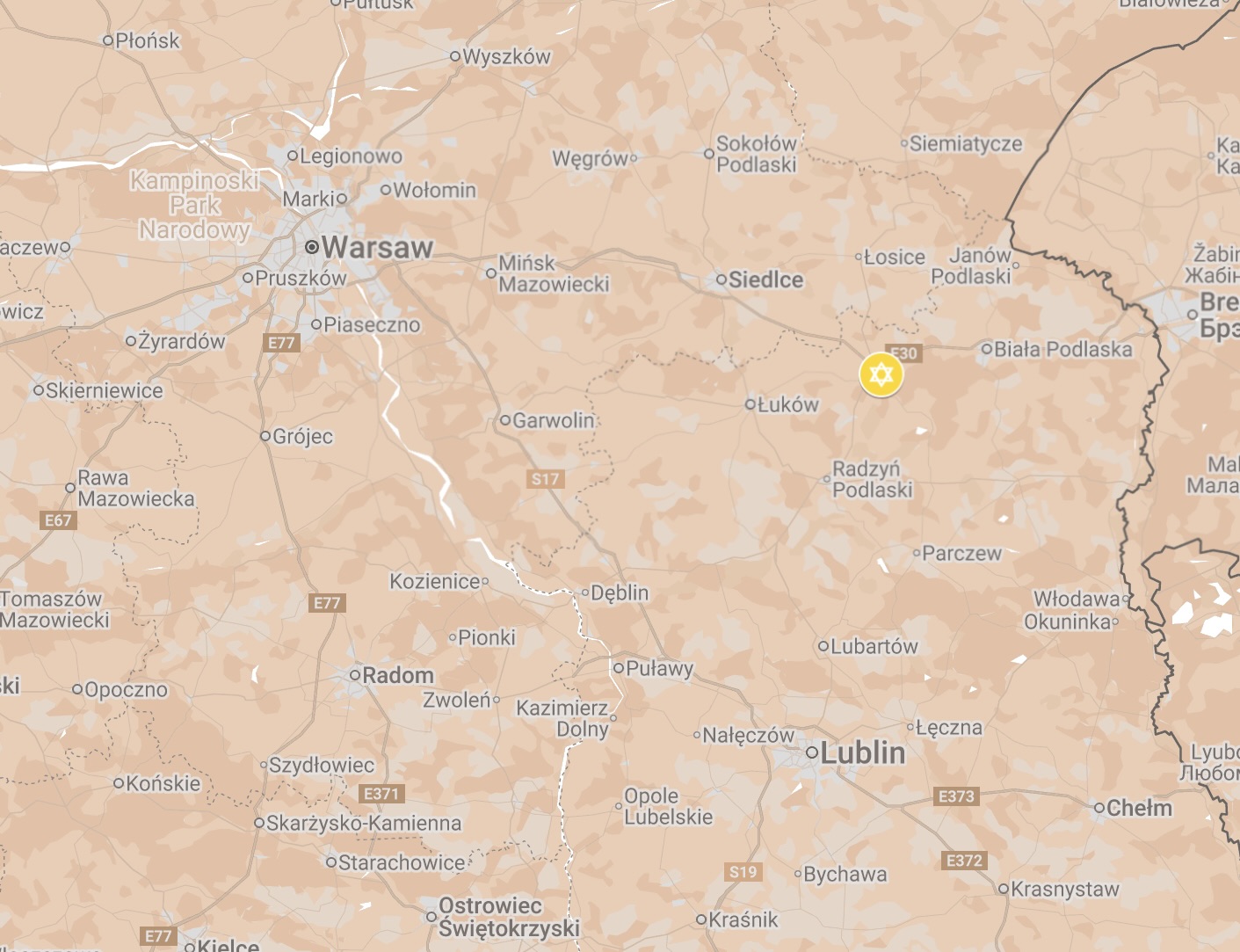
Międzyrzec Podlaski lies 100 km north of Lublin. The town’s August 1939 population of around 16,000 included 12,000 Jews. To find out more about the area and the Boys who grew up there click here.
A Wehrmacht unit occupied Międzyrzec on September 13, 1939, but soon abandoned it to Soviet occupation. Soviet forces arrived on 25 September 1939. Ten days later, they joined the regional Soviet evacuation behind the Bug River. Approximately 2,000 Międzyrzec Jews followed them. On 9 October, the Germans reoccupied Międzyrzec.
The Międzyrzec Ghetto was established in 1941 in the Szmulowizna district.
More than 17,000 (some sources say 24,000) Jews were imprisoned there, mostly from Międzyrzec and the surrounding towns. From 1942, the Germans began to gradually liquidate the ghetto, transporting its inhabitants to the Treblinka extermination camp and the Majdanek concentration camp. After several Treblinka escapees returned to Międzyrzec, the ghetto inmates learned that the deportees had been murdered.
The ghetto was finally liquidated on 17 July 1943.
About 100 Jews from Międzyrzecz survived the war, mainly thanks to the help of the local Polish population. For information on visiting the region click here.
 About
About History
 Education
 Quilts
 FIlms
FIlms Photos
 News Media & Events
 Publications
 Donate