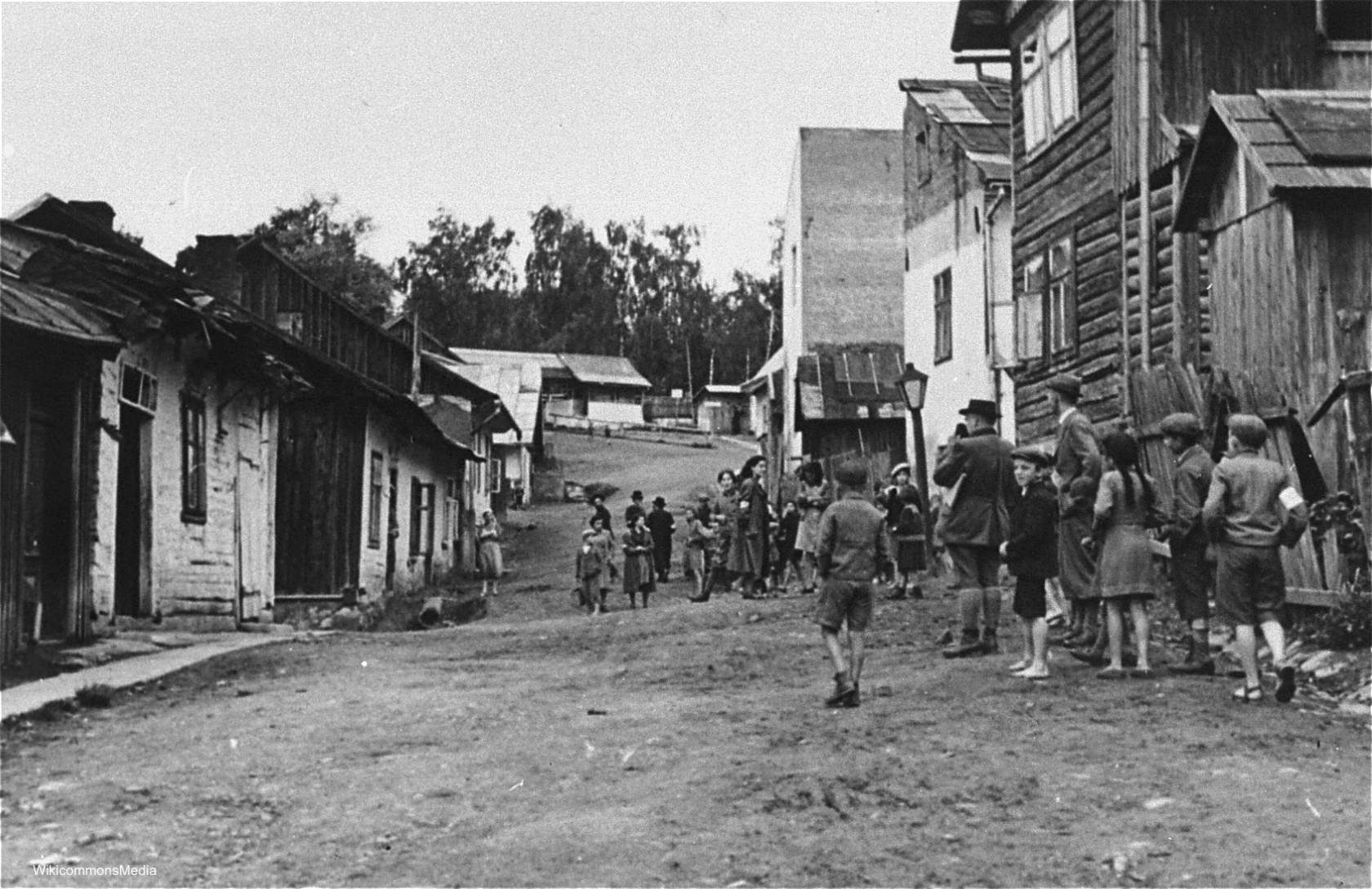
Members of the Boys were imprisoned in the Frysztak Ghetto.
The Frysztak Ghetto was one of a network of ghettos set up by Nazi Germany in which Jews were forced to live in occupied Poland. As with other ghettos in Czechoslovakia, Latvia, Lithuania and Poland, the Frysztak Ghetto was established to contain the region’s Jews and isolate them from the rest of the population until the Nazi leadership could decide on an answer to the so-called “Jewish Question.”
The Boys and their families spent years living in dire conditions. The ghettos were not designed for the vast numbers of people forced to find space to live within them. As a result, multiple families shared cramped and insanitary accommodation.
The Boys were teenage and child-Holocaust survivors, who were brought to the UK after the war for rest and rehabilitation.
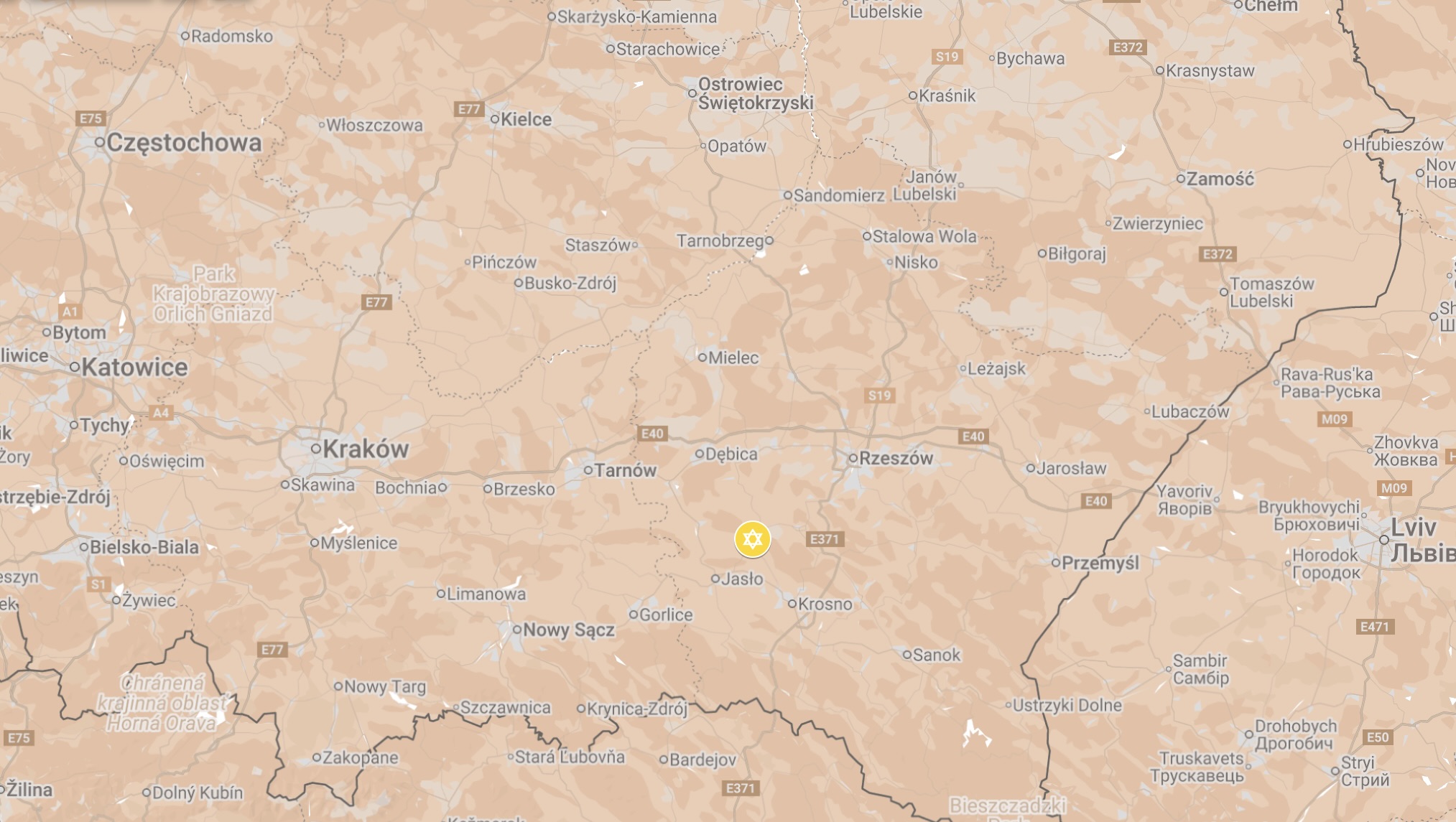
Frysztak is a village in the Gmina Frysztak, Strzyżów County, Subcarpathian Voivodeship, Poland, 17 km from Krosno. Frysztak lies in historic Lesser Poland. It is located on a hillock near the river Wisłok, on the road from Rzeszów to Krosno. To find out more about the region and the Boys who grew up there click here.
Overview
Frysztak Ghetto was set up in January 1942. The overcrowding was extreme as many Jews had been deported to Frystak from other towns. The ghetto had a population of 1,800 in the spring of 1942.
Mass Shootings
On 2-3 July 1942, the Gestapo organised the first deportation operation. The raid involved units of the German and Ukrainian Order Police and the Polish Blue Police. The Jews were ordered to gather at a cattle trade site between 5 and 6a.m. They were then robbed of their valuables. Some craftsmen were separated from the gathered group, as well as young people, whose work cards were stamped.
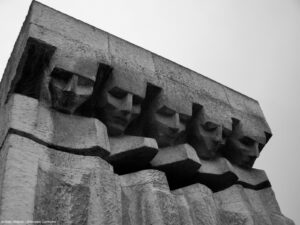
Men over 52 were loaded onto trucks. Women who were mothers of more than two children and others were also loaded onto the trucks. They were taken to the forest in Warzyce, ordered to undress, and then shot and buried in three mass graves. The children were taken from their mothers and murdered by hitting them against the trucks. The action ended around 3pm. The young Jews were then deported to the Kraków-Płaszów labour camp.
After the action, the gendarmerie tracked down groups of hiding Jews. On 12 July, a group of 250 to 260 people was shot in the forest in Krajowice near Jasło.
Liquidation
The final liquidation of the ghetto took place on 18 August. Some Jews were then sent to the Rzeszów Ghetto, and bout 35 people were transported to the Przemyśl Ghetto. The rest were taken to Jasło, and from there to the extermination camp in Bełżec on August 19–20, 1942.
Jewish Resistance
About 100 people managed to hide in nearby forests and avoid deportation. In the following months, they were sought out by the Nazis and denounced by the local Polish population. By the end of 1943, about 20 people remained.
Some Poles in the area risked their lives to help Jews. On July 3, 1943, the Nazis shot several of them, from the villages of Markuszowa and Kozłówek.
Memorialisation
Today, Frysztak commemorates its lost community with a small plaque at the site of the former synagogue and a memorial at the Jewish cemetery, which was partially restored in the 1990s. To find out more about visiting the region click here.
 About
About History
 Education
 Quilts
 FIlms
FIlms Photos
 News Media & Events
 Publications
 Donate