Members of the Boys were imprisoned in the Źmigród Nowy Ghetto.
The Źmigród Nowy Ghetto was one of a network of ghettos set up by Nazi Germany in which Jews were forced to live in occupied Poland. As with other ghettos in Czechoslovakia, Latvia, Lithuania and Poland, the Źmigród Nowy Ghetto was established to contain the region’s Jews and isolate them from the rest of the population until the Nazi leadership could decide on an answer to the so-called “Jewish Question.”
The Boys and their families spent years living in dire conditions. The ghettos were not designed for the vast numbers of people forced to find space to live within them. As a result, multiple families shared cramped and insanitary accommodation.
The Boys were teenage and child-Holocaust survivors, who were brought to the UK after the war for rest and rehabilitation.
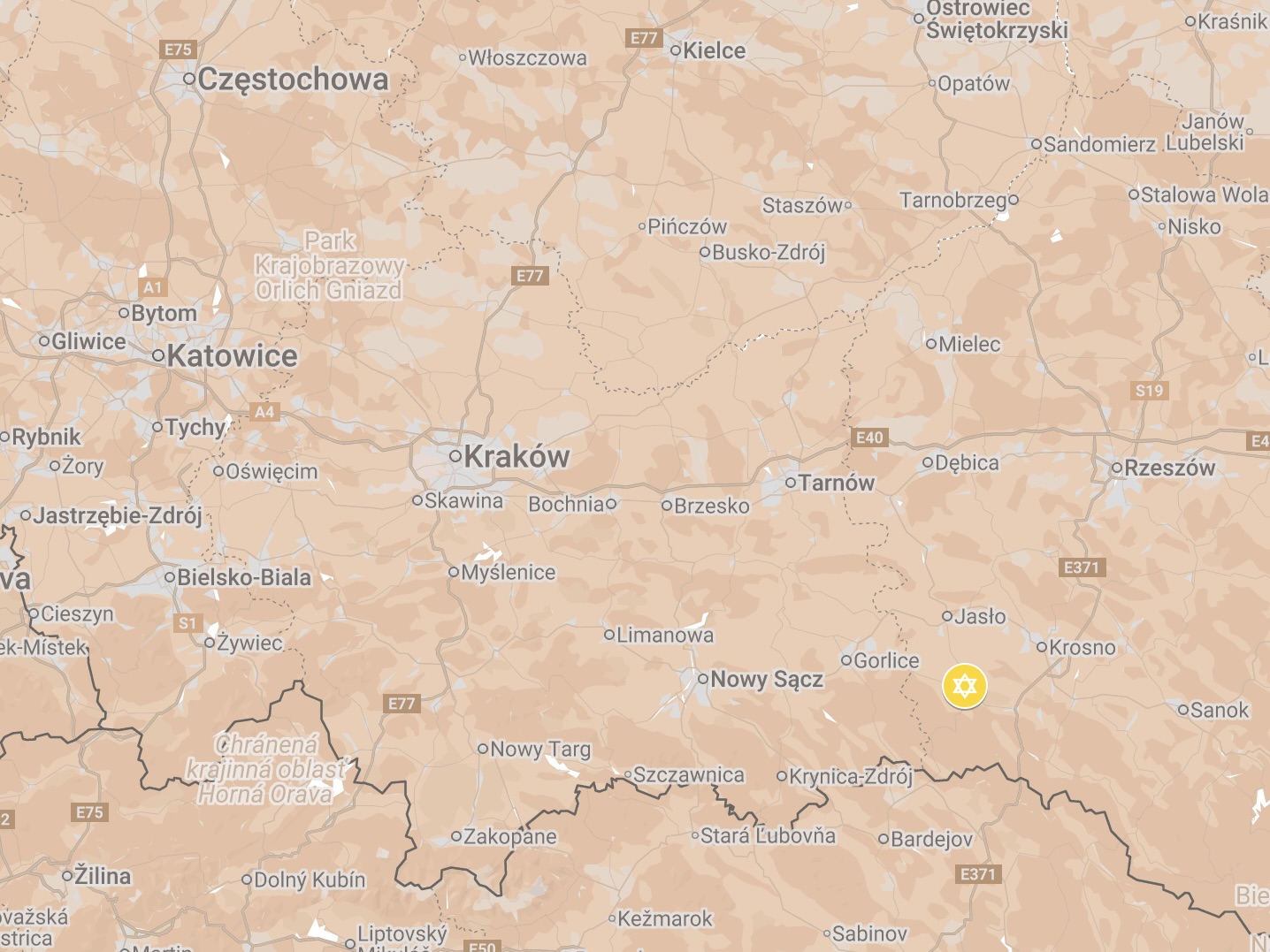
Nowy Żmigród is a village and rural municipality in Jasło County, Subcarpathian Voivodeship, Poland. It lies approximately 13km west-northwest of Dukla and 16 km south of Jasło. To find out more about the region where the ghetto was located and the Boys who grew up there click here.
Overview
The Źmigród Ghetto was established in the spring of 1942. Situated in the small town of Źmigród Nowy, it had an estimated population of around 1,500-2,000 people at its peak.
Layout
The ghetto was established in the central and eastern parts of Źmigród, where the pre-war Jewish community had been concentrated. The area was enclosed with wooden fences and barbed wire, and German SS units and local Polish and Ukrainian auxiliary police patrolled the perimeter.
There was only one official entry and exit point, located on the main road leading out of town. Any attempts to leave the ghetto without authorisation were met with execution. Despite these restrictions, some individuals managed to smuggle food and supplies into the ghetto.
Daily Life
Conditions in the Źmigród Ghetto were dire. Families were crammed into small, dilapidated buildings, with several households often sharing a single room. There was little access to running water, and sanitation was almost non-existent, leading to outbreaks of typhus and other diseases. The ghetto’s Judenrat (Jewish council) attempted to organise food distribution, however the basic rations provided by the Germans forced residents to rely on smuggling or bartering with locals outside the ghetto.
Most men and older boys were assigned to forced labour, working in road construction, agricultural fields, or German-run workshops. Women and children were largely left to fend for themselves. Education was prohibited, though some clandestine teaching took place, with basic religious education and literacy.
Deportations
The first major deportation from the Źmigród Ghetto took place in July 1942. Approximately 800-1,000 people were rounded up and transported to Bełżec extermination camp, where they were immediately gassed upon arrival. Some Jews were executed on the spot or in mass graves on the outskirts of the town.
A second deportation followed in September 1942. By this time, many had already attempted to flee, hiding in nearby forests or seeking refuge with sympathetic Polish families. However, the majority were captured and deported primarily to Bełżec, with some sent to forced labour camps in the region.
Liquidation
The final liquidation took place on 7 September 1942. The remaining inhabitants were sent to Bełżec, where they were murdered upon arrival. A small number of skilled labourers were initially spared and sent to the Pustków labour camp, though most were later murdered.
Jewish Resistance
A number of individuals managed to escape before liquidation. Some joined partisan groups operating in the forests of south-eastern Poland, taking part in operations against German forces. Others found temporary refuge with Polish neighbours, though many were eventually discovered and handed over to the Nazis.
A few acts of resistance were recorded, including a small group of young men who attacked a German patrol with makeshift weapons during the final liquidation, before they were overpowered and killed.
Memorialisation
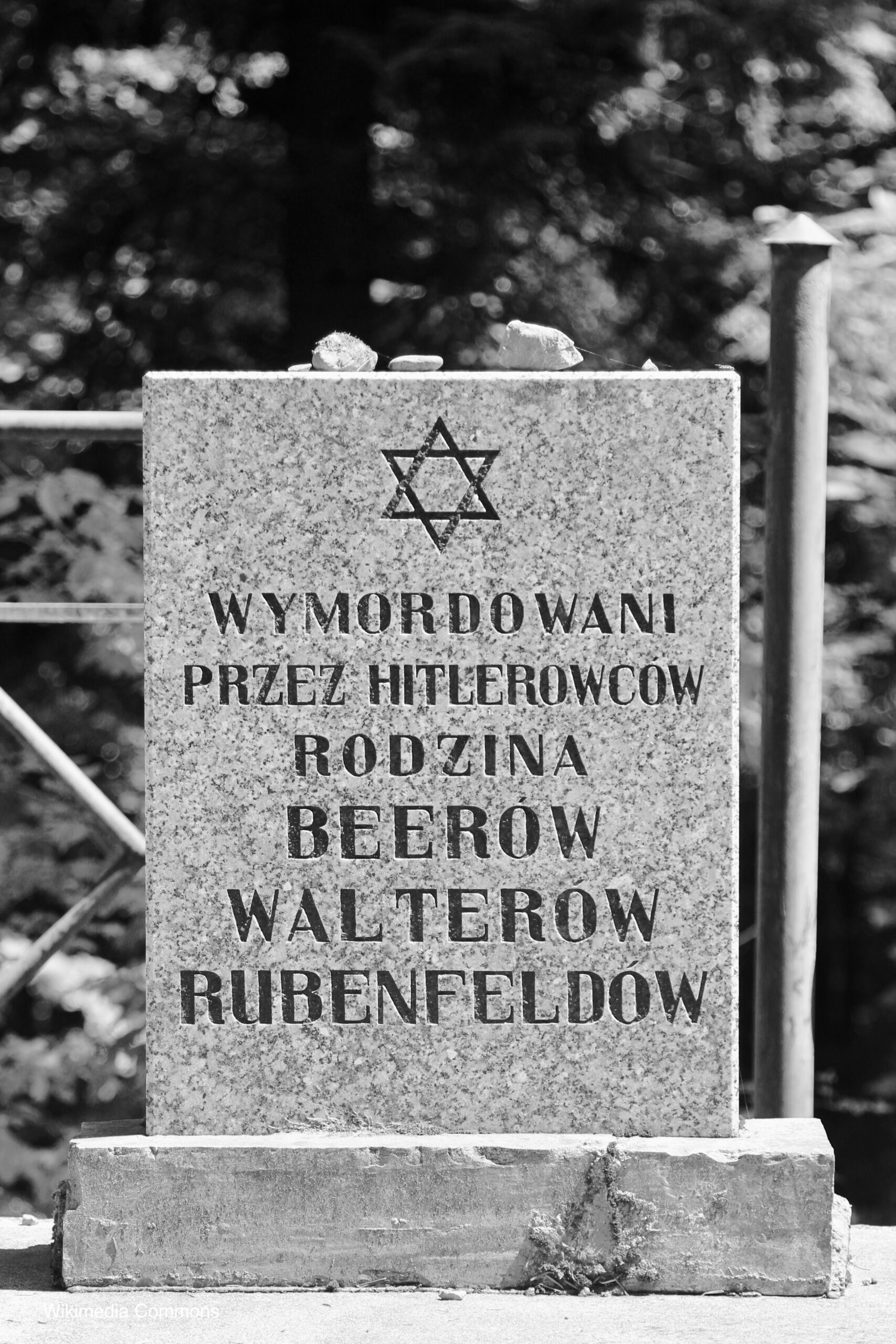
Today, there is a memorial plaque in the town square, near the site where deportations took place. The mass graves are also marked by a memorial. Every year, a small ceremony is held by local historians and Jewish heritage groups to commemorate the victims of the ghetto. To find out more about visiting the region click here.
 About
About History
 Education
 Quilts
 FIlms
FIlms Photos
 News Media & Events
 Publications
 Donate