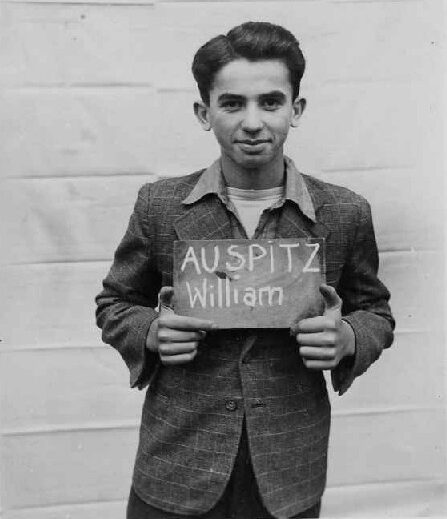
Members Boys and their families were imprisoned in the Nyiregyhaza Ghetto.
Nyiregyhaza Ghetto was one of a network of ghettos set up by Nazi Germany after it invaded in Hungary in March 1944.
The Boys were teenage and child-Holocaust survivors, who were brought to the UK after the war for rest and rehabilitation.
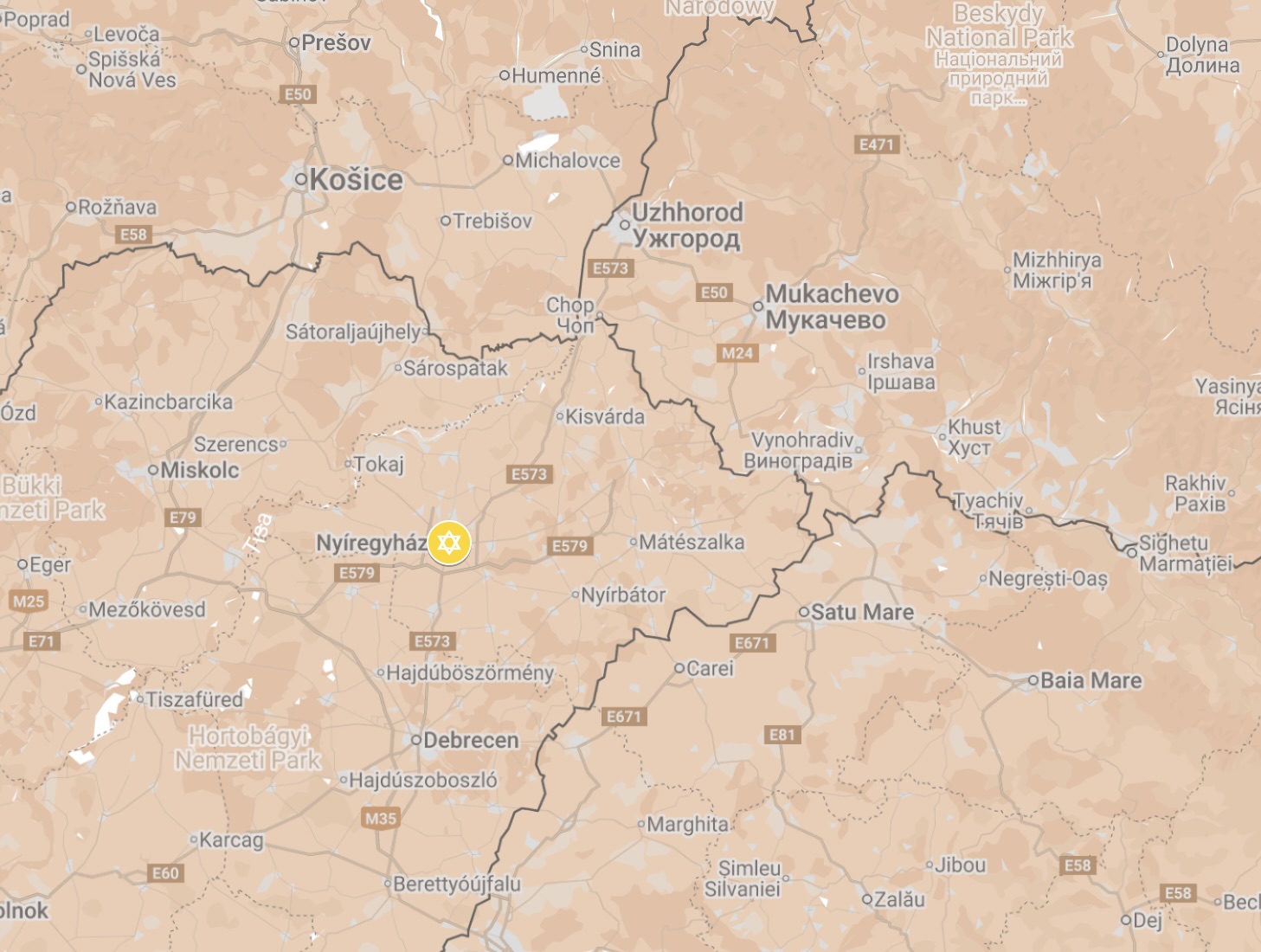
Nyíregyháza , in northeastern Hungary, is the county capital of Szabolcs-Szatmár-Bereg. It is 207km northeast of Budapest. To find out more about Szabolcs-Szatmár-Bereg County click here.
Overview
When World War II broke out, refugees from Poland arrived in Nyiregyhaza and were assisted by a special Jewish communal committee organised, which also supported refugee children from Slovakia.
Jews were persecuted after the imposition by the Hungarian authorities of anti-Jewish laws from 1938 to 1944. Those unable to prove their Hungarian citizenship to the authorities were rounded up in the summer of 1941 and deported to Kamianets-Podilskyi, in modern-day Ukraine, where most of them were murdered in August.
Jewish men of military age were recruited into special labour units, many of which were deployed along the frontline in the east.
The Germans occupied Szabolcs-Szatmár-Bereg County on 19 March 1944.
Ghettoisation
The Jews were compelled to wear the yellow star on 5 April 1944. Between 23-29 April, the Jews in Nyiregyhaza were placed in a ghetto located in the Jewish section of the city. A second ghetto was set up in the city for Jews brought in from the wider region. By 10 May, the ghetto population of the city had risen to 17,500, of whom about 5,000 were from the city itself.
Deportations
At the end of May and beginning of June 1944, the Jews in the ghetto were deported in freight wagons to the Auschwitz II-Birkenau extermination camp. The synagogue was then blown up. There was a selection on arrival and members of the Boys were taken for slave labour.
Aftermath
The survivors reestablished communal life under the leadership of József Kádár. In 1946, the community consisted of 1,210 Jews, including those who moved into the city from the neighbouring smaller communities. For more information on visiting the region click here.

 About
About History
 Education
 Quilts
 FIlms
FIlms Photos
 News Media & Events
 Publications
 Donate