The Boys arrived in five different groups between August 1945 and April 1948.
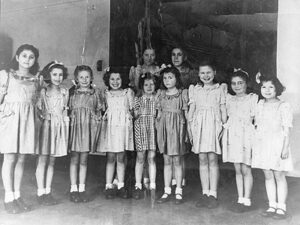
The Boys were teenage and child-Holocaust survivors, who were brought to the UK after the war for rest and rehabilitation.
Members of the Boys were held in Nazi labour and concentration camps and used as slave labourers. They had also survived World War II in hiding or as lone children.
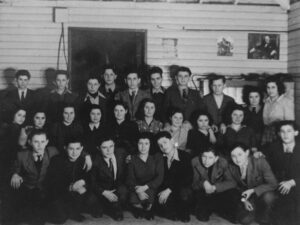
The Hostels Project
The Boys were cared for by the Committee for the Care of the Concentration Camp Children (CCCCC), which was part of the Central British Fund for German Jewry or CBF (now World Jewish Relief). The CBF was established in 1933 after Hitler came to power to rescue Jews from persecution in Germany.
The Boys’ arrival was overseen by Joan Stiebel and Leonard Montefiore the chairman of the CCCCC. Care for the children was led by psychologist Dr Oscar Friedmann.
The Committee for the Care of the Concentration Camp Children
The hostels were the responsibility of the Central British Fund’s subcommittee, the Committee for the Care of the Concentration Camp Children (CCCCC). It met regularly at its headquarters at Bloomsbury House in London. The committee was in charge of inspecting the hostels, providing finance and staff.
The CCCCC was also responsible for bringing the Boys to the UK and organising their emigration or settlement in the UK.
The principal members of the Committee were:
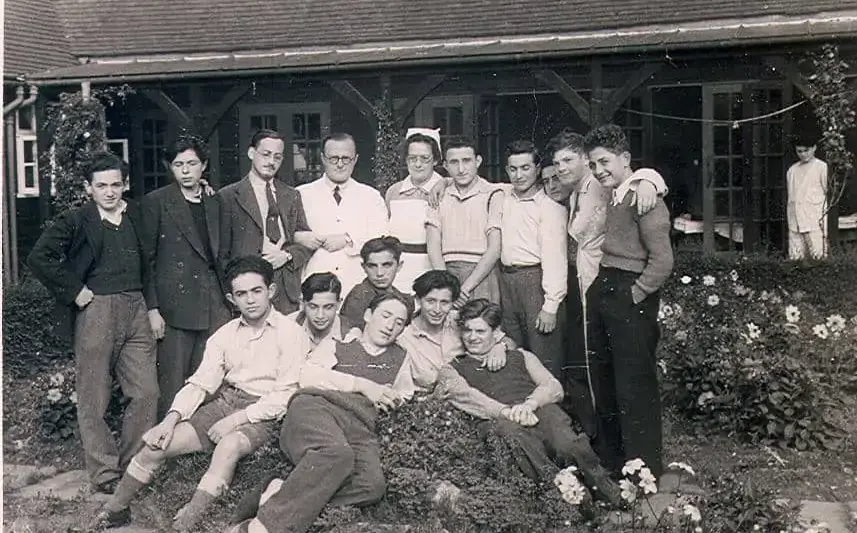
Leonard Montefiore believed that the Boys should be cared for in Jewish-run hostels in groups of no more than 30. The hostels were children’s homes.
The CBF had housed some of the Kindertransport children in hostels but the majority had been placed in private homes, often with families who were not Jewish. An emergency response, it was not always successful.
Food shortages and the fact that the children were expected to be problematic ruled out fostering with Jewish families for most of the older children.
Montefiore appealed to a rainbow of Jewish organisations to help care for the children in a network of hostels across the country.
Barabara Barnett, one of the social workers who cared for the Boys, reflects on the time she spent with them:
As a result, all the hostels had different orientations. Some were Orthodox, others more liberal. Some were Zionist-orientated, and others were not.
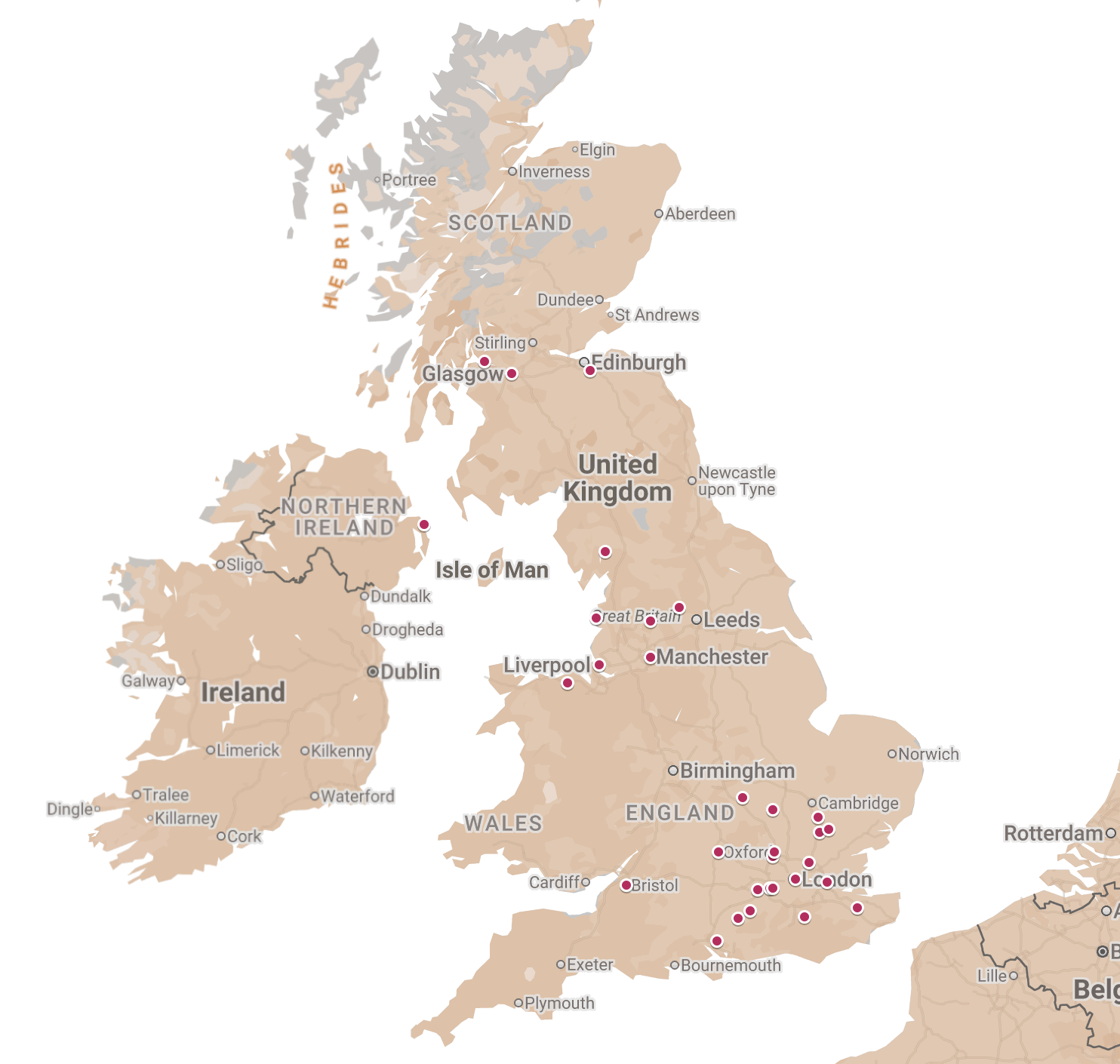
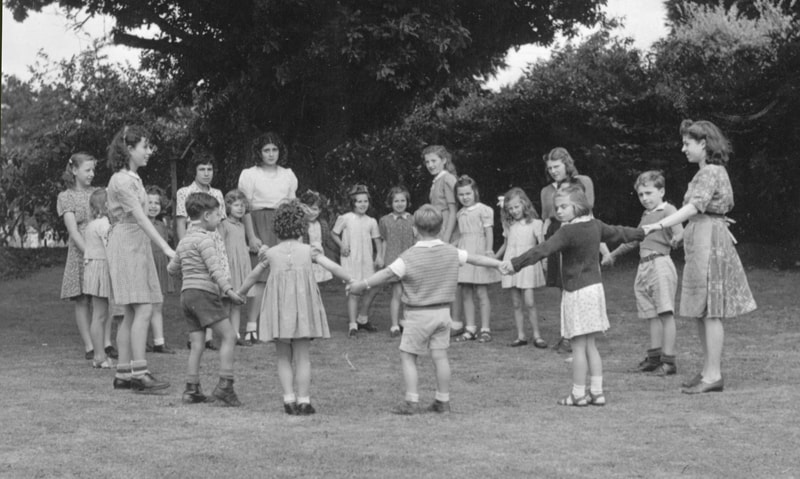
The Boys had witnessed horrors that were unimaginable to most people in the UK and the CBF expected that children, especially the older boys, would be difficult to control. In addition, many of the younger children were German and Austrian and the CBF were concerned that their presence in Britain so soon after the end of the war could possibly cause resentment. As a result, many of the hostels were in large country houses in secluded surroundings.
A number of the children had tuberculosis and were looked after in the Ashford Sanatorium, in Kent, and a special hostel, Quare Mead, in Essex.
Elaine Blond, daughter of the Marks and Spencer empire, was a leading member of the Committee for the Care of the Concentration Camp Children. In her memoirs, she records that everything was done to make the children fit in.
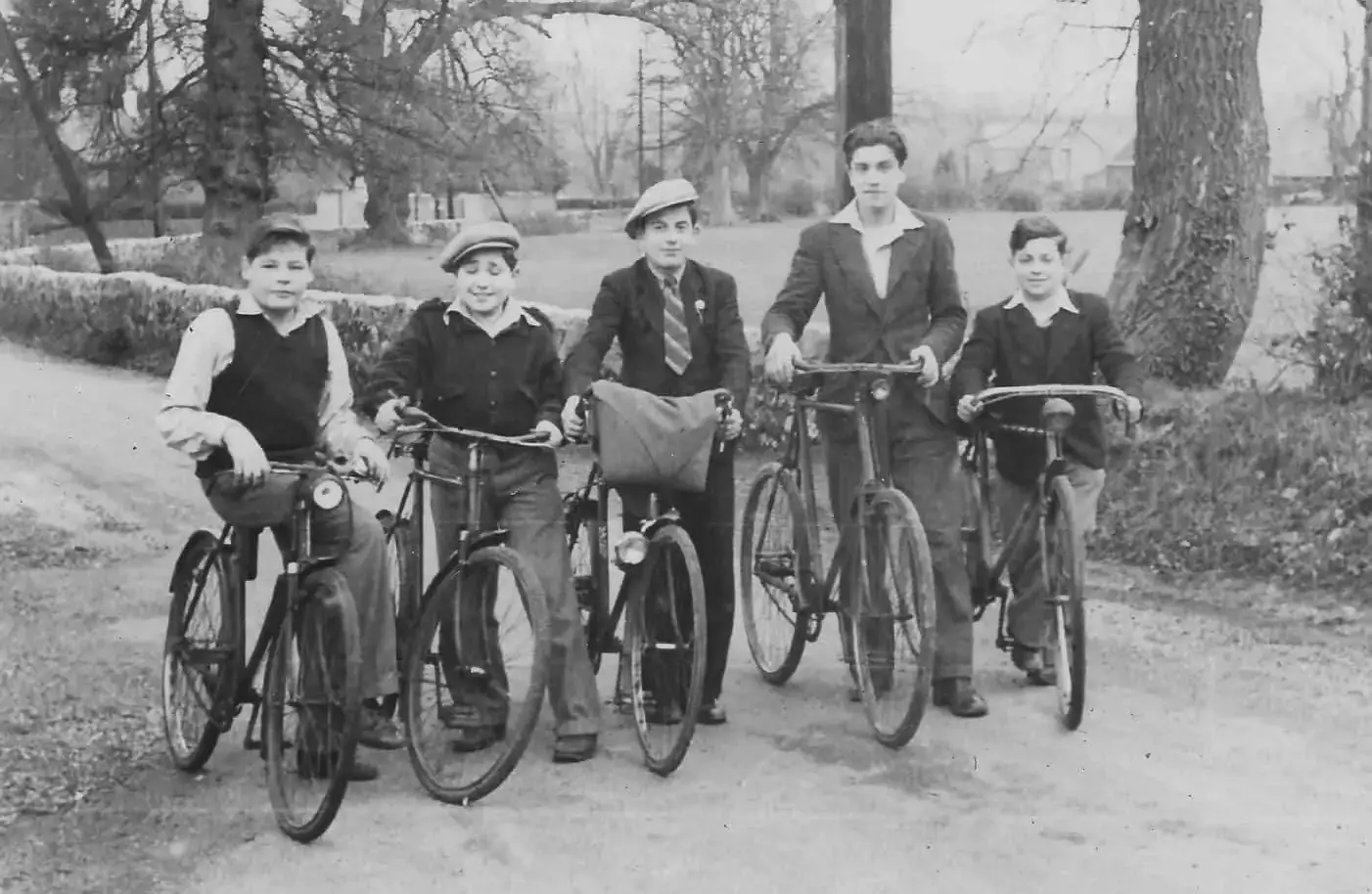
The staff at all the boy’s hostels were instructed to make sure that the boys were seen playing football, which was supposed to be a key sign of Britishness.
It was also important that the youngsters looked like model British children. They were given money to buy new shoes and all the boys were provided with suits by the tailoring firm Burton.
Jan Goldberger on how the hostels were a saving grace:
Education
The Committee for the Care of the Concentration Camp Children met regularly to assess each hostel. As soon as the children had mastered the English language the committee began to decide on their futures.
According to Montefiore, meeting the Boys expectations was not easy, and when the children responded that they wanted “to spend seven years in this country studying to be a doctor, or a professional pianist, or become a portrait painter, we had to say, ‘Think of something else’.”
In reality, most of the children were given little choice and many of the children in Montefiore’s care have said that it was never explained what was happening to them, and why, in the years that they were in the CBF’s care.
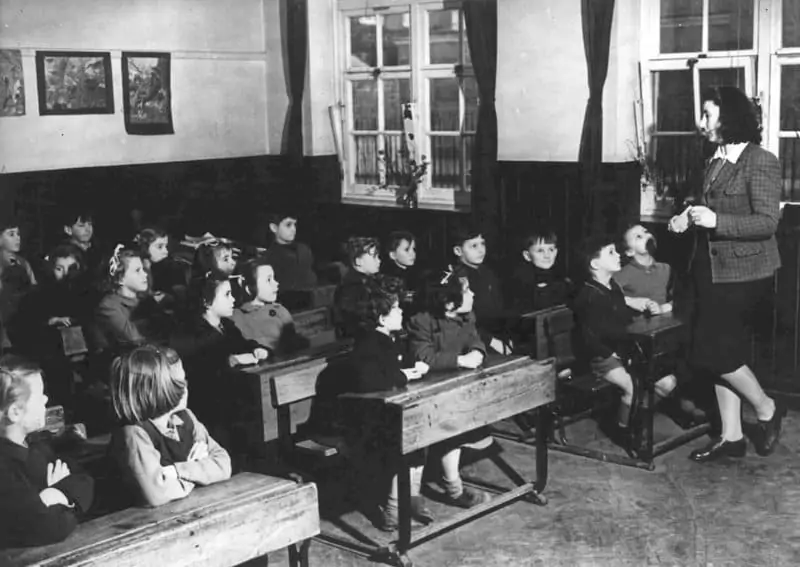
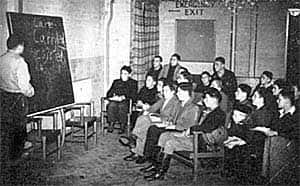
Some of the boys attended local schools but a number of the younger teenagers were moved to boarding schools that had relocated from Germany to the UK before the war. Other boys studied at yeshivas in Gateshead, London and Staines.
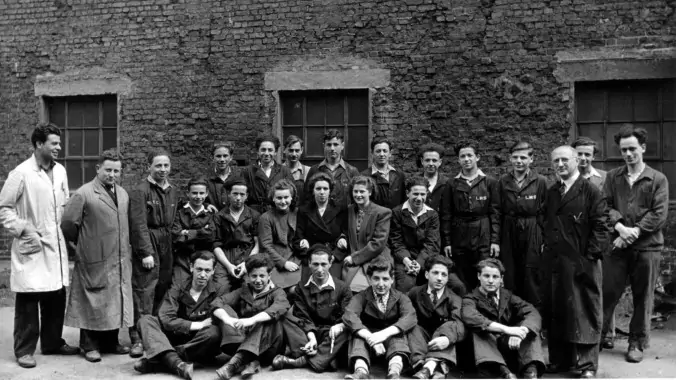
Key to many of the boy’s early years was the ORT school in South Kensington, which opened in July 1946. It was a vocational school which fitted perfectly with the CBF’s ethos of collective living in a Jewish environment. ORT also had a merchant marine training ship in the Thames.
A number of the boys went to university, in particular the London School of Economics, thanks to the help of the political thinker, Harold Laski, who was a professor at the school.
The children in the two groups that arrived in 1946 were accommodated in training farms at Polton House in Scotland and Millisle in Northern Ireland. A number of the Boys spent time at the religious kibbutz Thaxted Farm in Essex before settling in Israel.
The ’45 Aid Society is active in Holocaust education.
To find out more about the resources we offer click here.
Our Education Team can advise on how to deliver the story of the Boys by booking a suitable speaker and can help teachers devise lesson plans.
For a full list of Critical Thinking Questions click here.
Glossary
Central British Fund (CBF) The UK-based charitable organisation that was instrumental in bringing the Boys to the UK. Formerly known as the Central British Fund for German Jewry, it is known today as World Jewish Relief.
Displaced Persons Camp (“DP Camp”) A series of camps established by the Allies after World War II to house survivors of Nazi persecution and refugees from eastern Europe, known as displaced persons, or DPs, while they awaited repatriation to their home countries or resettlement in a new destination.
Hostel The locations in the UK where the Boys were received and given time, space, health care, and education necessary for rehabilitation, recovery, and learning English.
Yiddish A Germanic language with elements of Hebrew and Aramaic historically spoken by Ashkenazi Jews.
For a full Glossary click here.
 About
About History
 Education
 Quilts
 FIlms
FIlms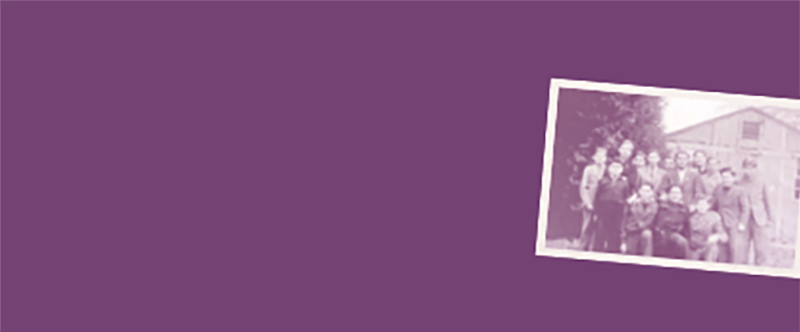 Photos
 News Media & Events
 Publications
 Donate