Members of the Boys were born in Mukačevo in Czechoslovakia.
The Boys were teenage and child-Holocaust survivors, who were brought to the UK after the war for rest and rehabilitation.
Members of the Boys were held in Nazi labour and concentration camps and used as slave labourers. They had also survived World War II in hiding or as lone children.
Pre-war
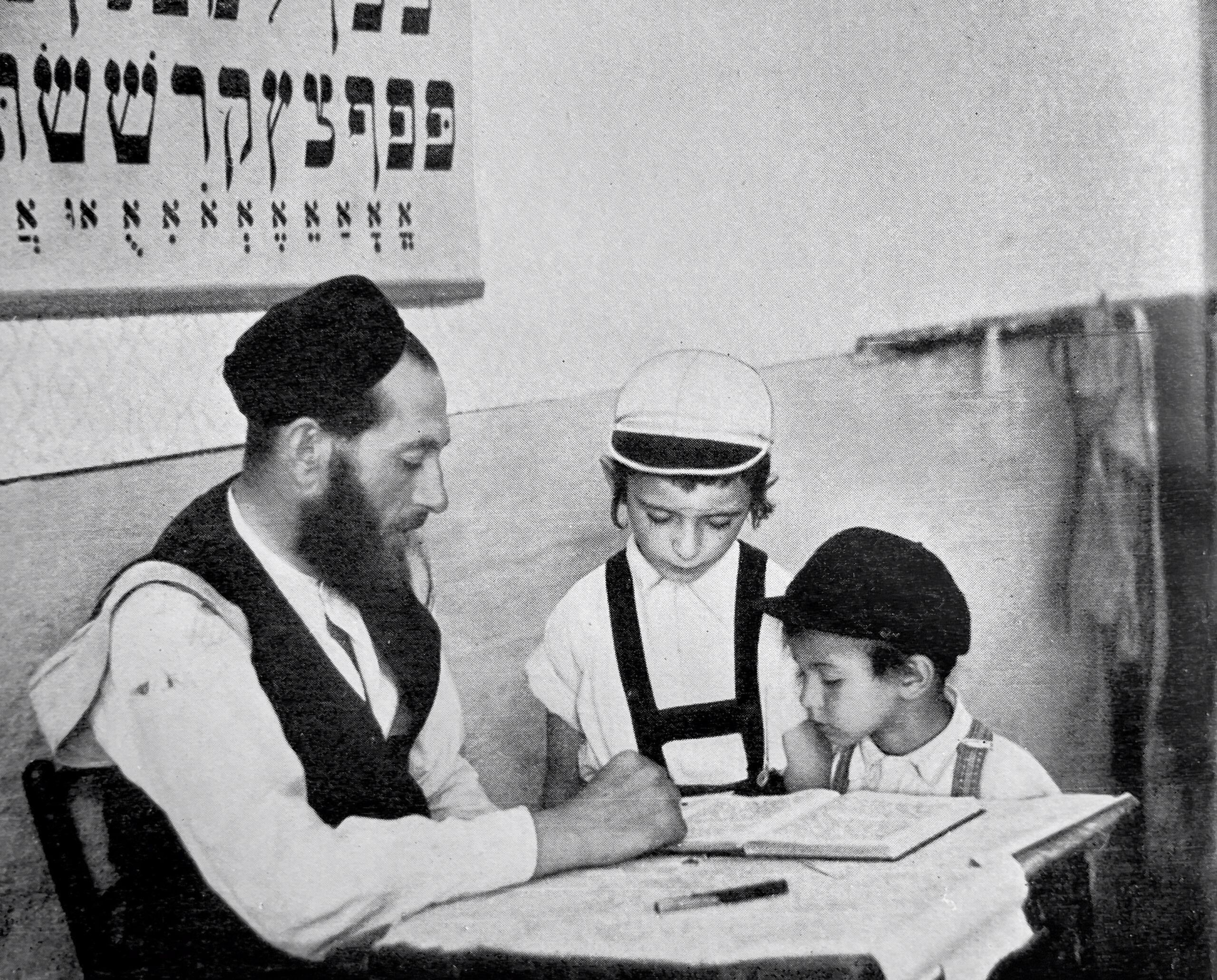
Jews lived in Mukačevo and the surrounding villages as early as the second half of the 17th century. By 1851, Mukačevo was home to a large yeshiva.
The Jews of the region were among the poorest in Europe, many living in rural areas and working in agriculture.
Mukačevo had a large Hasidic community. On the eve of the Holocaust, there were nearly 30 synagogues in town, many of which were shtieblech – small Hasidic synagogues. Much of the town was closed on Shabbat, and the first cinema in the town, established by a Hasidic Jew, also closed on Shabbat and Jewish holidays.
The Chief Rabbi of Mukačevo, Rabbi Chaim Elazar Spira, led the community from 1913 until his death in 1937, and was the most outspoken voice of religious anti-Zionism.
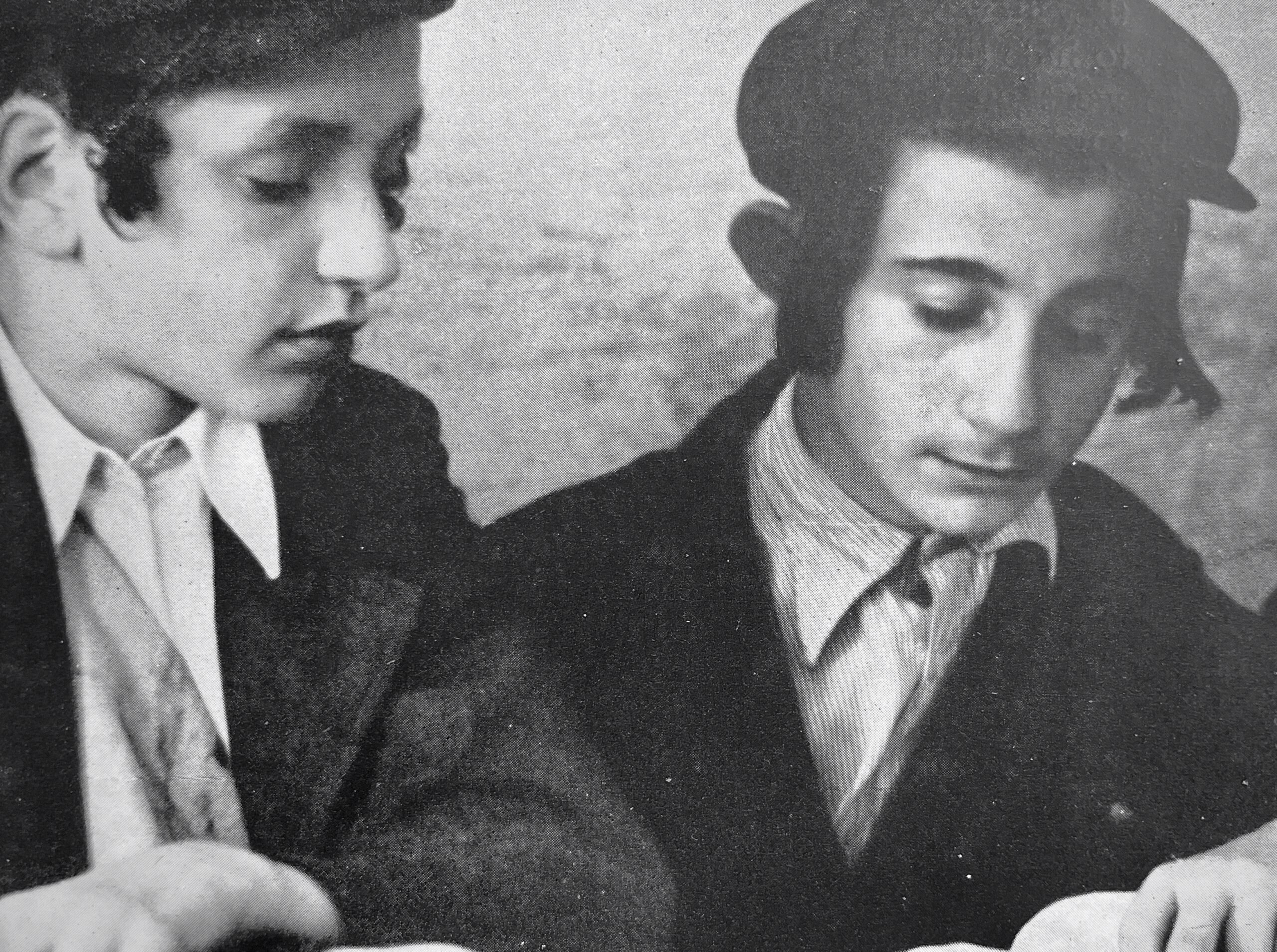
In 1920, the first Hebrew-speaking school in Czechoslovakia was established in Mukačevo, followed by the Hebrew Gymnasium in 1925, which soon became the most prestigious Hebrew high school east of Warsaw. Many of the Boys attended this school but not all.
In the interwar period, the Jews of Mukačevo constituted almost half of the town’s population, and about 10% the Jewish population of Subcarpathian Rus.
On the eve of the Holocaust, Mukačevo was the largest and most prominent Jewish community in eastern Czechoslovakia. According to the 1941 census, 42.7% of the town’s population were Jewish.
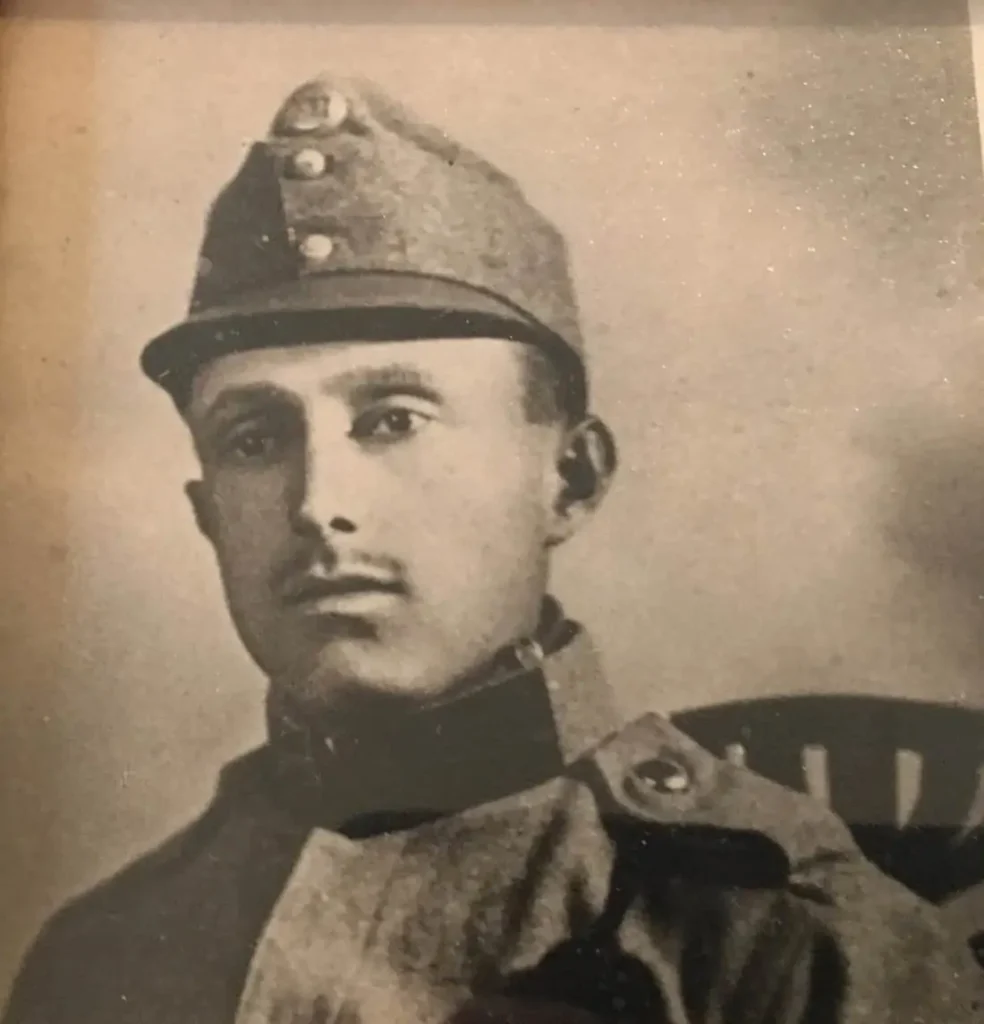
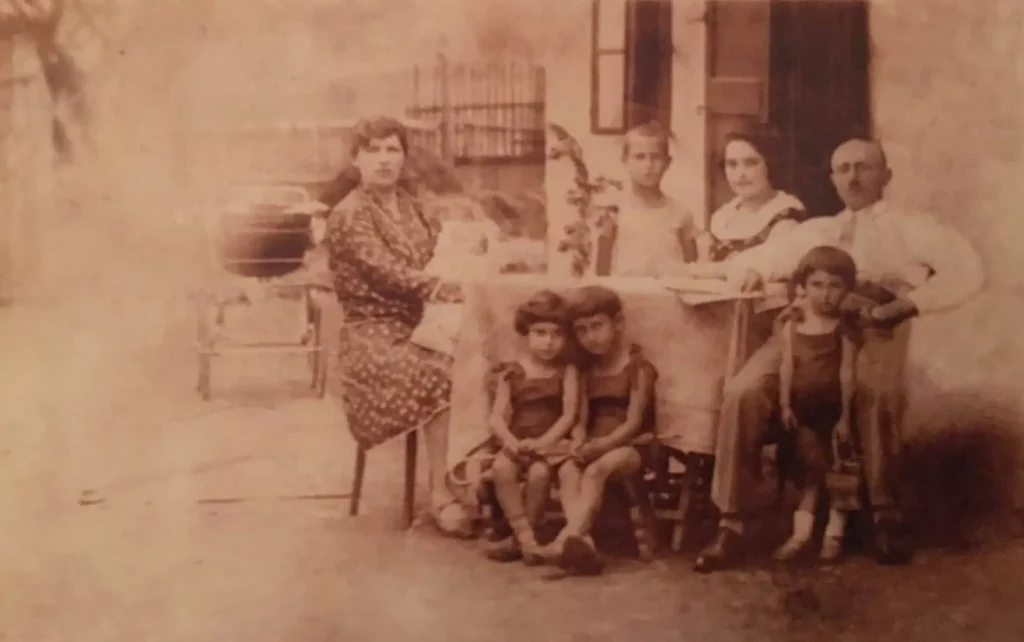
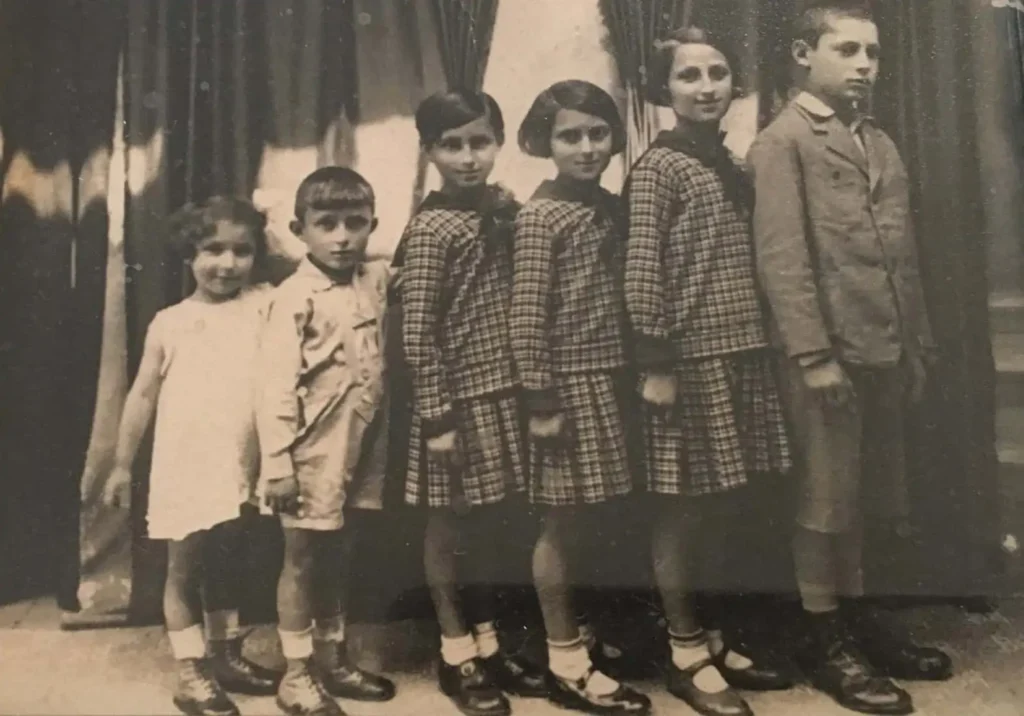
The Stern siblings Zolly, Manci, Alice, Dvora, Meir and Eliska lived in Mukachevo. The children’s father had been an officer in the Austro-Hungarian army. The children attended the Hebrew Gymnasium but sadly Dvora died before the outbreak of World War II.
When war broke out their father was called up to a labour battalion, where he worked in the kitchen. He survived and returned home before Germany invaded Hungary in March 1944.
Their cousins were deported as they were not able to prove that they were previously Czech citizens. Their family was massacred in a mass shooting in Kamianets-Podilskyi but two of their cousins escaped and returned home. Nobody believed them when they told the community what had happened to their parents.
In the spring of 1944, the Stern family were imprisoned in the ghetto in Munkács, before they were deported to the Auschwitz II-Birkenau concentration and extermination camp, where the children’s father died.
Meir was a slave labourer in Neu-Dachs-Jaworzno, a subcamp 40km north of Auschwitz that was centred around slave labour in a coal mine. He escaped while on a death march. His sisters Manci, Alice and Eliska also survived
The children were reunited with their mother in Prague. They were then given accommodation that had previously belonged to a German family who had ben expelled.
Eliska and Meir’s mother signed them up for the transport of children that was leaving for the UK in May 1946. Stern’s mother was in favour of Stern going to England as he says, he was a “trouble-maker”. He did not want to study and “They thought they would make something out of me in England and I think she was right,” Stern says. To find out more about the life of Meir Stern click here.
Zolly, who was living in Budapest in 1944, was saved by the Swedish diplomat, Roaul Wallenberg and went to Israel in 1949. Alice and Manci went to Israel in 1949. Elsika, also one of the Boys, later lived in the United States. To find out more about her life click here.
Occupation
Following the Munich Agreement in 1938, Czechoslovakia was divided up and Hungary annexed Mukačevo and the surrounding region. It now became known by its Hungarian name of Munkács.
There was widespread antisemitism and life became difficult for the Jewish community. Polish and Russian Jewish residents, as well as native Jews who could not prove their citizenship, were deported over the Ukrainian border into the hands of the German commando. Many men were conscripted into the Hungarian army.
Deportation
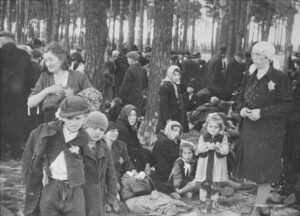
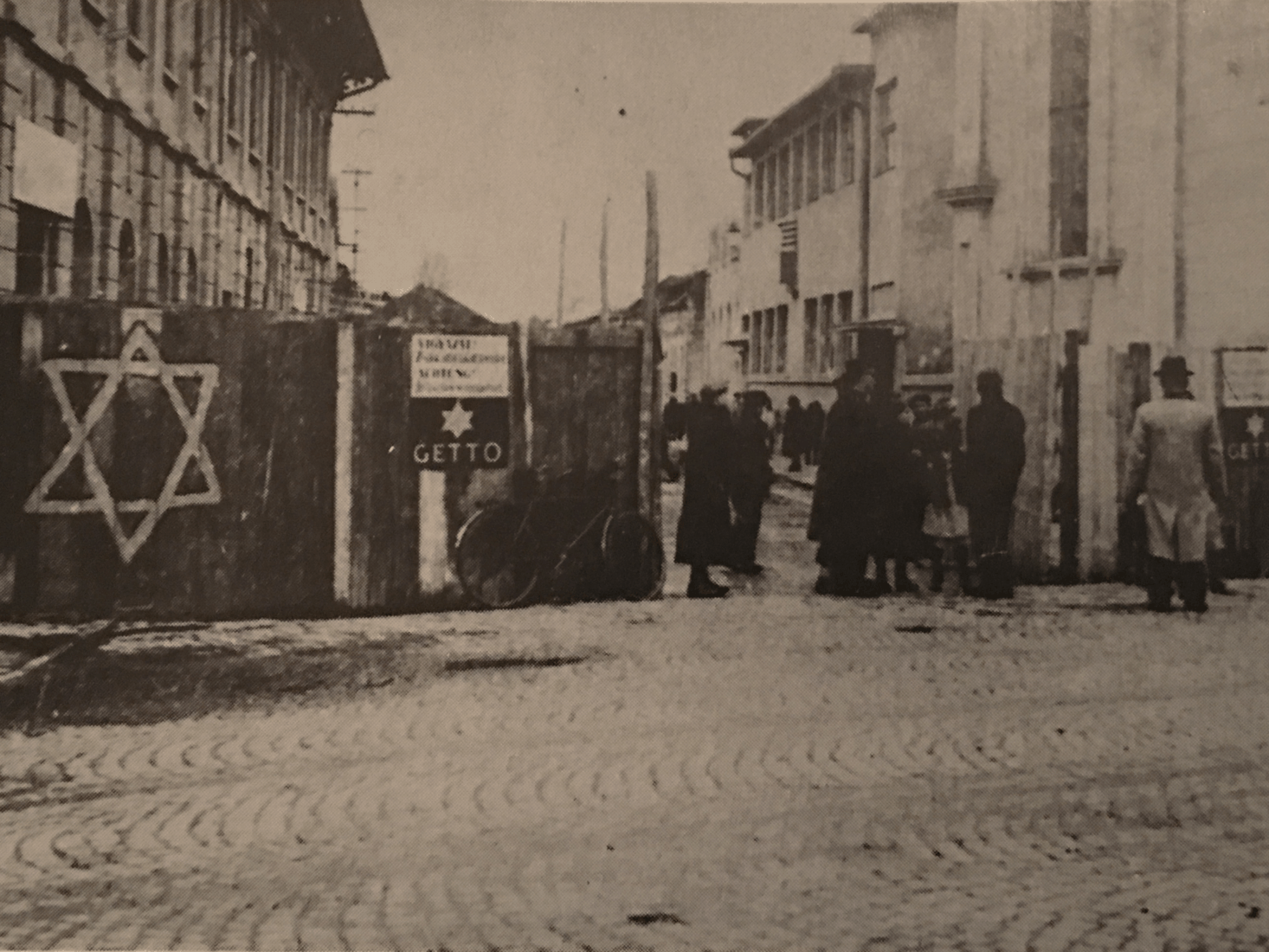
In March 1944, the Germans invaded Hungary. A ghetto was set up in city. To find out more click here.
After a week, under the supervision of Adolf Eichmann, the architect of the ‘Final Solution’, the Jews in the ghetto were put into freight wagons and deported to Auschwitz II-Birkenau concentration and extermination camp.
On 30 May 1944, Munkács was officially declared Judenrein, free of Jews. Over 27,000 Jews from Munkács and surrounding villages had been deported to Auschwitz.
Liberation
An estimated 2,000 Jews from Munkács survived the Holocaust.
In 1945, around 1,000 of these returned, searching for family members among them members of the Boys.
After the war, the region was annexed by the Soviet Republic of Ukraine. Following the annexation, many Jews left. In the late 1960’s.
After 1969, the Jewish community of the city was reduced to about 300 elderly people, only a handful of whom had been born there before World War II and survived the Holocaust.
Present-day
There is a small community of approximately 100 Jews. There is a modest revival including a kosher kitchen, mikveh, and daily prayer services. A number of Ukrainian Jews from further east have settled in western Ukraine since the Russian invasion.
Getting there
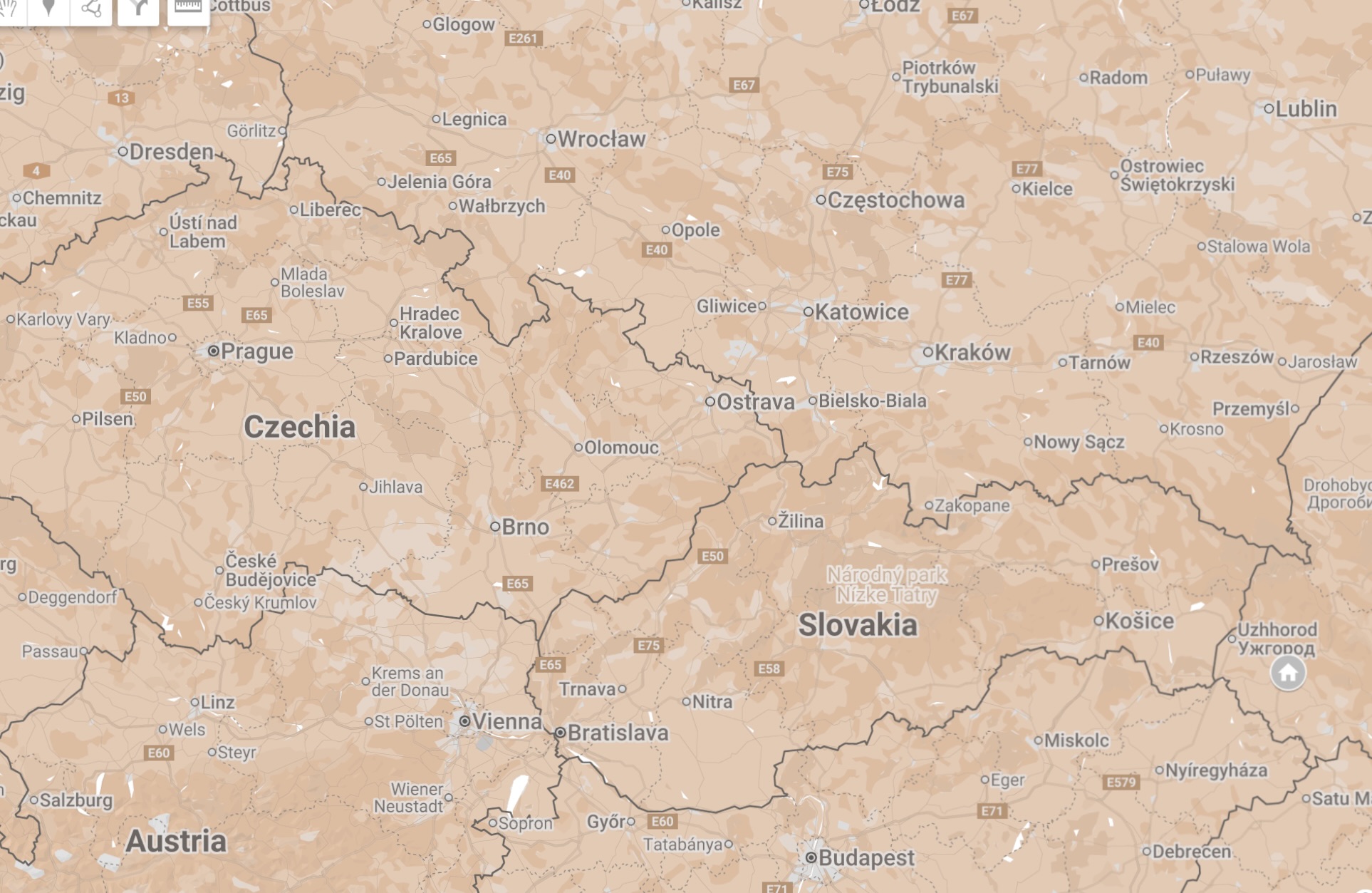
Mukachevo is best reached by train from Košice via Chop.
Note the UK Foreign and Commonwealth Office advises against travel to Ukraine because of the ongoing Russian invasion.
What to see
In 1920, the first Hebrew-speaking school in Czechoslovakia was established in Mukachevo, followed by the Hebrew Gymnasium in 1925, which soon became one of the most prestigious Hebrew high schools in eastern Europe. The building still stand on the main street.
Memorials
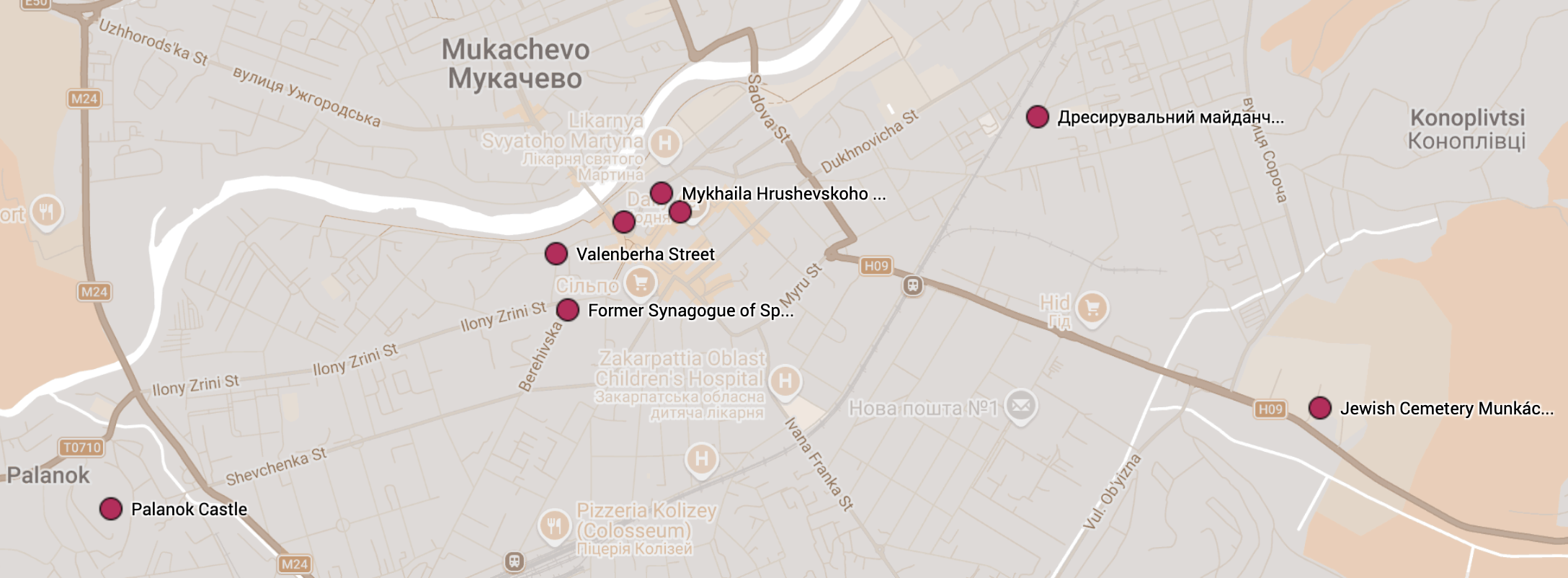
Holocaust Memorial Plaque (Bld Valenberha) marks the site where deportations to Auschwitz began in May 1944.
Next door to it is a 2013 plaque that commemorates the Swedish diplomat Raoul Wallenberg, who saved Jews in Budapest – though he had no direction connection to Mukachevo, he did save Jews from the city.
A plaque at Zankovetskoi Street 6 marks the house of Traian Popovici, the Romanian-appointed mayor in 1941–42. He compiled a list of some 20,000 Jews eligible for exemptions for deportation to Transnistria or to enable those who had already been sent to return. He was sacked in spring 1942. In 1969 he was recognised as a Righteous Among Nations.
Cemetery
The Old Jewish Cemetery (ul. Myra and Akademik Pavlova) was destroyed in the communist-era and turned into a car park. Now it is full of lines of symbolic tombstones and has a Holocaust memorial topped with a menorah at its centre. There is also a newer memorial inscribed in Ukrainian.
New Jewish cemetery is 2km east at Tomas Masaryk Street 21.
Ghetto Location (Valenberha (Wallenberg) Street) The Holocaust memorial marks the ghetto entrance at the corner of the street.
Former Religious Sites
Spinka Synagogue (3 Berehivska)
Bais Hakneses Hagadol Synagogue (10 Kosmonavta Belyaeva)
Hoif Complex of the Munkacser Rebbes (20 Hrushevskoho) The former residential and community complex of the Munkacser Hasidic dynasty.
Former Synagogue of Belz (17 Vozyednannya) This historic building belonged to the Belz Hasidic community.
Synagogue & Jewish Community
Bais Medrash Hagadol (7 Hrushevskoho) A new synagogue was dedicated in 2006 on the site of a pre-war Hasidic prayer house, which serves as a central point for the current community
Museum
Palanok Castle (History Museum) The castle features a dedicated exhibition, “From the Jewish Community History,” providing context on the city’s multicultural past.
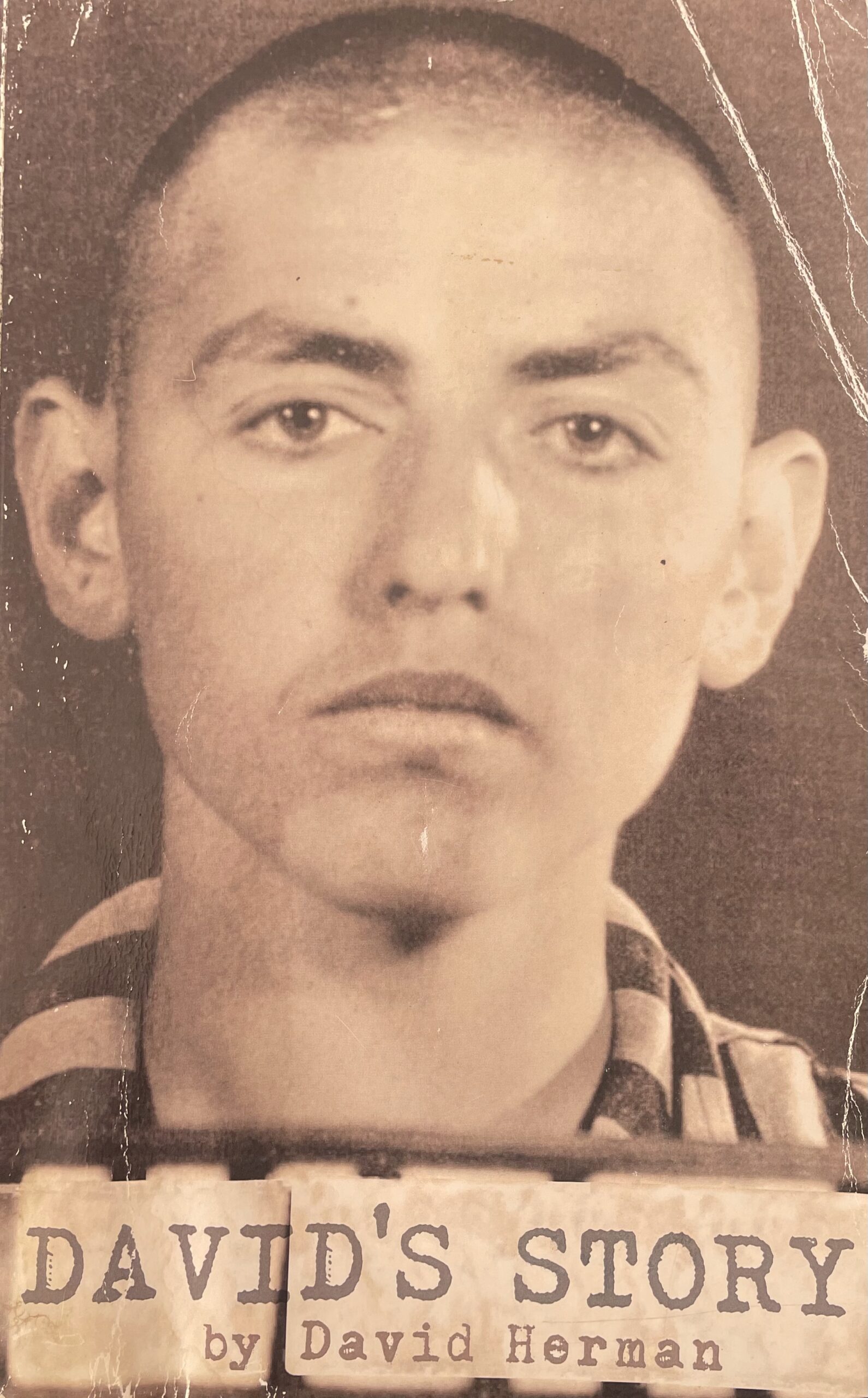
David’s Story (Herman Press, 2016) David Herman. Herman was one of the Boys who grew up in Mukachevo. To find out more click here.
 About
About History
 Education
 Quilts
 FIlms
FIlms Photos
 News Media & Events
 Publications
 Donate