Members of the Boys were born in Piotrków-Trybunalski in Poland.
The Boys were teenage and child-Holocaust survivors, who were brought to the UK after the war for rest and rehabilitation.
Members of the Boys were held in Nazi labour and concentration camps and used as slave labourers. They had also survived World War II in hiding or as lone children.
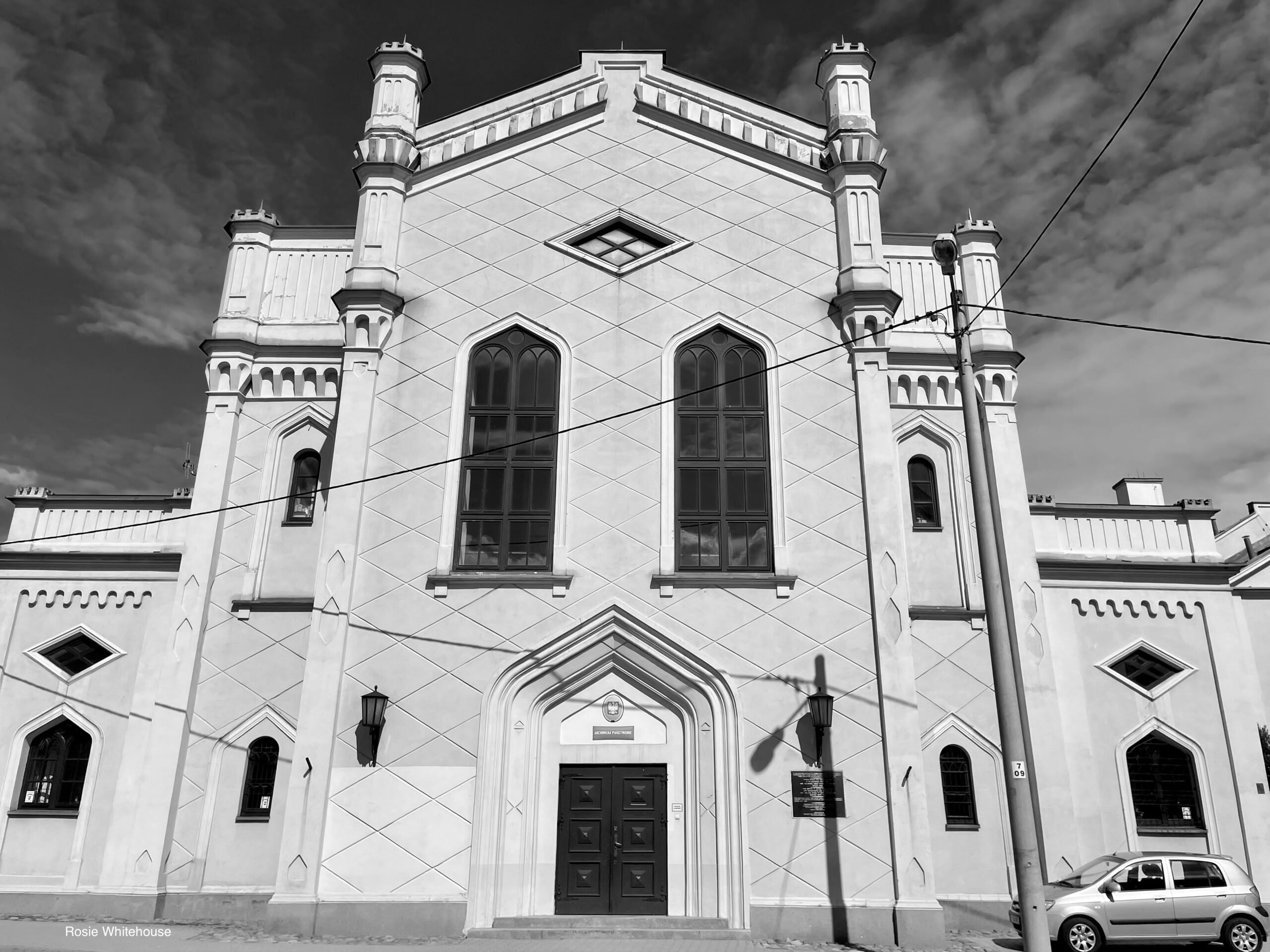
The former synagogue in Piotrków, Poland.
Poitrków played a significant part in the story of the Boys, despite the fact that Jewish life in the city was totally destroyed during the Holocaust.
Over 30 of the Boys were born in Piotrków and many more were interned in the ghetto after the German invasion of Poland in September 1939.
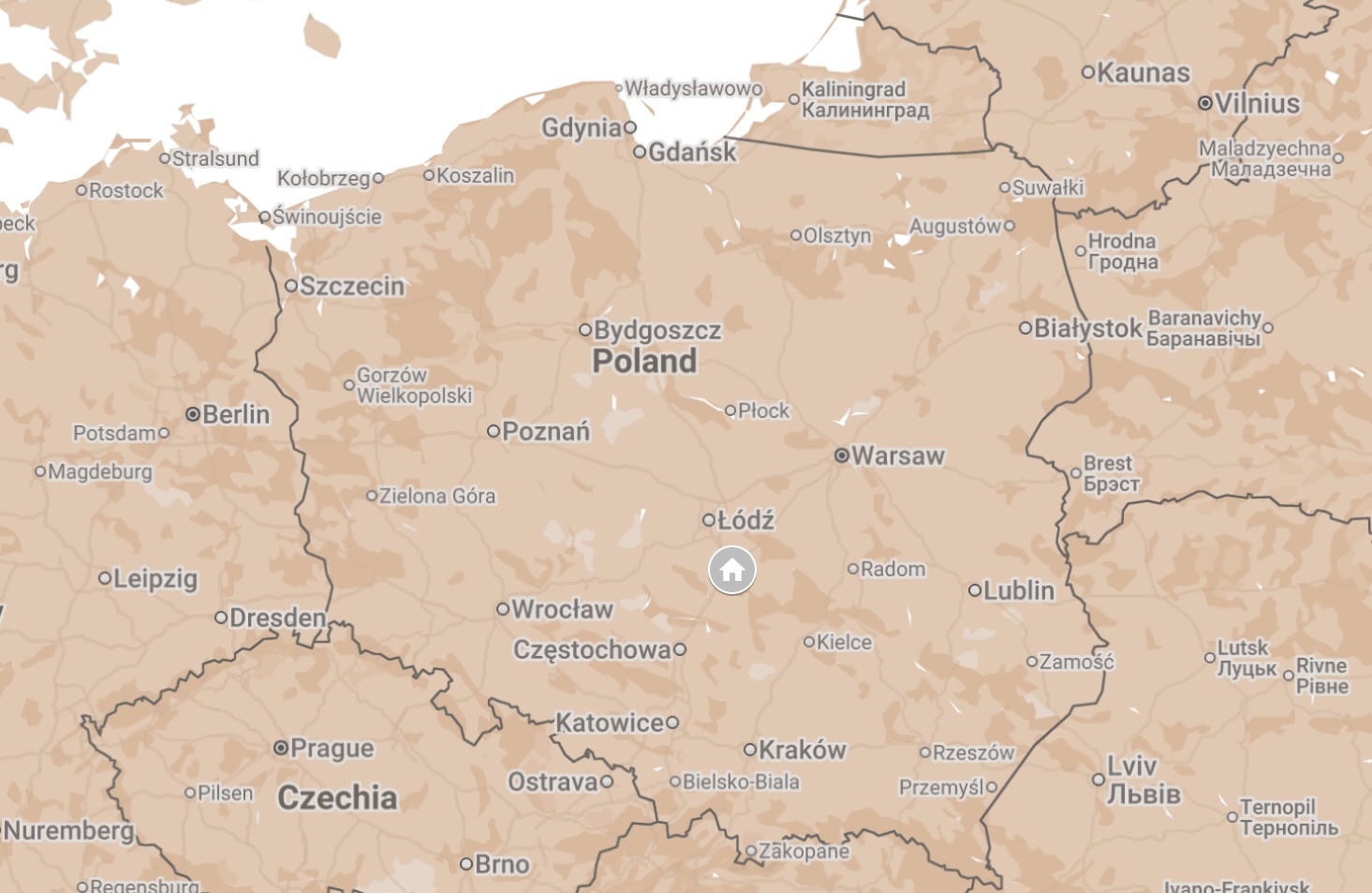
Piotrków is situated in an industrial area of Poland in the Łódź Voivodeship. Many of the Boys who came from this area survived because the factories, mills and brickyards were vital to the German war effort. They were run by German companies, who used forced and slave labour.
“Piotrków was a progressive town, in fact it was a socialist town. There were still many Jews who were Orthodox and wore kaftans and peaked hats, but that was declining very fast. I spoke Polish at home, though my parents between them still spoke Yiddish to each other, my grandparents spoke Yiddish.”
The vast majority of the Boys worked as slave labourers, and thus evaded deportation to the extermination camps, where many of their relatives were murdered. This shared experience bonded the group together.
The Boys from Piotrków and the Creation of the Boys
It was two of the older brothers of the Boys, who were born in Piotrków and arrived in the Theresienstadt Ghetto in the final weeks of World War II, who brought the young teenage orphans into one unit that would be cared for together. They became part of the first group of the Boys. To find out more click here.
Pre-war
Jews had lived in Piotrków, one of Poland’s oldest cities, since the early 16th century. In 1939, Jews, numbering about 15,000 people, made up 27% of Piotrków’s population.
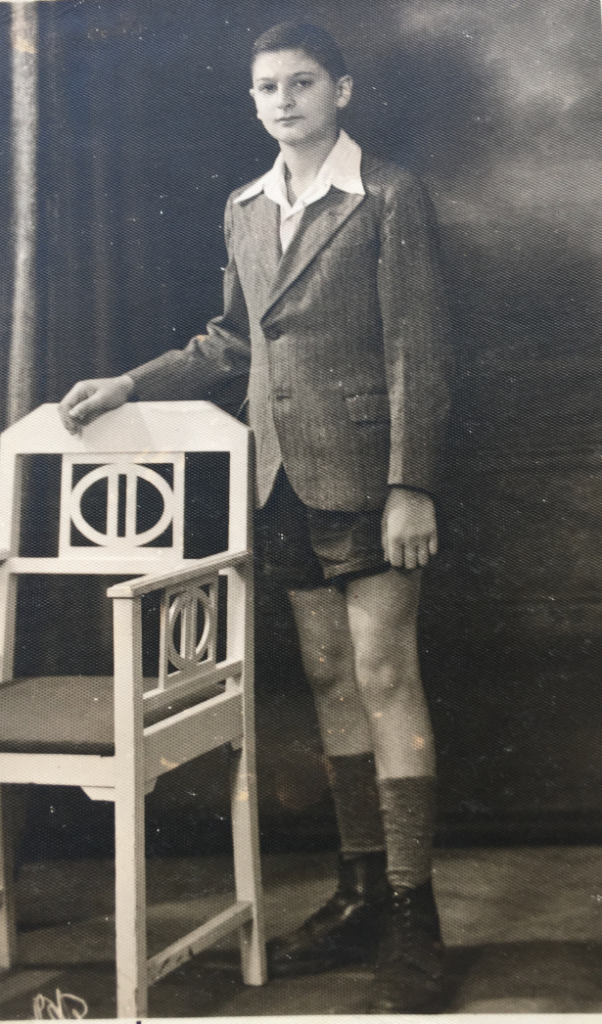
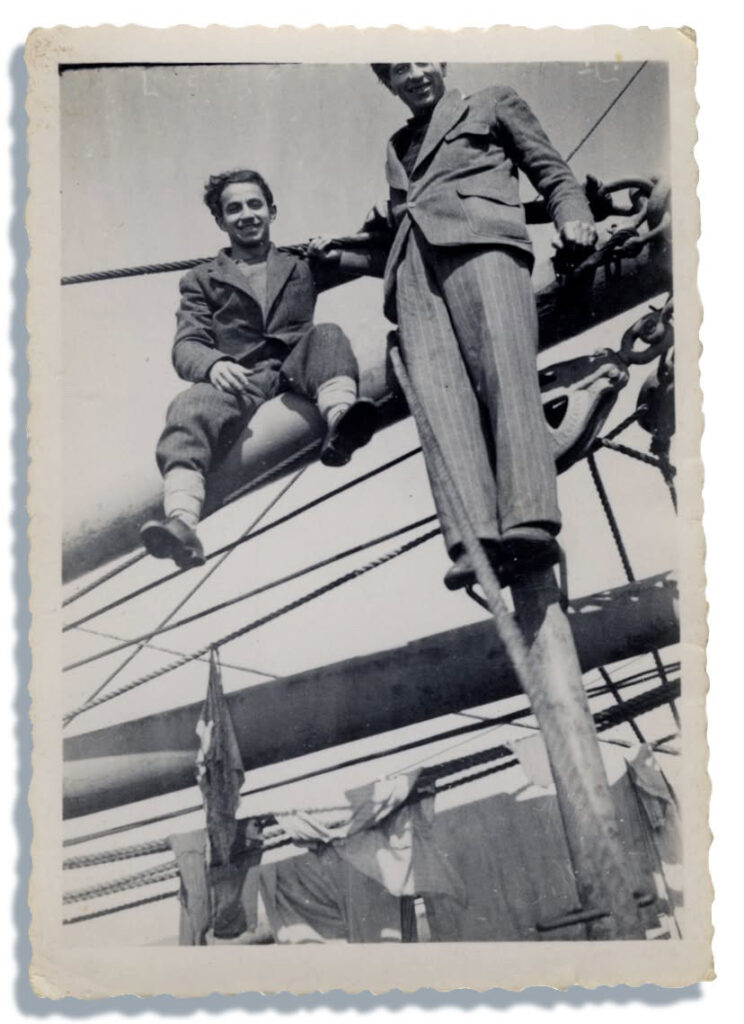
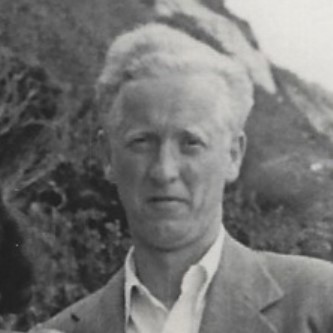
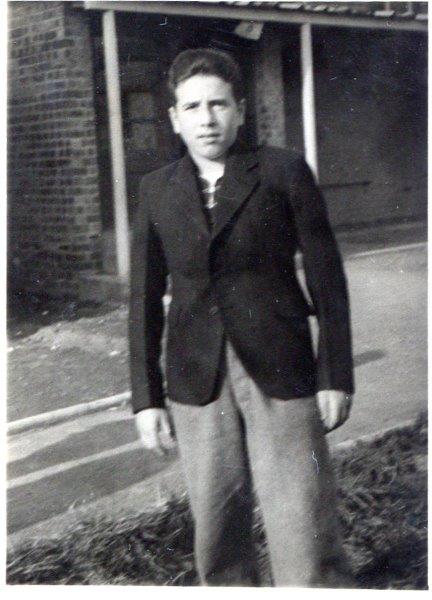
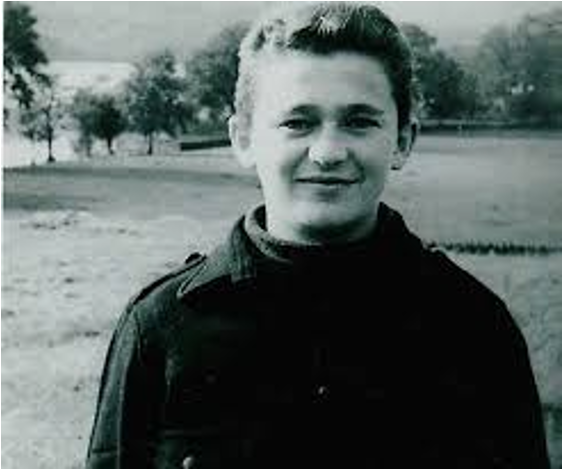
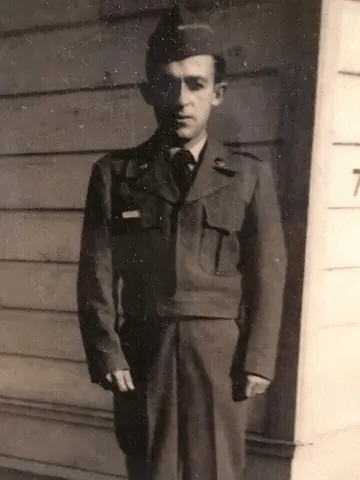
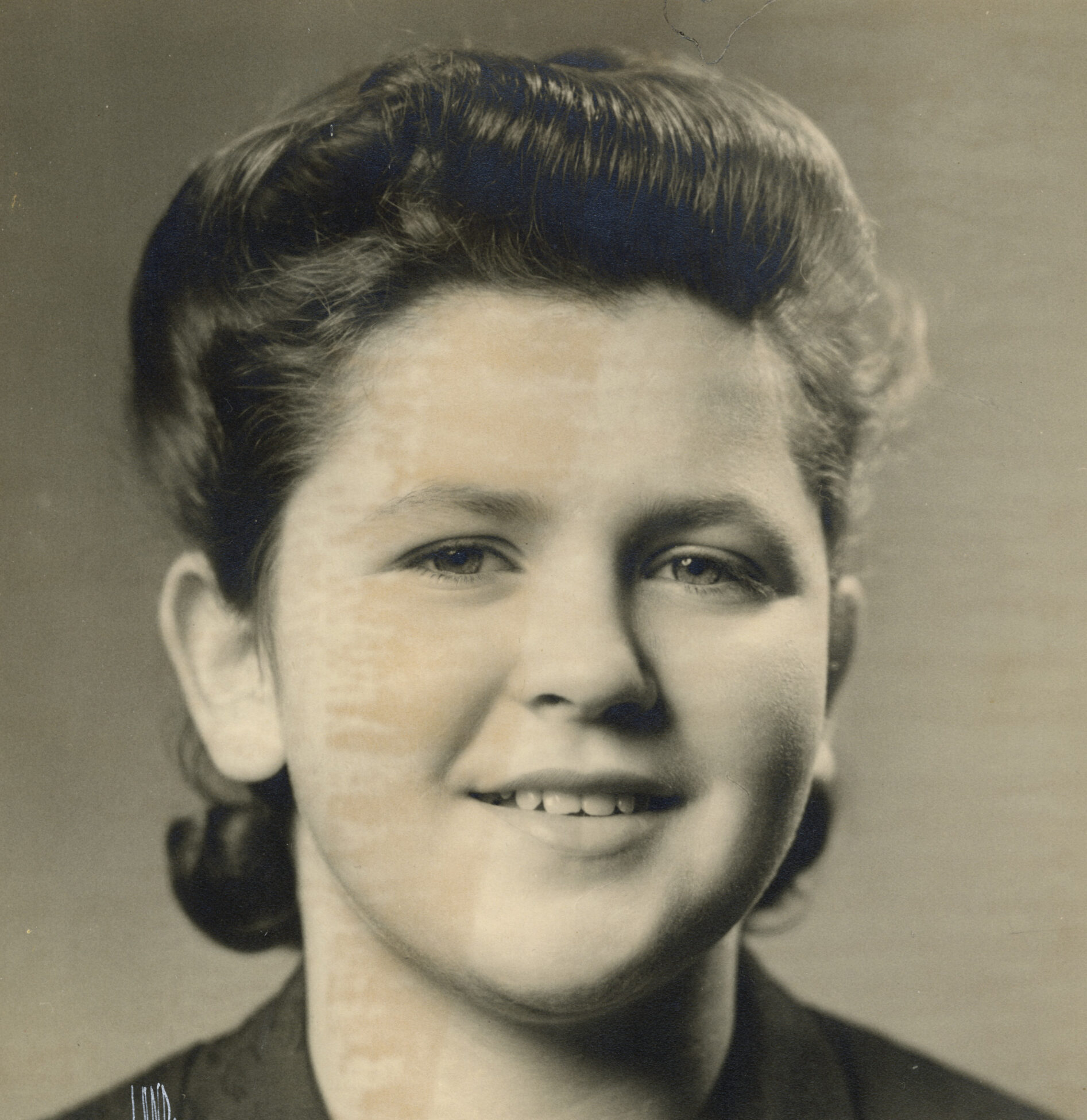
Six of the Boys from Piotrków. These photographs were all taken after the liberation.
As Piotrków industrialised in the 19th century, it was Jewish families who established the city’s first factories and most of the city’s shops. Piotrków was at this point part of the Russian empire. The city became part of Poland after World War I.
Piotrków was a centre for timber, textiles and glass manufacturing. In 1928, 65% of the registered traders and craftsmen were Jewish. Commercial life in Piotrków was badly affected by the 1930s depression and many Jewish families lived in extreme poverty
Piotrków was a major hub of the Jewish printing industry, which produced a wide range of publications that included Yiddish newspapers, secular and rabbinic literature.
Mala Tribich remembers her childhood in Piotrków:
The city was a centre for Talmudic study and produced many notable rabbis but the Jewish community was diverse and included Orthodox families as well as assimilated secular Jews.
During the interwar period Piotrków was home to branches of all the Jewish political parties represented in Poland: the religious Agudas Yisrael, the various Zionist factions, and the socialist Bund.
In the late 1930s antisemitic attacks became frequent.
Harry Spiro described the first weeks of the German occupation in 1939 at a Chabad meeting in Oxford in 2019:
The Ghetto
The Germans army arrived in Piotrków on 5 September 1939. Persecution of the Jews began immediately. A month later a ghetto was established, the first in occupied Poland.
The ghetto had a population of around 10,000 people but the numbers soon began to swell as Jews from the surrounding area were brought to Piotrków. Eventually, almost 25,000 people were confined to the ghetto. To find out more about the ghetto click here.
Mala Tribich describes the murder of her mother and sister in 1942 after the family had been in hiding:
Deportation
As news of deportations and mass killings began to reach the city, the Judenrat learned that the Germans planned to keep slave labourers in the city and set out to increase the number of workshops.
On 14 October 1942, the ghetto was surrounded by SS and Ukrainian militia and in the days that followed approximately 22,000 people were deported to the Treblinka extermination camp, where they were murdered. There are only 67 known survivors of Treblinka, where there was no selection made on arrival and prisoners were sent directly to the gas chamber.
Some of the Boys witnessed the selection in the market square but others heard the departure of the trains while at work in the factories.
In November 1942, those Jews who had hidden in the ghetto and did not have work permits were rounded up and held in the synagogue. Among them were a number of the Boys.
When the manager of the Hostensia glass factory discovered that this was the reason some of his work force had not arrived for work the Boys were immediately released as key workers.
The Jews remained in the synagogue for some days before they were shot in a nearby forest. Among them were the families of the Boys.
Slave Labour
The 2,400 Jews who remained alive were now all confined in forced labour camps, among them many members of the Boys.
South central Poland had been a centre of the armaments industry since the area had been part of the Russian empire. Many of the Boys from Piotrków were taken to munitions camps, notably one at Skarżysko-Kamienna, which was run by the German company HASAG.
There the members of the Boys became highly skilled workers and although they were treated with abject cruelty, they played an important part of the German war machine. One thousand five hundred other Jews were deported to the forced labour camps at Bilzyń, Pionki and Starachowice.
Those Jews who remained in Piotrków worked in Hortensia glass factory, which produced jars and bottles, the Kara factory that produced glass plate, and the Bugaj timber yards.
In November 1944, the Jewish workers at the glass factories and a smaller part from the Bugaj were sent to the HASAG factories in Częstochowa. The larger part of those from the Bugaj, including about 50 people from the glassworks, were sent to Buchenwald concentration camp in Germany, among them were many members of the Boys.
The women and small children from both factories were also sent to Germany to the Ravensbrück concentration camp and those who survived were liberated in the Bergen Belsen concentration camp. Among them was Mala Helfgott, also one of the Boys.
Liberation
Piotrków was liberated by the Red Army on 16 January 1945. Less than 2,000 of the Jews who had been in the ghetto survived.
Some returned to Piotrków, among them Ben Helfgott, Mala’s brother. He was arrested and Polish policeman threatened to shoot him before letting him go.
Only about half of the Jews that left Piotrków in November 1944, survived the atrocious conditions in various German concentration camps and on the death marches.
Most of the surviving Jews of Piotrków chose to leave Poland.
Present-day
Today, there are no known Jews in the city.
Getting there
The nearest airport is Łódź. There are direct trains and buses from Warsaw and Kraków.
What to see
Former Synagogues
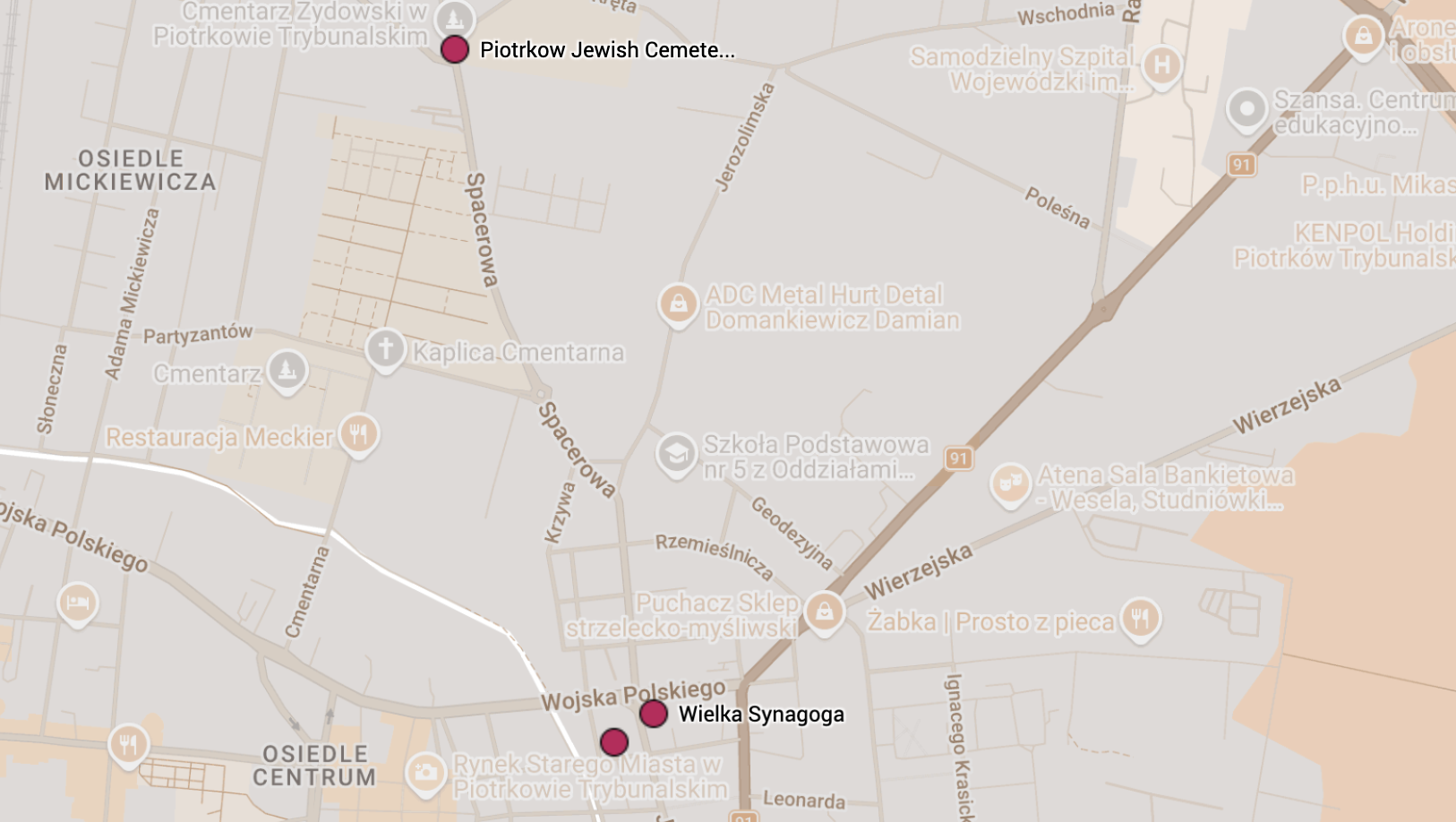
The traces of the Jewish community of Piotrków-Trybunalski include two preserved synagogue buildings:
The Great Synagogue (Jerozolimska 29) Built at the end of the 18th century, it is one of the best preserved synagogues in the region. It is now home to the town library.
The Small Synagogue (Jerozolimska 25) Also dating back to the 18th century, is the children’s library.
Ghetto Location
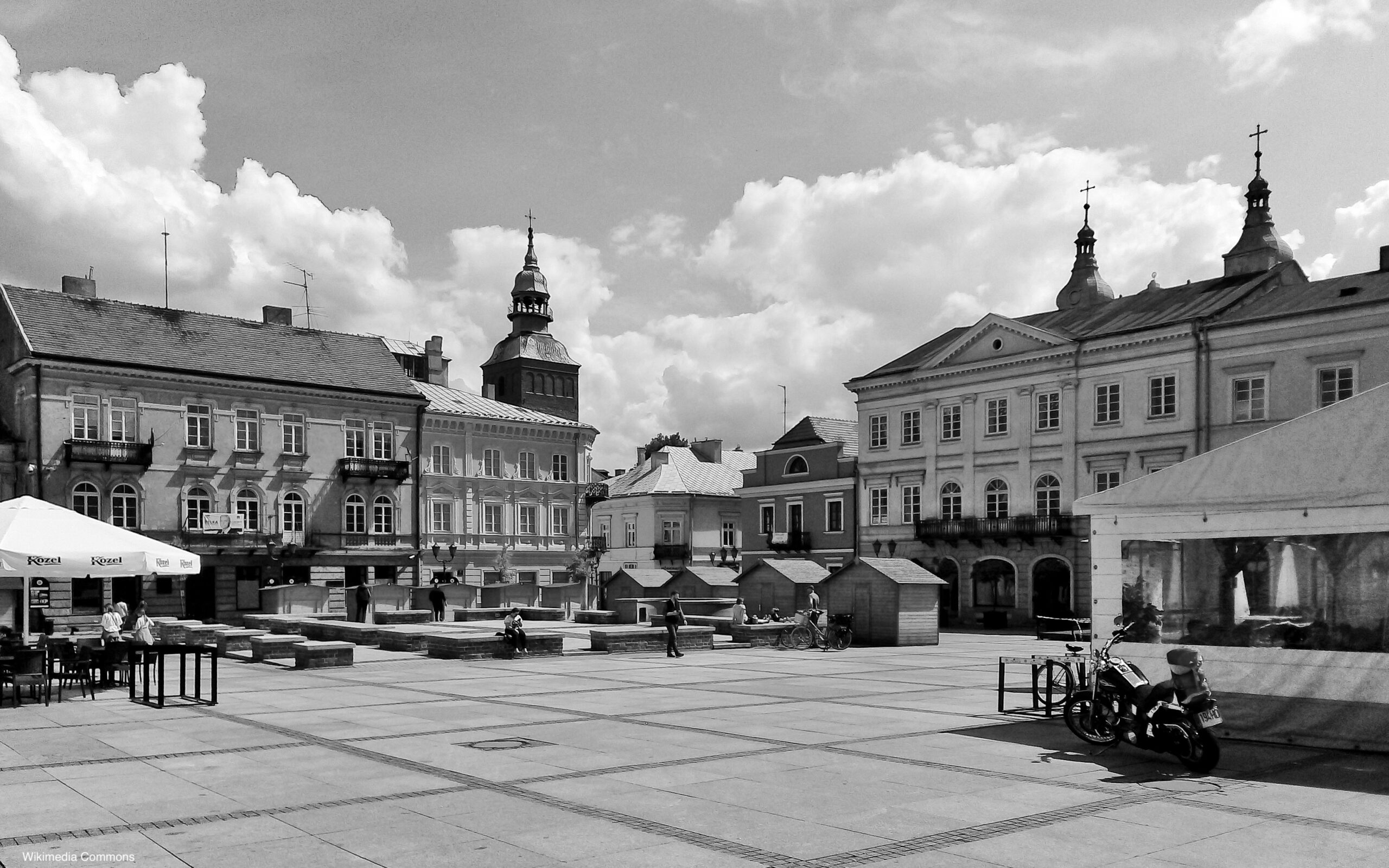
A walk through the old town, specifically along Staro-Warszawska and Jerozolimska streets, traces the boundaries of the 1939 ghetto.
Deportations took place in the main square.
Bugaj Slave Labour Camp Site During WWII, the Dietrich-Fischer wood factory (Holzwerke) at the lake was used as a slave labour camp, where many of the Boys were held.
Hortensia Glassworks Labour Camp Site (21 Maja Street) Located on the outskirts, this was the site of a forced labor camp (Arbeitslager) where Jewish prisoners, including members of the Boys, were forced to work under brutal conditions. The original Hortensja factory did not survive the economic changes of the late 1990s.
Memorial
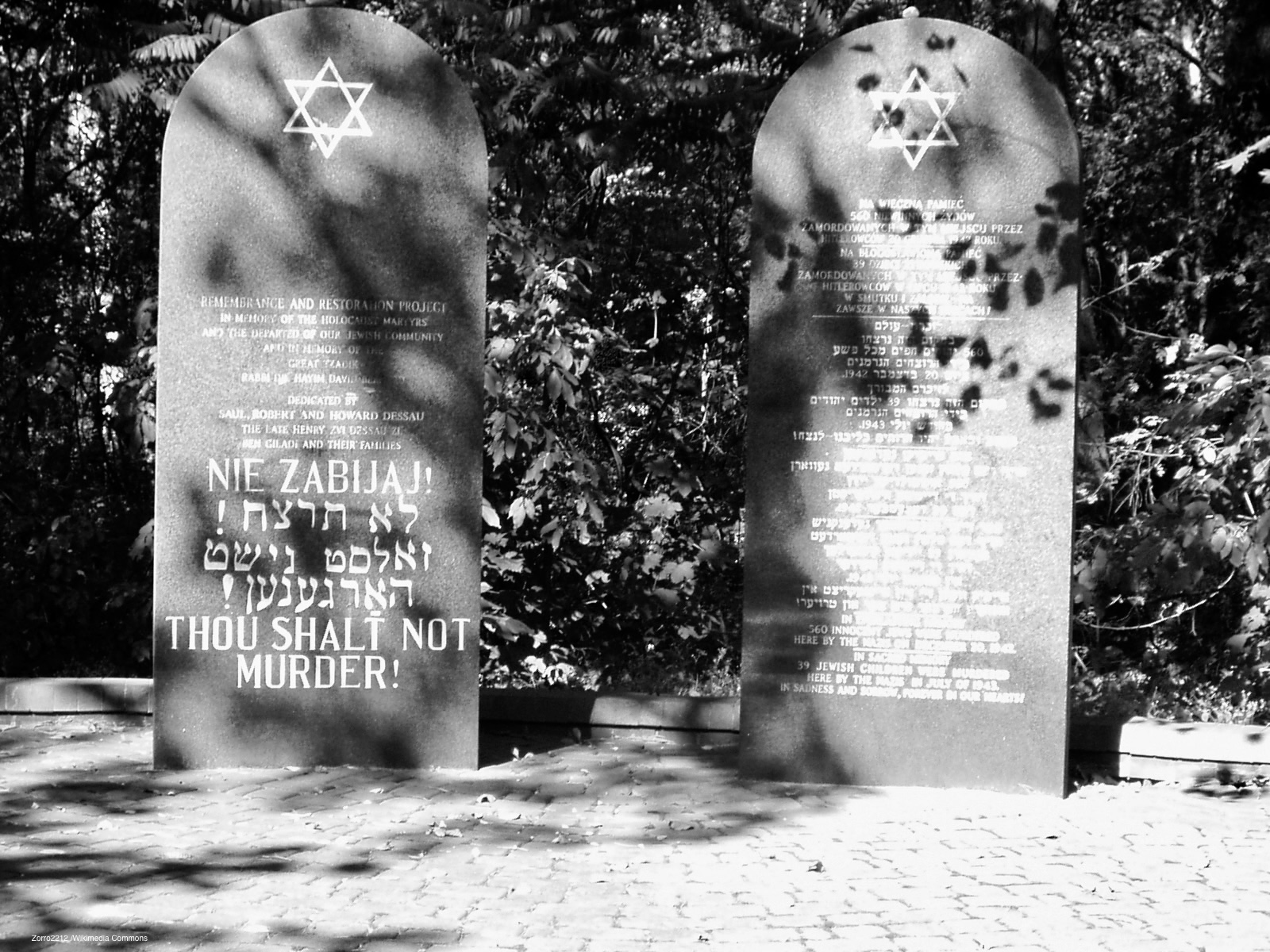
Commemorative Plaques Five plaques exist, funded by survivors Saul and Robert Dessau and Ben Giladi, located at the Great Synagogue, Plac Czarniecki, the Old Cemetery site, the New Cemetery, and near the Rakow forest (3km northwest of Piotrków Trybunalski).
Museum
Piotrków Trybunalski Museum (plac Zamkowy 4, located in the Royal Castle) Provides broader historical context for the city, including its Jewish history.
Cemetery
New Jewish Cemetery (Kręta 20) This is one of the largest and best-preserved Jewish cemeteries in the region, with over 1,700–3,000 surviving matzevot (tombstones). It includes mass graves of Holocaust victims and the ohel of the famous tzaddik Chaim David Bernhard. (The cemetery is usually locked; keys are held by a family living in the former gravedigger’s house on-site.)
Old Jewish Cemetery Site Located in the park area directly behind the synagogues, this site no longer has visible tombstones but is commemorated by a memorial plaque installed in 1997.
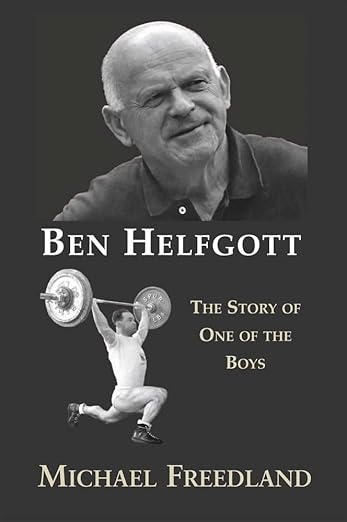
Ben Helfgott, The Story of One of Our Boys (Valentine Mitchell, 2018) Michael Freeland. Ben Helfgott was one of the Boys from Piotrków. To find out more click here.
 About
About History
 Education
 Quilts
 FIlms
FIlms Photos
 News Media & Events
 Publications
 Donate