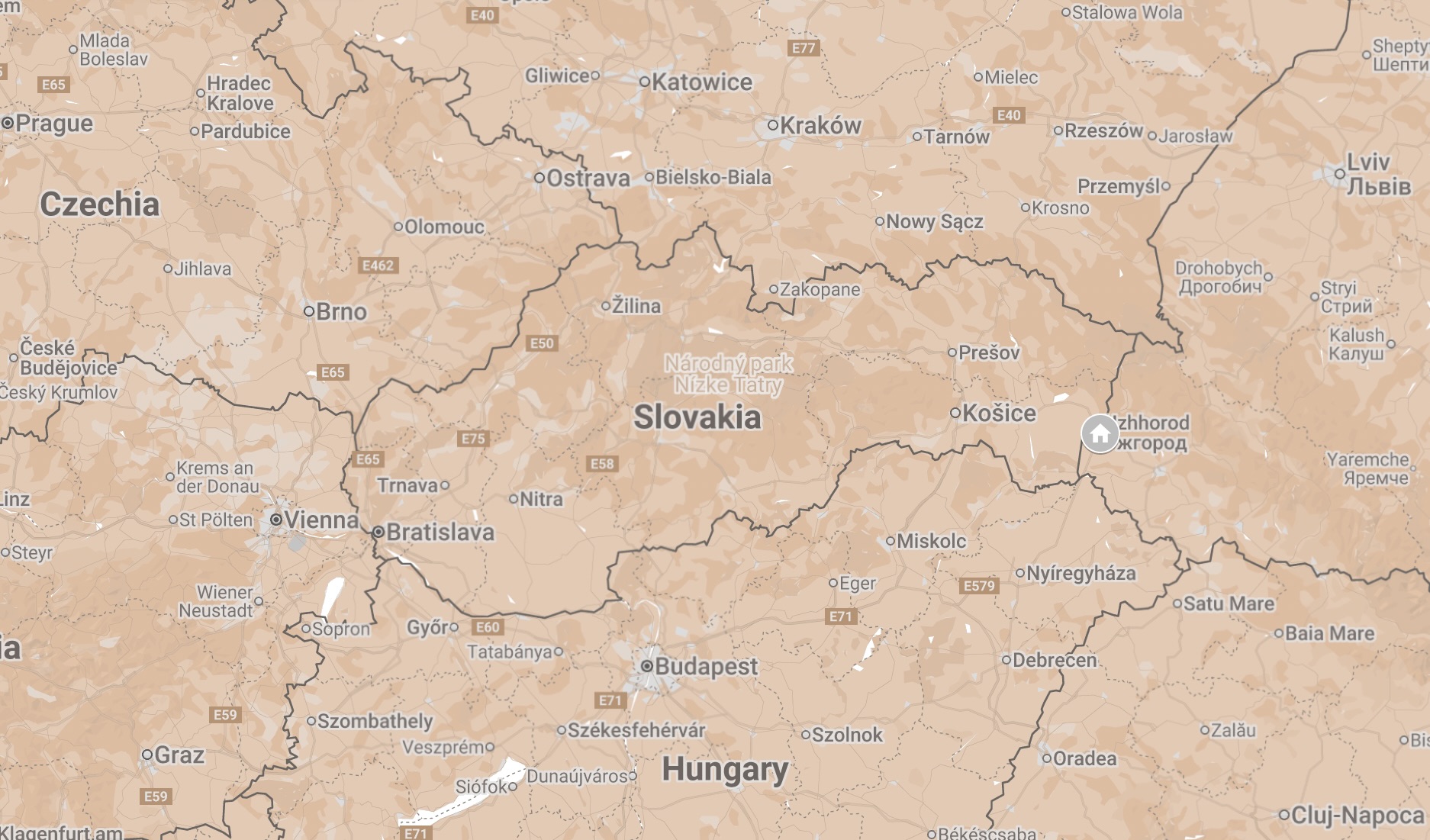
Members of the Boys were born in Užhorod in Czechoslovakia.
The Boys were teenage and child-Holocaust survivors, who were brought to the UK after the war for rest and rehabilitation.
Members of the Boys were held in Nazi labour and concentration camps and used as slave labourers. They had also survived World War II in hiding or as lone children.
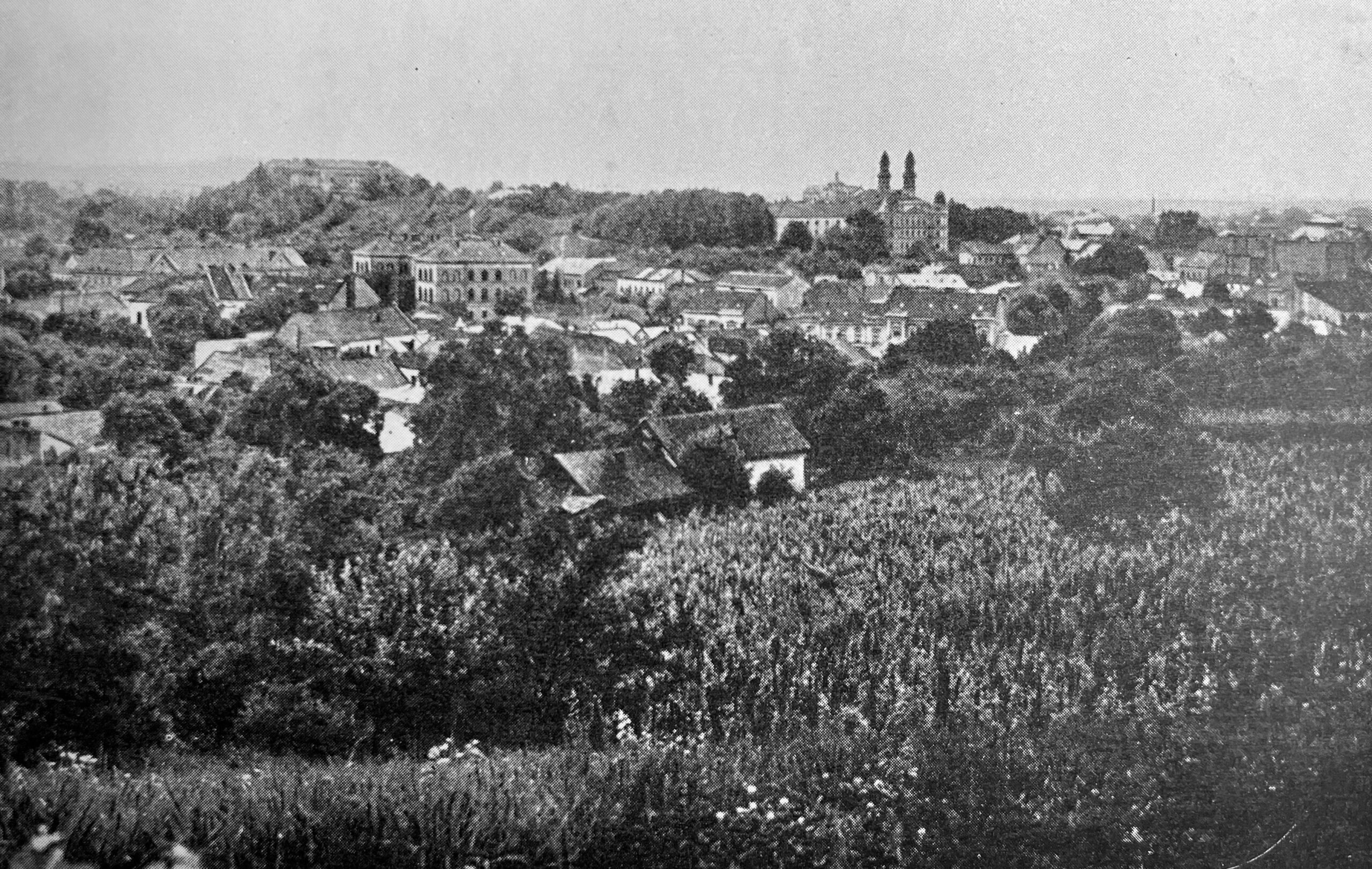
Užhorod in the Carpathian Mountains was home to 22 members of the Boys.
Pre-war
Jews have lived in Užhorod since the 16th century.
Until 1920, Užhorod was part of Austro-Hungary. In 1920, Užhorod became the capital of Carpathian Ruthenia, the most easterly corner of the newly created state of Czechoslovakia. In the inter-war period the Jewish community flourished.
In 1930, 7,357 Jews, a third of the population lived in Užhorod.
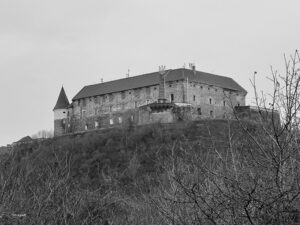
The city had a number of Jewish schools, a yeshiva, a Jewish hospital and an old aged people’s home. Užhorod was an important Hasid and Orthodox religious centre. Many books were printed in the city in Hebrew and Yiddish.
Jews played an important role in the economy and were active in local politics. The vast majority of the Jewish population of Užhorod were tradesmen and shopkeepers, although there were also wealthy families who owned large factories that still exist. The Weiser family were owners of the flour mills on Mukacsevskaja Street, which still produces bread and baked goods.
Occupation
Under the 1938 Munich Agreement, Hungary occupied the area. In March 1939, the Hungarians officially annexed the region and imposed laws restricting Jewish access to education, trade, and the professions. The city was now known by its Hungarian name of Ungvár.
Many Jewish men were drafted into labour battalions sending them east for forced labour on the eastern front. Jews who could not prove that they had Hungarian citizenship were deported to Poland and many were murdered there by the SS.
Deportation
In March 1944, Germany invaded Hungary.
On 21 April 1944, two ghettos were established outside the town. One in the ghettos was in a brick factory, which belonged to the Jewish Moschkowich family and the other in a timber warehouse, owned by the Gluck family, who were also Jewish. Jews from the surrounding area were brought into the ghettos and approximately 25,000 people were held there. Other member of the Boys from neighbouring towns and villages were also taken to the ghetto. To find out more click here.
In June 1944, the majority of the ghetto’s inhabitants were sent to Auschwitz II-Birkenau concentration and extermination camp.
Liberation
On 27 October 1944, the city was liberated by the Soviet Red Army. About 2,000 Jews from Užhorod survived the Holocaust. Many of those who returned home were not made welcome and found strangers living in the homes.
Transcarpathia was annexed to the Soviet Union in 1945. As a result most survivors chose to leave.
Present-day
Uzhhorod has a small Jewish community, a synagogue, community centre and a day school. It oversees the remaining Jews in the nearby towns of Khust, Mukachevo, Rachiv and Vinogradov.
Getting there
Trains run from Košice in Slovakia to Uzhhorod and Mukachevo via Chop. If you are going to Uzhhorod this way, get out in Chop and take a taxi from in front of the station. To explore the Carpathian Mountains, it pays to have your own transport.
Note that the UK Foreign Office advises against travel to Ukraine because of the ongoing Russian invasion.
What to see
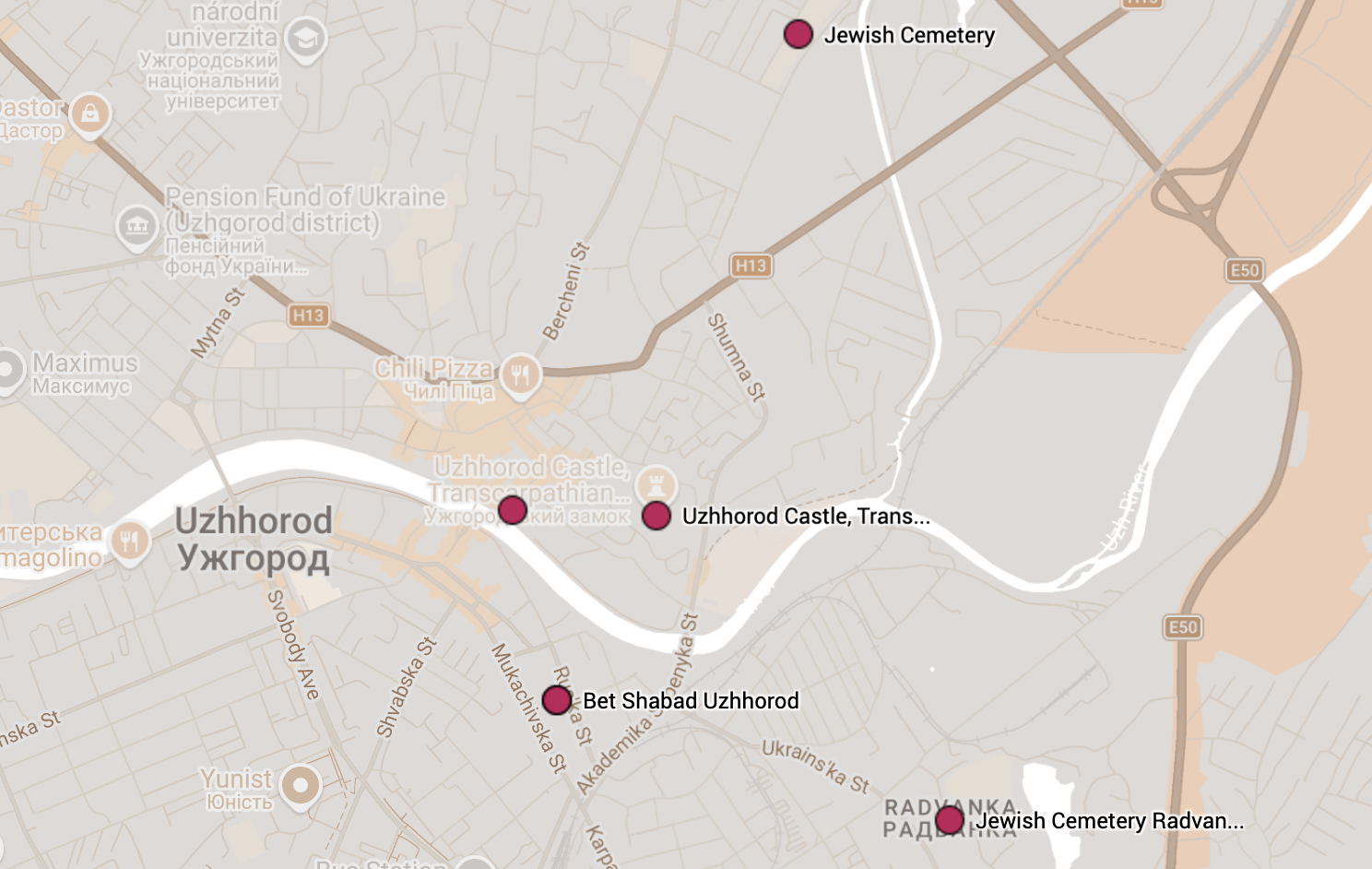
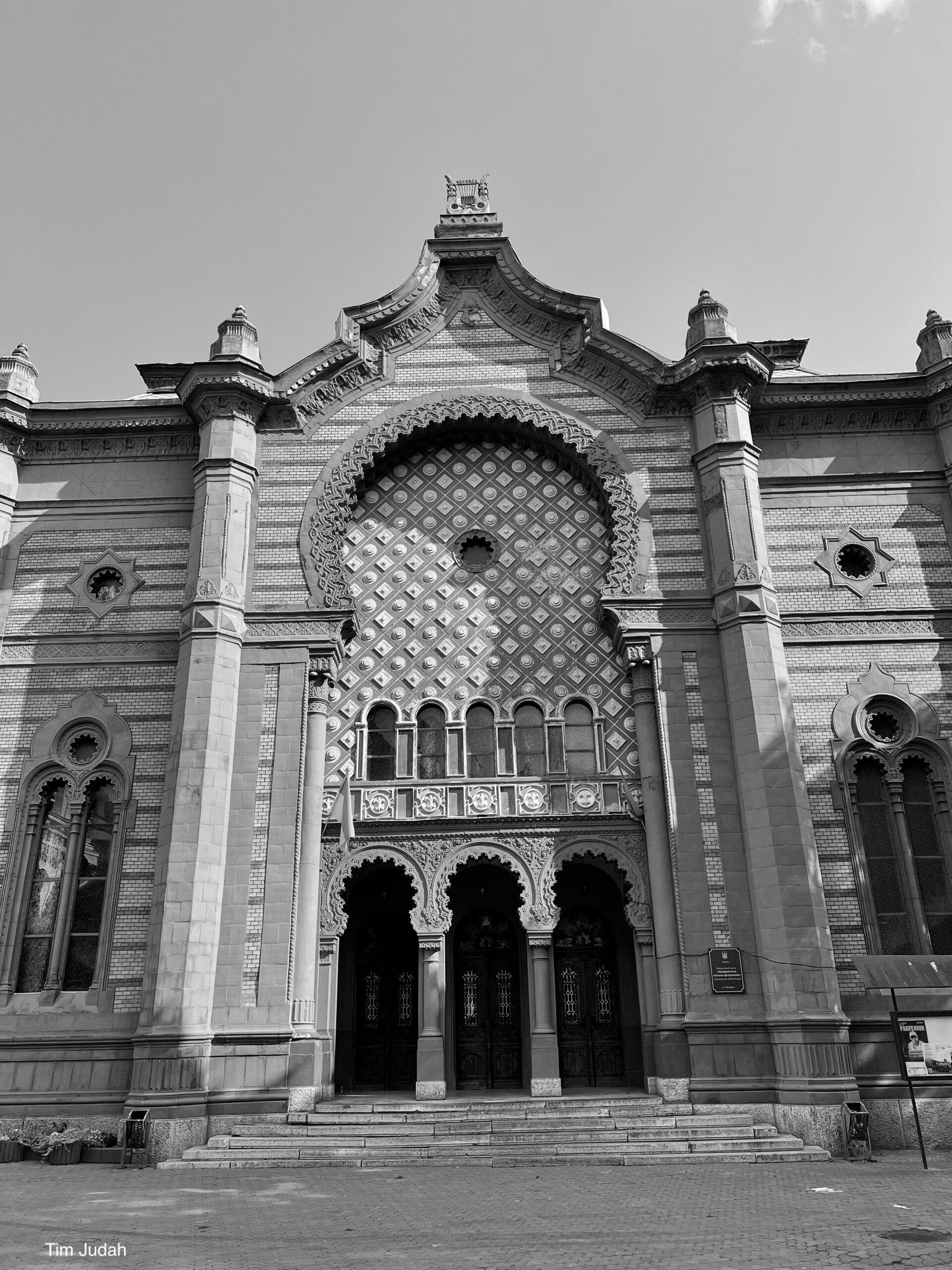
Uzhhorod Choral Synagogue (10, Pasazh Ln) Completed in 1904, this landmark building is famous for its Neo-Moorish and Byzantine Revival architecture. Since 1947, it has functioned as the Transcarpathian Regional Philharmonic. While most Jewish symbols were removed during the Soviet era, a plaque on the facade commemorates the 85,000 Jews from the region murdered in the Holocaust.
Active Synagogue (47 Mukachevska Street) This 1920s-era synagogue currently serves the local community of approximately 300 people.
Jewish Cemeteries The city’s Jewish cemeteries are considered significant pilgrimage sites, particularly the grave of Rabbi Solomon Ganzfried (1804–1886), the author of the Kitzur Shulchan Aruch.
The Old Jewish Cemetery (Kotlyarevs’koho St) This is the city’s largest and most historically significant Jewish burial ground, containing over 1,000 gravestones and the Ohel of Rabbi Shlomo Ganzfried: The author of the Kitzur Shulchan Aruch (1804–1886).
Radvanka Jewish Cemetery (5, Stefanyka Street) Established around 1855, it currently contains approximately 70 gravestones.
Jewish Community of Uzhhorod (36, Rus’ka St) The centre offers support and information for visitors exploring local heritage.
Museum
Transcarpathian Museum of Folk Architecture (Kapitul’na St, 33а) As of late 2025, a rare wooden synagogue from Velyki Komiaty was slated for transfer to this open-air museum to be preserved and used for religious purposes.

 About
About History
 Education
 Quilts
 FIlms
FIlms Photos
 News Media & Events
 Publications
 Donate