Częstochowa, Poland

Members of the Boys were born in Częstochowa in Poland.

The Boys were teenage and child-Holocaust survivors, who were brought to the UK after the war for rest and rehabilitation.

Members of the Boys were held in Nazi labour and concentration camps and used as slave labourers. They had also survived World War II in hiding or as lone children.
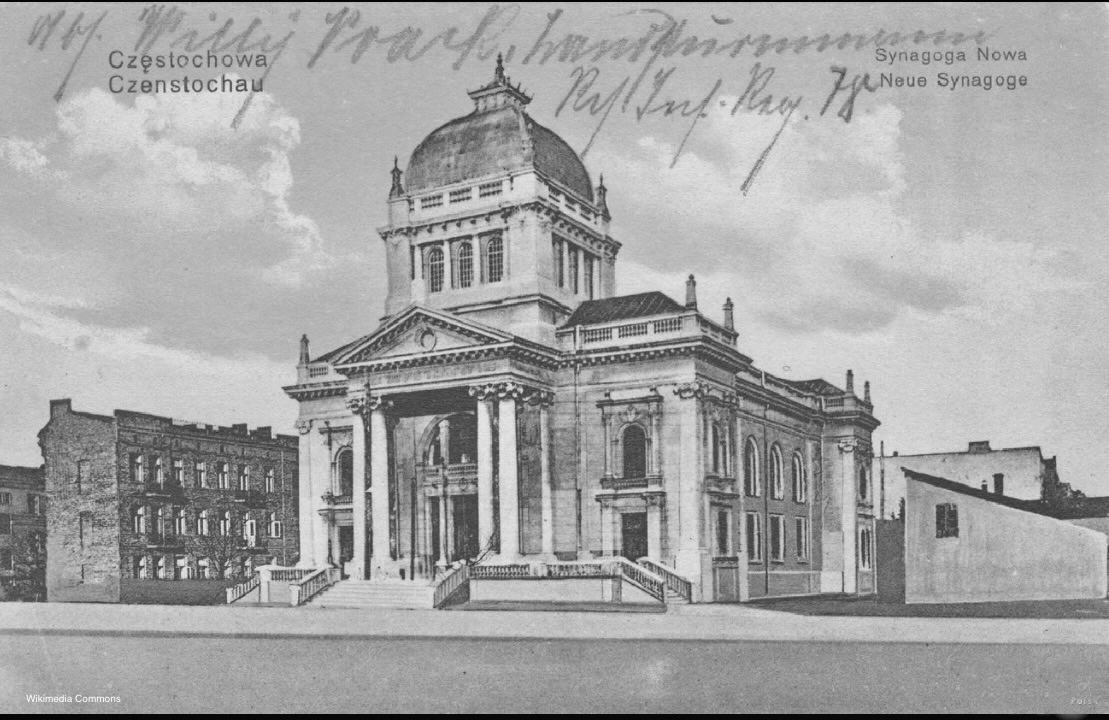
Old postcard of the New Synagogue in Czestochowa, Poland.

Old postcard of the New Synagogue in Czestochowa, Poland.

The industrial city of Częstochowa in southwest Poland is famous for the Catholic icon the Black Madonna but, before the Holocaust, it was also home to a lively Jewish community.

Częstochowa played a role in many of the Boys lives as a large number passed through the HASAG labour camp and from there were deported to the Buchenwald concentration camp in Germany. It illustrates the importance of slave labour in their survival but is also significant as it was through this period that many close friendships among the Boys were formed.

Pre-war

When World War II broke out, 28,500 Jews lived in Częstochowa. They played an active part in industry, banking, civic and commercial life. The city was also a centre for doll manufacturing and many of the toy companies belonged to Jewish families.

Częstochowa was also an important centre of Hasidism and Zionist movements. A Jewish agricultural training farm and a trade school operated in Częstochowa during the interwar years preparing young Jews for life in the Palestine Mandate. There was also a network of religious and secular Jewish schools, as in most large Jewish communities in Poland.

Wartime

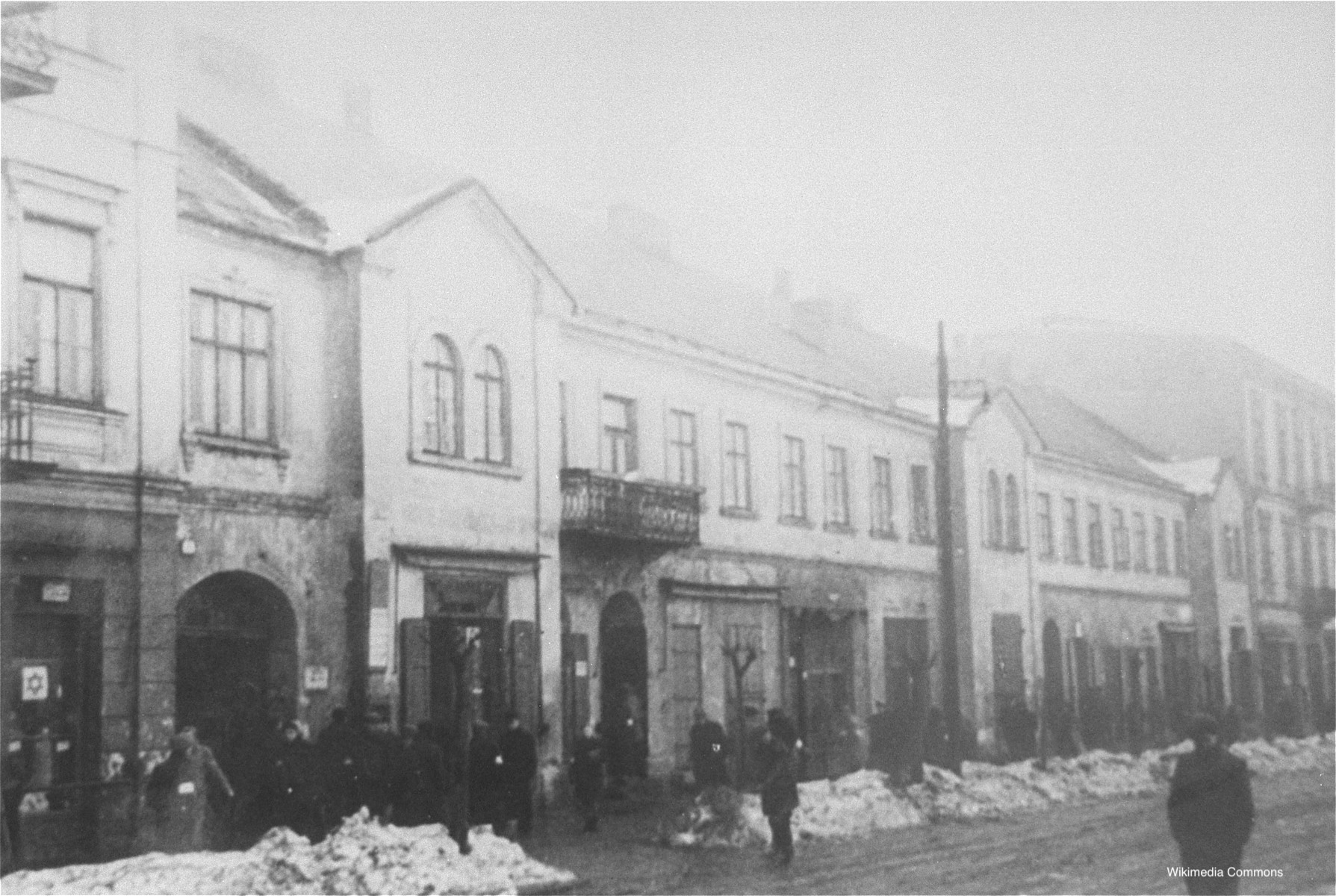
The Germans entered Częstochowa on Sunday, 3 September 1939 and persecution of the city’s Jews began immediately.

A ghetto was established on 9 April 1941. Some 20,000 Jews, including a large number from Kraków, Łódź and Płock and the nearby villages were also imprisoned in the Częstochowa Ghetto.

The German company HASAG ran a series of labour camps in the city, in which many of the Boys worked as slave labourers prior to deportation to the Buchenwald and Ravensbruck concentration camps in Germany.

During World War II, HASAG became a Nazi arms-manufacturing conglomerate with dozens of factories across German occupied Europe using slave labour on a massive scale. HASAG employed women as well as men.

There was a little known underground resistance movement in the ghetto that maintained close contact with the Jewish Fighting Organisation in the Warsaw Ghetto.

Liberation

When the Red Army liberated Częstochowa, 5,000 Jews were still living in the area.

In June 1946, 2,167 Jews were living in Częstochowa. After the establishment of the state of Israel, many Jews left Częstochowa and, after the Polish Communist Party’s antisemitic campaigns of the 1960s, nearly all the remaining Jews left the city.

Visiting Częstochowa
>

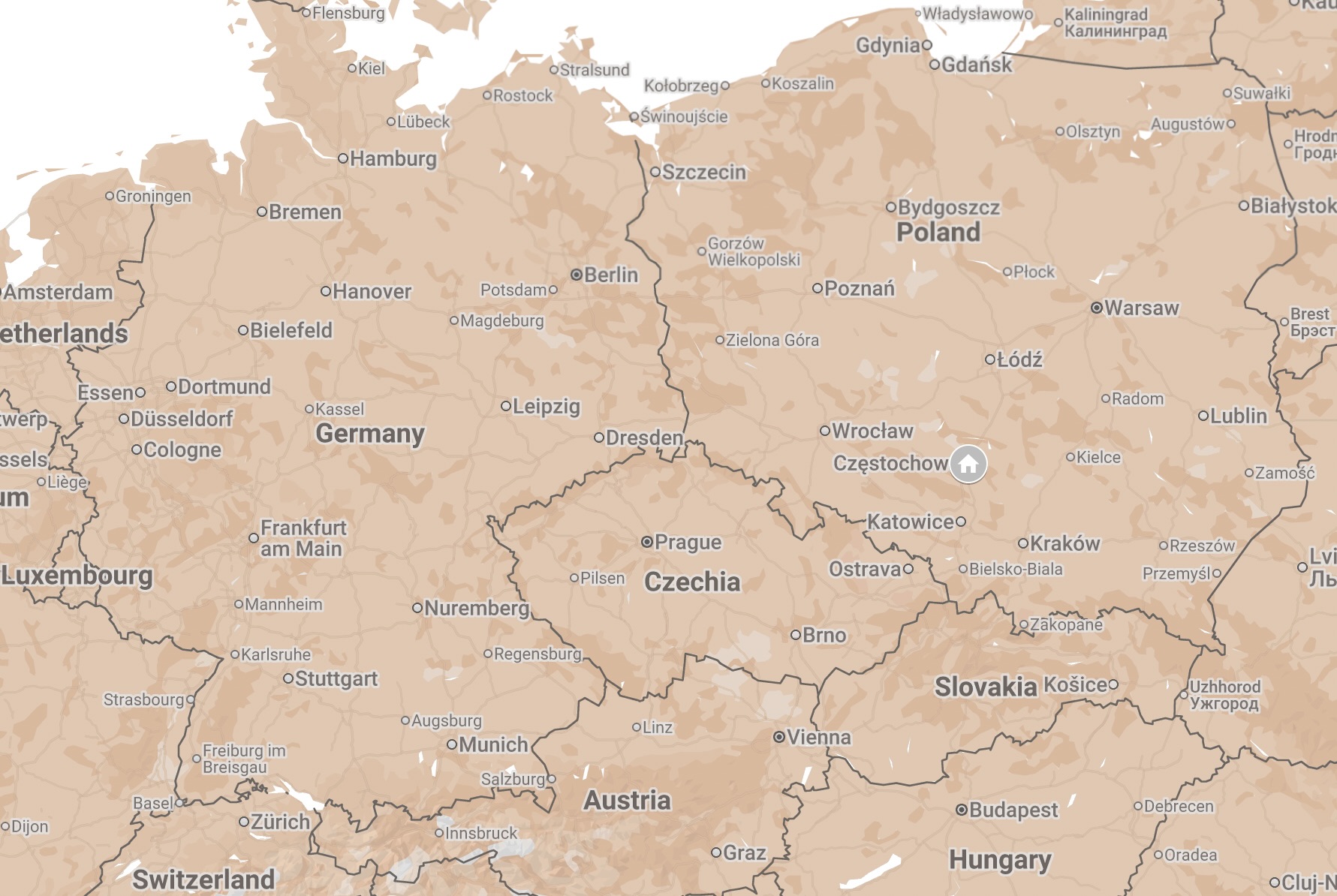
Getting there Częstochowa is easily accessible by train from major Polish cities like Katowice, Warsaw, and Kraków.

What to See

Museum

Muzeum Częstochowskie (ul. Katedralna 8; entry fee) The city museum has a permanent exhibition on the city’s Jewish history. The website w czestochowa.pl/jewish-tour has an extensive list of Jewish memorial sites in the city.

Ghetto Location The area around the old city (Stare Miasto) and Dawson street was the center of the Jewish community before it was converted into a closed ghetto by the Germans in 1941. There is a commemorative plaque at Bohaterów Getta, 1–3.

Memorials

A memorial on ul. Olsztyńska 28 commemorates the victims both Poles and Jews shot by the Germans in 1939.

There are several Holocaust memorial in the Jewish cemetery on Złota, 42-202.

One of Częstochowa’s roundabouts is named after Leon Silberstein, one of the resistance leaders.

There is a memorial at the site of the HASAG labour camp on Oźmińska ul.

Cemetery

Jewish Cemetery (Złota Street 42-202) This is one of the largest in Poland. It contains around 4,000 tombstones (matzevot), the ohel of Tzaddik Pinchas Menachem Eliezer Justman, and several Holocaust memorials, including a mass grave of ghetto victims and a monument to the Jewish Combat Organisation.
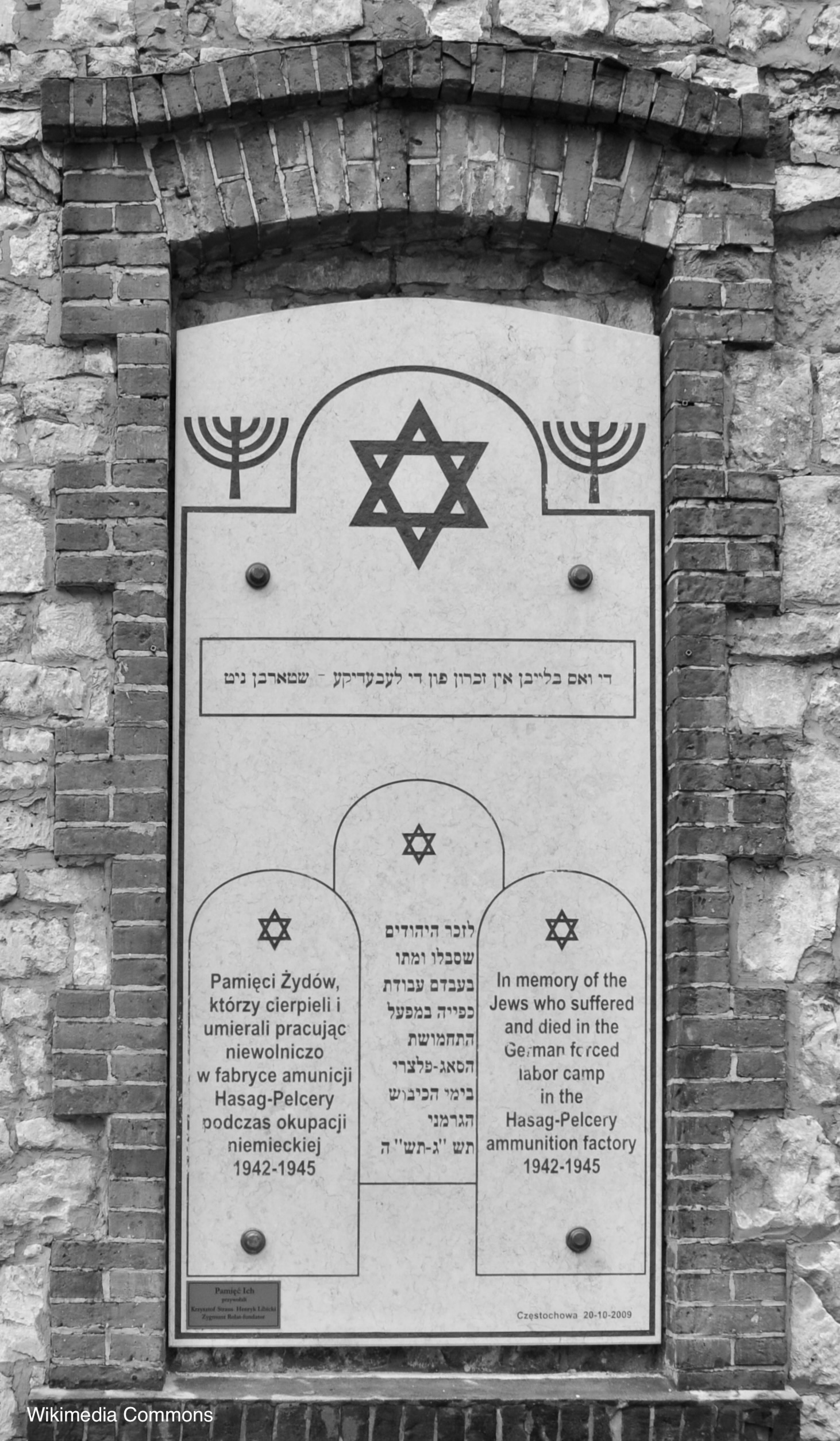
 

Photograph of the Częstochowa Hasag Memorial Plaque.
Map:
Gallery:
Contact:
team@45aid.org
45 Aid Copyright 2026
45 aid society is a registered charity
in England and Wales (243909)
Design and development:
Graphical