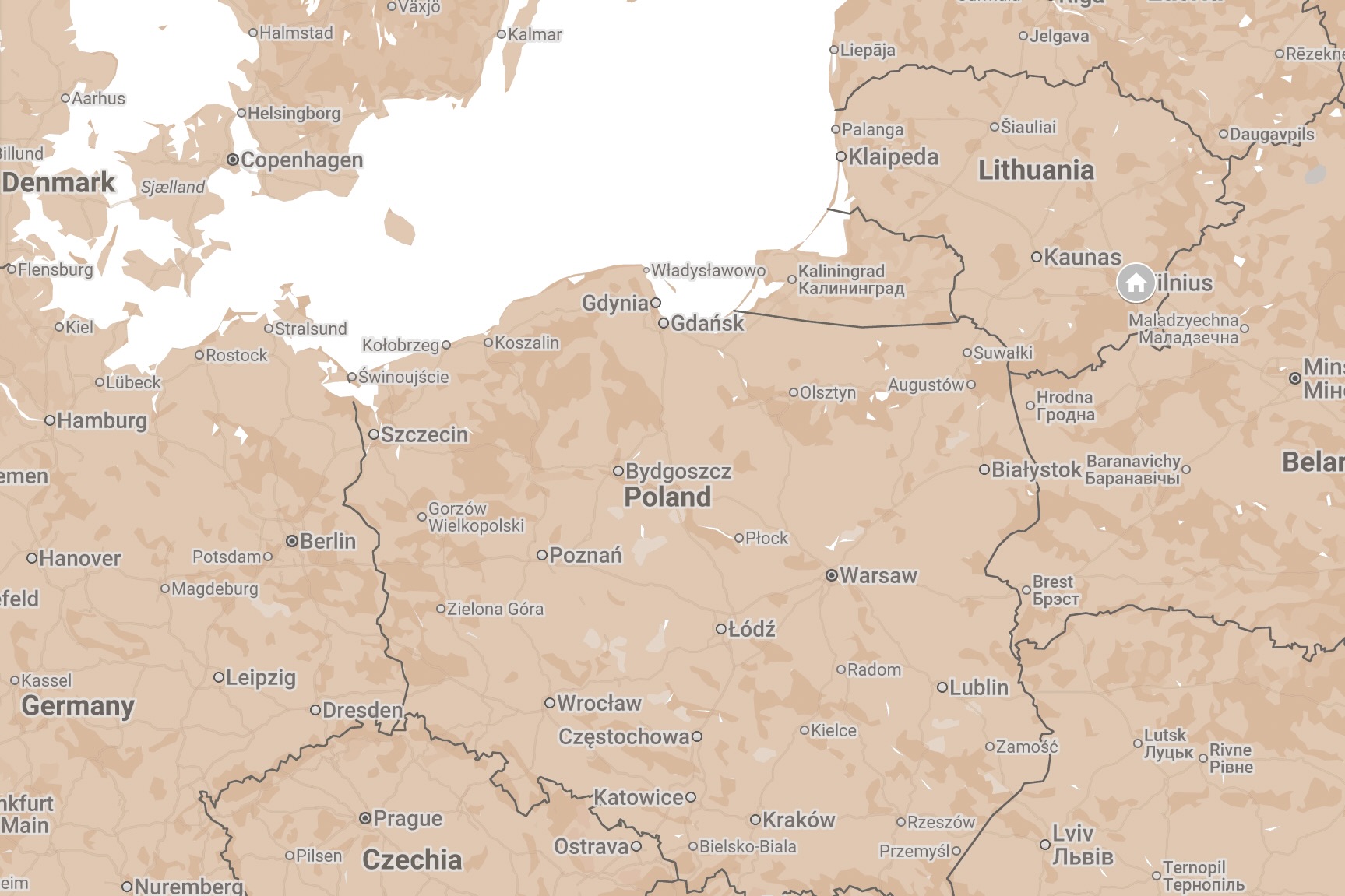
Members of the Boys were born in Vilnius, Poland, now in Lithuania.
The Boys were teenage and child-Holocaust survivors, who were brought to the UK after the war for rest and rehabilitation.
Members of the Boys were held in Nazi labour and concentration camps and used as slave labourers. They had also survived World War II in hiding or as lone children.
Getting there
Vilinius has good air and road connections. Trains also run to Riga and Warsaw.
What to see
Ghetto Location
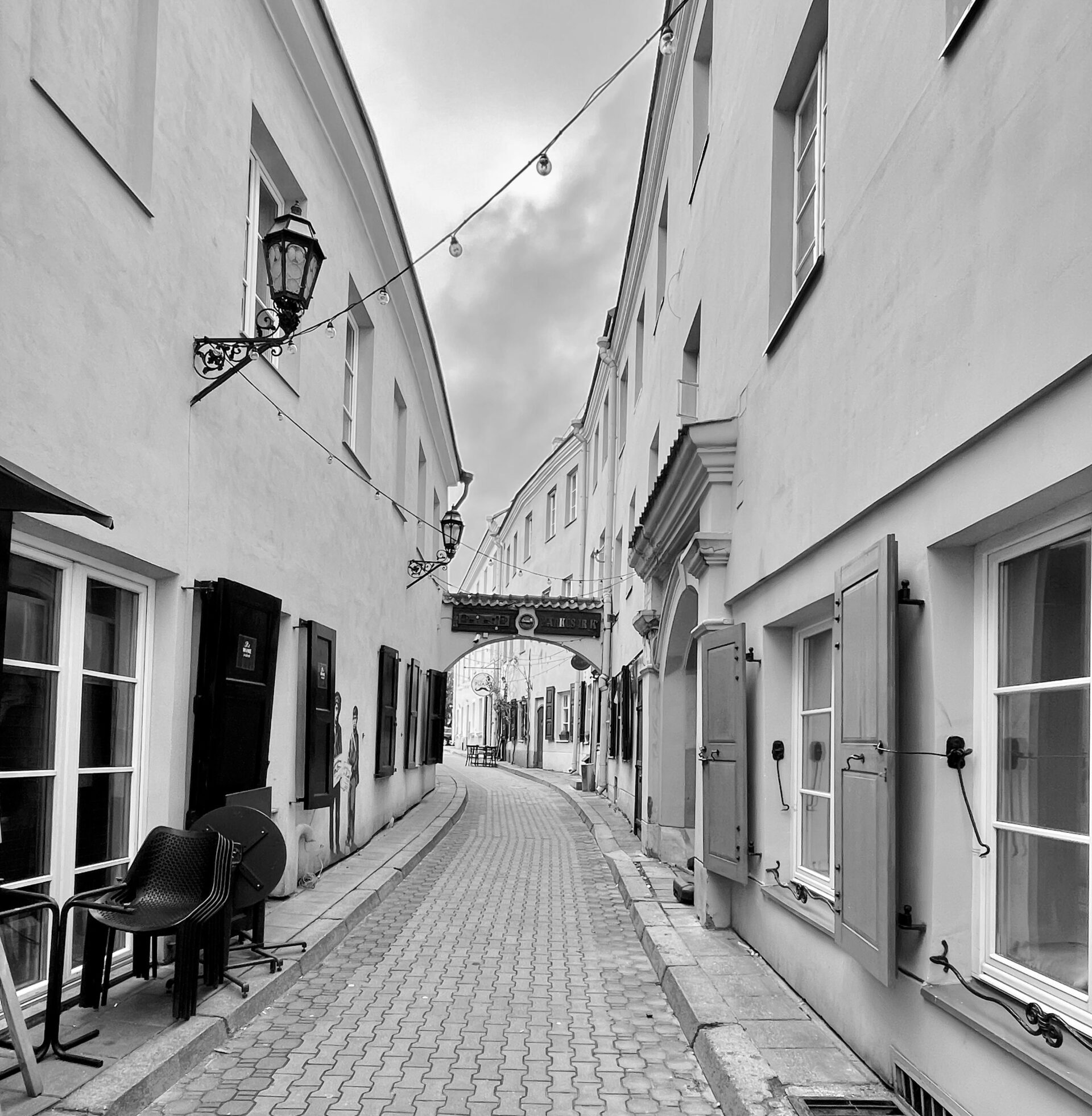
The Little Ghetto was located at the beginning of Stiklių gatve to the right of Vilnius Town Hall, where there is a map and memorial plaque.
Former Great Synagogue was on Žydų gatve. Take the second left turn on Stiklių gatve. Next to it stood the famous Strašūnas Library. The complex was damaged in World War II, though not irrevocably, and it is now undergoing restoration.
The Great Ghetto
Vokiečiu gatve ran between the two ghettos. Now far wider than originally laid out, this was the heart of the Jewish Quarter and once bustled with shoppers and peddlers.
Jewish Culture and Information Centre (Mėsinių 3a/5) Stop here to pick up a map of Jewish Vilnius. In the basement there is a fascinating recreation of a malina, a hiding place. Outside there are information panels, as well as an example of the ‘Walls That Remember’ graffiti art initiative and one of the city’s talking statutes. Use the QR code you’ll find there to activate it.
The Judenrat was located at Rūdninku 8, a few minutes’ walk away. The entrance to the Great Ghetto was at No. 18, where there is a memorial plaque. After the liquidation of the Great Ghetto in September 1943, around 1,250 Jews were transferred to a labour lamp on Subačiaus gatve (Bldgs 47 & 49), 2km east of the city centre. There is a memorial between the two buildings and an information plaque.
Vilna Ghetto Library (Žemaitijos g. 4) This site is being transformed into a new memorial museum for the Holocaust and the Vilna Ghetto.
Synagogue
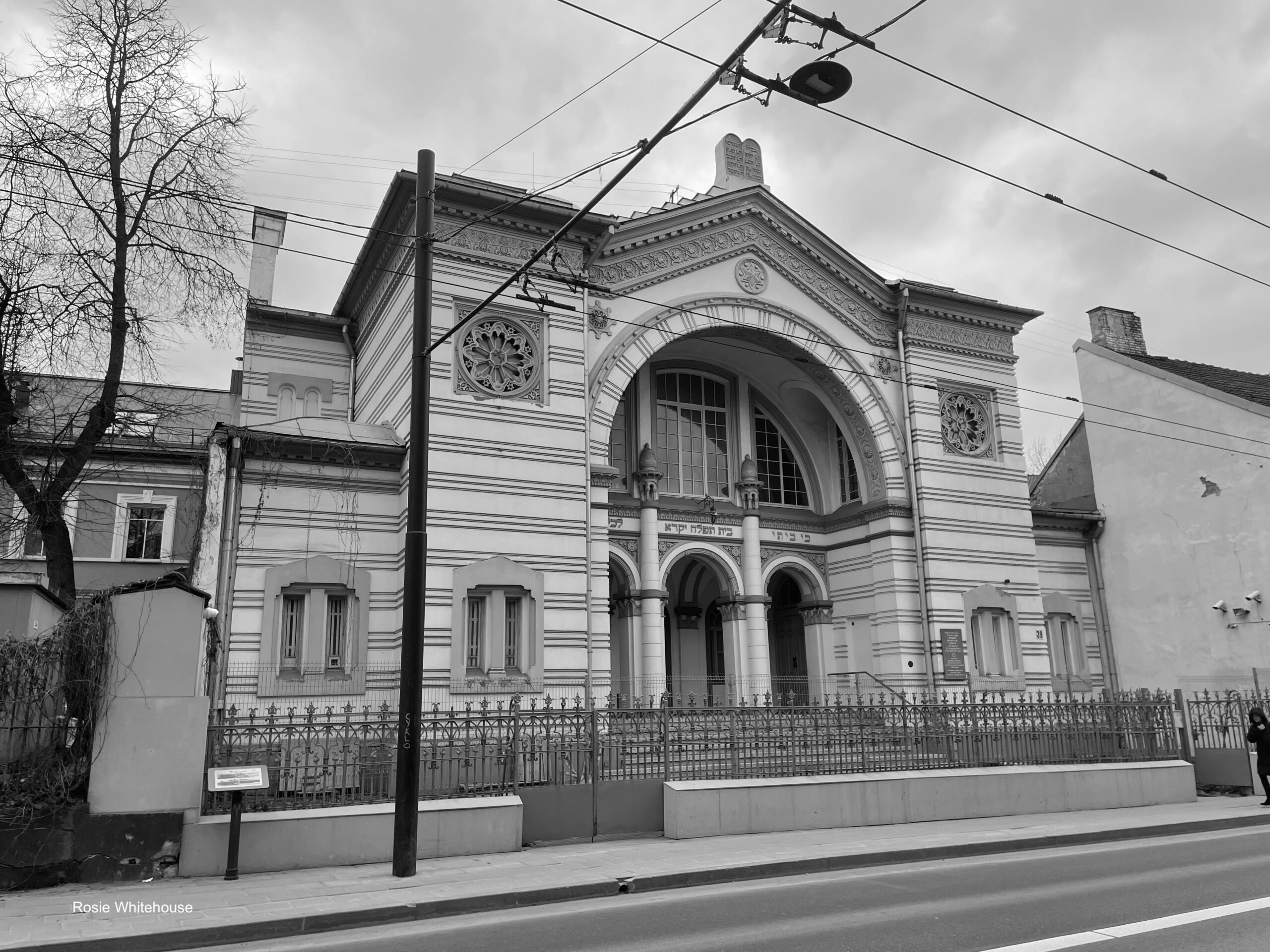
Choral Synagogue (Pylimo g. 39; ring the bell on the gate for admission) Here the partisan leader Abba Kovner made his famous rousing speech after the liberation at Jewish New Year 1944. Do not miss the fascinating old matzo-making machine on display in the women’s gallery.
Museums
Vilna Gaon Museum of Jewish History The Vilna Gaon Museum of Jewish History covers a number of important museums:
The Samuel Bak Museum in the Tolerance Centre (Naugarduko g. 10/2) Much of the museum is dedicated to the artist Samuel Bak, but it also hosts an extremely moving exhibition about children who were saved during the Holocaust. A child’s singing guides visitors to a memorial for the murdered Jewish children of Lithuania.
The Museum of Culture and Identity of Lithuanian Jews, (Pylimo g. 4A) The museum is in the Lithuanian Jewish Community headquarters in the former Tarbut School. It also exhibits the work of Rafael Chvoleso (1913–2002) in the separately named Rafaelio Chvoleso Muziejus and other Jewish cultural figures. It tells the story of Jewish life in Lithuania, notably of Jewish secular schooling.
The Holocaust Exhibition (Pamėnkalnio str. 12) Located in a wooden building known as the Green House. The museum is rather old fashioned but is due to be replaced by the new museum in the former ghetto library.
Further afield
Paneriai Forest Paneriai Paneriu Memorialas (Agrastu g. 17; w jmuseum.lt/lt/paneriu-memorialas-2; ( 24hrs; free) During the Soviet occupation, the Red Army dug several huge round pits in which to store aircraft fuel outside the village of Aukštieji Paneriai, 14km southwest of Vilnius. The Germans used them as ready-made death pits. They hold the remains of 75,000 people, mostly Jews but also Soviet prisoners of war and Poles murdered by the Germans and Lithuanian collaborators between 1941 and 1943. The events are well documented in the visitor’s centre.
Rudnicki Forest After the liquidation of the Vilnius Ghetto in 1943, Abba Kovner and his partisans hid out deep in the Rudnicki Forest, south of Vilnius near the border with modern-day Belarus. The partisans, because they had fought with the Red Army, were heroes in Soviet times, and every Soviet school child visited the old partisan bunkers. Since the present Lithuanian government does not celebrate Soviet heroes, Kovner’s hideout no longer appears on maps. If you decide to visit, pack mosquito repellent as the forest is infested. For information on visiting ask at the Jewish Culture and Information Centre.
 About
About History
 Education
 Quilts
 FIlms
FIlms Photos
 News Media & Events
 Publications
 Donate