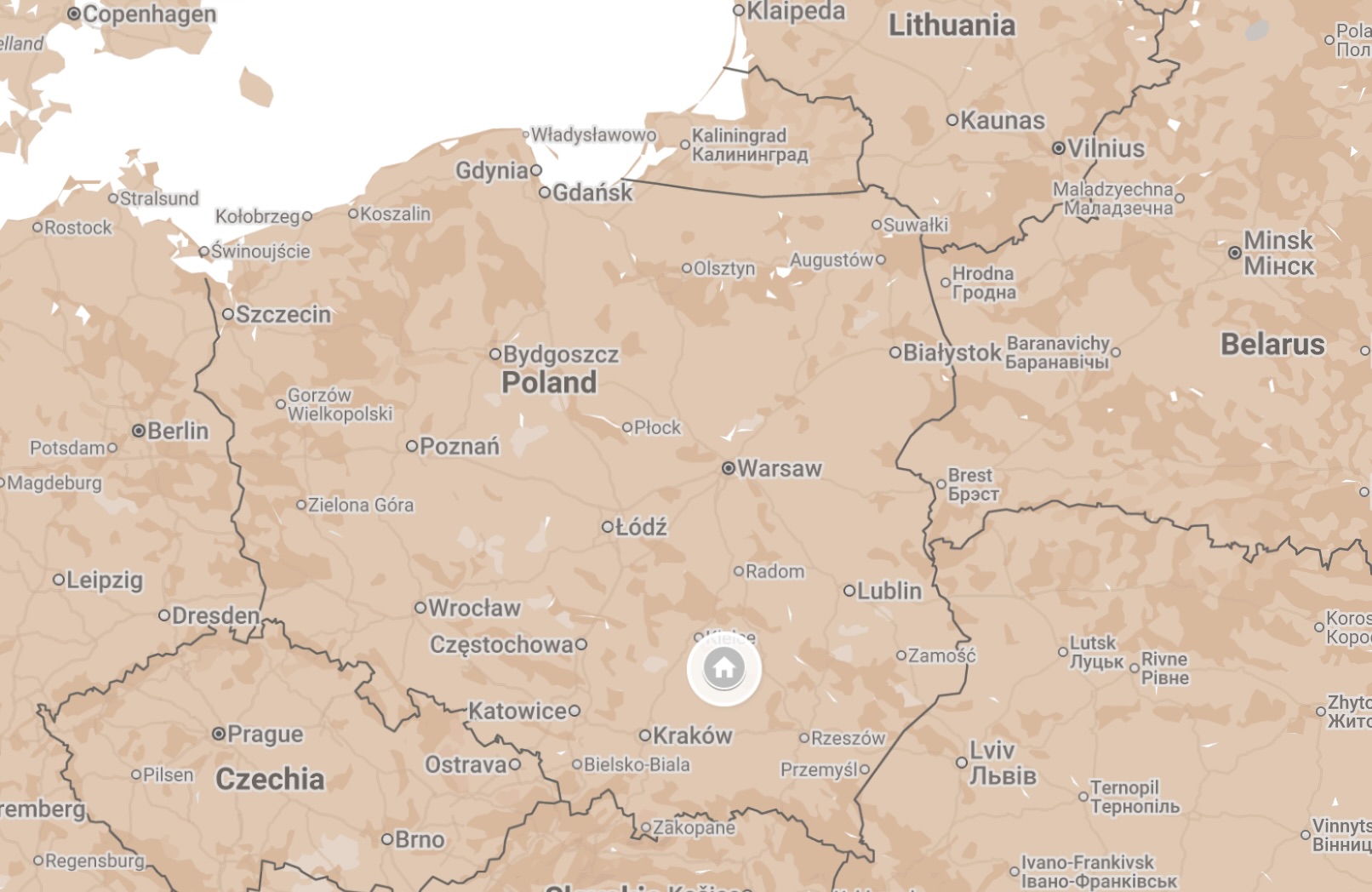
Members of the Boys were born in Świętokrzyskie Voivodeship, Poland.
The Boys were teenage and child-Holocaust survivors, who were brought to the UK after the war for rest and rehabilitation.
Members of the Boys were held in Nazi labour and concentration camps and used as slave labourers. They had also survived World War II in hiding or as lone children.
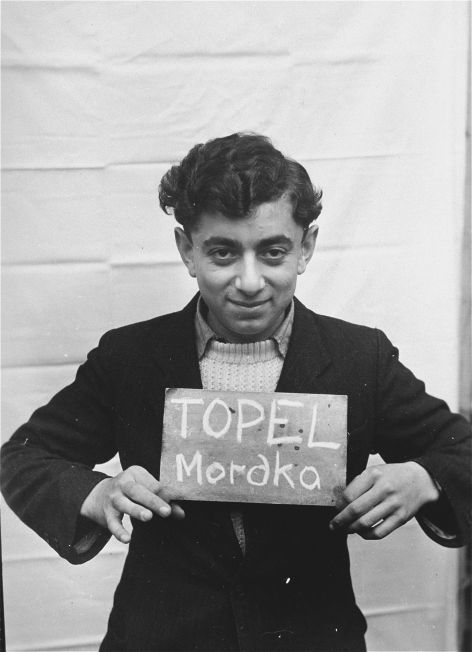
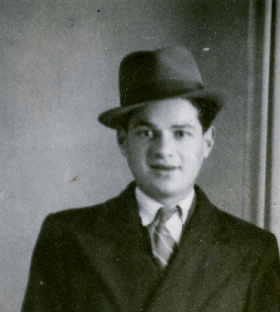
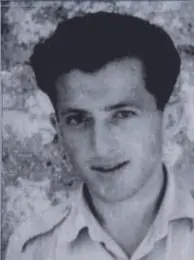
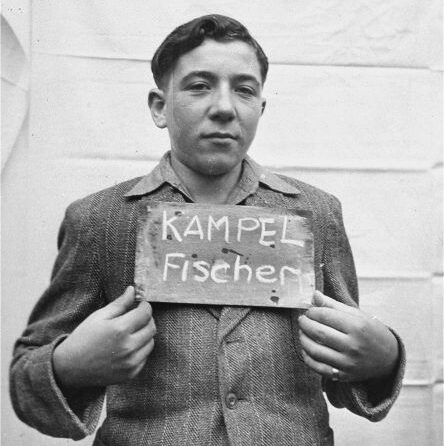
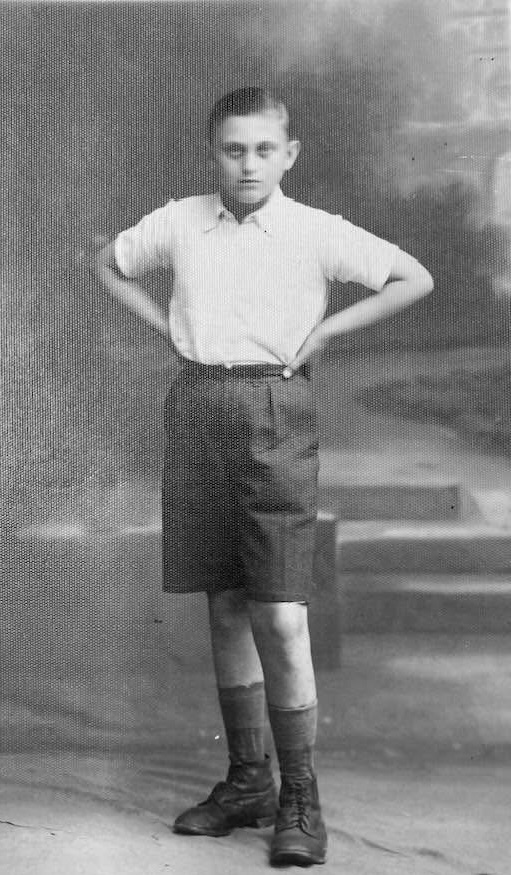
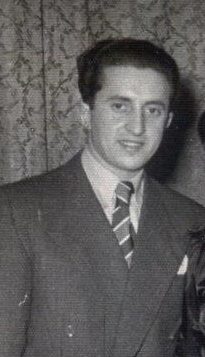
Six of the Boys from Świętokrzyskie Voivodeship. These photographs were all taken after World War II.
History
During the partition of Poland, which lasted from the late 18th century until World War I, Kielce was part of the Russian empire. During this period, the area became an important centre for the production of armaments and there were a number of large munitions factories in the the city and its surrounding towns.
After World War I, Poland regained its independence and Kielce became the capital of the Świętokrzyskie Voivodeship.
Kielce had a significant Jewish population before World War II. According to the Russian census of 1897, among the total population of 23,200 inhabitants, there were 6,400 Jews in Kielce around 27% of the total population.
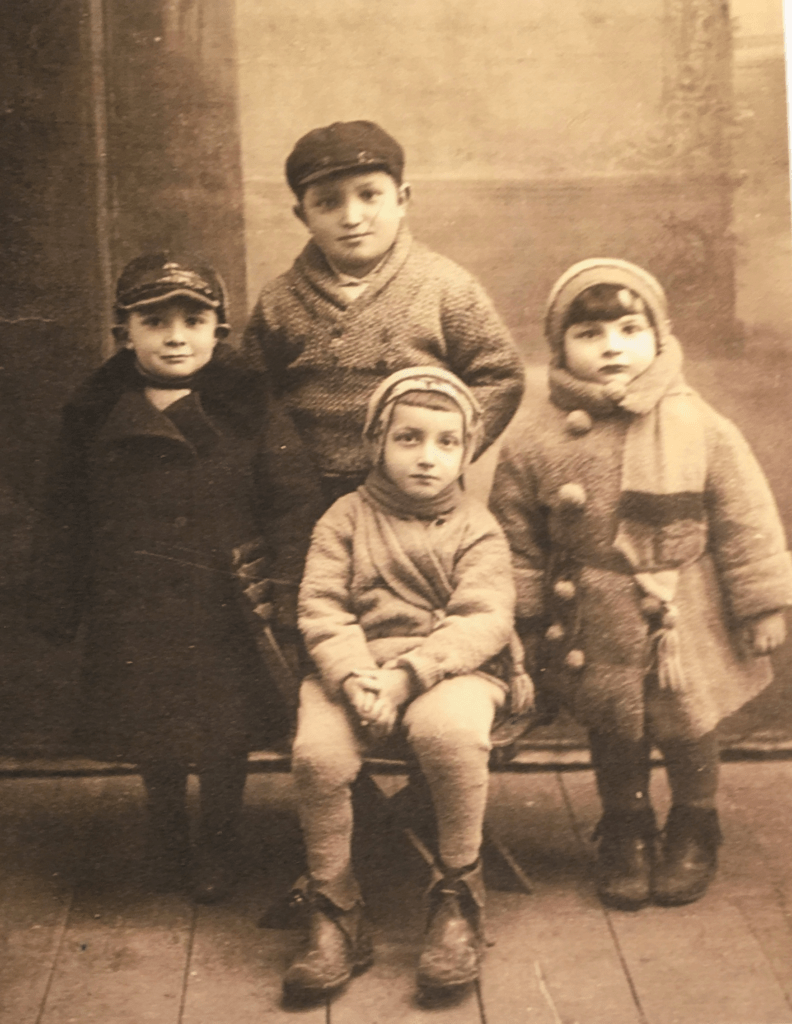
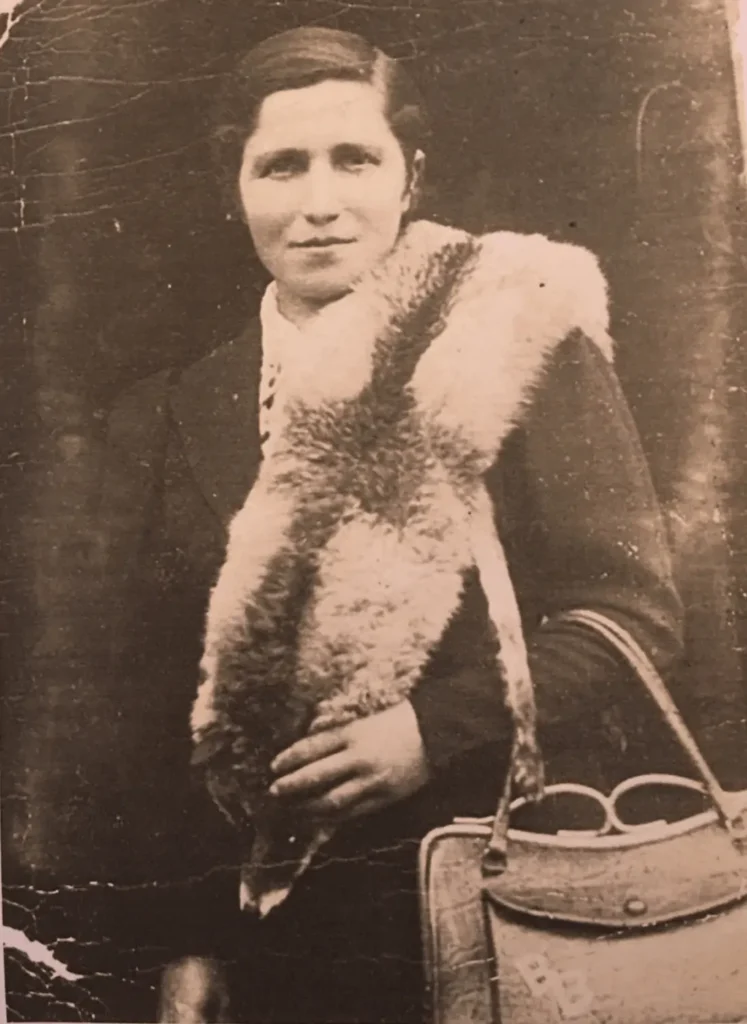
Ksil Yehezkiel and Bluma Bekierman had four sons Shaul (b. 1927), Shlomo (b. 1929), Haskiel (1931) and Shmuel (1933). Ksil ran a mill in Chmielnik where the family lived.
Chmielnik was a vibrant Jewish centre with a large population. The town had a a strong Hasidic presence. The Bekiermans were an Orthodox but not strictly religious family. Shaul Bekierman recalled that he did not like going to cheder, the Jewish school, and used to run away to work at his father’s mill.
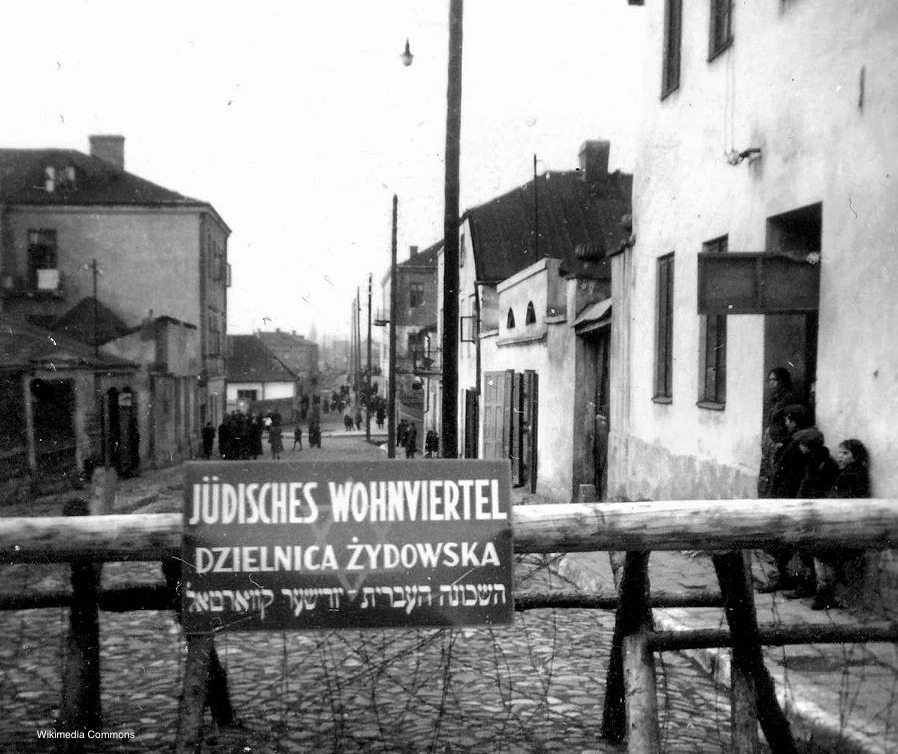
After the German invasion of Poland, a ghetto was set up in Chmielnik, in which the Bekierman family were imprisoned. Ksil Bekierman’s factory was confiscated and the family lost their living. Life was extremely hard.
In October 1942, Ksil and Bluma Bakierman and three of their sons were deported to the Treblinka extermination camp. Their oldest son Shaul was taken as a slave labourer and was the only member of the family to survive the Holocaust. He later changed his name to Sidney Baker. To find out more about his life click here.
Interwar Period
During the interwar years, Zionist parties were active in the city, as were Agudath Israel, the Bund, and Polish- Communist Jews. The parties ran youth movements and the Zionists also operated pioneer training facilities.
Kielce had cultural societies that promoted the study of Hebrew and Yiddish culture. The Jewish community had three libraries and a small Jewish theatre; four Yiddish newspapers were published in Kielce. The city also boasted a number of Jewish sports clubs.
On 11-12 November 1918, just after the First World War had ended, a pogrom occured in Kielce. About 400 Jews were injured and ten murdered. In the 1930’s, violent anti-Semitic incidents occurred in the city. In November 1934, three Jews were murdered near Kielce, and in 1937, a pogrom was carried out in the city, during which the homes of 50 Jewish families were burnt down and five Jews lost their lives.
In 1938, there were 20,942 Jews living in Kielce, out of a total population of 67,634.
1939-1945
After the German invasion of Poland in 1939, the local armament factories were integrated into the economy of the Third Reich and many of the Boys were held in them slave labourers.
Immediately after the German occupation, all Jews were ordered to wear a Star of David on their outer garments. Jewish–owned factories and businesses in the region were confiscated by the Gestapo.
Ghetto were set up across Świętokrzyskie Voivodeship, which were liquidated in 1942. The majority of the Jews held in the ghettos were murdered in the Treblinka extermination camp.
Aftermath
After the liberation Kielce was the scene of a major program in July 1946 in which almost 40 Jews lost their lives and many more were injured. It was one of the key factors that prompted a mass exodus of Holocaust survivors from Poland.
Getting there & around
Świętokrzyskie Voivodeship is accessed primarily through Kielce, its capital. The nearest major international airport is Warsaw. Kielce is well-connected by road and rail.
Kielce
Synagogue The former synagogue sits on a traffic island in the middle of a busy dual carriageway, Aleja IX Wieków.
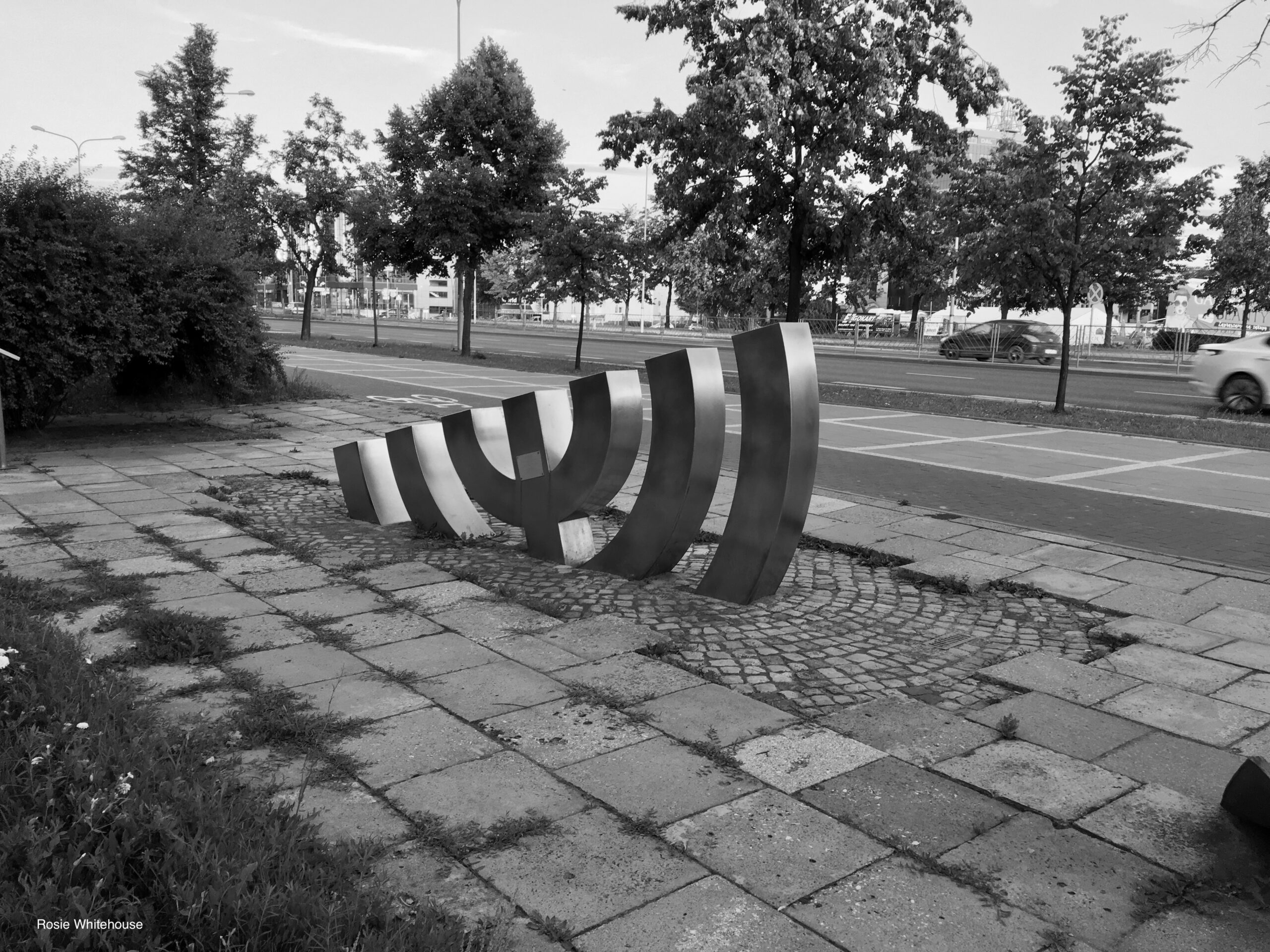
Memorial A few minutes’ walk east from the former synagogue, a memorial marks the location of the former ghetto. It is a menorah that is either sinking into or rising out of the ground depending on which way you look at the story of what happened here.
Museum
The Jan Karski Society (ul. Planty) Named after the Polish underground courier, the museum recounts the 1946 pogrom that occurred in the city. The centre has worked for recognition of the role played by local Poles in the 1946 pogrom and was founded by Bogdan Białek. There is a documentary film about his work: Bogdan’s Journey (2016).
The Boys’ other hometowns
Chmielnik
The Synagogue of Glass (Świętokrzyski Sztetl Museum) Located in a restored 17th-century synagogue, this centre features a unique glass bimah, which symbolises the destroyed original wooden structure, and serves as an educational hub for Jewish life.
The Mikveh A well-preserved ritual bath with original tiles was discovered in 2015 in a private building’s basement, highlighting the hidden remnants of the community.
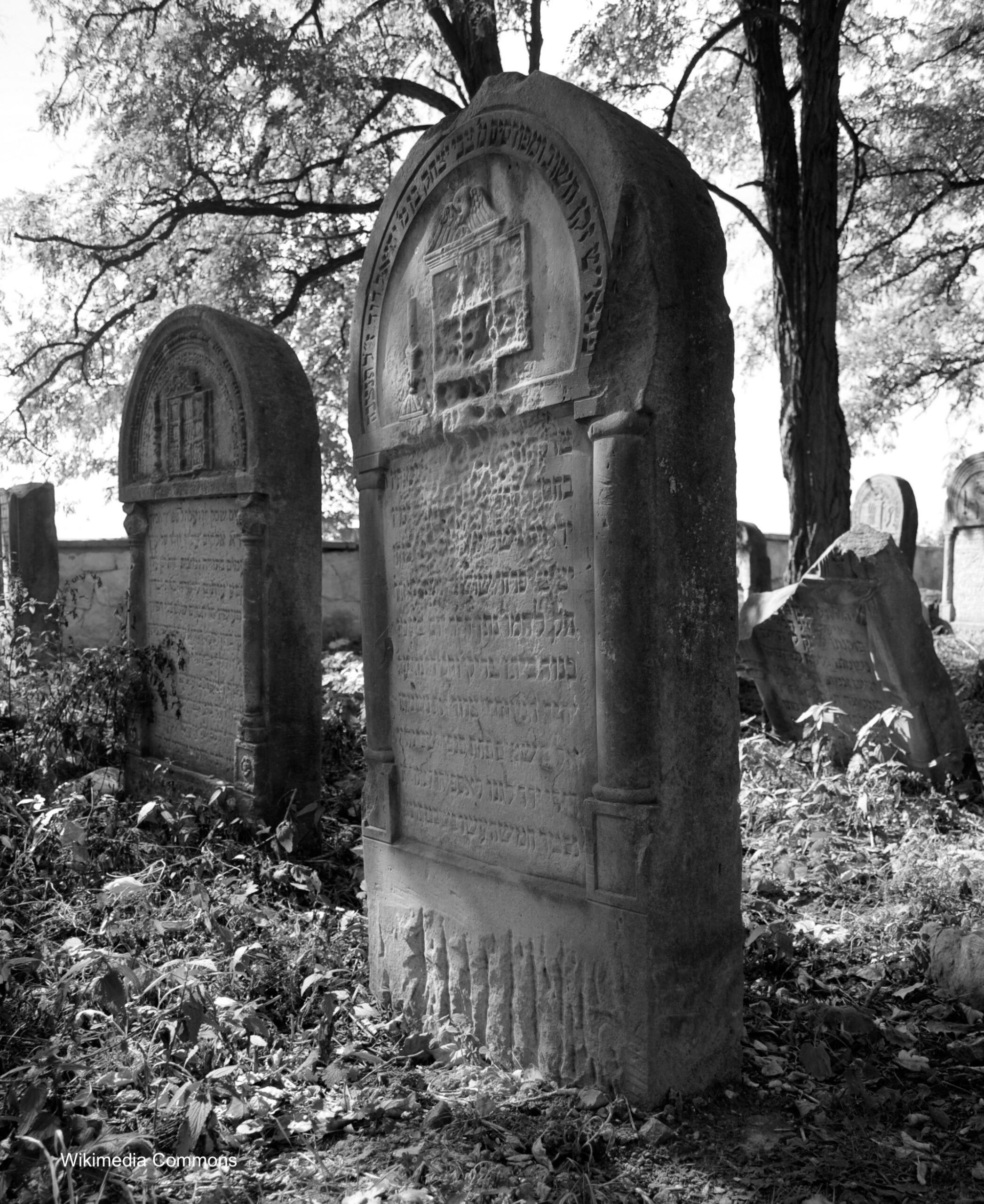
The “Shadow House” and Cemeteries The old Jewish cemetery was destroyed during the war, but a modern monument known as the “Shadow House” was erected in 2014 to honour the lost community. The new cemetery also features a lapidarium made from recovered, shattered tombstones (matzevot).
Skarzysko
Jewish Cemetery (Łyżwy Street) The cemetery contains some traditional, mostly broken, matzevot (tombstones).
Memorial (Intersection of 1 Maja Street and Czerwonego Krzyża Street) A monument commemorating the Jews of Skarżysko-Kamienna murdered by the Nazis (1939–1945) was erected in 1987.
There are Jewish cemeteries in the following towns:
Bodzentyn, Brzesko, Jędrzejów, Koprzywnica, Kozienice, Magnuszew, Ostrowiec Staszow, and Szydlowiec.
Repurposed synagogues stand in:
Brzesko, Kielce, Sandomierz. The synagogue in Działoszyce is a ruin.
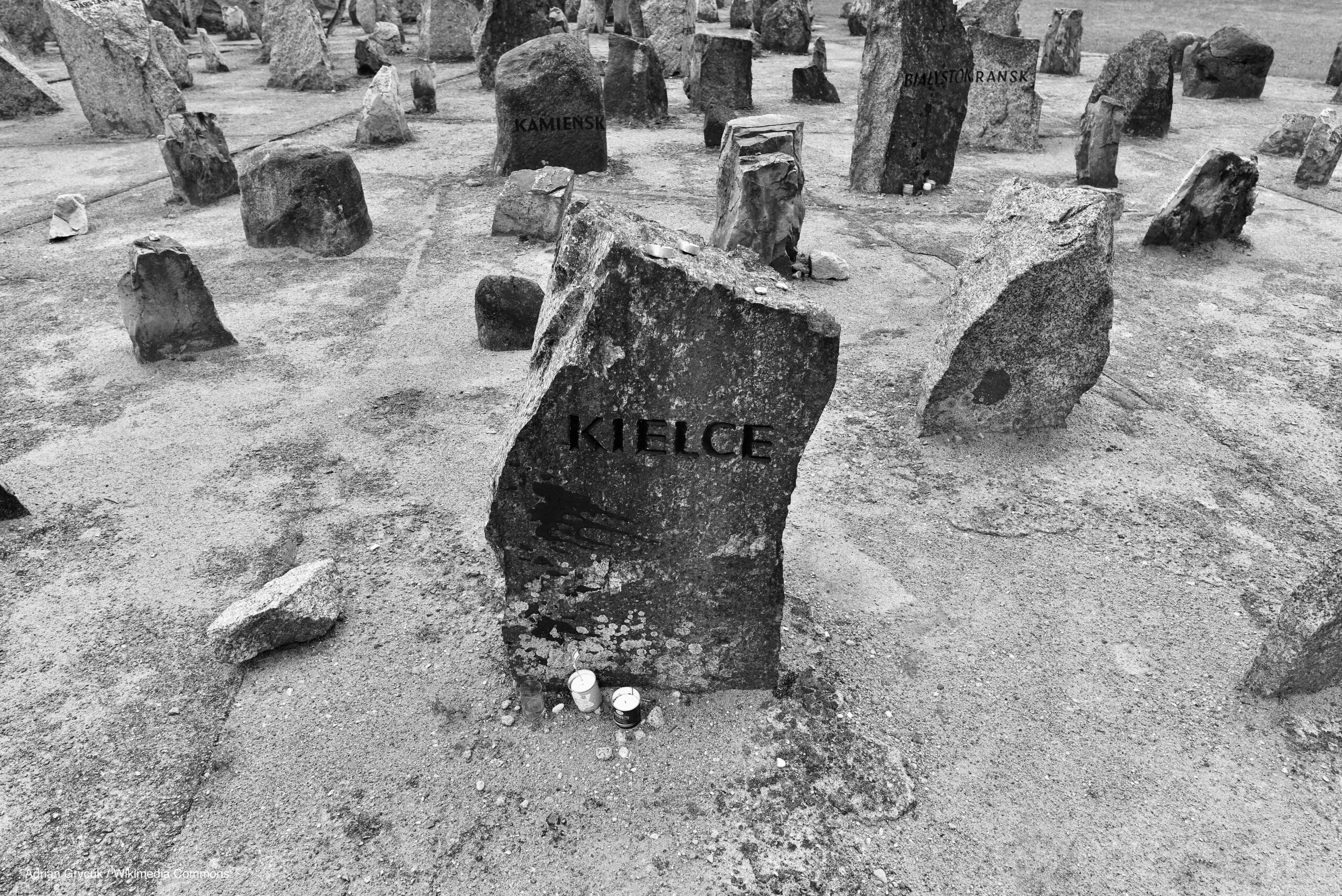
There is also a memorial in Działoszyce
 About
About History
 Education
 Quilts
 FIlms
FIlms Photos
 News Media & Events
 Publications
 Donate