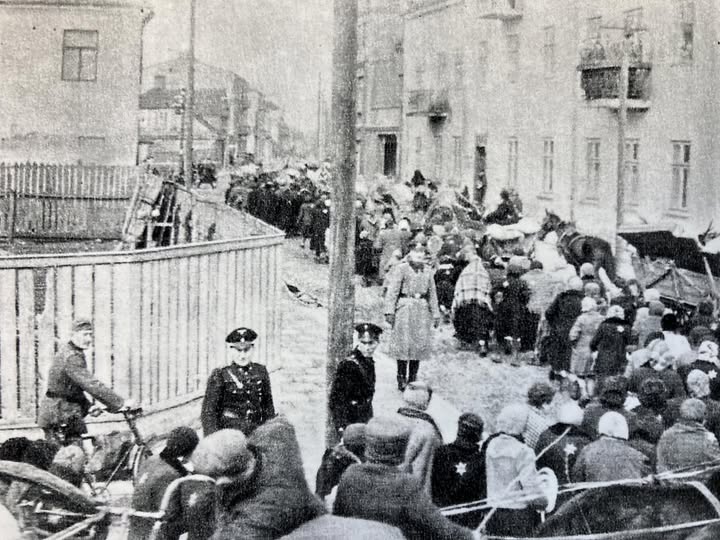
Members of the Boys and their families were imprisoned in the Sieradz Ghetto.
The Sieradz Ghetto was one of a network of ghettos set up by Nazi Germany in which Jews were forced to live in occupied Poland. As with other ghettos in Czechoslovakia, Latvia, Lithuania and Poland, the Bobowa ghetto was established to contain the region’s Jews and isolate them from the rest of the population until the Nazi leadership could decide on an answer to the so-called “Jewish Question.”
The Boys and their families spent years living in dire conditions. The ghettos were not designed for the vast numbers of people forced to find space to live within them. As a result, multiple families shared cramped and insanitary accommodation.
The Boys were teenage and child-Holocaust survivors, who were brought to the UK after the war for rest and rehabilitation.
Overview
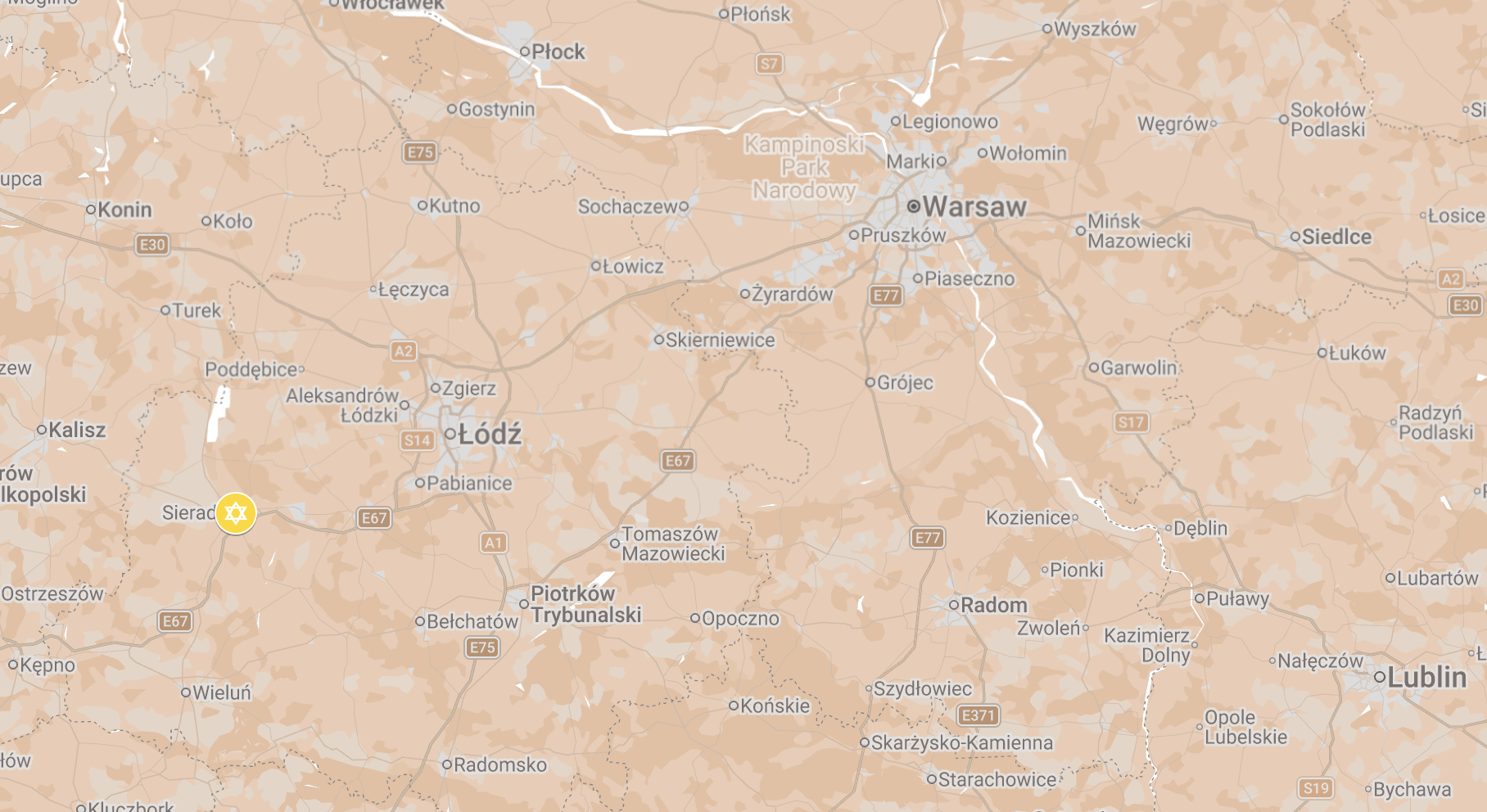
Sieradz, a historic town in central Poland, had a long-established Jewish community before the war, numbering around 3,000. Following the German occupation in 1939, anti-Jewish measures were rapidly introduced, including forced labour, confiscation of property, and restrictions on movement. In early 1940, the Jewish population of Sieradz and surrounding areas was confined to a ghetto.
The ghetto was overcrowded and conditions were harsh. Families were forced to live in cramped quarters with limited access to food, sanitation, and medical care. Disease and starvation were widespread, and many individuals were subjected to forced labour both inside and outside the ghetto. At its peak, the ghetto held between 4,000 and 5,000 Jews.
Deportation
In August 1942 the ghetto was liquidated. The majority of those imprisoned there were deported to the Chełmno extermination camp, where they were murdered shortly after arrival.
Others were sent to labour camps in the region, where survival conditions remained extremely difficult. By the end of the war, only a small number of individuals from Sieradz and its surrounding communities had survived.
Memorialisation
Today, memorials and plaques in Sieradz commemorate the Jewish community that once lived there.
 About
About History
 Education
 Quilts
 FIlms
FIlms Photos
 News Media & Events
 Publications
 Donate